SUMMARY: 1Q earnings were better than feared. The S&P has experienced a 9% increase this year, with cyclicals leading defensives and early cyclicals leading deeps. Risk-on factors have been outperforming risk-off factors recently. Additionally, 10-year yields have risen while credit spreads have tightened. That’s the good news.
The not-so-good news, it is important to be cautious when extrapolating macro trends due to high economic volatility and the Federal Reserve’s focus on fighting inflation. Mean reversion remains the dominant theme, and we are maintaining our range bound market call between 3800 and 4200. As the quant team discussed this morning (HERE), most factors have reversed relative to their Mar/Apr and early-May trends. Expect the rotation into risk-on factors to continue near-term, assuming a debt default is avoided, but don’t expect the rotation to be durable.
TECH RISK: Tech has been the best-performing S&P sector, driven by mega-cap names. Tech companies are more exposed to momentum of price and quality of earnings factors, while being less exposed to risk-off factors and realized value. Those exposures have been a support since the bank failure. This current round of mean reversion will be a headwind to Tech broadly. Especially if 10yr yields keep marching higher….
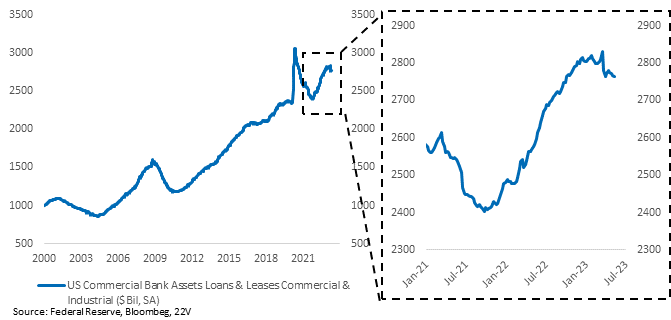
CREDIT TRENDS FINE: Credit availability has decreased since SVB, and financial conditions related to banking are tighter compared to two months ago. However, there are no signs of a widespread liquidity crisis. You can see this in C&I loans, which have fallen but not cratered. And companies still have positive financing sentiment, including debt financing and cash availability. This suggests that the ongoing mean reversion, which favors risk-on investments and poses a challenge for tech, is likely to continue in the near term as investors re-adjust their recession expectations. Our survey work HERE indicates that is happening now.

More details in the full report below…
MARKET VIEWS: 1Q earnings reporting is about complete, and companies logged 1) higher than normal beat rates (top and bottom line) and 2) a surprise expansion of margins. The S&P is up 9% this year, cyclicals are leading defensives, Early Cyclicals are leading Deep Cyclicals, and as of last week, risk-on factors are leading risk-off. Recently, 10yr yields have moved higher and credit spreads tighter. Those are the good bits.
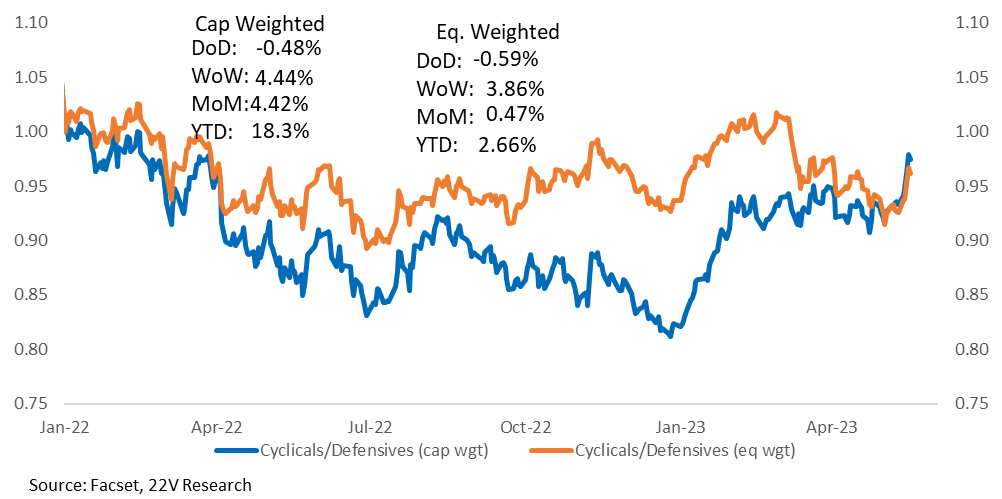
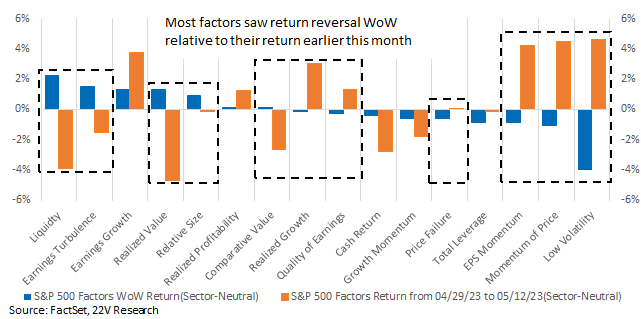
Now the worse part. It is still dangerous to extrapolate macro trends when economic vol is exceptionally high and the Fed is still in inflation-fighting mode. Mean reversal remains the overarching theme, and stocks are range bound (3800-4200). As the quant team discussed this morning (HERE), most factors have reversed relative to their Mar/Apr and early-May trends. Expect the rotation into risk-on factors to continue near-term, assuming a debt default is avoided, but don’t expect the rotation to be durable.
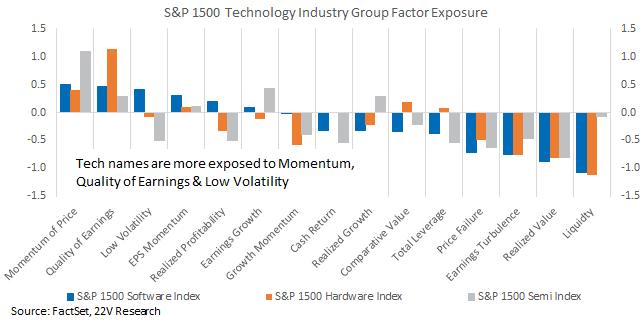
TECH RISK: Technology has been the best performing S&P sector this year, led by mega cap names. Breaking down into factors, Tech names are more exposed to Momentum of Price and Quality of Earnings while less exposed to risk-off factors and Realized Value. Those exposures have been a support since the bank failure. This current round of mean reversion will be a headwind to Tech broadly. Especially if 10yr yields keep marching higher….
CREDIT TRENDS FINE: Company sentiment readings, measured using Amenity’s natural language processing tool, showed credit conditions tightened AT THE MARGIN but did not collapse. Since SVB’s failure, credit availability has decreased, and banking related financial conditions are tighter than two months ago. However, a rapid credit freeze has not occurred and there are no signs of broad liquidity issues. You can see this in C&I loans, which have fallen but not cratered.
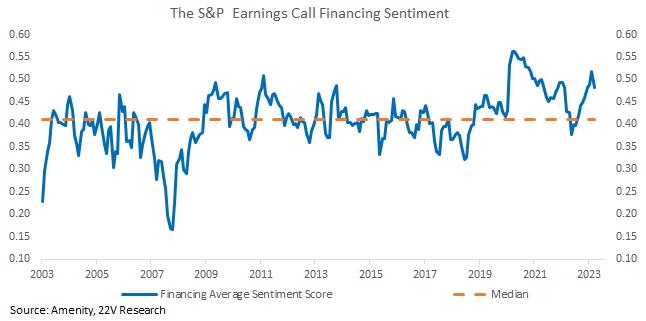
Companies still have positive financing sentiment, which includes sentiment about debt financing and the availability of cash. All this implies the current round of mean reversion, which is risk-on and a headwind to Tech, is set to continue near-term as investors re-adjust recession expectations. Our survey work HERE indicates that is happening now.
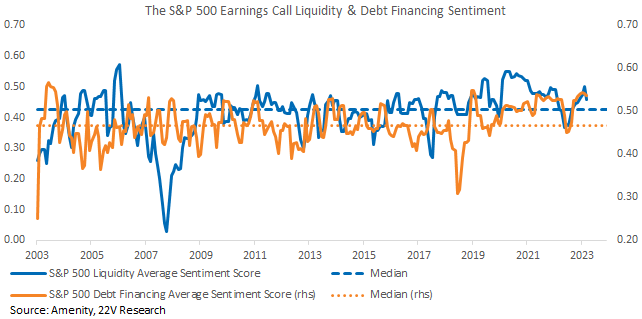
Here is debt financing sentiment and liquidity sentiment broken out. Both are above their medians.
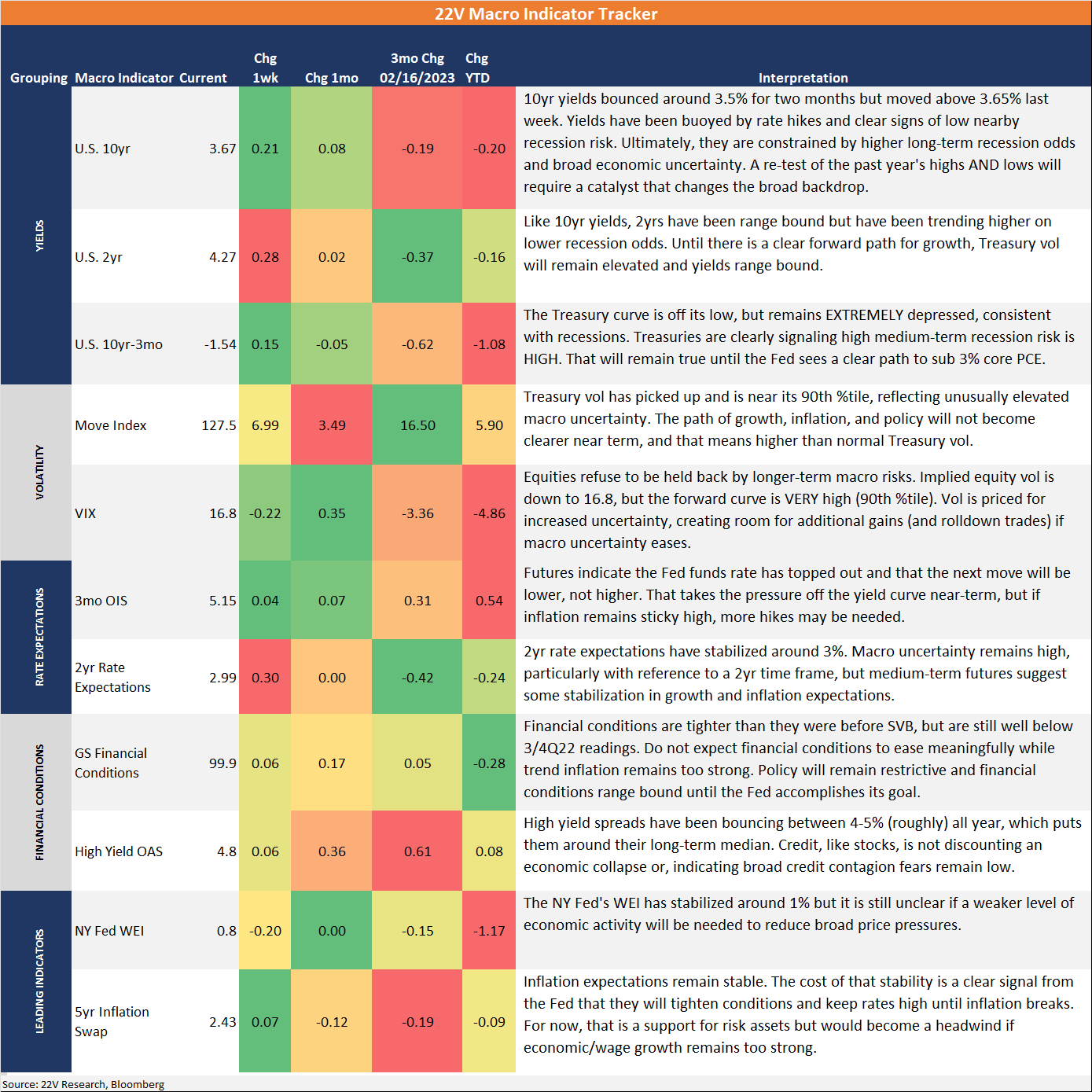
Macro Tracker: Rolling issues stemming from the Fed’s aggressive rate hikes continue to crop up, but they have not snowballed in a way to create deep recession risk. As a result, investors have lowered their nearby recession odds and increased their EPS estimates for the year (HERE). Credit spreads remain range bound, the VIX is stable below 17, 1Q earnings were better than expected, and market internals took a big move in the risk-on direction last week. The skew on stocks has improved some, but a meaningful break higher requires more clarity on looming economic issues. Labor markets remain too tight, inflation too high, so Fed-induced recession risk odds remain elevated.