SUMMARY: The combination of unsually tight labor market and slower demand is not going to last and the labor market already appears to be loosening. We expect that will continue for the next few months and the hook lower in wages (see Atlanta Fed yesterday) and increase in claims is consistent with that view.
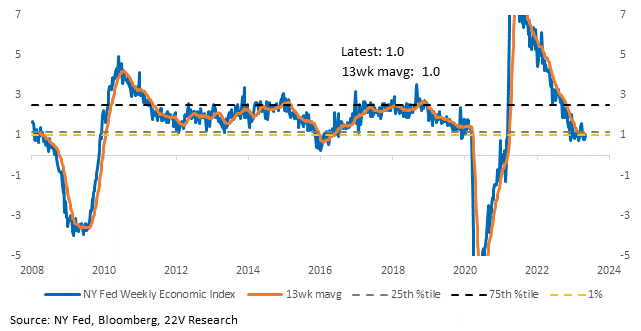
It WILL NOT AUTOMATICALLY mean a hard landing though. An important check on the hard landing call is high-frequency economic data. If the NY Fed Weekly Economic index (the best high-frequency measure of a broad set of indicators. NO cherry picking) remains remained steady as the labor market continues to cool, that would be consistent with a soft landing. The market will be a tough short if the NY Fed Weekly is not moving lower. People have tried to front-run recession risk all year and the Weekly Economic Index has never confirmed that view.
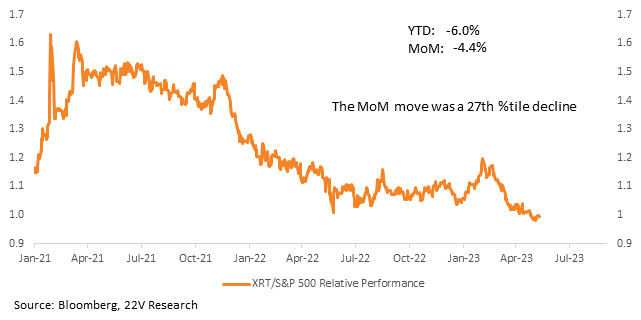
Retail Pressure: Multiple clients have pointed out over the past few days that being short the consumer is the most obvious trade over the summer. Given what we outline above on the labor market loosening and the fact that the savings rate is highly unlikely to move lower (we don’t think it will move higher either), consumer spending WILL SLOW from its abnormally strong pace. Consumer concerns will likely continue to weigh on retail stocks (they have been relative losers the past month), and anchor inflation expectations and 10yr yields. Early Cyclicals will continue to work vs Deep Cyclicals in that backdrop. FYI, below is what retail sales will look like if consensus estimates are correct next week. Slower, but not an issue.

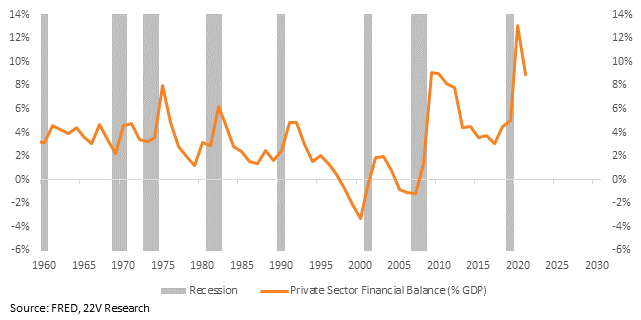
We will be debating consumer led recession or not with investors for the next 3 months. Unless the unemployment rate goes up very quickly, don’t expect a consumer-led recession. As our special webinar guest, Angel Ubide, pointed out yesterday, there is inertia in the unemployment rate. i.e., it doesn’t tend to move very quickly unless there is a shock. Also, slowdowns become deep recessions when there are amplification mechanisms. Right now, amplification is hard to find. There is a private sector surplus. Put differently, households and corporations have a positive financial balance. They both had negative financial balances heading into the last two recessions. Angel assumes we will end 2023 with 3% ish Core inflation and no recession. That will be much better for earnings than investors currently think.
The big risk Angel pointed out, a rapid unwind of the labor hoarding. That would happen if the PMIs remain very weak through the summer AND the consumer weakens materially. Given the inventory situation in 1Q (HERE), PMI readings should stabilize and move higher. We have faded the PMIs as an indicator given the weird supply and demand dynamics post-COVID, but they will become more relevant moving forward.
Full report below…
MARKET VIEWS: The labor market is in the process of loosening. The economy appears to be growing at a slightly below-trend pace (1% underlying demand according to the NY Fed Weekly Economic index. Atlanta Fed GDPNow at 2.7% for 4Q) and labor hoarding has been a real phenomenon. That explains why the labor market has remained unsually tight despite demand slowing to a below-trend pace (from BOOM levels). Over the next few months, expect the labor market to loosen more. It WILL NOT AUTOMATICALLY mean a hard landing and an important check on hard landing odds will be what high-frequency economic data does. If the NY Fed Weekly Economic index remains steady, as the labor market cools, that would be consistent with a soft landing. Recent data has been consistent with a soft landing.
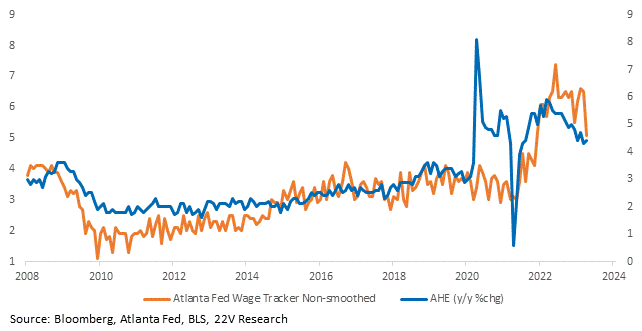
Consistent with a cooling labor market, the Atlanta Fed’s wage growth measure moved lower on a non-smoothed basis (the relevant way to look at it according to Gerard). The Atlanta Fed series seems to confirm that the average hourly earnings reading from last Friday were superficially strong. The bottom line, the labor market is loosening, wages are moving lower and that means downside risk to inflation over the next 6 months. That continues to favor Early Cyclicals (Tech, Comms, and Discretionary) relative to Deep Cyclicals (Energy, Industrials, and Materials).
Retail Under Pressure: Real Personal Consumption Expenditure growth is shifting lower. It was running at a 3% pace (very strong historically) and Gerard estimates the launch into 2Q puts us at a 1-1.5% pace. That is much lower than 3%, but in line with the post-GFC period and not close to recessionary. Below is what retail sales trends will look like if the consensus is correct next week.
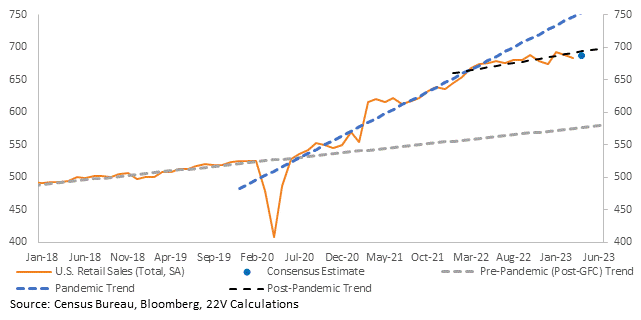
Investors we have talked to over the past few days have highlighted the slowdown in the consumer and think being short or underweight consumer names is the most obvious trade of the summer. The rate of change in spending and labor market headwinds for consumers are real, but it doesn’t mean recession. The economy is coming off boom levels. Consumer concerns will likely continue to weigh on retail stocks (they have been relative losers the last month) and anchor inflation expectations and 10yr yields. Favoring big cap Tech.
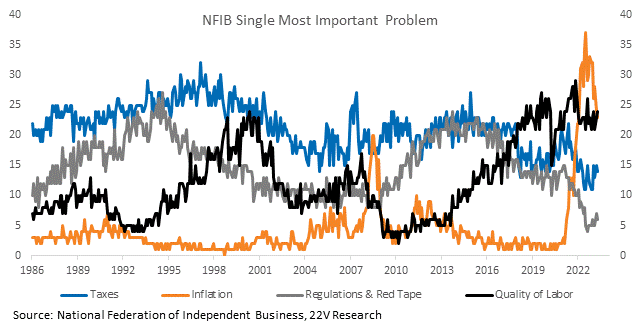
ECONOMIC INERTIA & AMPLIFICATION: We hosted a webinar with our good friend Angel Ubide, head of econ and macro at Citadel. 30-minute replay link (HERE). Two great points to highlight. 1) there is inertia in the unemployment rate. Labor hoarding will take longer to unwind than investors anticipate. Companies are afraid they can’t find replacement talent (“quality of labor” is once again the largest concern for small businesses) so they will be reluctant to fire employees, especially since companies expect a better 2H23.
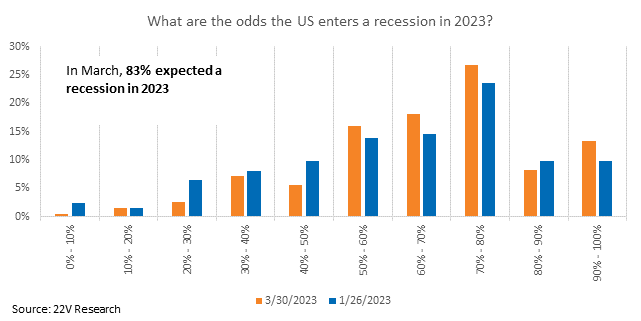
We recognize the pushback that rules like the Sahm indicator have a high historical hit rate. Yes, once the unemployment rate starts rising, it tends not to do it orderly. We aren’t pushing back against that, but rather the timing of a recession. At the beginning of April, 83% of investors put the odds of a recession in 2023 above 50%. Inertia pushes recession risk farther out.
In the scenario that Angel described, we would end up with something like Jason Furman’s “continued overheat,” which is his modal case (HERE). +3% inflation with a relatively low unemployment rate. Earnings growth would be significantly better than expected under that backdrop led by a stronger topline. Financial conditions wouldn’t ease though, and future recession risk would be elevated. Assuming the Fed thinks 3% core PCE is too high. If core PCE can get back to the 2.5-3% range, the Fed can let financial conditions ease and that would be a positive scenario for equities.
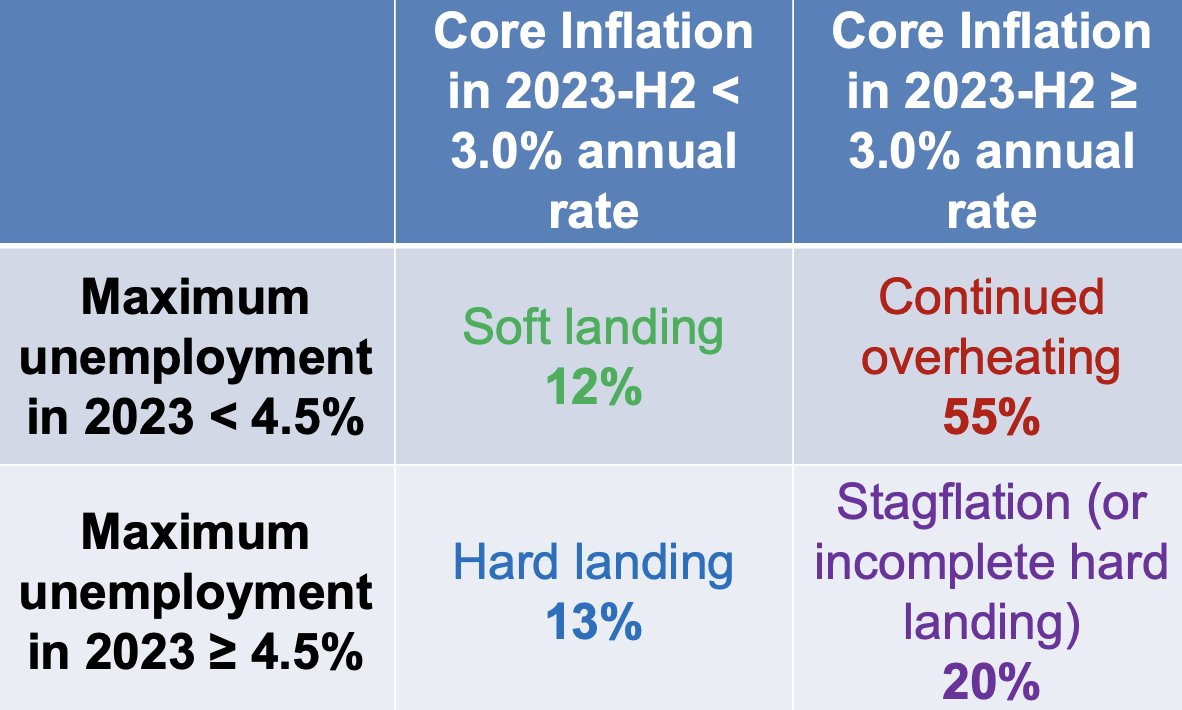
Source: Jason Furman’s Twitter, linked above
2) Another big point Angel made is that recessions become deep recessions when there are amplification mechanisms. In 2000, the surplus was over-investment in tech and the resulting recession didn’t even have two consecutive quarters of negative GDP growth. In 2008, housing was a different story. Right now, amplification is hard to find. There is a private sector surplus. A recession is not likely to turn into a deep recession.