SUMMARY: With economic data not confirming the worst fears and being obviously non-recessionary (see 50yr low in urate, headline payrolls, and the ISMs last week) expect the burden of proof going forward to be on economic bears to PROVE that tighter lending standards == imminent recession. Investors will stop assuming it. Low Vol names have outperformed SIGNIFICANTLY since the banking issues first started, posting a 98th %tile 2mo move relative to Earnings Turbulence. Value names have had an 8th %tile move lower relative to Growth. Longer term, Quality should lead as inflation and GDP growth slow. BUT investors should be prepared for some mean reversion of risk-on factors near term. Earnings have been surprisingly strong, with S&P companies beating top-line and profitability forecasts, which should help risk-on factors (like Value and Earnings Turbulence) as investor focus shifts away from banking issues.

The Senior Loan Officer OPINION Survey is released today, which shouldn’t be shocking (Powell basically previewed it as such at the FOMC meeting). Gerard has an interesting net net on the bank issues HERE. It appears we are in a bank walk, not run, as depositors are reacting SLOWLY to shifting incentives (deposit growth has stabilized after the initial hit), and the use of emergency facilities has collapsed. FYI, shifting incentives raises returns for depositors at the expense of banks. Consumers win. Assuming bank proftis don’t crash and lending doesn’t freeze. So far, there has been a small decline in small bank and overall C&I loans. Lending is tighter, but it doesn’t appear to be a significant macro issue.
Our S&P fair value range remains 3800-4200, the same range we have had since last June. The 50yr low in the urate and wage growth holding at 5% (aggregating all the wage measures), even as other COVID shocks ease, means the Fed still needs to keep financial conditions tight enough to keep economic growth at a below trend pace (trend being ~1.8%). The Fed must accept higher recession odds to keep growth below trend for an extended period.
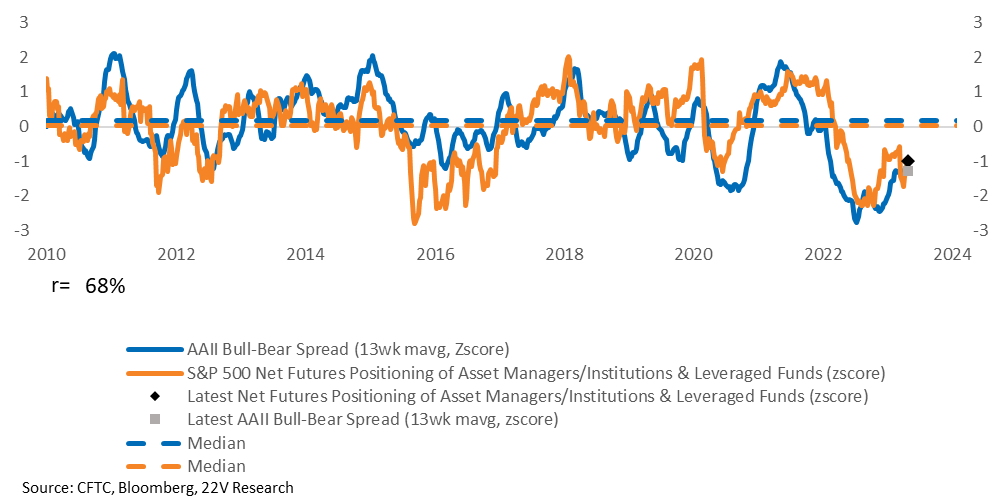
The above being noted, if we HAD to make a near term market call, we would say higher vs lower given sentiment. The European Sentix Investor Confidence survey had a sharp decline overnight and is back to January ‘23 levels. S&P net futures positioning and the AAII Bull-Bear spread remain muted relative to history too. The implied cash return ERP has some room to decline if sentiment improves.
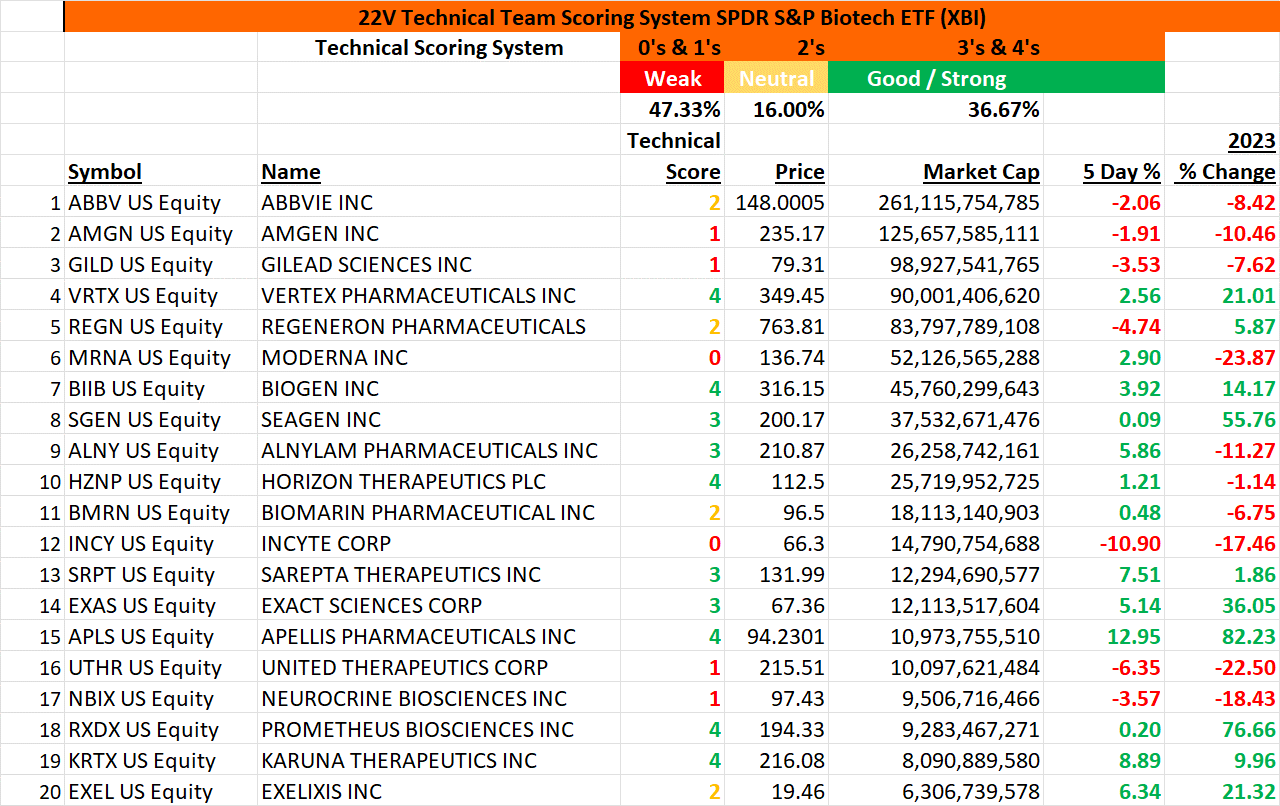
Biotech: We have mentioned a few times the move higher in gold prices suggesting lower real yields going forward. That MIGHT explain the recent strength in Biotech/ARRK. We had John Roque look at the biotech index and updated his scoring of individual Biotech names. Focus on the 4/5 as longs and 1/2 as shorts.
Full report below…
MARKET VIEWS: Our S&P fair value range remains 3800-4200, the same range we have had since last June. The 50yr low in the urate and wage growth holding at 5% (aggregating all the wage measures), even as other COVID shocks abate, means the Fed still needs financial conditions tight enough to keep economic growth at a below trend pace (trend ~1.8%). The Fed must accept higher recession odds to keep growth below trend for an extended period. Below trend growth keeps EPS growth expecations muted and higher than normal longer term recession risk keeps the equity risk premium elevated (on a cash return basis).
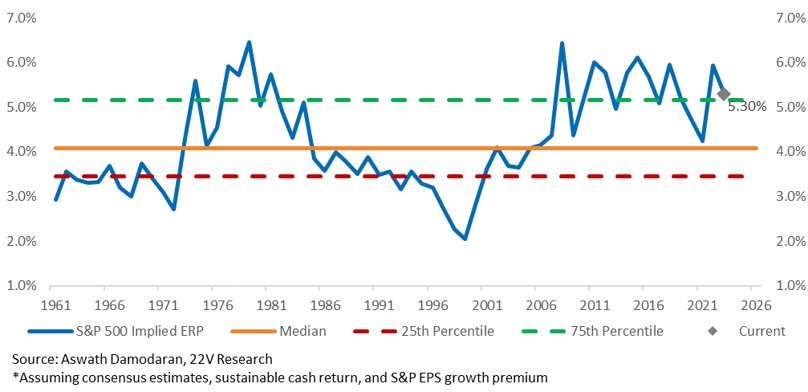
The above being noted, if we HAD to make a near-term market call, we would say higher vs lower given sentiment. The European Sentix Investor Confidence survey had a sharp decline overnight and is back to January ‘23 levels. S&P net futures positioning and the AAII Bull-Bear spread also remain muted relative to history. The implied cash return ERP has some room to decline if sentiment improves. Valuation is not a constraint OR a tailwind either. A lasting move above 4200 would require a higher conviction in a soft landing. That seems unlikely for now.
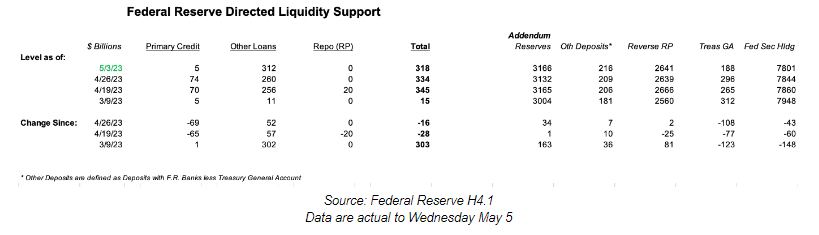
The Fed senior loan officer OPINION survey (SLOOS) is out later today and given Powell’s “preview” of the SLOOS at the FOMC meeting, it shouldn’t be shocking. Gerard has an interesting net net on the bank issues HERE. It appears that we are in a bank walk, not run, as depositors are reacting SLOWLY to shifting incentives (deposit growth has stabilized after the initial hit) and the use of emergency facilities has collapsed. FYI, shifting incentives raises returns for depositors at the expense of banks. Consumers win. Assuming bank profits don’t crash and lending doesn’t freeze. So far, there has been a small decline in small bank C&I loans and overall C&I loans. Lending is tighter, but it doesn’t appear to be a significant macro issue. It is also possible that improvement in housing offsets what will be a tighter lending backdrop. Chart and table below…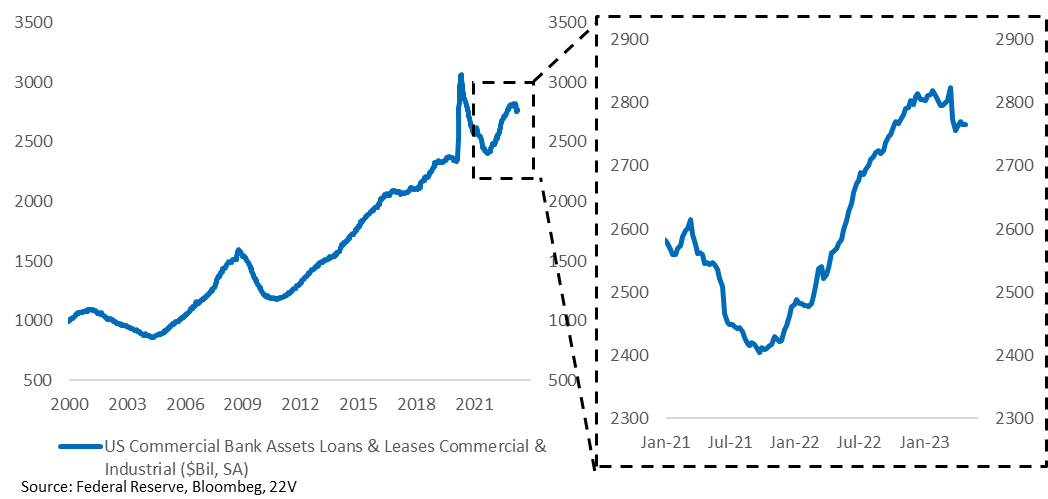
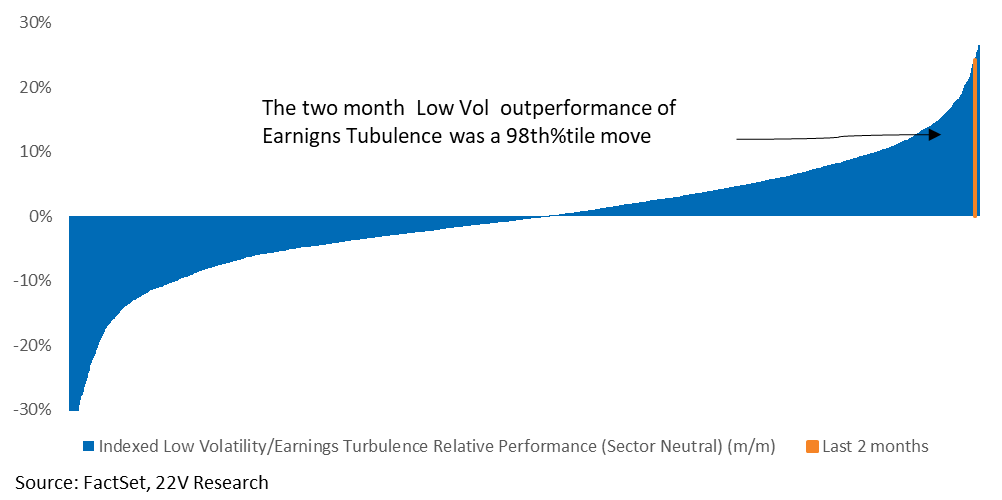
Unless banks suddenly tighten much more aggressively FROM HERE, the fear that tighter lending standards will lead to much higher near-term recession odds will fade. Recent economic data does not support high near-term recession odds either (see payroll and the ISMs last week). Low Vol stocks have outperformed SIGNIFICANTLY since the banking issues first started. Low Vol had a 98th %tile move relative to Earnings Turbulence…
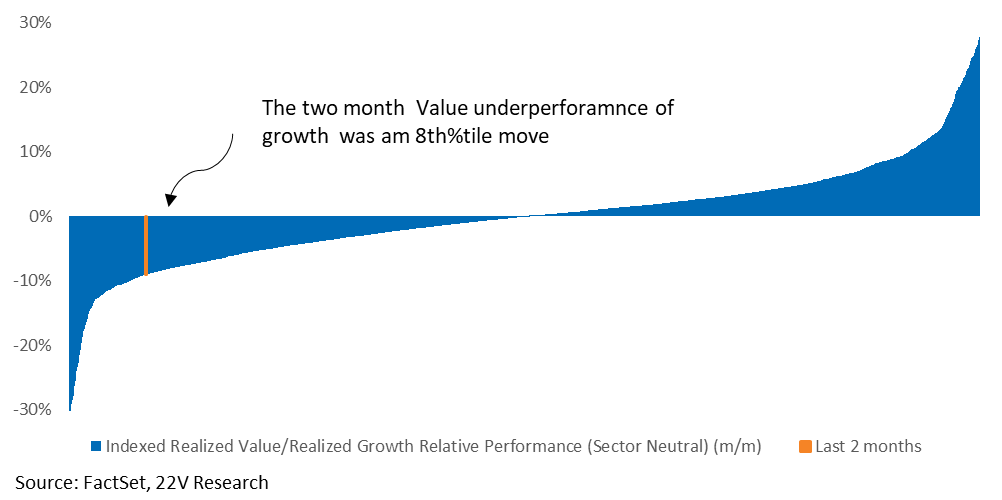
And Value had an 8th %tile move relative to Growth. Longer-term we are long Quality growth factor as inflation will slow and trend GDP growth is lower. BUT investors should be prepared for some near-term mean reversion. Earnings have been surprisingly strong, with S&P companies beating top-line and profitability forecasts, which should help risk-on factors (like Value and Earnings Turbulence) as investors focus away from banking issues.
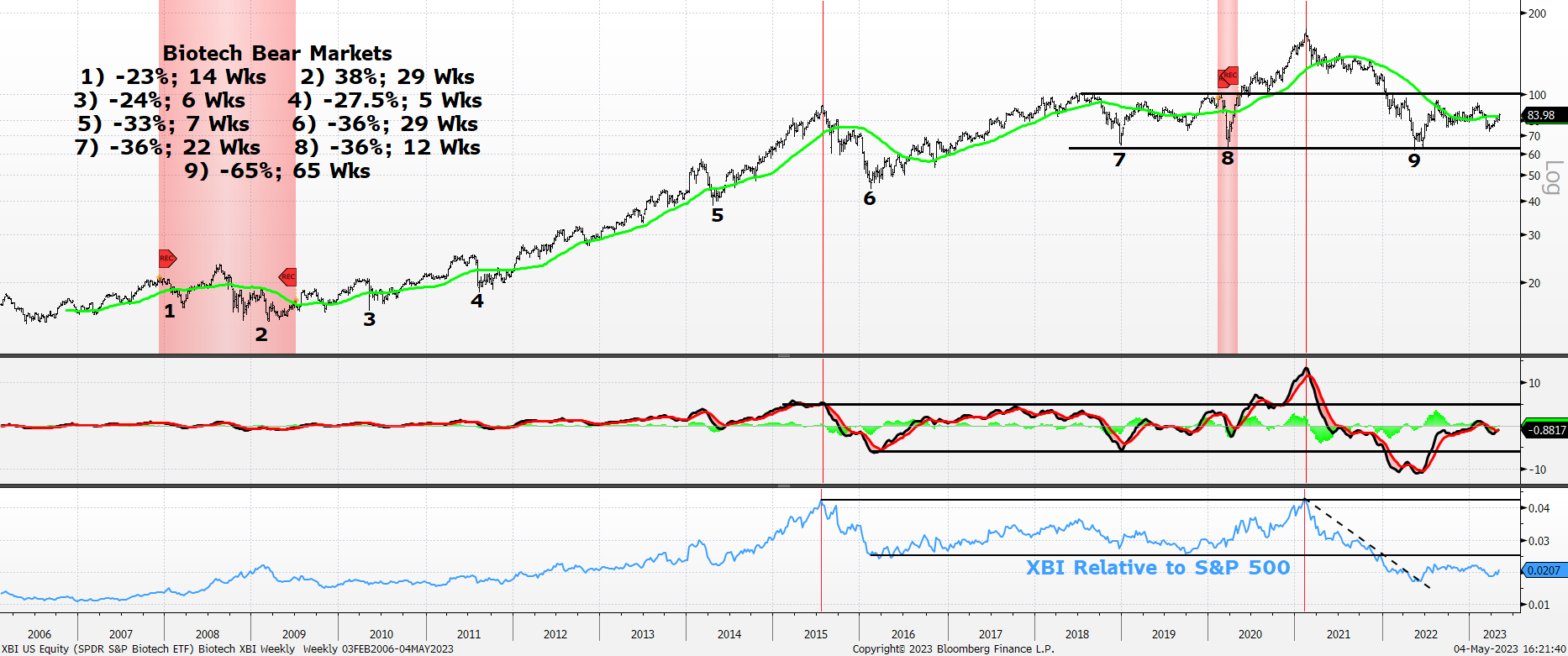
John Roque On Biotech: Top Panel – no obvious up or downtrend, but solidly sideways since early summer 2022. This is all occurring within a bigger range with 100 as the top end and 60 as the bottom end.
Middle Panel – MACD / momentum is still in negative territory.
Bottom Panel – Same unimpressive level relative to S&P 500 since January 2022.
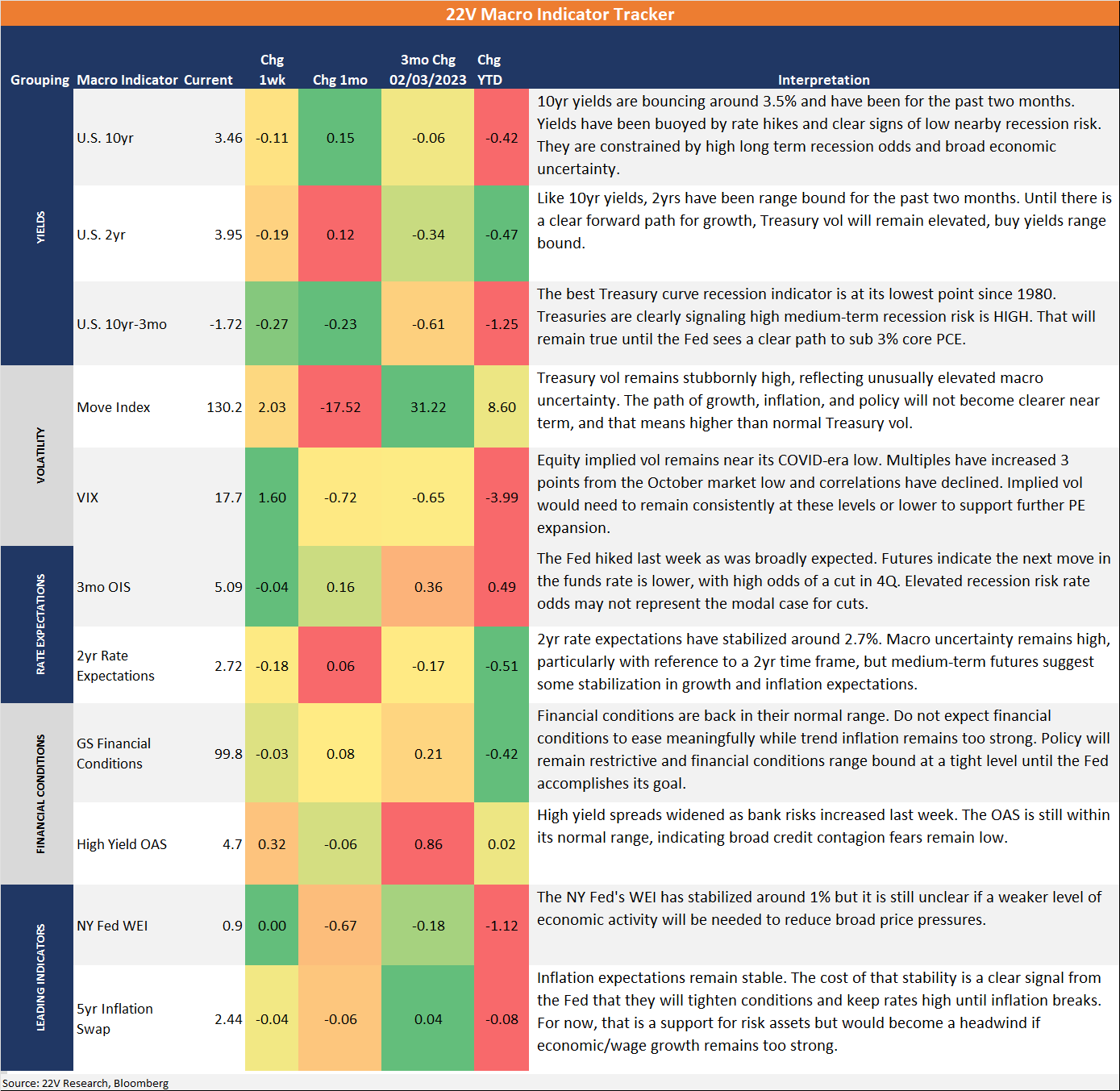
Macro Tracker: Broad economic signals remain mixed, and having a high-conviction, medium-term macro-outlook is challenging. Nearby recession odds are low and will stay that way while the urate is near its 50yr low. The elevated risk of a sharp slowdown is clear though from highish financial conditions (67th %tile) and an extremely inverted yield curve. Another bout of concerns about the banking system helped push equity vol modestly higher last week, but the broad macro backdrop remained stable. That helps explain why the VIX barely got above 20 and ended the week below 18. Over the past month, equity volatility has eased as earning expectations have increased, allowing stocks to hold stead near the high end of our fair value range. Earnings have been surprisingly strong, with S&P companies beating top-line and profitability forecasts. EPS has supported stocks and consistently exceeded expectations, which is another sign that the economy is not trending toward a deep recession.