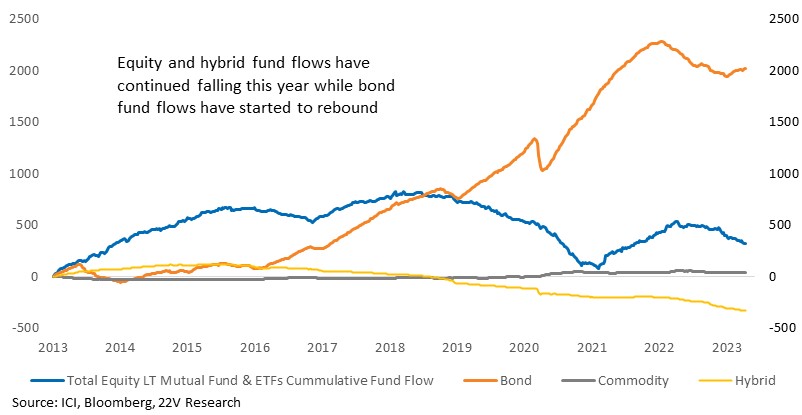
After a broad outflow from equity, bond, and commodity funds during the early part of the Fed rate hiking cycle last year, cumulative flows for equity and bond funds have diverged. Equity funds continue to see broad outflows while bond funds have rebounded this year as yields back up. That trend is in line with their historical correlations with real yield, which equity fund flow was positively correlated to real yield while bond fund flow was negatively correlated. Falling real yields this year, especially after the recent bank failures, was a tailwind for bond flows. Continued bond inflows suggest investors are positioning for a more recession-like backdrop.
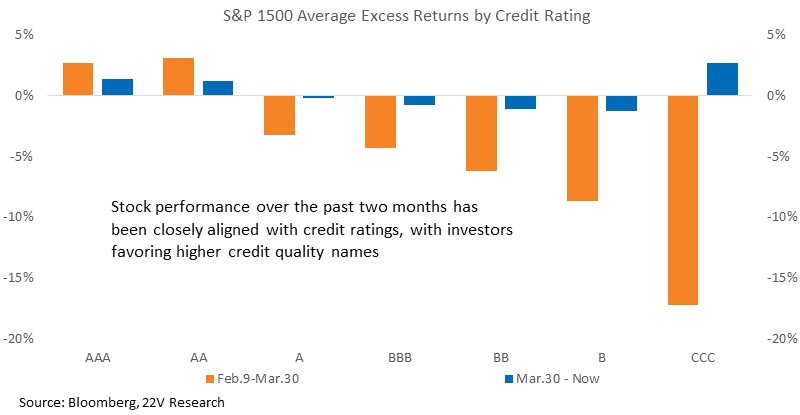
Within bond funds, investment grade bond funds have seen more persistent inflows than high yield funds. Interestingly, fund flow changes for high yield funds are less correlated with the equity rating performances. Money has flowed into high yield bonds even as S&P stocks with lower credit ratings have continued to decline. Some rebound in more speculative names near-term is possible, though the Fed’s commitment to keeping growth slow will remain a major headwind to more speculative names.

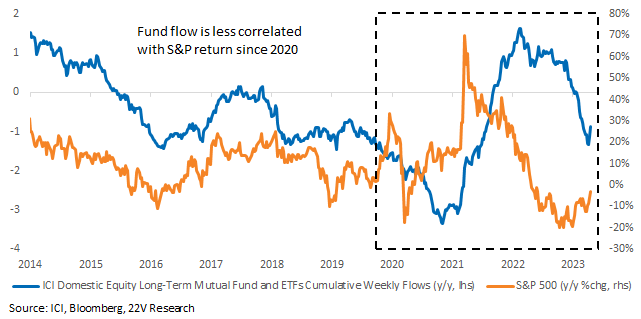
Pre-COVID, the S&P used to be well correlated with equity fund flows, but that trend has been broken for a few years. Our fair value range remains 3800–4200 under the current macro/earnings backdrop. P/E expansion has been the major contributor to the S&P’s 8.6% gain YTD and EPS was a drag. We expect earnings to beat expectations, but they are still set to decline.
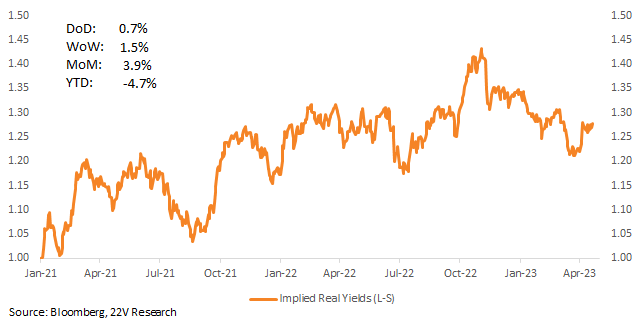
As bank risk eases, U.S 10yr yield and implied real yield should rebound near term. That is a tailwind to our implied real yield long – short portfolio. That portfolio has rebounded 3.9% MoM. Near-term, expected 1Q earnings beats together with better macro readings to continue supporting the rotation into names that benefit from higher implied real yields.
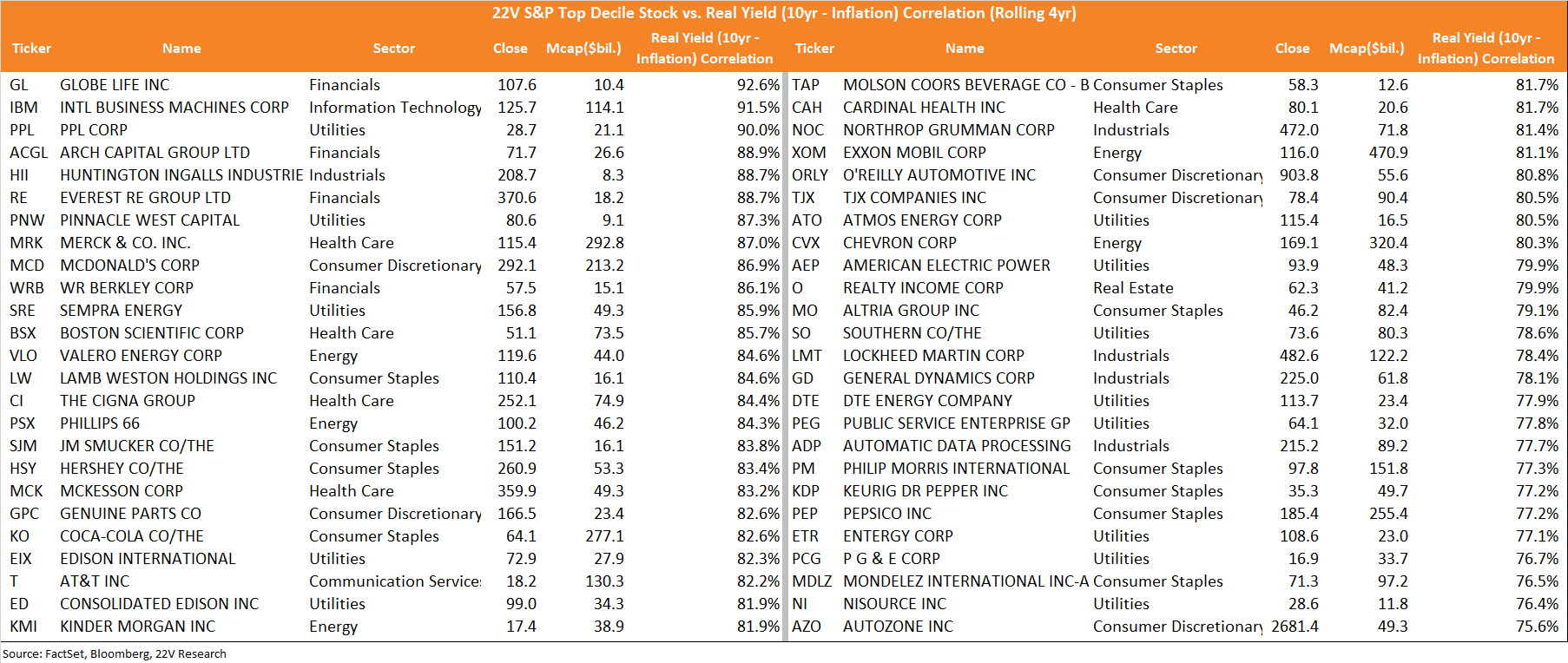
At the end of the report, we list the S&P top decile names positively correlated with implied real yield, which should benefit from the recovery, and the short side names which are most negatively correlated with implied real yield as well.
Divergent Equity & Bond Fund Flows: After a broad outflow from equity, bond, and commodity funds during the early part of the Fed rate hiking cycle last year, cumulative flows for equity and bond funds have diverged. Equity funds continue to see broad outflows while bond funds have rebounded this year as yields back up. Default rates remain low, and rising yields have made IG/HY bonds relatively more attractive. What is interesting is equity flows have not increased despite the S&P rallying 15% since October and recovering ALL its bank failure losses.
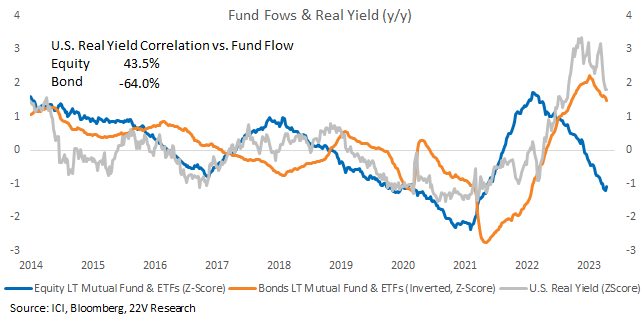
Historically, U.S. real yields have been positively correlated with equity fund flows and negatively correlated with bond flows. The early phase of the rate hike cycle, where money moved rapidly out of equities, was unusual but consistent with the rotation out of speculative names that led during the ZIRP period. Stock PEs do tend to decline as expected real yields increase, and 2022’s losses were ALL PE contraction. Continued bond inflows suggest investors are positioning for a recessionary backdrop of falling inflation and weakening growth.
Within bonds, flows into investment grade vehicles have been stronger than flows into high yield, which are more impacted by both real yields and credit trends. High yield flow volatility has been high this year, especially since early February.
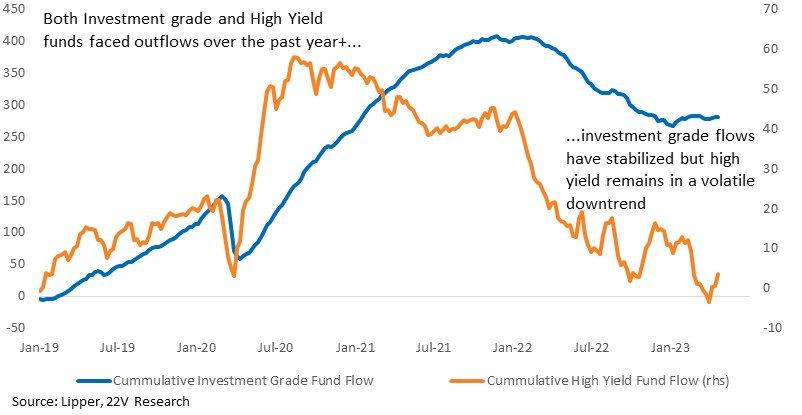
Interestingly, fund flow changes for high yield funds are less correlated with the equity ratings. Though S&P 1500 stocks with lower credit ratings continued to underperform into April, high yield bond flows increased sharply. This is another sign that credit risk remains low despite banking headwinds. High yield spreads have narrowed back below their pre-SVB failure level.
Pre-COVID, the S&P used to be well correlated with equity fund flows, but that trend has been broken for a few years. Continued outflows from equity funds don’t suggest a near-term decline for the S&P. Our fair value range remains 3800 – 4200 under the current macro/earnings backdrop. P/E expansion has been the major contributor to the S&P’s 8.6% gain this year, while EPS dragged -1.3%. We expect earnings to beat expectations, but they are still set to decline.
As inflation expectations have stabilized around 2.5%, forward real yield should be more impacted by U.S. 10yr trends. The less severe than feared bank fallout, at least so far, has led to a rebound in the U.S. 10yr yield and implied real yields. Our portfolio designed to profit from rising real yields has recovered since early April after a SHARP decline after SVB’s collapse. Expected 1Q earnings beats together with better macro readings to push implied real yields higher still.
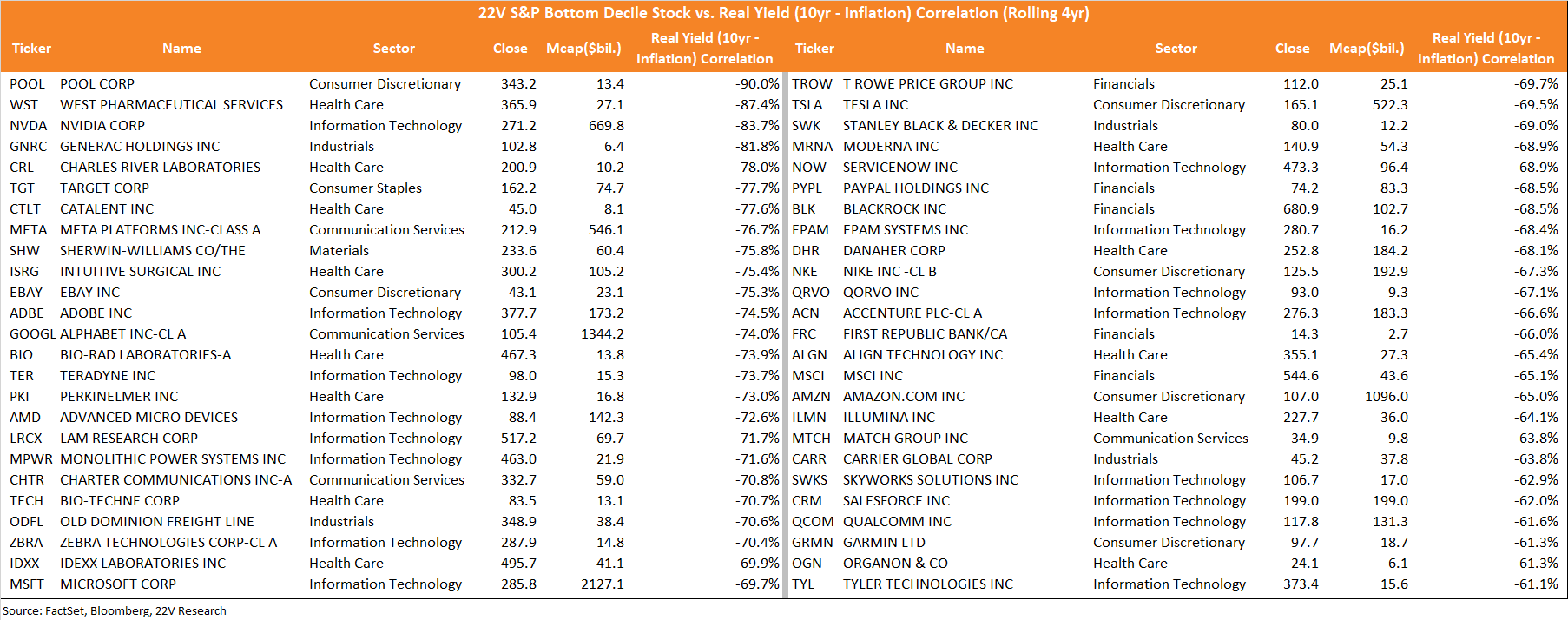
Below are the S&P top decile names most positively correlated with U.S. real yield, which are more likely to benefit from near term recovery.
The short side consisting of the S&P names most negatively correlated with U.S. real yield are below. These names face more downward pressure as real yields continue to rebound from their relative low.