EARNINGS PREVIEW WEBINAR: We are hosting about 1Q earnings season webinar today at 10:30 AM ET where we will discuss what sentiment and other quant tools are telling us about earnings season, and update bank sentiment. Registration link HERE.
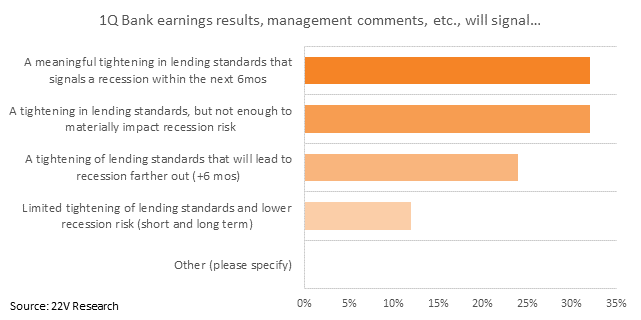
SUMMARY: Bank earnings are rolling in. So far, most have beaten estimates. Those estimates were revised sharply lower over the past month though, so the bar was low. More importantly, commentary and sentiment around credit demand/availability have been okay. At least relative to investor expectations that bank earnings/commentary would signal a tightening of lending standards that increased recession risk (HERE). Again, a low bar that the banks are clearing.
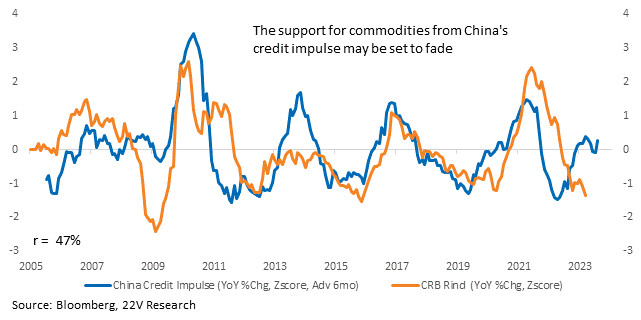
Per Michael Hirson, 22V China analyst, China’s Q1 GDP report was strong and nicely balanced in terms of the breadth of the recovery. However, the potential for stimulus withdrawal is a watchpoint given Beijing’s concern over financial risks. New bank lending, which reached an all-time high, is set to fade (HERE). That limits the lift to commodities, which Colin Fenton noted has faded suddenly in April on post-1Q signs of cooling demand for jet fuel and diesel (HERE).
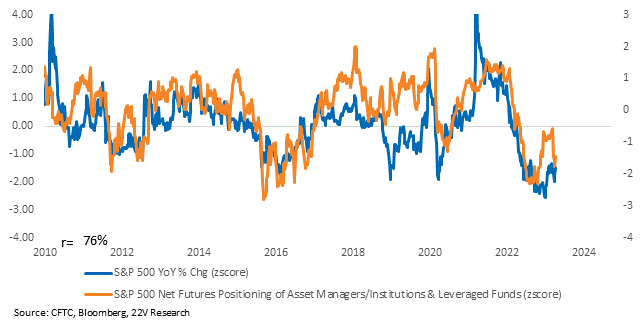
Growth IS slowing, but positioning has been too bearish relative to econ growth/earnings that have been consistently better than expected. Understanding that bearish positioning was consistent with a too quick pulling forward of recession risk has served us well for the past 8 months. Net positioning of asset managers and institutions/leveraged funds in S&P futures had a 92nd percentile increase w/w, so investors broadly are starting to discount lower near-term recession risk. BUT, positioning is still below its 10th percentile.

In the U.S., the Empire manufacturing PMI beat expectations, including a massive m/m increase in new orders. The good news is that readings is another sign that near-term recession risk is low. The bed news is it reinforces the likelihood the Fed will need to keep financial conditions tight. Strong data like this is more rate and yield positive (higher) than it is a tailwind for risk-on assets, given the implication for more Fed hikes.
Hot data will push yields higher as it implies a higher expected real fed funds rate. Fading bank stress bias yields higher too. But a full retracement of the 10yr yields is a more difficult call. Global economic growth is still slowing and with inflation too strong, the Fed is likely to keep FC tight. YTD fluctuations in the 10yr yield have been closely tied to the term premium (compensation interest rate volatility) and the term premium is difficult to predict. Usually, it tracks implied bond volatility, but that has not been the case recently. So, the direction of travel on yields is higher, but it is too early to call for a new high.
MARKET VIEWS: Bank earnings are rolling in. Yesterday, Schwab cut its dividend, but bank deposits met analyst expectations. This morning, BofA had a strong beat. Deposits fell, but by a bit less than consensus ($1.9T deposits vs $1.88 est), while net interest income rose unexpectedly. They also mentioned strong commercial loan growth. The outlook for bank earnings is not great, but reports show few signs of systemic credit risk. The bar was low heading into bank reporting as investor expected that bank earnings/commentary that signaled a tightening of lending standards and increased recession risk (HERE).
Per Michael Hirson, 22V China analyst, China’s Q1 GDP report was strong and nicely balanced in terms of the breadth of the recovery. However, the potential for stimulus withdrawal is a watchpoint given Beijing’s concern over financial risks. New bank lending, which reached an all-time high, is set to fade (HERE). That limits the bullish signal to commodities, which, per Colin Fenton, have faded suddenly in April on post-1Q signs of cooling demand for jet fuel and diesel. The crude oil supply cuts announced by OPEC+ are also weighing on margins and sentiment. Oil refiners in Taiwan, Singapore, and South Korea are indicating that they may have to cut their utilization rates in response.
Investors have been too bearish as econ growth/earnings have been consistently better than expected and financial conditions have stabilized. Understanding how bearish investors are and the fact that they were pulling forward recession risk too quickly has served us well for the past 8 months. Net positioning of asset managers and institutions/leveraged funds in S&P futures had a 92nd percentile increase w/w but remains below the 10th percentile. Investors are still bearish despite a sizable shift in positioning.
Concerning economic growth, the Empire manufacturing PMI beat expectations, including a massive m/m increase in new orders. This is good news in the sense that recession is not right in front of us. But, just reinforces that the Fed likely needs to keep financial conditions tight. And we combine all the regional PMIs anyway because there is virtually no signal from just one series. Strong data like this is more rates positive (yields higher) than risk-on, given the implication for more Fed hikes.
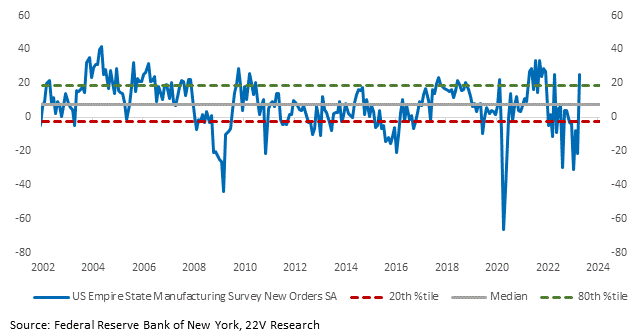
Hot data will push yields up via a higher expected real fed funds rate, and fading bank stress biases yields higher, but a full retracement of the 10yr yields is a much more difficult call. Growth is still slowing and there is more fragility in the system. Also, the YTD fluctuations in the 10yr yield have a lot to do with the term premium (compensation for the risk of interest rate volatility)…
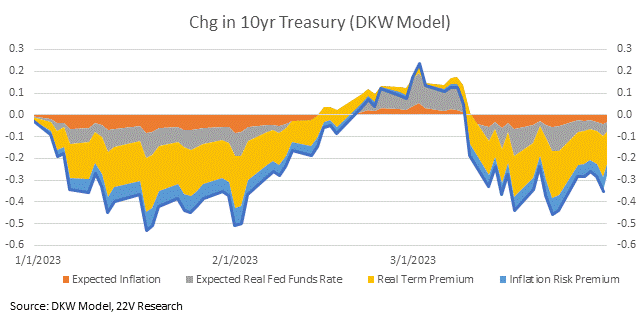
…and the term premium has been difficult to predict. Usually, it tracks implied bond volatility, but has not at all recently. So, there may be a higher expected real fed funds rate, but that still may not push the 10yr yield back up to its cycle high.
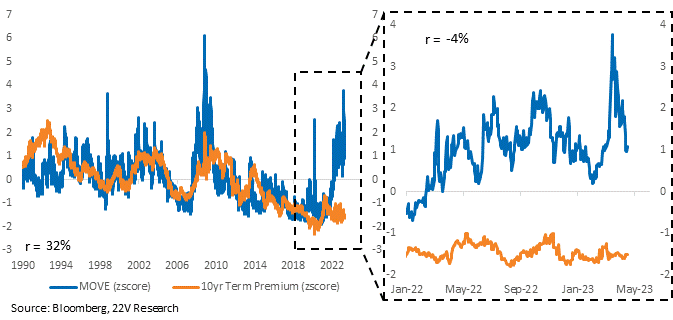
CHART HIGHLIGHT: John Roque sent around a good chart highlighting weakness in NVDA, the best performing stock in the S&P ytd. Per John, “momentum is retreating faster than price. I continue to think NVDA is going to weaken.”
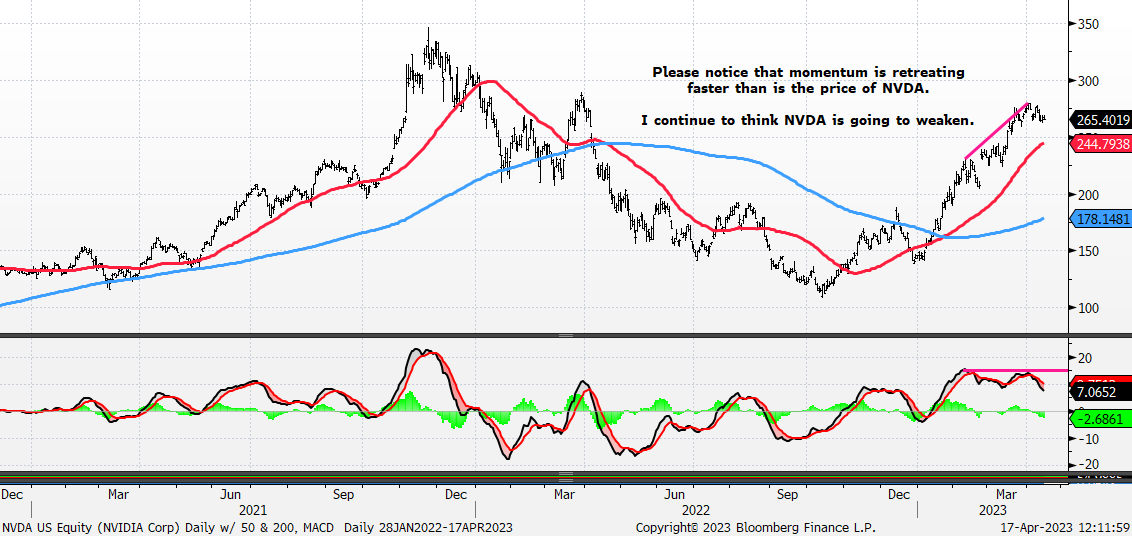
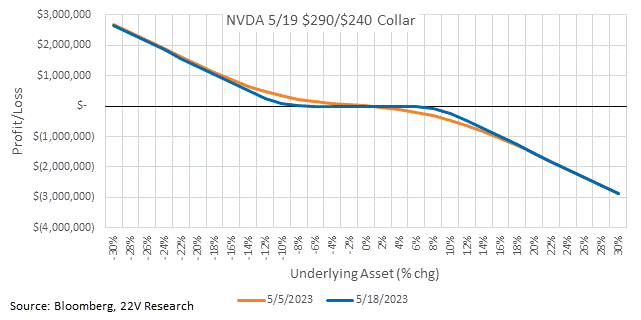
John likes selling NVDA more than shorting it. Through options, we like selling calls to fund puts. For example, sell NVDA 5/19 $290 calls and buy NVDA 5/19 $240 puts, which is self funding. The $290 call is just above the March 2022 high. $240 represents a 23.6% retracement of NVDA’s gain from its low in Oct ’22 to its high in early April 2023.