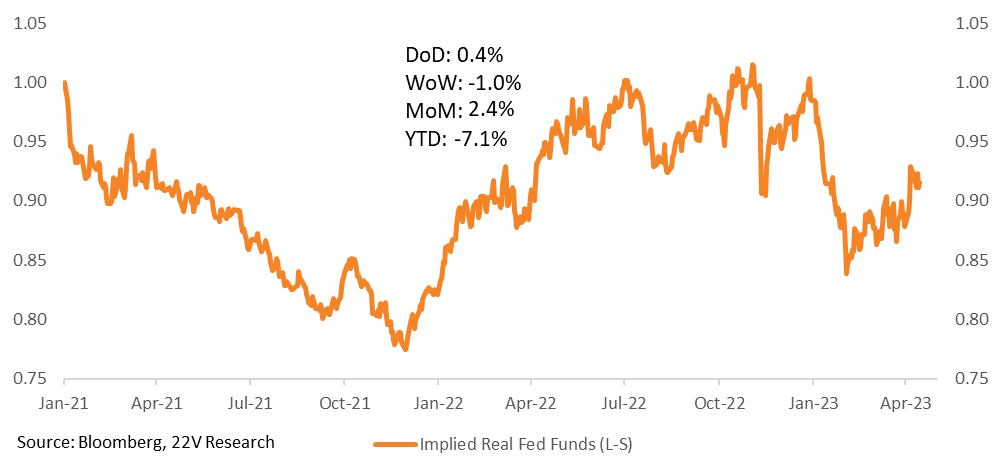
SUMMARY: Lower near term recession risk, systemic bank risk, and/or a shock tightening in lending standards looking much less likely (see the decline in the use of emergency lending facilities and the uptick in C&I loans HERE), along with inflation that remains well above the Fed’s target should favor stocks that benefit from a higher real fed funds rate (we can send the list). The above is also why Cyclicals outperformed last week and yields moved higher.
Last week’s macro data was not encouraging from an overall market standpoint though and the risk reward skew is now much less compelling. Current wage trends suggest inflation remains too high and that economic growth needs to slow more. Economic growth is already at a much lower level that last year, so the need for additional slowing increases longer term recession risk. That is a headwind for risk assets. The path to a soft landing is through lower wages AND economic stability. In economic terms, the price price spiral unwinds naturally as one-off shocks subside. That is the dovish theory. Last week’s data did not support that dovish theory. Side note… be open minded as this theory could work out over a longer time frame. The fact is, we have no idea how things will play out, BUT conviction on economic outcomes is still high.

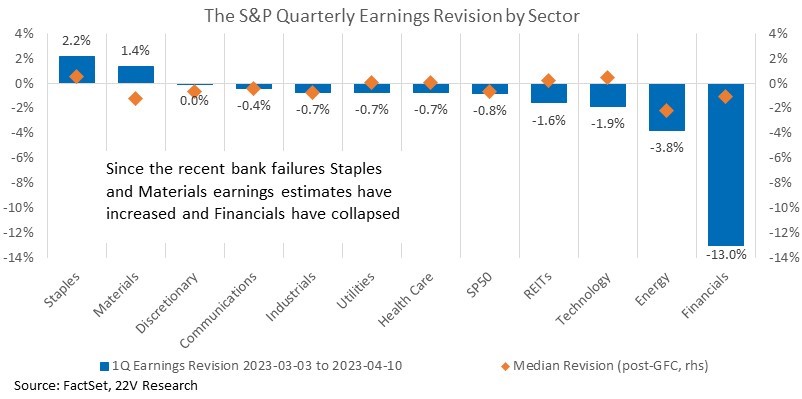
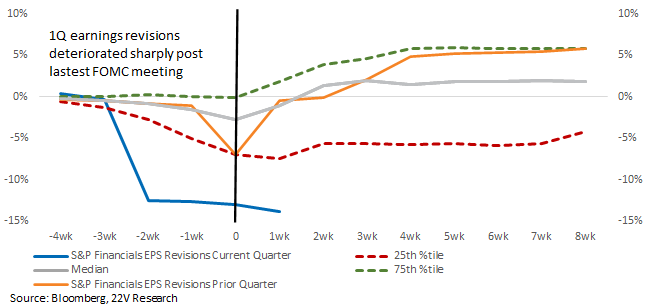
The financial sector’s earnings expectations have fallen the most compared to other sectors, with a -13pp decline relative to expectations before bank failures. Those estimates have deteriorated further since reporting started, falling to -13.8%. On the one hand, it is encouraging that revisions have fallen so fast. We don’t know if Financials have been revised low enough or not, but the major banks did not confirm worst case credit demand/availability last Friday. On the other hand, what regional banks say over the next few days will be important to setting the broader tightening tone.
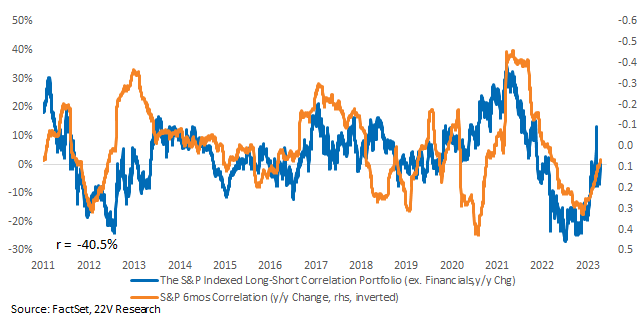
Lower correlations remain one of the highest conviction themes for the year, and focusing on correlations is more important when the S&P is near the high end of its range. Lower correlations will support stocks with higher idiosyncratic influence.
MARKET VIEWS: Cyclicals outperformed, and interest rates increased as CPI, retail sales, and large Bank earnings commentary were not as negative as feared. Investor concerns over elevated near-term recession risk, which could potentially show up in data now, was unusually high. That helps explain the near record short position in S&P net futures positioning put on before the payroll report 10 days ago. Lower near-term recession risk, systemic bank risk, and/or a shock tightening in lending standards becoming much less likely (see the decline in the use of emergency lending facilities and an uptick in C&I loans HERE), along with inflation that remains well above the Fed’s target should favor stocks that benefit from a higher real fed funds rate (we can send the list).
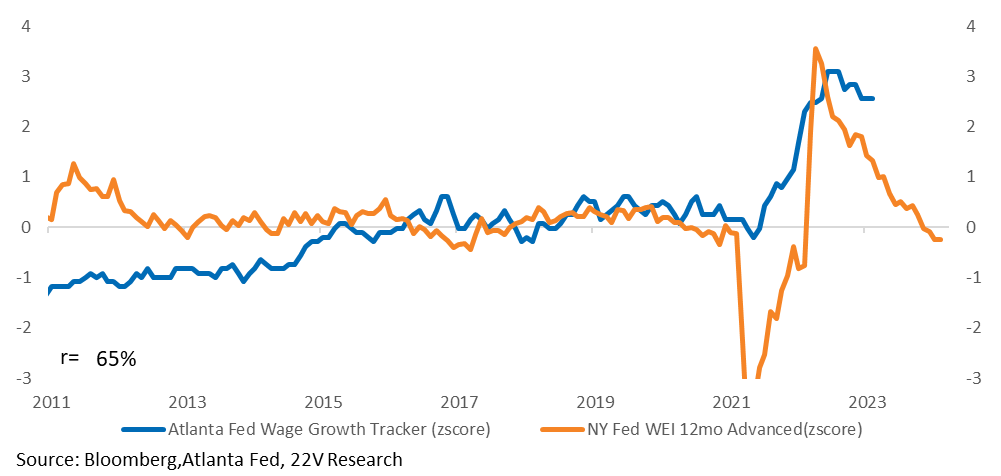
Last week’s data were not encouraging from an overall market standpoint though. Current wage trends suggest inflation remains too high. Unless that changes, it suggests economic growth needs to slow more to slow wages/inflation. With economic growth already much lower over the past year, the need for activity to slow further increases longer-term recession risk and is a headwind for risk assets. The New York Fed Weekly Economic index suggests 1.5%ish underlying demand growth and wages are still elevated relative to that (see below). That should change going forward (wages lower as economic growth remains at or below trend), but for now, wages aren’t coming down fast enough. Recall, the path to a soft landing is through lower wages AND stable economic growth. Last week’s data did NOT support that outcome.
Financials Earnings Focus: At the sector level, earnings expectations for Financials have fallen most of any sector, down -13pp relative to expectations BEFORE the bank failures. That is a 92nd percentile decline. The number dropped further to -13.8% after banks reported on Friday. We don’t know if Financials have been revised low enough or not, but it is encouraging that revisions have fallen so fast. Those revisions will not help if management teams signal a broad and deep deterioration in credit demand/availability, but as the Quant team covered in detail (HERE) tis morning, the major banks did not confirm worst case credit demand/availability last Friday. What the regional banks say the next few days will be important to setting the broader tightening tone.
S&P Financials earnings revision declined the most in the week of Mar. 24th (the FOMC meeting) and have stayed around those levels. The decline in Financial EPS revisions is dramatic relative to history.
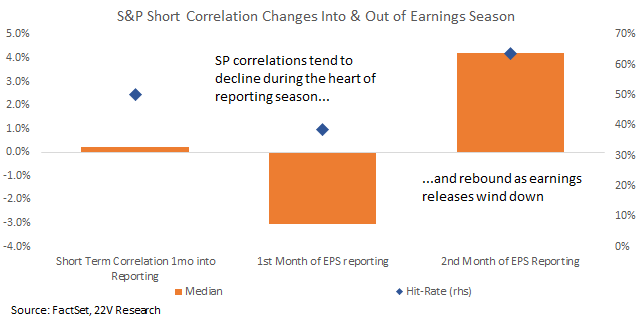
Lower Correlations: S&P IPC tends to decline during reporting season as investors adjust their expectations based on newly available data. Lower correlations remain one of our highest conviction themes for the year. Focusing on correlations is even more important, in our view, now that the S&P is near the high end of its fair value range.
S&P 1-mo corrleations have already moved back down following the bank shocks. 6 months correlations will continue to follow.
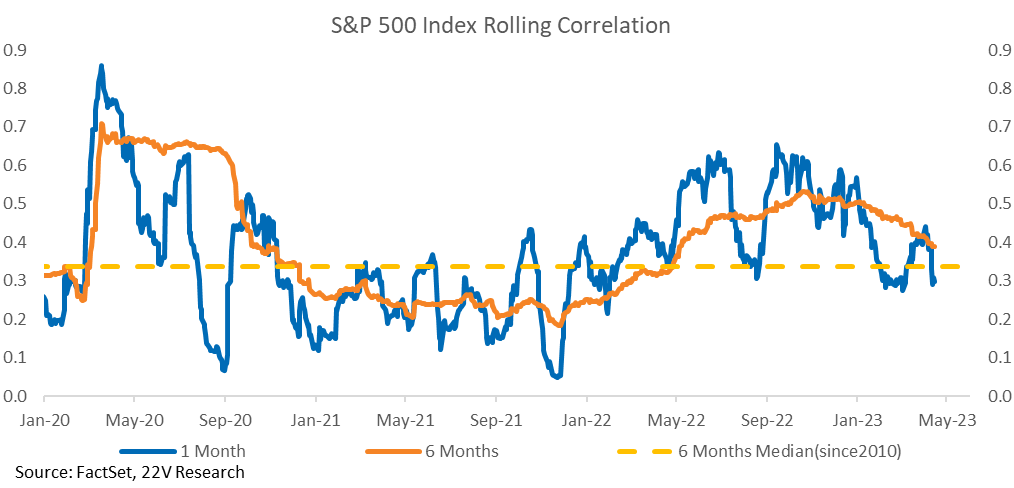
Lower 6 month correlation will supprt stockst that benefit from lower correlations relative to those that don’t. Stocks that benefit from lower correlations had a tough month as bank failures caused a broad increase in the comovement of stocks. But lower near term recession risk (data still ok) and systemic bank issues fading should reverse that trend.