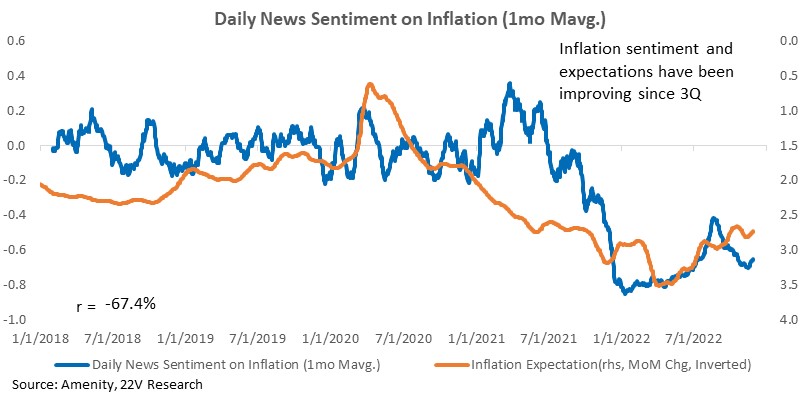
Commodity prices have eased, and supply chain bottlenecks are clearing (HERE), allowing forward actual and expected inflation readings to move lower. News sentiment toward inflation has stabilized and moved modestly higher as well. Returning core inflation to 2% will take years or a deep recession, but as growth slows and financial conditions remain tight over the coming quarters, inflation should slip even further.
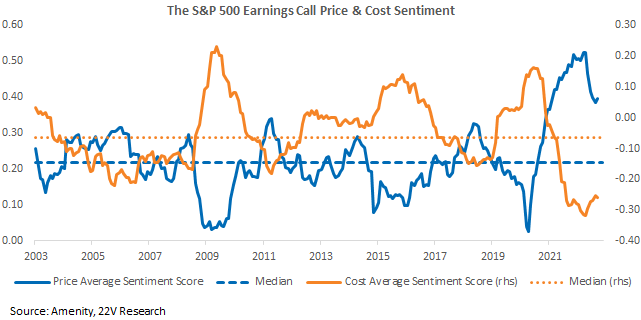
Pricing sentiment has fallen sharply while negative sentiment toward costs have improved, indicating managers are less worried about input costs but also less able to raise prices. The pricing and cost issues contributing to rising inflation are easing. Tightening financial conditions added downward pressure on pricing power sentiment. From an economic and policy standpoint, that is a good thing, but it also puts pressure on margins.
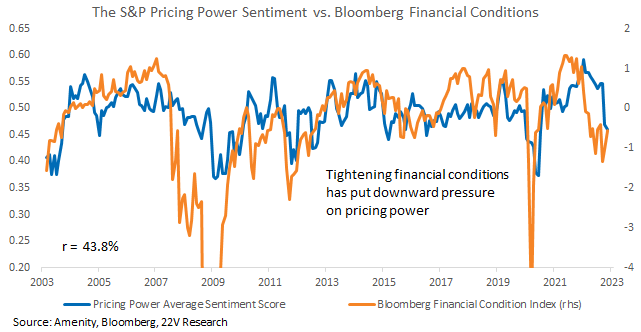
To lower inflationary pressures, the Fed NEEDS companies to have less pricing power, and tightening of business and consumer conditions has helped them achieve that goal. With inflation set to remain too high for the Fed for an extended period, aggregate pricing power will remain under pressure, making companies that can maintain pricing power more attractive.

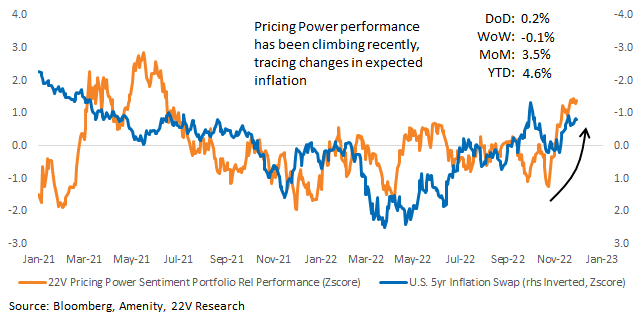
Returns to our high pricing power sentiment basket have climbed sharply in 4Q, especially since late October, as investors started discounting slower economic growth. Inflation dropped in 4Q as well, which tends to be negatively correlated with pricing power sentiment basket returns.
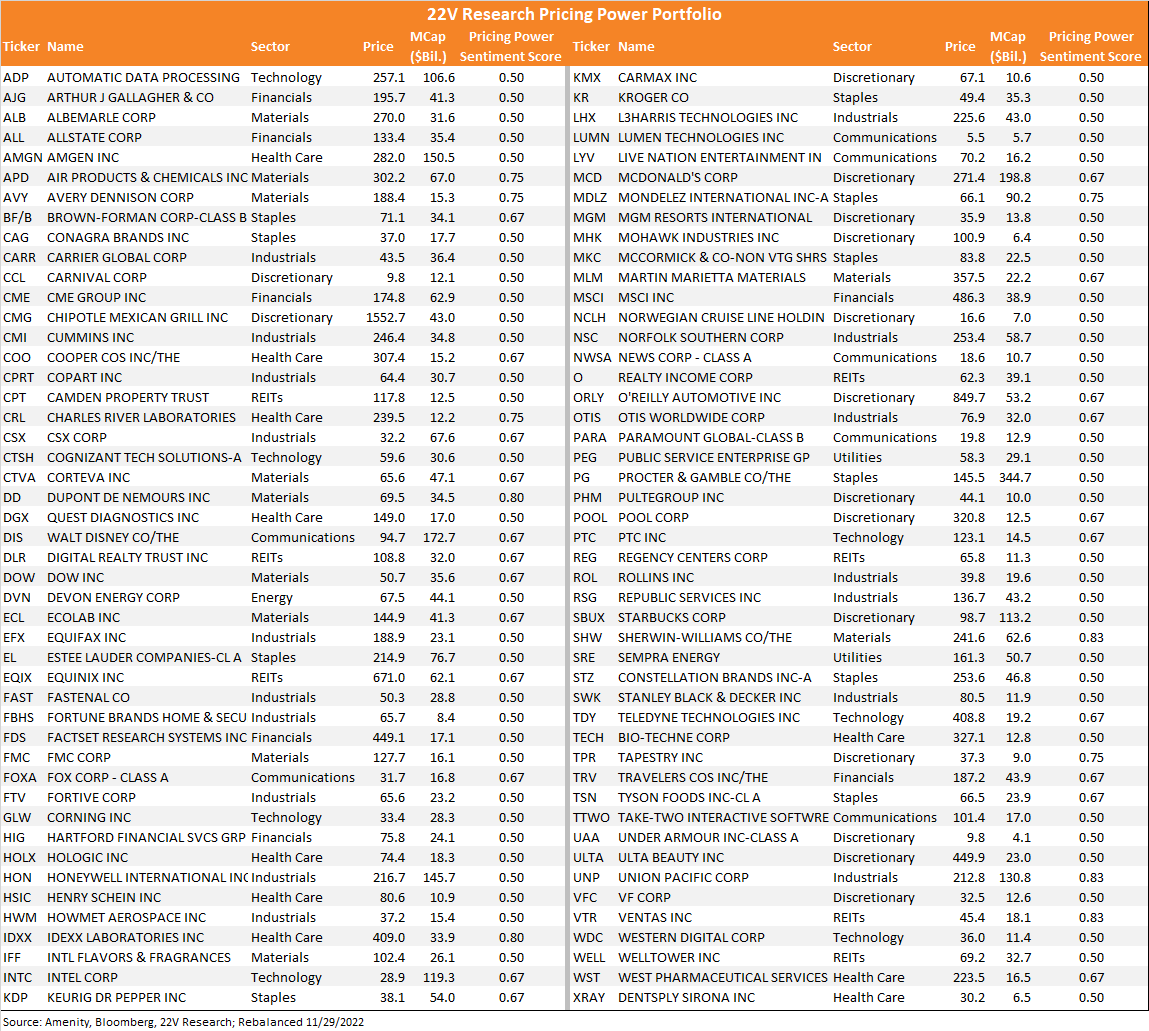
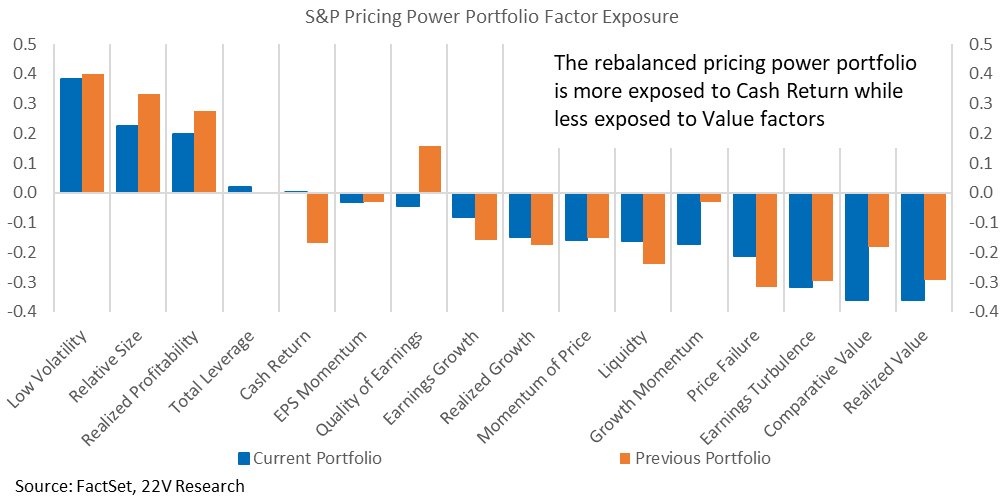
We rebalanced our pricing power portfolio and consistent with the decline in aggregate pricing power sentiment, the number of companies falling into our basket has dropped from 106 to 94. Factor exposure of the basket remains more risk-off and the rebalance increased exposure to Cash Return and Growth factors while reducing exposure to Value and Quality.
At the end of this report, we list the newly rebalanced pricing power portfolio names. As economic growth slows and inflation declines, positive pricing power sentiment names are more likely to maintain profitability and should be a valuable screening factor.
Pricing Power Screening Becoming More Profitable: Commodity prices have eased, and supply chain bottlenecks are clearing (HERE), allowing forward actual and expected inflation readings to move lower. News sentiment toward inflation has stabilized and moved modestly higher as well. Returning core inflation to 2% will take years or a deep recession, but as growth slows and financial conditions remain tight over the coming quarters, inflation should slip even further.
S&P management sentiment towards pricing and costs reached extreme levels in 2Q and have reversed significantly since. Pricing sentiment has fallen sharply while negative sentiment toward costs have improved, indicating managers are less worried about input costs but also less able to raise prices. The pricing and cost issues contributing to rising inflation are easing. From an economic and policy standpoint that is a good thing, but it also puts pressure on margins.
In addition, the tightening financial conditions in 3Q has added downward pressure on pricing power sentiment. To lower inflationary pressures, the Fed NEEDS companies to have less pricing power, and tightening of business and consumer conditions has helped them achieve that goal. With inflation set to remain too high for the Fed for an extended period, aggregate pricing power will remain under pressure, making companies that can maintain pricing power more attractive.
Returns to our high pricing power sentiment basket have climbed sharply in 4Q, especially since late October, as investors started discounting slower economic growth. Inflation dropped in 4Q as well, which tends to be negatively correlated with pricing power sentiment basket returns.
We rebalanced our pricing power portfolio today to reflect sentiment readings at the end of 3Q reporting. Consistent with the decline in aggregate pricing power sentiment, the number of companies falling into our basket has dropped from 106 to 94. Factor exposure of the basket remains more risk-off with Low Volatility the largest factor exposure, and Value and Earnings Turbulence the lowest. The rebalance also increased exposure to Cash Return and Growth factors, while reducing exposure to Value and Quality.
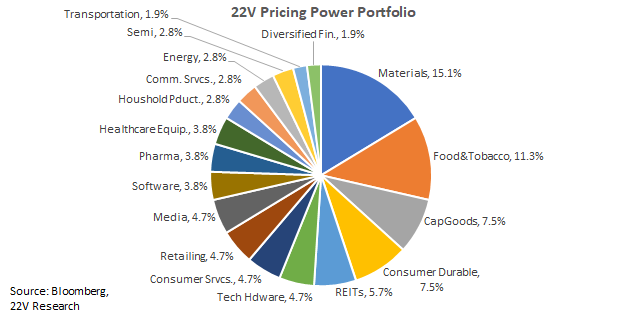
Industry group exposure of the pricing power portfolio remains diverse with Materials, Industrials and Consumer focused industry groups such as Food & Tobacco and Consumer Durable. These are also industry groups most overweighted relative to the S&P weighting.
Below we list the newly rebalanced pricing power portfolio names. As economic growth slows and inflation declines, positive pricing power sentiment names are more likely to maintain profitability and should be a valuable screening factor.