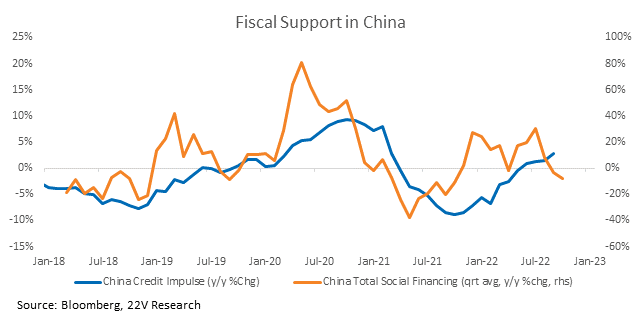
SUMMARY: A majority of investors we polled expect today’s CPI release to be risk-on (HERE). This is the first CPI survey since we started running them in June that shows investors are optimistic. Consistent with expectations of the market reaction, most investors (52%) think core CPI will print roughly in-line (+/-10bps). We don’t have a guess on CPI, and although the bar for a risk-on reaction seems high, a soft inflation print will still be risk-on and vice versa. Good or bad data will overwhelm sentiment. FYI, there are 5 Fed speakers scheduled for today, which could amplify moves. I.e., hot CPI might lead to investors focusing on anything hawkish from speakers. Lower than expected CPI could lead to the opposite. The strength of the USD going into the CPI is inconsistent with people setting up for a weaker reading. Although the USD move could be more China related (see below).
On a very hot CPI number, expect significant yield curve flattening as most of the damage would be felt in 2yr yields. 10yr yield moves could be muted given a hot CPI will increase hard landing odds. Defensives would outperform. Given record short interest in 2yr bond futures (HERE), yield curves are highly likely to steepen on a soft number, favoring Cyclicals.
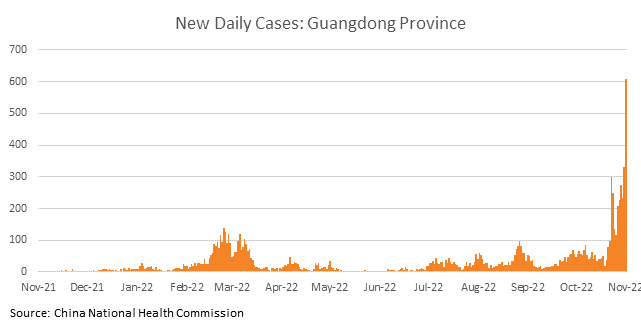
22V head of China research, Michael Hirson, noted yesterday that markets are getting a double whammy on China Covid: 1) realization that hopes for near-term pivot on zero-Covid were unrealistic, and 2) new Covid cases hitting their highest point since April, centered in a key economic hub (Guangdong). Michael does not expect this new round of outbreaks will force Beijing to try a more flexible approach to containment. The leadership’s lesson from Shanghai was that they waited too long to lock down. Michael expects the response in Guangzhou to be vigorous. More HERE. This is a headwind for oil and broader commodities near term. Oil had a 94th %tile decline yesterday, and an 84th %tile decline w/w.

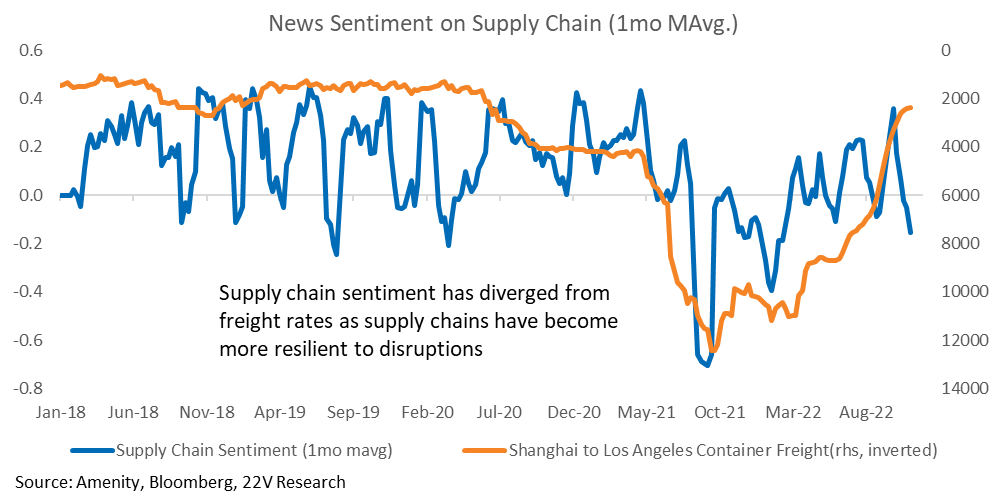
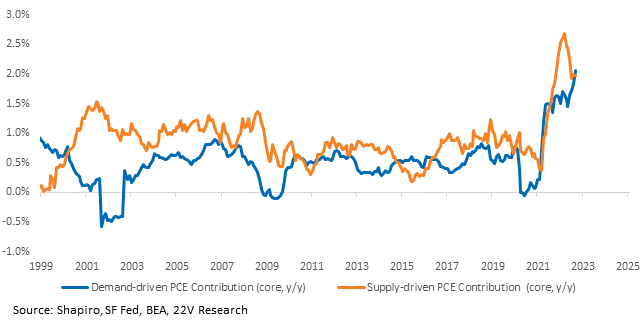
Chinese local authorities have gotten better at minimizing disruptions to production, including through “closed loop” operations where workers don’t leave. Michael doesn’t expect broader supply chain problems from the lockdown. China will remain a disinflationary force over the coming quarters. Freight rates, delivery times, backlogs, etc are still normalizing and that will continue. The supply-driven increases in PCE (per a model run by the SF Fed) have rolled over. Demand-driven remains the primary driver of US inflation. Fortunately demand appears to be moving below trend, it just a question if the shift to below trend demand will show up in today’s CPI report.
Full report below…
MARKET VIEWS: A majority of investors we polled expect today’s CPI release to be risk-on (HERE). This is the first CPI survey since we started running them in June that shows investors are optimistic. Consistent with expectations of the market reaction, most investors (52%) think core CPI will print roughly in-line (+/-10bps). We don’t have a guess on CPI, and although the bar for a risk-on reaction seems high, a soft inflation print will likely still be risk-on and vice versa. Good or bad data will overwhelm sentiment.
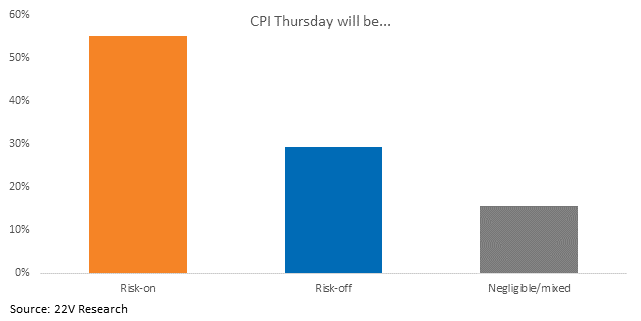
Crypto drama is making market moves weird. 10yr yields may react less because if, for example, CPI is hotter than expected, a lower growth component will counteract higher short rates. That move is playing out modestly overnight. Bitcoin may mute or aggravate the equity reaction. It’s hard to guess at what the equity reaction would be to a soft CPI but Bitcoin down another -10%.
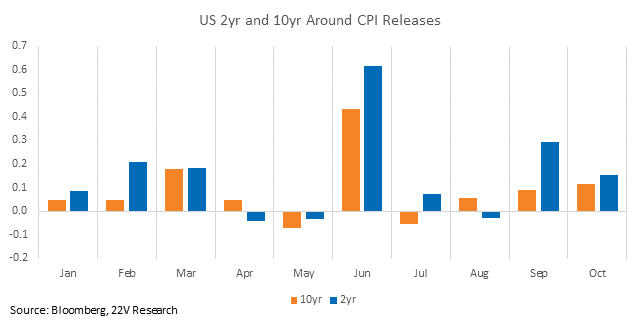
Oil, yields, and stocks are also getting hit by China covid problems. Oil had a 94th percentile decline yesterday, and an 84th percentile decline w/w. Fresh lockdown headlines (here) are dragging the commodity lower again this morning, and Asian equities are getting hit hard overnight.
Michael Hirson has been all over this. Per Michael, markets are getting a double whammy on China Covid: 1) realization that hopes for near-term pivot on zero-Covid were unrealistic, and 2) new Covid cases hitting their highest point since April, centered in a key economic hub (Guangdong). Guangdong is #1 by size of economy (about 10% of national GDP) and a key export hub. Guangzhou, the capital city, is now in partial lockdown. Michael does not expect this new round of outbreaks will force Beijing to try a more flexible approach to containment. The leadership’s lesson from Shanghai was that they waited too long to lock down. Michael expects the response in Guangzhou to be vigorous. More HERE.
Beyond the hit to the domestic economy, there could be disruptions to global supply chains if multiple cities/production sites in Guangdong are forced to lock down. That’s important to monitor but Michael doesn’t think we’ll see anything on the scale of Shanghai’s lockdown. Chinese local authorities have gotten better at minimizing disruptions to production, including through “closed loop” operations where workers don’t leave. Supply chain sentiment is dropping but freight rates, delivery times, backlogs, etc., are still normalizing. Sentiment has diverged from steadily improving rates, a trend we expect to continue.
The lockdowns don’t pose a meaningful inflationary risk. The supply-driven increases in PCE (per a model run by the SF Fed) have rolled over. Demand-driven increases remain an issue.
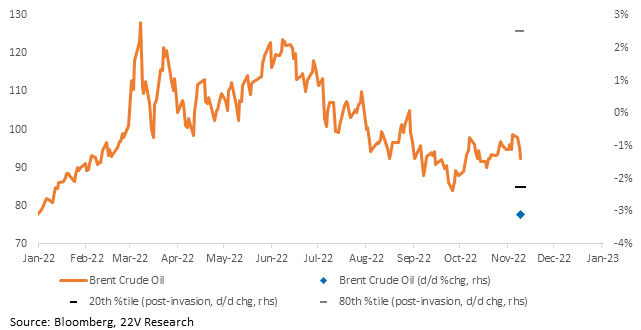
Overnight, China aggregate financing declined from $3.5T CNY to $908B while loan growth fell from $2.5T CNY to $615B. Both missed estimates. Michael does not expect major additional stimulus though this will increase pressure on the central bank to expand financing programs for the private sector. Beijing’s appetite for further loosening is limited, however, by concerns over financial risks, the weak state of local government finances, and pressures on the exchange rate.