As the length of the 2022 bear market has increased, S&P stock movements have become more highly correlated. That is true at the return AND the ranking level – stocks are moving more alike and from a factor standpoint, appear more alike. Short-term return correlations have moved lower as equities have rallied in 4Q, but both short and long-term correlations are in their 93rd %tiles historically. The bottom line is that profiting from stock selection has become increasingly difficult as broad market movements dominate volatility.
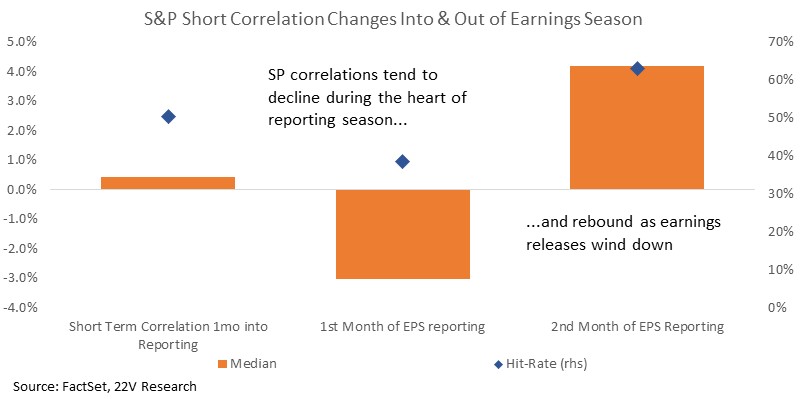
Historically, S&P names become less correlated during earnings reporting season as investors adjust individual stock prices to reflect new fundamental and expectations data. Currently, short-term correlations are also easing on expectations that the Fed will soften its rhetoric around tightening, given the clear slowing of economic activity. Correlations are typically highest during recessions and bear markets. Further easing of recession risk would help push correlations lower, allowing more room for alpha generation. Put another way, lower correlations make it easier for investors to profit from stock selection.

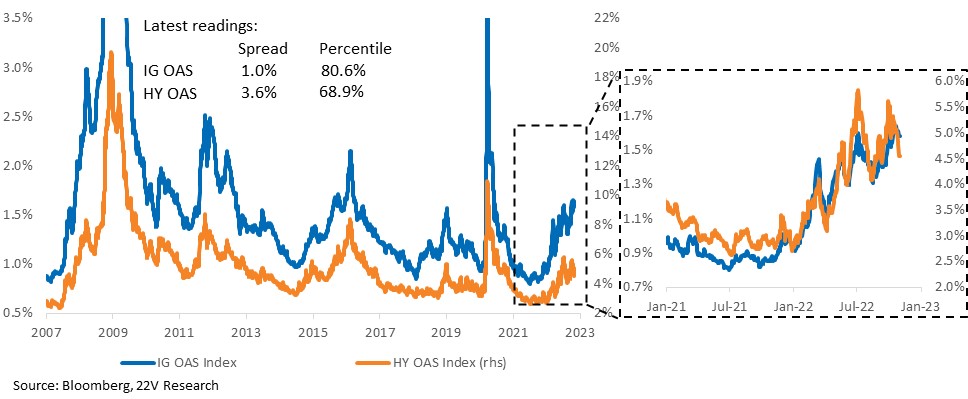
Recessions are rare and poorly defined, so it is important to not think in binary (recession/non-recession) terms. The current tightening cycle has been unusual in that consumer and corporate balance sheets remain strong. In corporate credit, spreads have widened out, but are WELL below recession or even sharp slowdown levels. Even if the current slowdown end in an official recession, it will likely be mild, which should allow for the easing of VERY high stock, industry, and factor correlations.
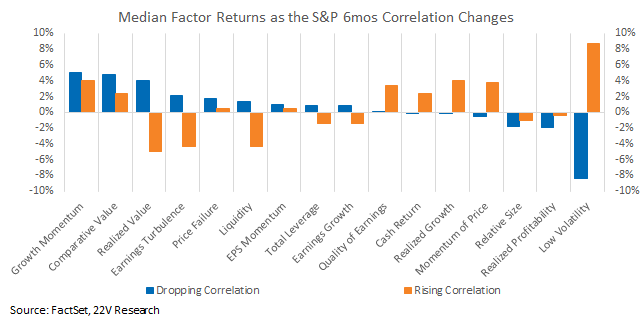
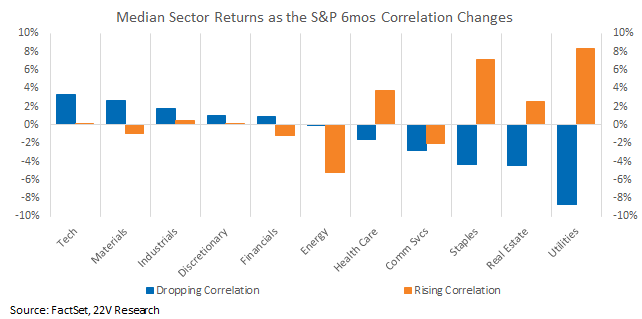
During periods of declining correlations, Growth Momentum, Value, and Earnings Turbulence have been the leading factors, while Low Volatility and Realized Profitability faced the largest headwinds. At the sector level, Cyclicals benefit most while Defensives all underperformed.
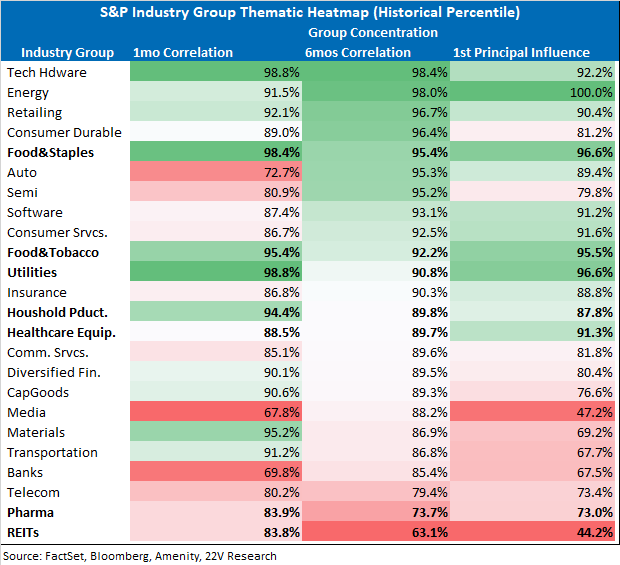
Recently, the correlation at the industry group level has shifted with Defensives correlation moved higher, especially industry groups in Staples and Utilities. It reflects more downward pressure on Defensives recently. At an absolute level, Energy and Banks remain the most correlated industry groups and have the highest macro volatility influence.
Implications of Declining Correlations: As the length of the 2022 bear market has increased, S&P stock movements have become more highly correlated. That is true at the return AND the ranking level – stocks are moving more alike and from a factor standpoint, appear more alike. Short-term return correlations have moved lower as equities have rallied in 4Q, but both short and long-term correlations are in their 93rd %tiles historically. The bottom line is that profiting from stock selection has become increasingly difficult as broad market movements dominate volatility.
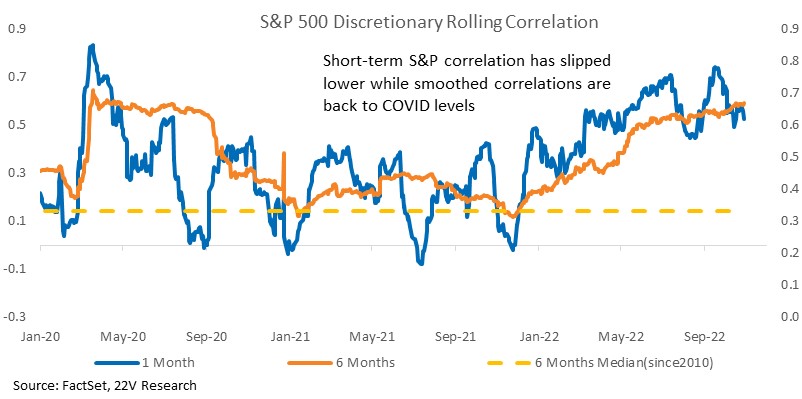
Historically, S&P names become less correlated during earnings reporting season as investors adjust individual stock prices to reflect newly available fundamental and expectations data. 73% of companies are beating analyst estimates, but there have been wide divergences between stocks. The most obvious has been some of the mega-cap names that have posted double-digit declines even as equities broadly have continued to rally. Mega cap declines have caused correlations within Communications, Technology, and Discretionary to move lower.
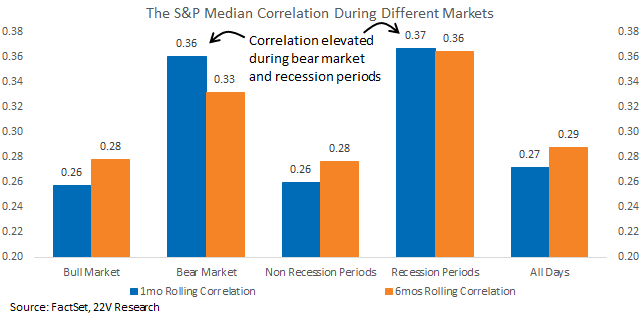
During recessions and bear market periods, the S&P correlations are typically higher than during non-recessions and bull markets. Today’s high level of correlation is above the median levels seen during historical bear markets and recessions. That is consistent with market internals such as investors positioning, the valuation spread between Cyclicals and Defensives, and Value and Growth, etc., which are at extremes not usually seen outside of recessions.
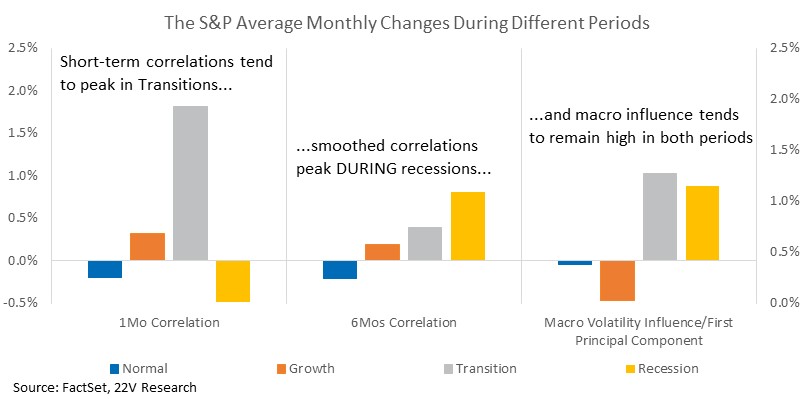
Classifying the market into four regimes based on our Macro Regime Classification Model (white paper HERE), 6mo correlations are highest during recessions historically, while short-term correlations peak during Transition (slowdowns that can end in recession or reacceleration). Given the easing of some near-term recession risks, short-term S&P correlation should move lower, unless payroll/inflation readings force investors to discount additional fed tightening.
The current tightening cycle has been unusual in that consumer and corporate balance sheets remain strong, and there has been little increase in market-implied default risk. Loan loss reserves are increasing, but consumer default rates remain low. In corporate credit, spreads have widened out, but are WELL below recession or even sharp slowdown levels and have been narrowing recently. Even if the current slowdown end in an official recession, it will likely be mild.
A no-recession/mild recession outcome to the tightening cycle would suggest a near-term decline in short-term correlations, and a peaking/rolling over of longer-term correlations. During periods of declining correlations, Growth Momentum, Value, and Earnings Turbulence are typcaly the best performing factors. Low Volatility and Realized Profitability were the worst performers as correlations eased. Those results are roughly in line with factor returns MTD as Realized Value and Earnings Turbulence have rallied.
At the sector level, falling correlations have been a tailwind for Cyclicals overall with Technology and Materials the best performers. Some of those gains are likely influenced by the study period (1990-fwd), which saw tremendous Tech gains. Defensives, especially Utilities and REITs dropped the most as correlations fell. Cyclicals returns have been improving over the past month as rising risk-free rates and slowing growth make Defensives relatively less attractive. If a recession is avoided or is mild and short, expect more relative Cyclical gains as correlations ease.
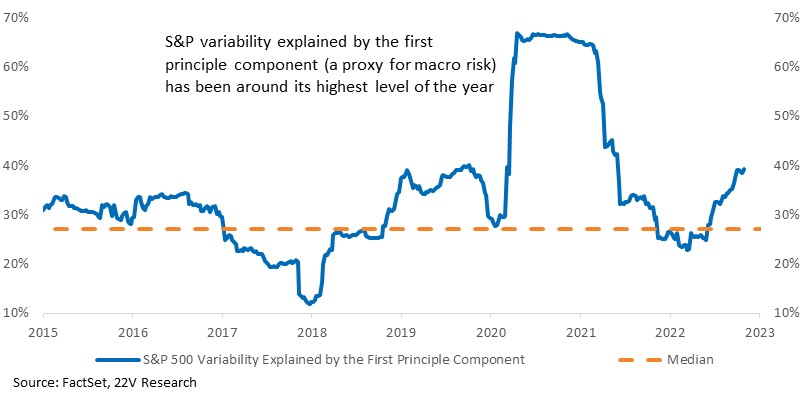
Macro influence on S&P volatility, proxied by the first principal component of PCA, stalled recently after climbing higher for most of the year. Lower macro uncertainty would allow investors to focus on stock earnings and fundamentals, reducing the influence of macro forces. The risk to that shift is a growth collapse or high inflation readings that force the Fed to ratchet rate hike expectations higher. Under the outcome, macro influence will remain high and increased deep recession risk will keep correlations at extreme levels.
At the industry level, Energy and Banks remain the most highly correlated industry groups at the absolute level. Defensives correlations and macro influence have climbed to some of their highest levels relative to history recently. Industry groups in Staples and Utilities have 1mo correlations 1) higher than the S&P and 2) at extreme levels relative to their own history. Defensives tend to trade more as a group than Cyclicals and slowing but not collapsing growth should benefit Cyclicals most. However, the extreme level of correlations within Defensives suggests there will be plays within those groups as well, with parts of Staples and Healthcare offering the greatest opportunities (Utilities correlations are almost always high).