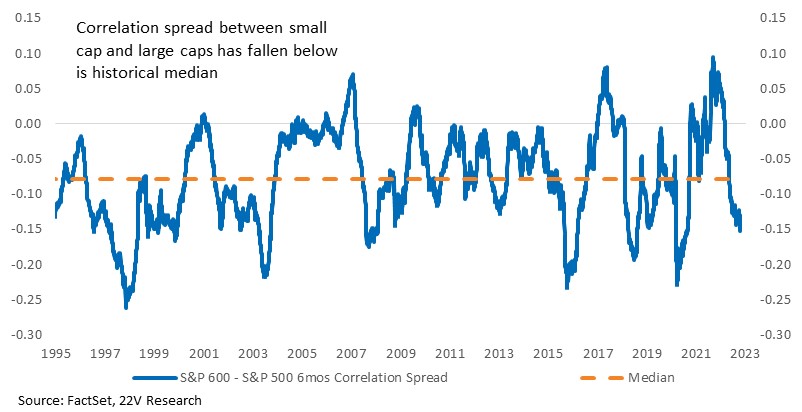
Small caps faced significant headwinds in late-’21, crashing relative to large caps from April to April. More recently, as global growth has slowed and non-Fed central banks have adopted a tighter policy stance, small-cap returns have been tracking overall market gyrations and outperforming during bear-market rallies. Small-cap correlations have declined as well. The 6mo correlation spread between small and large caps has fallen to its 12th %tile, down from a 25+ year high reached late last year. Relatively lower correlations mean it is easier to find single names in small caps that generate alpha.

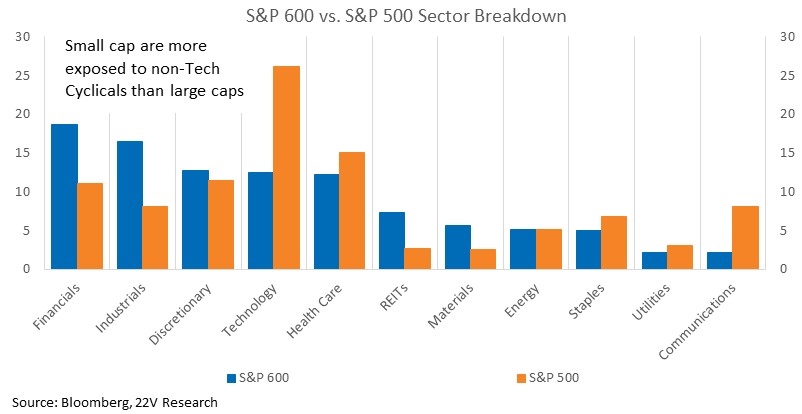
Some of the outperformance of small caps can be tied back to the sector allocation within the S&P 600. Small caps are underweight, relative to the S&P, Defensives, and VERY overweight non-Tech Cyclicals. As growth has slowed and inflation has moved lower, implied real yields have shot higher over the past ~six weeks. 1) Treasury yields have moved to new cycle highs and 2) inflation expectations have fallen toward their lowest level of the year. The result has been a spike in implied real yields, making slow-growing Defensive stocks less attractive than rising risk-free rates.
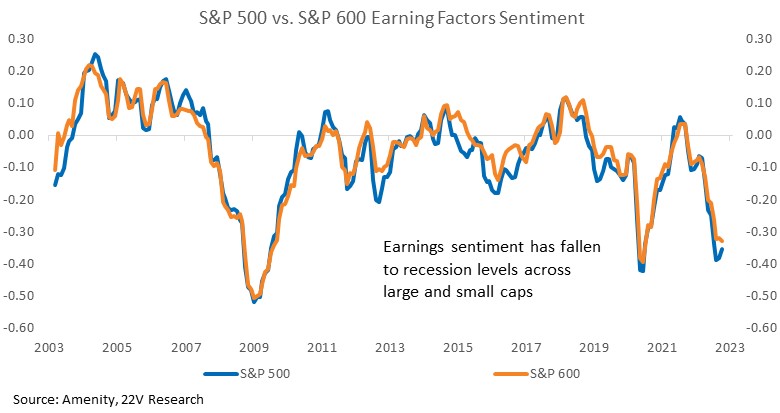
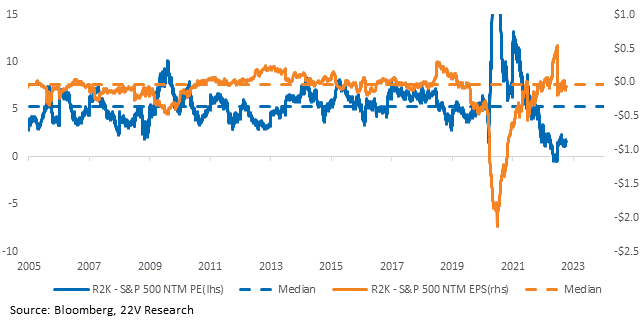
Slowing growth + higher recession risk is a risk to top-line growth, and inflation-fighting rate hikes + tight labor markets are putting downward pressure on margins. Those trends are reflected in the rapid deterioration of earnings sentiment readings across large and small-cap names. What creates the opportunity in small caps is that 1) PEs of the S&P 600 are unusually low relative to large cap PEs, and 2) NTM EPS expectations for small caps are higher. Small caps are discounting more negativity than large caps, creating an opportunity for further outperformance if there is a risk-on rally in 4Q.
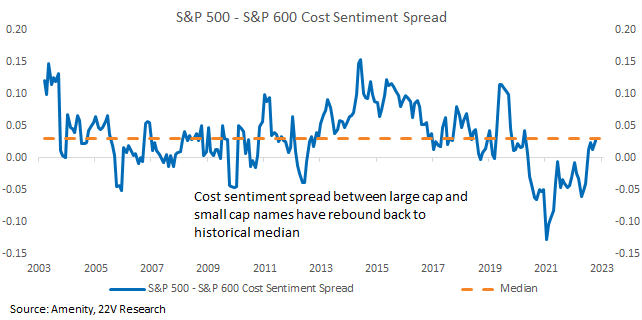
Cost sentiment for large-cap plunged earlier in the year but has rebounded recently. Overall, that suggests inflation remains a large risk to small caps. Screening for companies with positive (less negative) earnings sentiment is important when screening small caps. That being noted, easing cost pressures also offers more of a boost to small caps. At the end of this report, we highlight S&P 600 names with high earnings sentiment and Quality of Earning scores. These names tend to have better earnings prospects and earnings quality.
Small Caps a Better Place to Look for Single Stock Names: Small caps faced significant headwinds in late-’21, crashing relative to large caps from April to April. More recently, as global growth has slowed and non-Fed central banks have adopted a tighter policy stance, small-cap returns have been tracking overall market gyrations and outperforming during bear-market rallies.
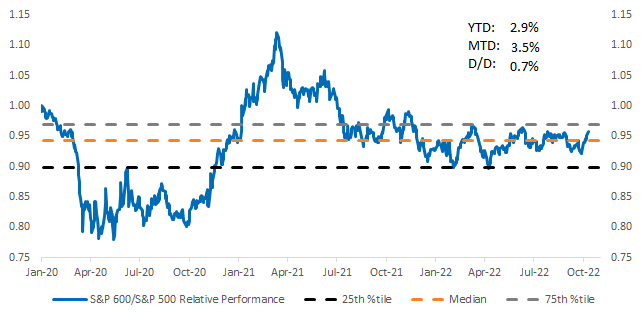
Recently, small caps have been relatively stable during down markets and have gained during rallies. Some of the performance can be tied back to the sector allocation within the S&P 600. Small caps are underweight, relative to the S&P, Defensives, and VERY overweight non-Tech Cyclicals. As growth has slowed and inflation has moved lower, Defensives have fallen out of favor, and stocks levered to rising real yields have gained.
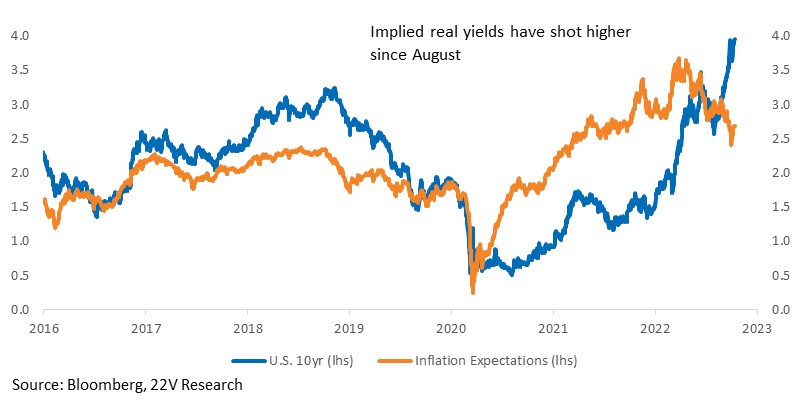
Real yields have shot higher over the past ~six weeks as 1) Treasury yields have moved too new cycle highs and 2) inflation expectations have fallen toward their lowest level of the year. Global central bankers are aggressively fighting inflation and futures/expectations markets reflect that trend. The result has been a spike in implied real yields, making slow-growing Defensive stocks less attractive than rising risk-free rates.
In addition to and tied with their sector allocation, small-cap correlations are lower than large caps. The 6mo correlation spread between small and large caps has fallen to its 12th %tile, down from a 25+ year high reached late last year. Relatively lower correlations mean it is easier to find single names in small caps that generate alpha.
Sentiment and Fundamentals Favor Small Caps: Slowing growth + higher recession risk is a risk to top-line growth, and inflation-fighting rate hike + tight labor markets are putting downward pressure on margins. Those trends are reflected in the rapid deterioration of earnings sentiment readings across large and small cap names (as we noted last Friday, pre-reporting guidance and revisions have been VERY weak – HERE). Earnings factor sentiment, measured using the Amenity natural language processing tool, is modestly better for small caps but is deeply negative across capitalizations.
What creates the opportunity in small caps is that 1) PEs of the S&P 600 are unusually low relative to large cap PEs, and 2) NTM EPS expectations for small caps are higher. Small caps are discounting more negativity than large caps, creating an opportunity for further outperformance if there is a risk-on rally in 4Q.
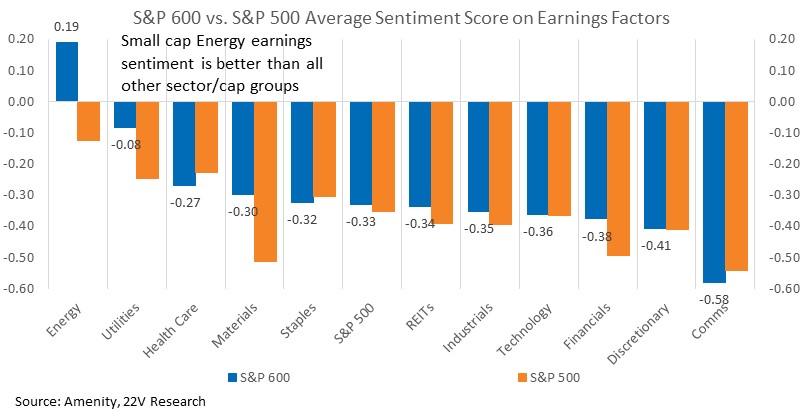
At the sector level, small-cap sentiment is more positive (still negative for the most part, just less so) for most small caps. Small cap Energy earnings sentiment remains positive, the only positive reading across large and small cap GICS breakdowns.
Inflation has been the focus this year as it is one of the major macro forces impacting earnings and sentiment. Companies with less pricing power and more negative cost sentiment are more at risk of suffering margin deterioration. Price sentiment for small-cap names has slipped, while cost sentiment has remained negative. That spread remains a risk to all stocks, small caps included.
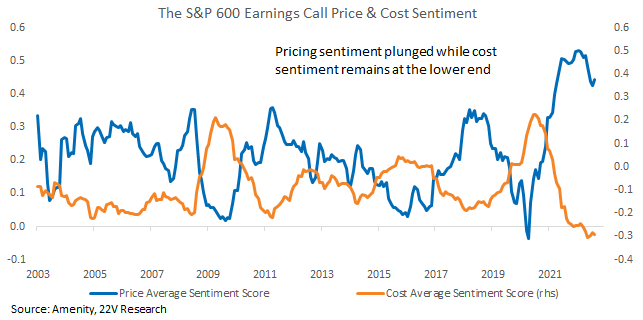
Cost sentiment for large-cap plunged earlier in the year but has rebounded recently. Overall, that suggests inflation remains a large risk to small caps. Screening for companies with positive (less negative) earnings sentiment is important when screening small caps. That being noted, easing of cost pressures also offers more of a boost to small caps. CPI readings tomorrow will offer more data on the observed inflation path. Those readings are backward-looking but have been causing extreme market movements.
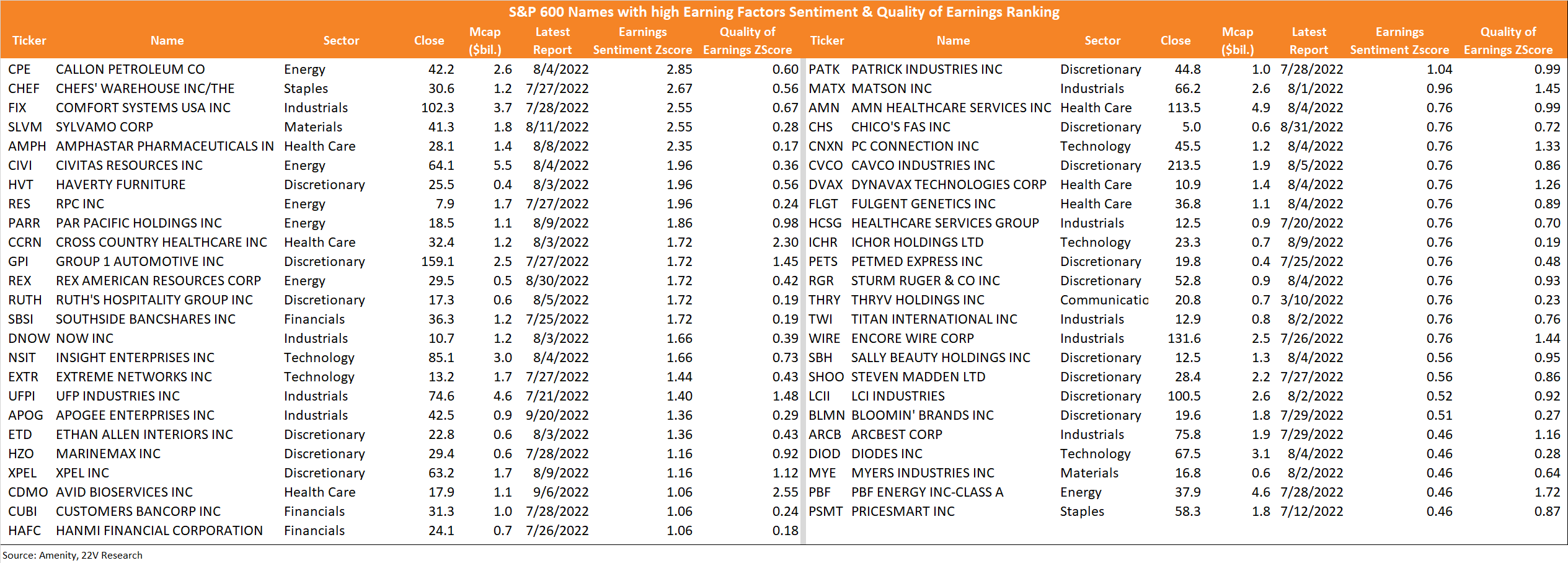
With 3Q earnings season coming, below we list the S&P 600 names with high earnings sentiment scores and Quality of Earnings rankings. These small-cap names tend to have better forward earnings expectations based on management’s view and strong earnings quality.