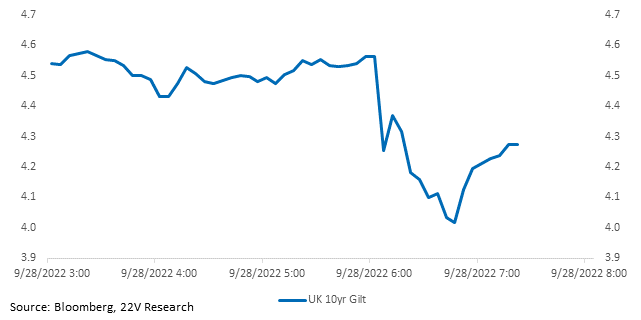
SUMMARY: It was an “exciting” overnight news session and we cover that in more detail below. Besides the negative demand implication from APPL backing off its boost to production (FYI: we need more of the backing off stuff for demand to slow), the big news was the BOE announcing they will carry out temporary purchase of long-dated UK government bonds through mid-oct to ensure financial stability.
NOW… some might argue this is even more inflationary, so the GBP should collapse. How is buying long dated debt, that is collapsing because of expansionary fiscal policy, not more inflationary? But that is probably only true if the BoE doesn’t follow through with aggressive rate hikes. Which means even more SHORT RATE increases are now necessary. How the GBP trades from here will be the tell. If the GBP holds up, tail risk will be reduced. The GBP is lower post the news, so not good so far.
Bottom line, macro uncertainty is becoming even more elevated, which will keep correlations high.
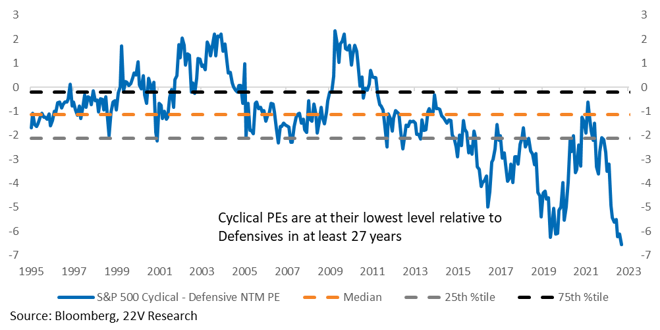
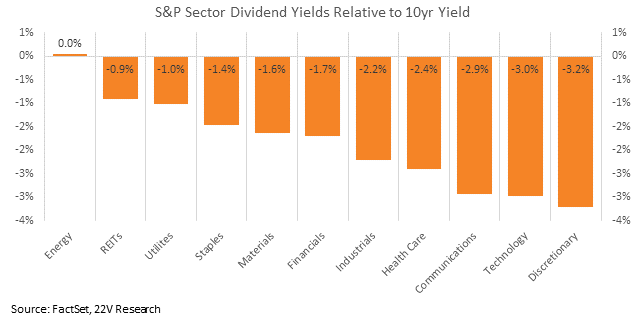
Defensive Not as Defensive? The surge in UST yields and general tightening of financial conditions has been a significant support for Defensive sectors and risk off factors. Interestingly though, Defensive sectors traded poorly the last few days despite a lower overall market tighter credit spreads. A couple of things are likely going on. First, Defensive sectors (Healthcare, Utilities and REITS in particular) have cash return yields that are significantly below 10yr yields. At some point, Defensive names with little earnings growth and a less attractive overall yield relative to the risk free rates doesn’t make much sense. On a pure dividend basis, REITS, Utilities, Staples and in Healthcare all of dividend yields that are -1% to -2.9% below current 10yr yields.

Bottom line: Our position has been that a more obvious non-recession or mild recession scenario is needed for Cyclicals to work relative to Defensives. But given the unattractive yield spreads of Defensives, abnormally high relative PE’s (great chart below on this) and longer-term slower earnings growth, Defensive underperformance could be coming despite slowing economic growth. That would be another version of a pain trade. An obvious and very deep recession seems needed to justify Defensives now. i..e, long rates and Cyclical earnings collapse in a GFC-like scenario.
Full report below…
MARKET VIEWS: Its been an “exciting” overnight session. First, the news that APPL is backing off plans to boost production of its new iPhones this year after an expected surge in demand failed to materialize helped drive China markets lower. US futures were lower as well. The IMF attack on UK fiscal policy, and threats of a ratings downgrade from Moody’s also had a large impact on UK rates and the GBP. At around 6AM ET the BoE announced they it will carry out temporary purchase of long-dated UK government bonds from 28-Sep to restore orderly market conditions. Basically they are worried about a financial stability. NOW, some might argue this is even more inflationary, so the GBP should collapse. But that is probably only true if the BoE doesn’t follow through with aggressive rate hikes. Which means even more SHORT RATE increases is necessary now and how the GBP trades from here will be the tell. If the GBP holds up, tail risk will be reduced.
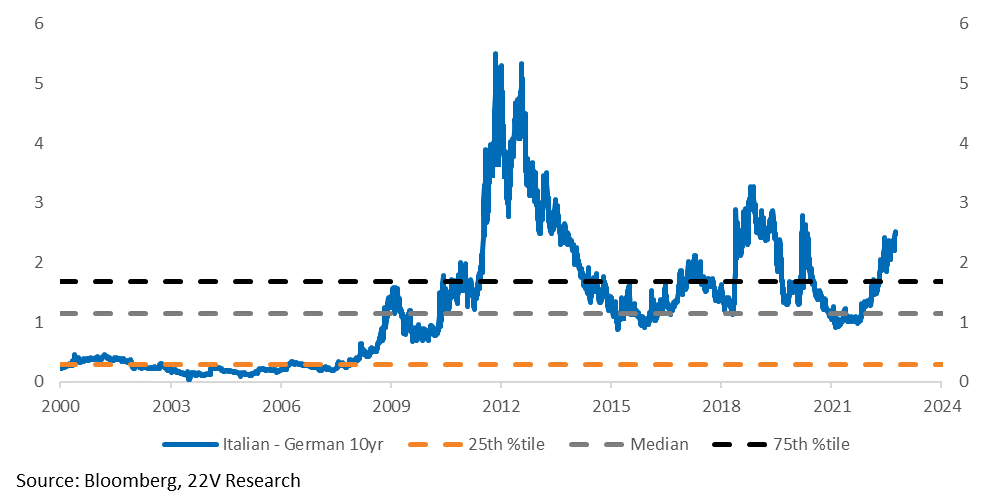
Keep in mind that the ECB has committed to buying peripheral debt to stabilize markets as well. Italian and German spreads have still widened despite ECB threats to intervene. Italian yields have moved up to 4.6%. To be fair, we don’t have a counter factual, maybe Italian yields would be much higher?
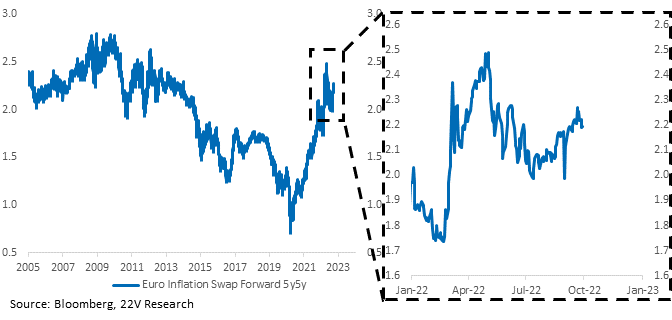
What we do know is that inflation expectations in Europe are anchored despite current inflation being way too high. The threat of the ECB buying peripheral debt has not pushed inflation expectations much higher. The more aggressive rate hike cycle from ECB is keeping the expected inflation rate in check.
Defensive Not as Defensive? The surge in UST yields and general tightening of financial conditions has been a significant support for Defensive sectors and risk off factors. Interestingly though, Defensive sectors traded poorly the last few days despite a lower overall market. A couple of things are likely going on. First, Defensive sectors (Healthcare, Utilities and REITS in particular) have cash return yields that are significantly below 10yr yields. At some point, buying a Defensive name that give you very little earnings growth and has a much less attractive overall yield relative to the risk free 10yr doesn’t make much sense.
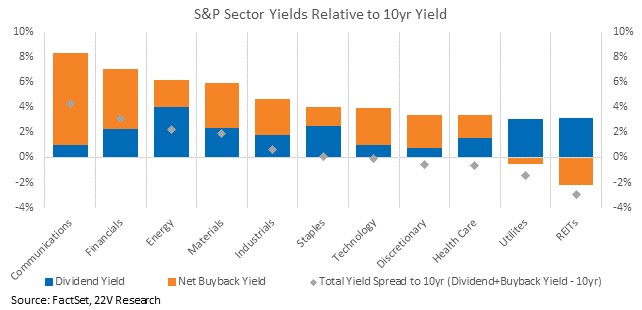
It is true that if a deep recession happens, cash returns are likely to be cut much more aggressively than dividends. The impact of cutting dividends on companies is much bigger relative to reducing cash returns. That being said, on a pure dividend basis, REITS, Utilities, Staples and in Healthcare all of dividend yields that are -1% to -2.9% below current 10yr yields.
Additionally, keep in mind that Cyclicals NTM PE are trading at the zero percentile historically relative to Defensive NTM PE. Defensives are very rich historically. Bottom Line: Our position has been that a more obvious non-recession or mild recession scenario needed to come to fruition for Cyclicals to work relative to Defensives. But given the unattractive yield spreads of Defensives, abnormally high relative PE’s and longer-term slow earnings growth, we wonder if significant Defensive underperformance is coming just related to risk free rates being higher for longer. It would seem like an obvious and very deep recession is needed to justify Defensives now. i..e, long rates and Cyclical earnings collapse in a GFC like scenario.