SUMMARY: Our weekly survey is focused on peak fed funds expectations and near-term market outlooks. Please take a minute to fill it out (HERE). We will publish the results this afternoon.
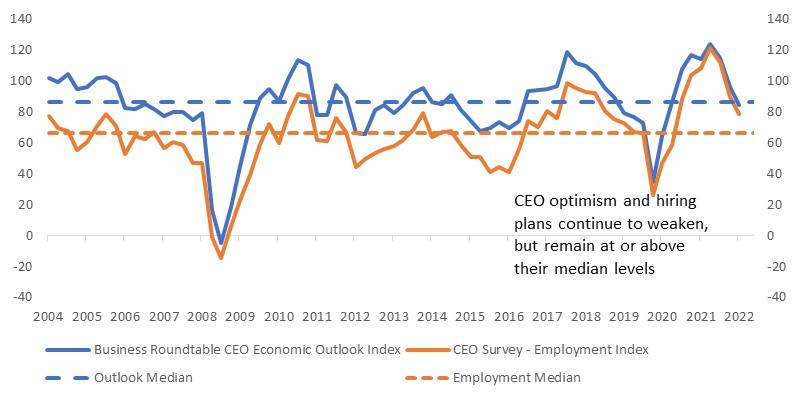
Positive overnight developments – deposit rate cuts in China, easing of Chengdu lockdowns, a tentative agreement between U.S. railroad unions and management – are being offset by data and policy headlines. A BoE poll showed consumer inflation expectations are rising (HERE), France’s CPI reading was stronger than expected, and French central bank head Villeroy said “…euro area R* can be estimated as below or close to 2% in nominal terms, and we could be there by the end of the year,” (HERE). Too strong inflation is causing increasingly aggressive central bank rhetoric. That makes another rotation into risk assets a tough call to make.
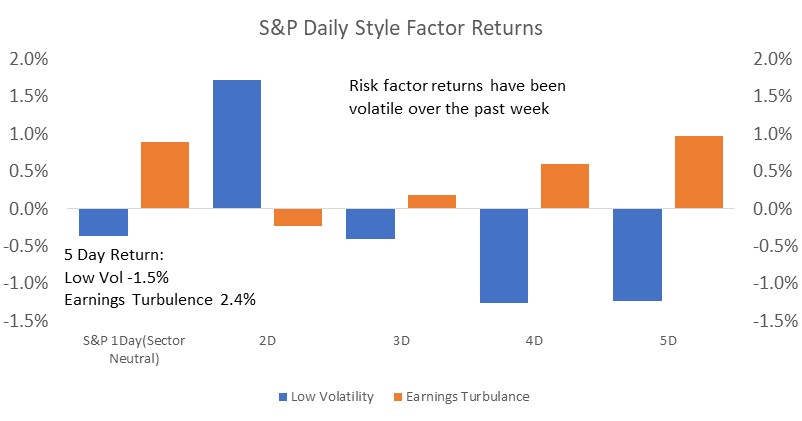
That being noted, short-term, internals were risk-on yesterday, and Earnings Turbulence remains the best performing factor over the past week. Growth is clearly slowing, and the lagged impact of rate hikes is working through the economy. U.S. CEO sentiment continued to deteriorate in 3Q. Importantly, hiring plans are slow as well. Supply chain disinflation started the process of lower price pressures. Reducing labor market tightness is key to getting inflation back on a trajectory acceptable to policy makers.
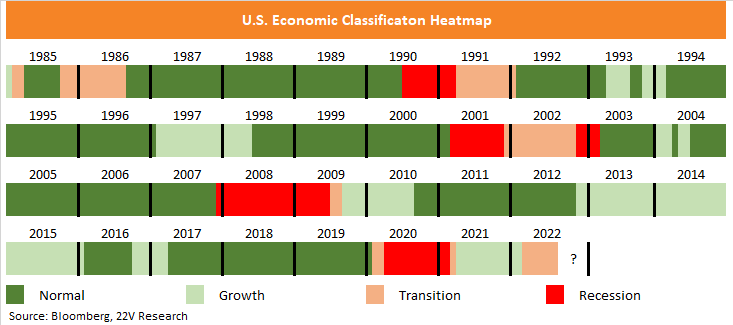
As the Quant team noted earlier this week, the 22V Macro Regime Classification Model shifted back to “Transition” from “Recession” as yields rose, and leading indicators stabilized. There are two implications: 1) Regime classifications can be volatile, particularly when a number of macro indicators are sitting near recession levels.; 2) Macro uncertainty remains high, but a recession can be avoided if inflation falls without financial conditions having to tighten much more.
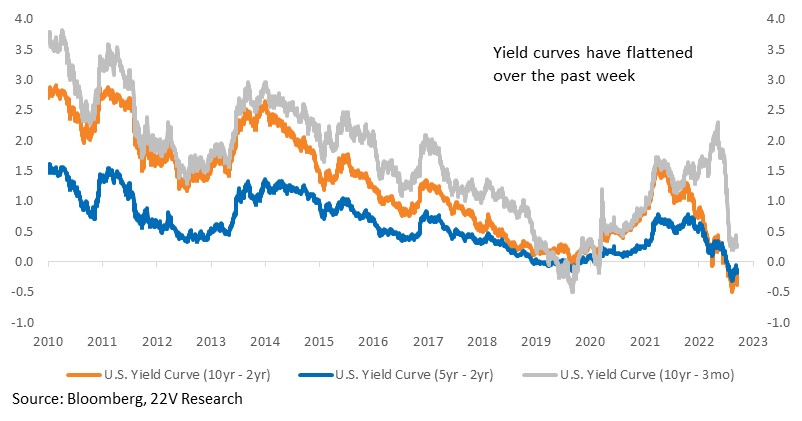
The 10s-3mo curve, the best Tsy curve-based recession indicator, has been volatile but stable at a low level for the past two months. That is indicative of the overall macro backdrop. Recession risk is clearly higher, which was necessary given the Fed’s goals. For another risk-on rotation to take hold, investors need to see a clearer path to either no recession or one that is mild (does not cause a significant decline in earnings).
Full report below…
MARKET VIEWS: Positive overnight developments – deposit rate cuts in China, easing of Chengdu lockdowns, a tentative agreement between U.S. railroad unions and management – are being offset by data and policy headlines. A BoE poll showed consumer inflation expectations are rising (HERE), France’s CPI reading was stronger than expected (6.6% y/y vs est 6.5%, last 6.5%), and French central bank head Villeroy said “…euro area R* can be estimated as below or close to 2% in nominal terms, and we could be there by the end of the year,” (HERE). Too strong inflation is causing increasingly aggressive central bank rhetoric.
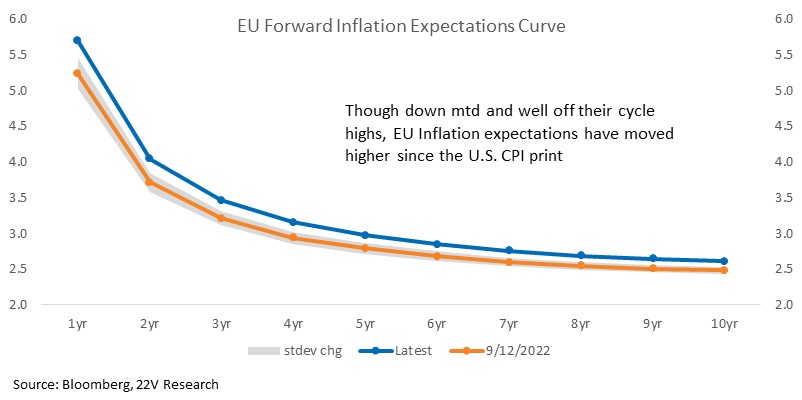
Growth remains too strong, but the lagged impact of rate hikes is working through the economy. U.S. CEO sentiment continued to deteriorate in 3Q. Importantly, hiring plans are slow as well. Supply chain disinflation started the process of lower price pressures. Reducing labor market tightness is key to getting inflation back on a trajectory acceptable to policy makers.

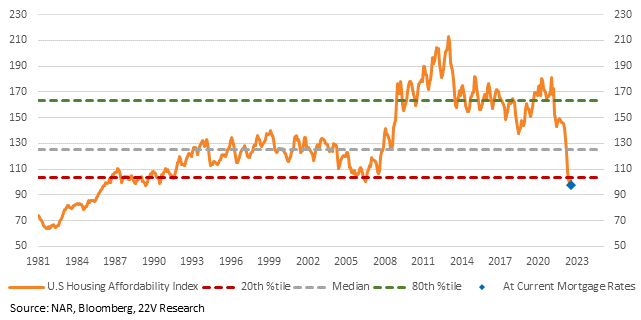
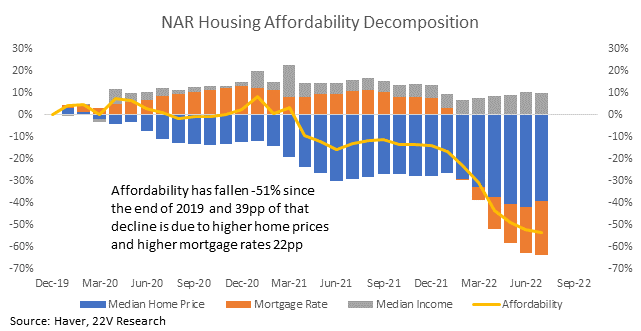
Housing is also contributing to the slowing of growth. Affordability has continued to collapse, falling below levels seen during the GFC. A household with median income, can afford 98% of the median home. The decomp (second chart) does a nice job illustrating how recently the increases in mortgage rates are outpacing decreasing home prices. Today’s backdrop is VERY different than during the financial crisis, but housing is slowing and reducing the credit support for consumers.
As the Quant team noted earlier this week, the 22V Macro Regime Classification Model shifted back to “Transition” from “Recession” as yields rose and leading indicators stabilized. There are two implications: 1) Regime classifications can be volatile, particularly when a number of macro indicators are sitting near recession levels.; 2) Macro uncertainty remains high, but a recession can be avoided if inflation falls without financial conditions having to tighten much more.
Since the U.S. CPI report, U.S. yield curves have flattened again, which at the margin suggests increased recession risk. The 10s-3mo curve, the best Tsy curve-based recession indicator, has been volatile but stable at a low level for the past two months. That is indicative of the overall macro backdrop. Recession risk is clearly higher, which was necessary given the Fed’s goals. For another risk-on rotation to take hold, investors need to see a clearer path to either no recession or one that is mild (does not cause a significant decline in earnings).
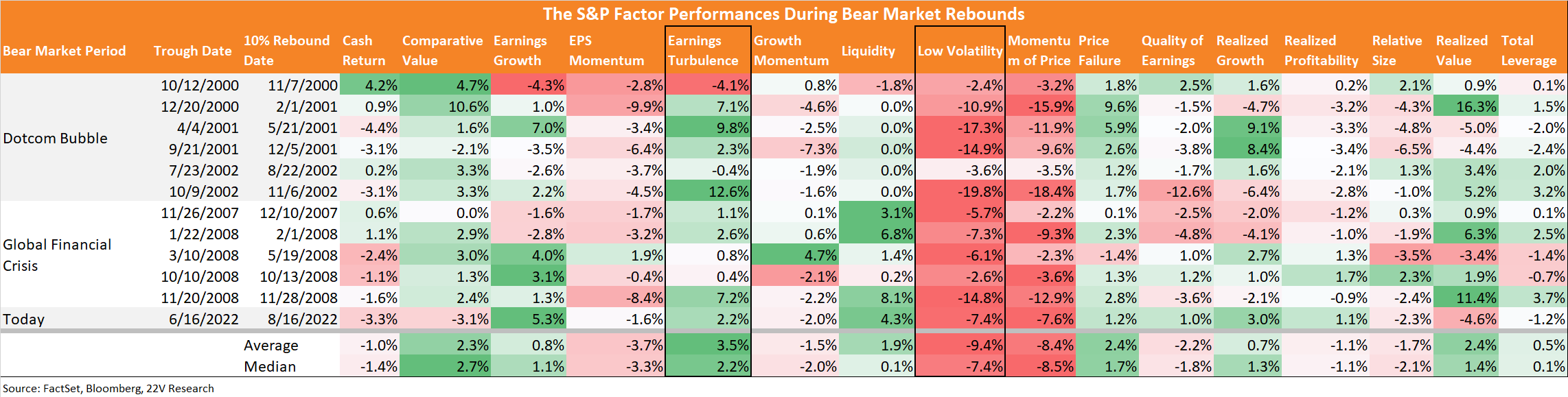
Near-term, risk-on/off rotations should remain the norm until a clear market narrative, backed up by data, takes hold. Since the start of the bear market, market rallies have been led by Earnings Turbulence and other risk-on factors. Market failures have been led by Low Volatility.
So far, internals post the CPI report indicate a risk-on preference remains in place. Low Vol surged higher as immediately following the CPI release, but high Turbulence names led internals yesterday. Over the past week, risk-on factors have still clearly led risk-off. Correlation is still high and so is macro influence, so narratives can continue to drive internals short term. The longer-term trend is toward slower growth, and a hyper-focus on inflation developments.