SUMMARY: Last week, investors we polled anticipated a risk-on market reaction to a below-consensus CPI (more HERE). But that was about 4% ago on the S&P. Financial conditions have eased again since, increasing the odds a positive market reaction to CPI was pulled forward…
…but per the latest BofA survey (HERE), investors are record underweight equities, assign higher recession odds, and expect profits to decline. Sentiment remains extremely negative, and, compared to last week, markets are pricing in higher odds of +75bps at the next Fed meeting while rate cuts are priced out of next year. The market might be stretched relative to fair value (more on that below), but we still think a risk-on narrative could form short-term if CPI is in-line or lower than expected. Keep in mind that demand growth remains too firm and printed inflation is still too high, which increases the odds 3Q earnings season surprises to the upside or does not slow as quickly as feared. That would be consistent with the commentary from companies this conference season according to clients. The NFIB small business survey came in higher than expected today too.
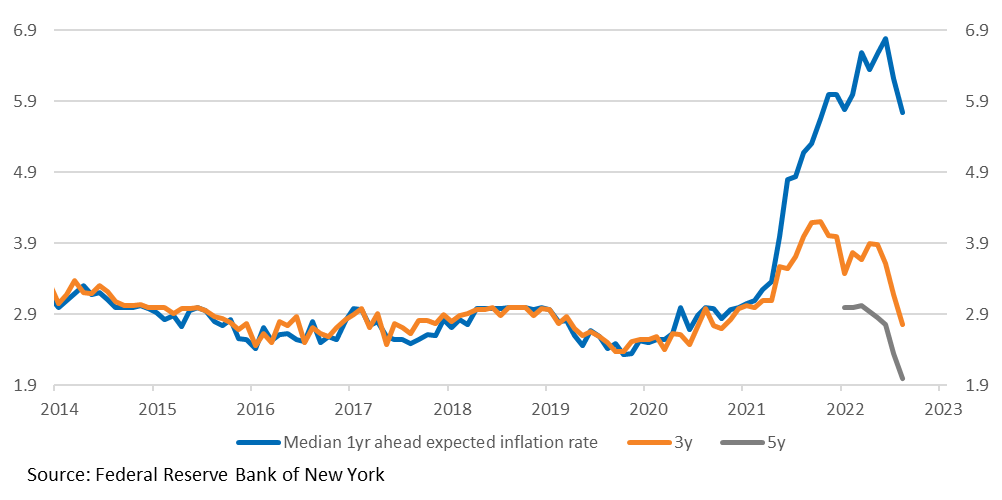
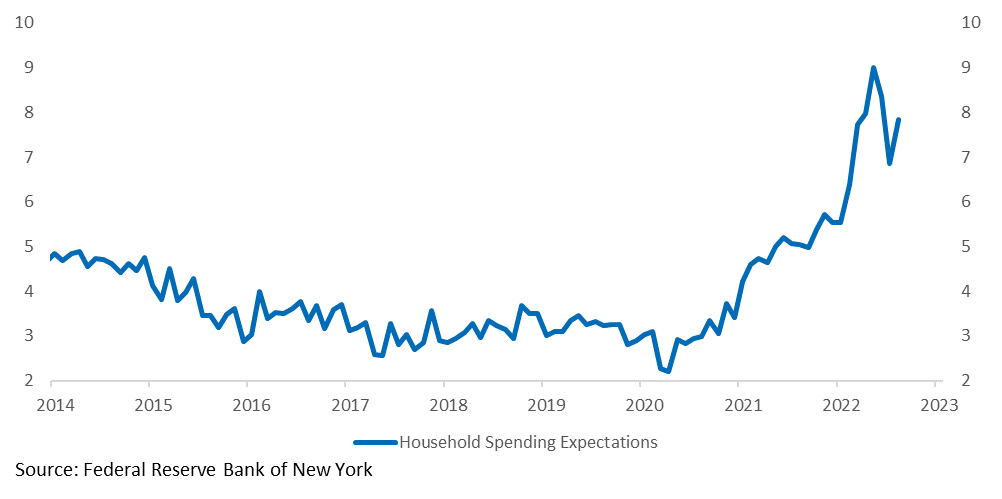
The easy part of disinflation is coming, but where prices settle is a big question. All indications are that inflation will settle at too high a level for the Fed, but uncertainty about the inflation forecast is high, so the fed/investors might not focus on inflation being high longer term (especially if CPI is lower than expected today). The NFIB prices component fell (HERE) and the inflation components of the NY Fed’s survey of consumer expectations were down (HERE). Simultaneously, consumer demand is healthy with household earnings and spending expectations moving higher according to the NY Fed. That’s a problem longer-term but feeds into a possible risk-on narrative of low recession risk with anchored inflation expectations.
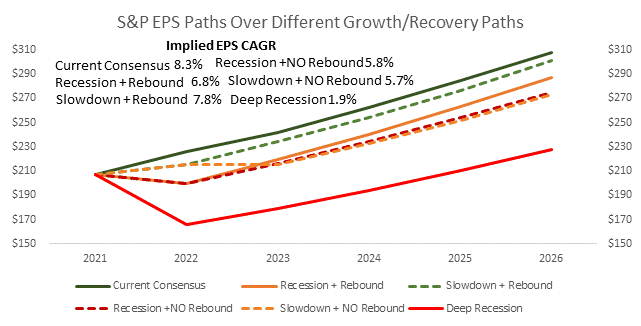
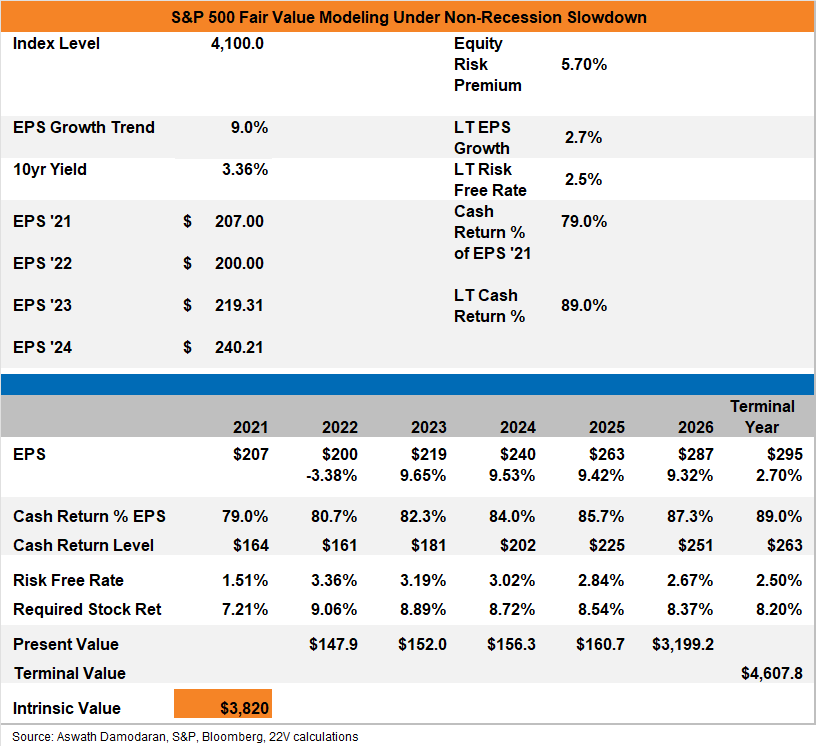
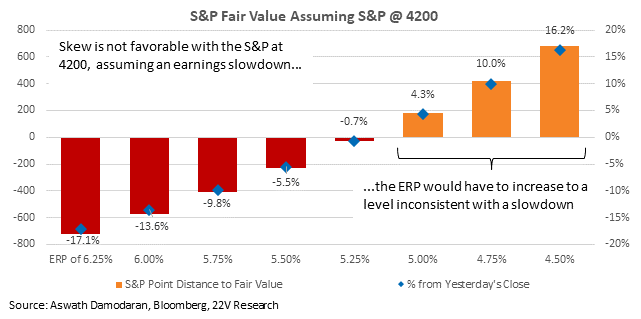
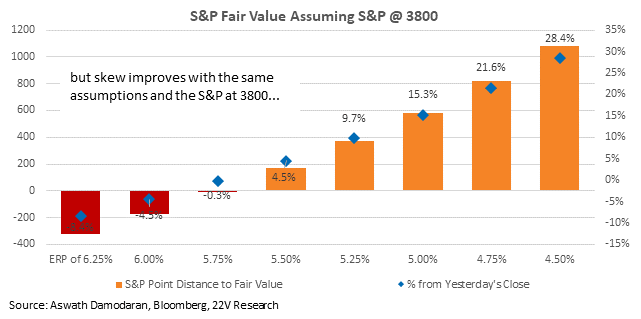
We still think fair value is in the 3800-4200 range, assuming an earnings slowdown and rebound. We run the calculation in the full report. Under a slowdown/shallow recession scenario in which earnings contract, skew with the S&P at 4200 is poor. Unless you think the ERP will decline. It’s a stretch to assume the ERP would fall towards a more ‘normal’ (less elevated. Currently 85th%tile) level considering a slowdown is coming and we don’t know how weak the economy will get. Skew was much better with the S&P at 3800. 10yr yields at current levels don’t make much of a difference for fair value. Especially if higher 10yr yields = higher trend earnings. The ERP is a much bigger driver.
For fair value estimates, the recovery path of earnings is more important than the slowdown/recession hit. Calling for ~3,200 on the market requires discounting of a deep recession with an earnings drawdown + recovery path slower than what has happened in the past four recessions. Being long the market is tough here, but tail risk is limited. Equities would be attractive if we could forecast that inflation would move to the Fed’s target WITH only a mild slowing in economic growth. The ERP would drop in that scenario. That seems like a tough narrative to chase, but a narrative that is a focus for investors near term.
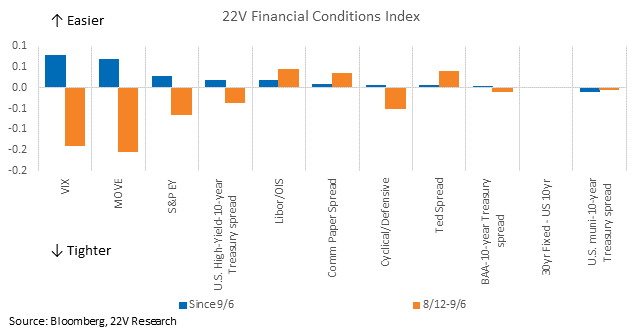
MARKET VIEWS: Last week, investors we polled anticipated a risk-on market reaction to a below-consensus CPI (more HERE). But that was about 4% ago in the S&P. Financial conditions have eased again since – mostly in volatility and equities, but in credit spreads too. That increases the odds that a positive market reaction to CPI was pulled forward…
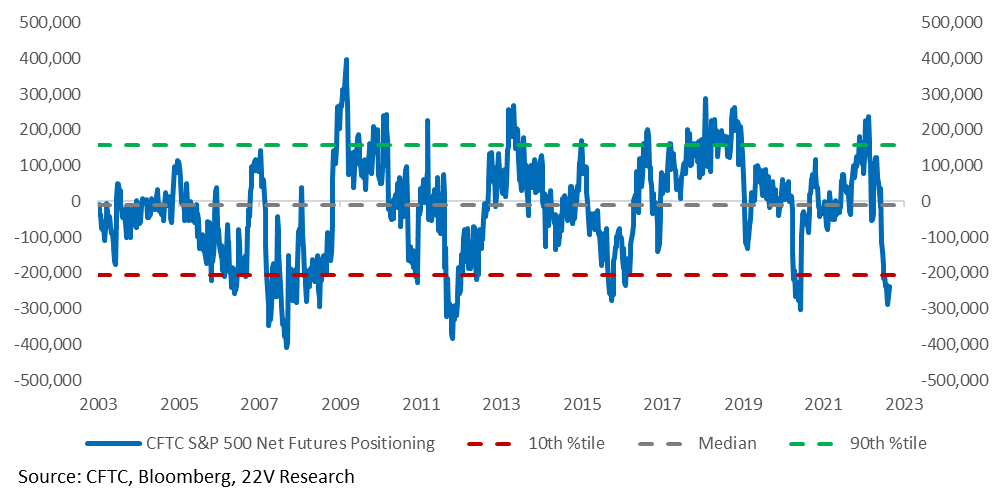
…but per the latest BofA survey (HERE), investors are record underweight equities, assign higher recession odds, and expect profits to decline. The AAII investor sentiment survey is in its 2nd percentile and CFTC net futures positioning is in its 7th percentile. Sentiment remains extremely negative, and, compared to last week, markets are pricing in higher odds of +75bps at the next Fed meeting while rate cuts are priced out of next year. The market is stretched relative to fair value (more on that below), but we still think a risk-on narrative could form short term if CPI comes in in-line or lower than expected.
Short-term narrative: Anchored inflation expectations (and not just market-based inflation expectations) could contribute to the view the Fed doesn’t have to push back against the recent easing of financial conditions. The easy disinflation is here and at what level inflation settles could be a next year problem (especially if CPI is lower than expected today). The NFIB prices component fell (HERE). The inflation components of the NY Fed’s survey of consumer expectations all fell (HERE). The Fed doesn’t have to push back against that.

And simultaneously, consumer demand seems healthy. That’s a problem longer-term, but feeds into a possible risk-on narrative of low near-term recession risk with anchored inflation expectations.
Fair Value Update: We still think fair value is in the 3800-4200 range, assuming an earnings slowdown and rebound. We run an estimate with earnings troughing at $200 and an ERP that stays elevated at its current level (~5.7), putting fair value around $3,800. Fair value rises to $4,200 with a lower (but still elevated) ERP.
Under a slowdown/shallow recession scenario in which earnings contract, skew with the S&P at 4200 is poor. It’s a stretch to assume the ERP would fall towards more ‘normal’ (less elevated) level considering a slowdown.
Skew is much better with the S&P at 3800. There is upside under a more reasonable ERP.
For fair value estimates, the recovery path of earnings is more important than the slowdown/recession hit. Calling for ~3,200 on the market requires a deep recession with an earnings drawdown + recovery path that hasn’t happened in the past four recessions. Being long the market is tough here, but tail risk is limited.