Summary: The employment report was less hawkish than expected and many economist/fed watchers noted it increased the odds of a soft landing. Higher participation rates, a higher unemployment rate, and weaker than expected average hourly earnings all suggest lower services inflation going forward. That noted, as Gerard pointed out, the employment report was “not weak in an absolute sense or a scene changer for the economy or Fed. Employment growth running above 300k is obviously quite strong, and the so-called “research series”, which places data from the household survey on the same definitional footing as the headline establishment jobs figures, was very strong. It was up 559k vs the 442k gain in the conventional household survey job measure.”
Many thought a rally would take place following the less hawkish employment report. The sell-off late Friday took some people by surprise (less hawkish = positive was the thinking). Even though the odds of a 75bp hike in September did decline the intent of the Fed weas unchanged. It is clear Powell and company need economic growth to slow more, so easier financial conditions are unlikely to last. It is tough to chase rallies if the Fed doesn’t seem interested in letting rallies run. Also, China/Europe are still facing major issue (more lockdowns in China, European service PMIs at an 18th month low at the same time energy prices keep going up AND the ECB might tighten by 75bp this Thursday), and US 30yr fixed mortgage rates are back above 6%. Housing data has already been slowing and that is likely to accelerate with mortgage rates above 6%.
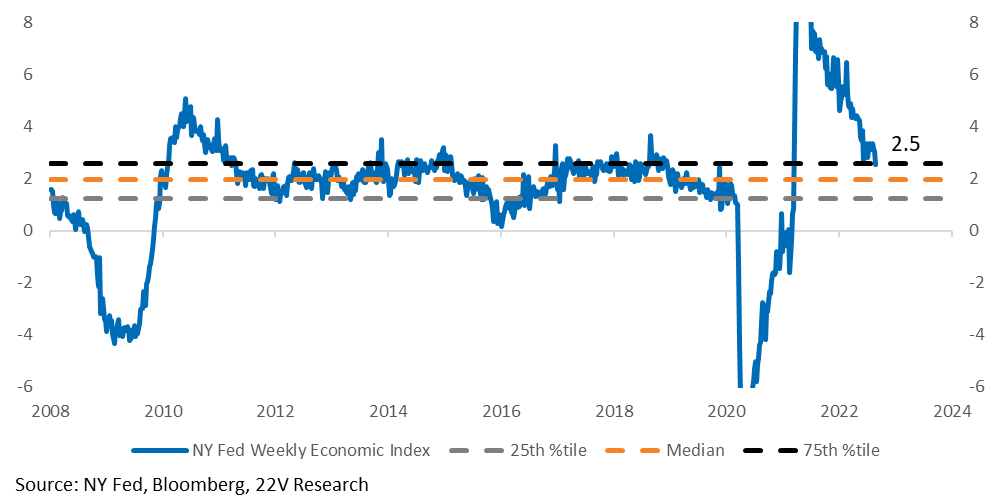
Bottom Line: Our portfolio of stocks that benefit from tighter financial conditions should continue to outperform, while labor markets are tight (job openings super elevated relative to unemployment), and demand growth is running above trend. But the next trade, which will start in earnest over the coming weeks, which is slower economic growth. The NY Fed weekly Economic Index has been consistently WELL ABOVE trend (Fed has trend GDP at ~1.8%) but declined to 2.5% last week. To the extent overall financial conditions remain tight (mortgage rates above 6% is a big deal) demand growth is likely to slow. There is some risk demand growth slows aggressively post the “revenge travel” summer season.
Once the NY Fed Weekly Index is consistently below trend GDP, and the labor market is more obviously weakening, financial conditions can ease without causing a policy reaction, and investing in stocks that benefit from tighter financial conditions will not make as much sense. Growth and Profitability will be much more interesting then as well, relative to more purely Defensive positioning. For now, Low Volatility and Defensives will continue to outperform and the market has downside risk.
We continue to think the range on the S&P is 3800-4200. Around 3800, the implied cash return yield will be unusually high even under mild recessionary scenarios for earnings.
We are more interested in being long 10yr yields and biased to flatter curves as economic growth is likely to slow over the coming months.
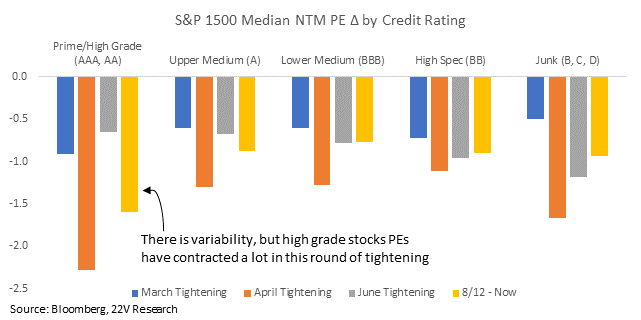
PEs tend to fall across all stocks when financial conditions tighten. That process has already started, but stocks with higher credit ratings are doing unusually poorly. Based on the prior periods of rapid tightening, the PE drawdown in highly rated stocks has been large, particularly relative to the small drawdown in lower rated names. That tends to change as the focus shifts from higher rates to increasing default risk increasing. Lower rated stocks will face pressure as economic headwinds build.
Full Weekly Report Below…
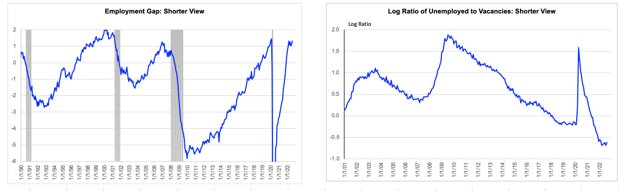
Indicators & Themes: The labor market remains quite tight in absolute terms, a condition the Fed needs to address.
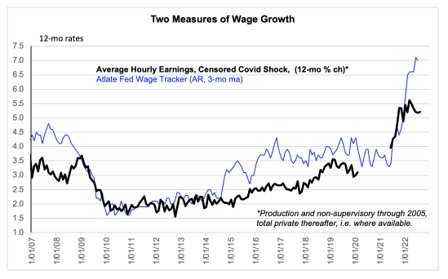
Wages growth missed estimates. However, wage growth remains far too high in absolute terms, particularly in light of evidence the path of expected productivity may be faltering. Moreover, alternative measures of wages that control formally for mix shift have recently been quite a bit stronger.
Economic growth is still running well above trend according to the NY Fed’s weekly economic indicator. The WEI did slow last week (to 2.5% from 3%), but it needs to slow further. Tighter financial conditions (lower stocks prices, wider credit spreads and mortgage rates above 6%) should be a headwind for growth.
10yr yields, posted a 91st percentile m/m move. keep in mind that the Fed’s urgency to slow economic growth has increased which will ultimately limit how high 10yr yields will go. Especially if the longer-term growth outlook for the economy is still in the 1.8% range.
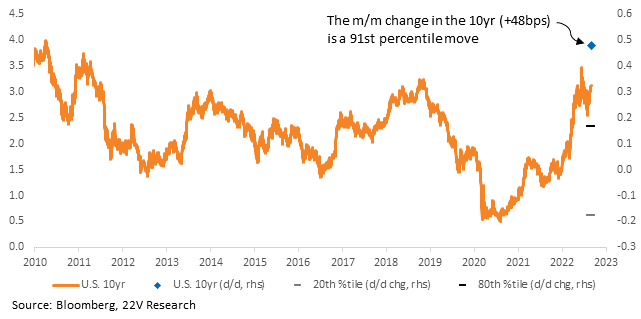
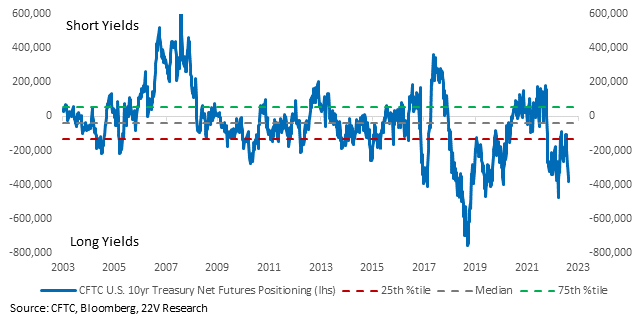
If a higher fed funds path means a sharper slowdown and more recession risk longer out, the 10yr would fall. We would be the long the 10yr (short yields) after a mechanical increase in rates following a hot employment report. FYI, traders are positioned for more yield increases.
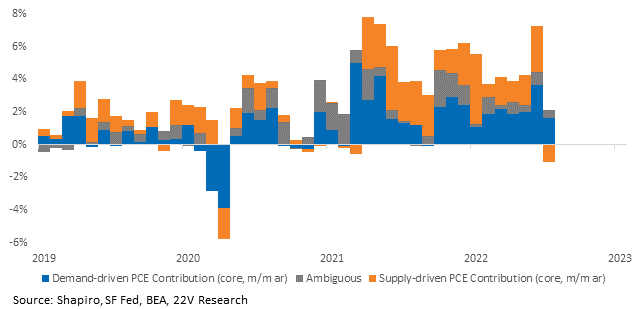
The Fed is committed to dealing with inflation. Persistent or higher supply-driven inflation would mean the Fed has to bring down demand-driven inflation more aggressively. This is not our call but helps explain the market sensitivity to lockdown headlines. There was supply-driven deflation last month, per a model run by the SF Fed (HERE). Persistent, widespread lockdowns jeopardize the easy disinflation. We aren’t there yet though.
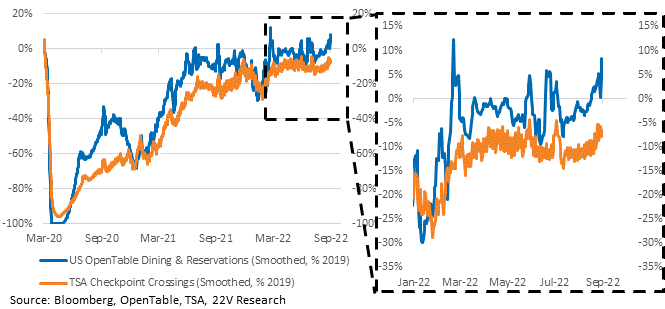
Demand Growth Through the Summer: One theory as to why demand growth has been unusually strong has to do with “revenge travel” idea. People haven’t been be able to travel or go out freely for two years, so are spending at high levels despite housing activity slowing, savings a bit lower, weak real incomes, long lines at the airport, high gasoline prices etc., etc., We’ll be monitoring TSA crossings and OpenTable res data this fall. If the “revenge travel” theory is correct, TSA crossing and OpenTable reservation data should fall off quickly this fall. Open Table has been unusually strong recently.
PEs tend to fall across all stocks when financial conditions tighten. That process has already started, but stocks with higher credit ratings are doing unusually poorly. Based on the prior periods of rapid tightening, the PE drawdown in highly rated stocks has been large, particularly relative to the small drawdown in lower rated names. That tends to change as the focus shifts to tightening of financial conditions to a focus on default risk increasing. The lower rated stocks will face pressure as economic headwinds build.
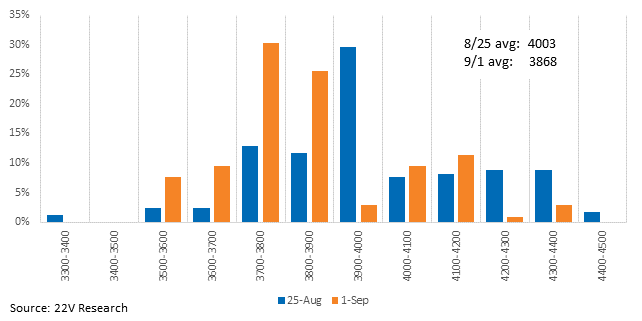
Survey: Two weeks ago, we asked for month-end estimates for the S&P. The average response was around 4,000. Last week, that number dropped to ~3,870. The majority of responses in both weeks were within 3700-4000, slightly worse than our estimate of fair value (3800-4200). People are still negative and pressing on the short side in the 3800 range will be difficult unless economic growth is MUCH stronger than expected.