
At the 2022 Offshores Northern Seas Foundation annual conference in Stavanger, Norway on Monday, Elon Musk extolled the economic virtues of power generated by oil and gas. We doubt he was thinking of the concurrent or future environmental implications as much as he was acknowledging what it takes to produce his “zero-emission” vehicles. Elon knows the technology of his cars as well as anyone, just as he knows that power generated by alternatives and renewables won’t allow him to hit monthly production targets.
Such is the energy transition. A process which increasingly seems less relevant to measure in models as much as it is measured in practical outcomes. Neither Putin’s war in Ukraine nor Biden’s signature to literally ground-breaking energy/climate legislation were causal shocks to the on-going evolution toward less polluting energy sources, each is an accelerant to that process. John Elkind of Columbia University last month reminded us during a 22V webinar for clients that the on-going US transition began in the 1970s with bipartisan clean air and water legislation. It was nearer the end of this 50 years that the US became energy self-sufficient.
We also believe the war in Ukraine and the new energy law are exhibit A or B to the realities of managing the transition. Europe is necessarily in the market for every drop of oil or gas available to store up against Putin’s energy policy reaction to the West’s sanctions. And the new US law incorporates commitments to ease permitting rules for up- and mid-stream energy production. Far from being incongruent this is what a dual-tracked energy transition should and likely will resemble for many years.
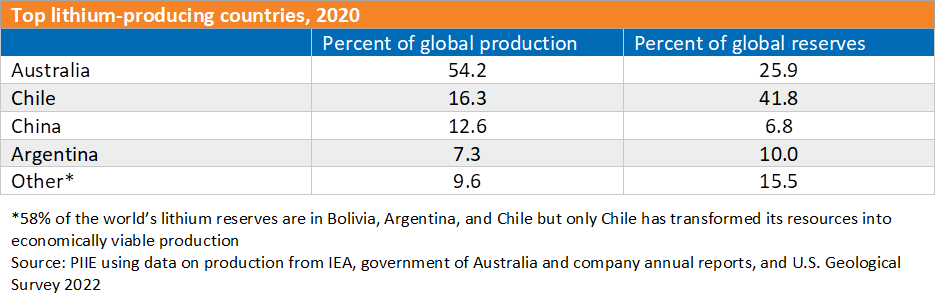
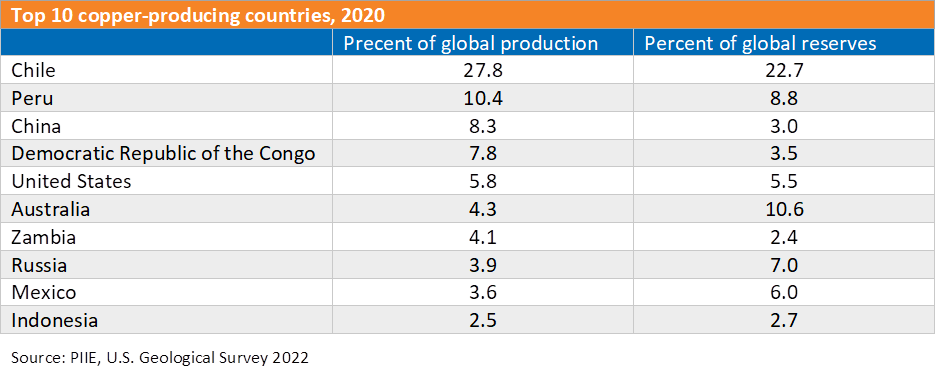
As the shift to cleaner, greener power generation picks up pace, the following graphics demonstrate sourcing of minerals and materials are unlikely to be a showstopper. Of the nonfuel minerals the US imports over half its take, many are available in countries not named China or Russia. Put simply, geopolitics alone aren’t a transition impediment.

Australia, Chile, and Argentina are among countries the US enjoys good-to-close trade and geopolitical relations that produce and hold lithium. Copper production and reserves are also found in countries not overtly hostile to US interests. Mining is a dirty business, but the practicalities of powering economies require tradeoffs, especially considering the low single-digit contributions to power generation from solar, wind, geothermal and other renewables alternatives to fossil fuels.
As we mentioned in our weekly client webinar last week, which one or two of you understandably might have missed, Ravi Menon’s recent speech What does it take to get to net zero in Singapore covers energy transition considerations vexing policymakers, markets, and consumers. His most telling observation is that while several companies and countries have net-zero commitments, few have credible plans. While the new US law isn’t itself a climate plan, it is both a signal to and seed investment in the research, development, and deployment of capital that will continue to drive transition milestones (in much the same way the 1970s bipartisan energy and water legislation began the path for U.S. energy self-sufficiency).
A recently published study in the journal Nature Communications found that “roughly 80–90% of Americans underestimate the true level of concern for climate change as well support for transformative climate policies …” Though not a holistic plan, the new energy law is the most advanced set of sovereign capital allocations to incent private investment and take advantage of possibly underappreciated public support for the transition.
California is holding on to its remaining nuclear power plant and France to its coal-fired plants. It’s hard to come up with a more of-the-moment testament to the vital twin tracks of the global energy transition. Investor and regulator (the Securities and Exchange Commission and the European Securities and Markets Authority) interest in refining ESG standards is another example of a move away from narrative to pragmatic energy transition investment. ESG may have become overly politicized which poisons the discussion for some, but a more transparent, plain standardization of definitions will help cleaner/greener investment without sullying smart, desirable capital allocation to the production and use of hydrocarbons as the transition’s next 50 years has begun. Energy policy and markets are poised to generate interest and returns over a long course, recent shocks and new US law underpin this picture.
REMINDER: Please join us for a 22V Washington Policy virtual conference on Tuesday, September 13 from 11:00 a.m. to 1:00 p.m. ET. Click HERE to Register or contact 22V Sales for help with registration. Kim will moderate four 30-minute guest discussions on the Post-election Policy Outlook, Midterm Polling, China Outlook, and Digital Assets Regulatory Outlook.

