SUMMARY: Energy costs in Europe are dropping fast as the EU pledges action (likely price caps, here) and nat gas storage increases. Equities are higher globally this morning, and the USD is lower as positive developments in Europe limit tail risk. Financial conditions in the U.S. are biased to tighten over the coming months, but lower energy prices will likely lead to some tightening of credit spreads in Europe very short-term.
Improvements that limit tail risk, in addition to other market cross currents, make trading the market at these levels tough. Over the past few weeks, we’ve hopefully made it clear we favor defensive positioning (low vol, high quality, defensives) as financial conditions continue to tighten. Our fair value range remains 3800-4200. But extremely negative positioning combined with a VIX implying daily moves of 1.6% can lead to quick reversals higher. S&P and NASDAQ net futures positioning are still below their 25th percentile.

Lower-rated equities have underperformed during prior periods of rapid financial conditions tightening this year. As this period of tightening unfolds, we expect lower-rated equities to underperform again. Complicating that rotation is uncertainty over if or when a recession will start. Tail-risk-limiting events will continue to lead to short-term market rallies.
We are maintaining our defensive posture in part because the Fed has been explicit in its goal of slowing growth to reduce inflation. We try not to get too carried away by a single Fed speaker, but Kashkari did mention equities in financial conditions in pretty clear terms (here). The takeaway is the same as with all the other Fed speakers – the Fed wants to tighten financial conditions. Stocks will remain under pressure until labor markets ease, but stocks will go down if the labor market eases too fast, given the recession risk implied with that. Payrolls this Friday will be another important signal for risk assets.
FYI and per Gerard, the Fed will be hawkish as long as underlying growth looks strong and the unemployment rate is inclined to fall, but the tone will change once the urate starts to rise, because labor market conditions can lead inflation and because the Fed does have a dual mandate. Policy is hawkish, not sadistic. This is consistent with downside being limited by already higher volatility, lower multiples, and tighter conditions than earlier episodes of tightening.
MARKET VIEWS: Energy costs in Europe are dropping fast as the EU pledges action (likely price caps, here) and nat gas storage increases. Storage in the bloc has already hit its October target of 80% of capacity. UK natural gas is down -30% and Dutch nat gas -19% since Friday. Equities are up globally this morning and the USD lower as the positive developments limit tail risk. Lower energy prices will likely lead credit spreads tighter very short-term.
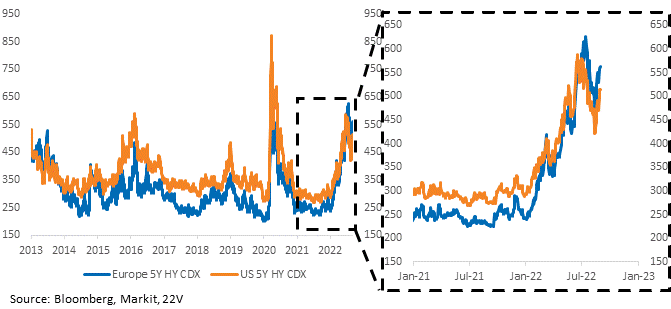
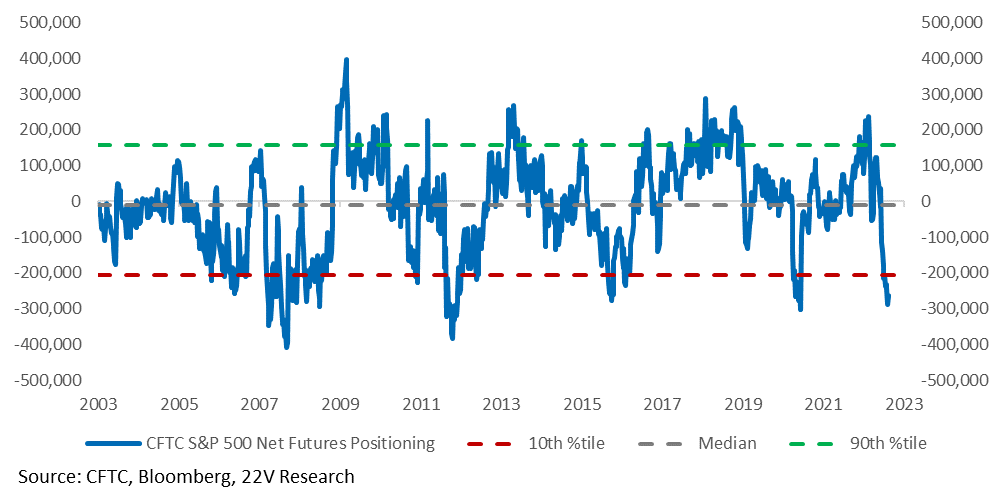
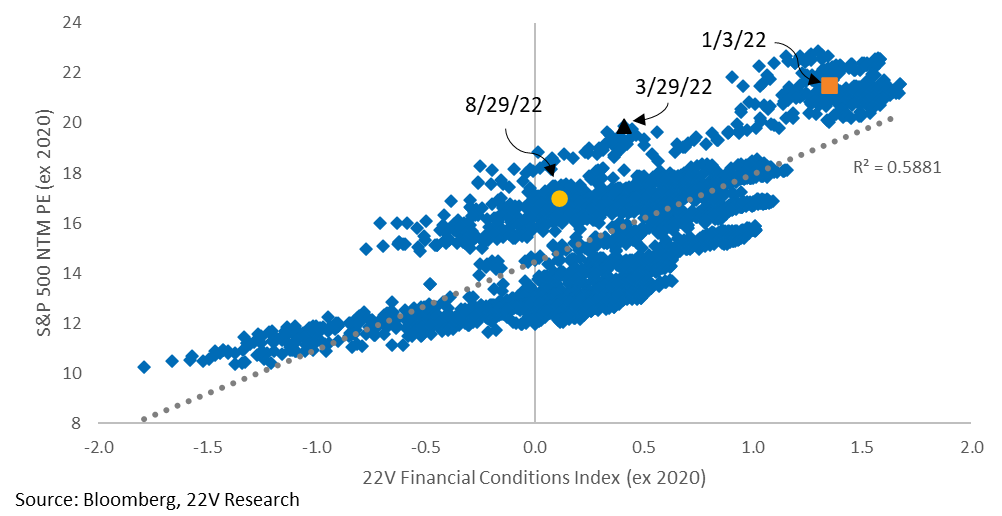
Improvements that limit tail risk, like lower energy prices, make trading this market tough. Over the past few weeks, we’ve hopefully made it clear we favor defensive positioning (low vol, high quality, defensives) as financial conditions continue to tighten. Our fair value range remains 3800-4200. But extreme negative positioning with the VIX implying daily moves of 1.6% can lead to quick reversals higher. S&P and NASDAQ net futures positioning are still below their 25th percentiles.
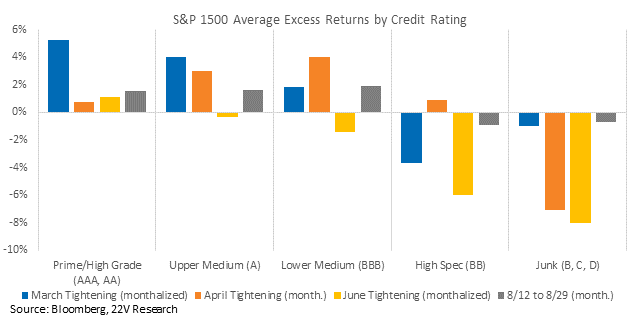
Lower-rated equities have underperformed during the prior periods of rapid financial conditions tightening this year. As this period of tightening unfolds, we expect lower-rated equities to underperform again, even if interrupted by tail-risk-limiting events in the very short-term. The degree of underperformance should be more limited given previous rounds of declines.
We are maintaining our defensive posture because the Fed has been explicit in its goals. We try not to get too carried away by a single Fed speaker, but Kashkari did mention equities in financial conditions in pretty clear terms (here). The takeaway is the same as all the other Fed speakers – the Fed wants to tighten financial conditions. Stocks will go lower until the labor market starts to ease, but stocks will go down if the labor market eases too fast, given the recession risk implied with that. Eyes on Payrolls Friday. The trick is small, gradual increases in the urate are rare.
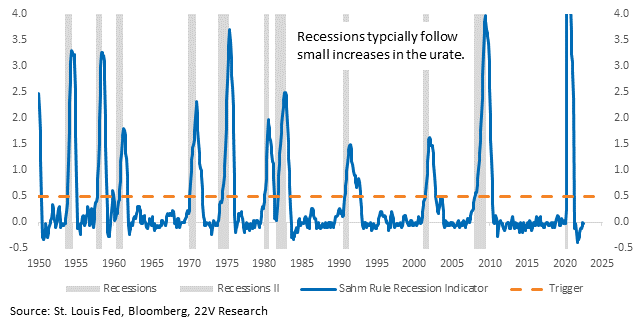
FYI and per Gerard, the Fed will be hawkish as long as underlying growth looks strong and the unemployment rate is inclined to fall, but the tone will change once the urate starts to rise, because labor market conditions can lead inflation and because the Fed does have a dual mandate. Policy is hawkish, not sadistic. This is consistent with downside being more limited by already higher vol, lower multiples, and tighter conditions than earlier episodes of tightening.
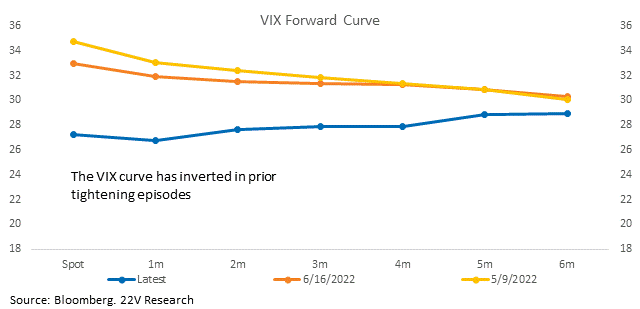
VIX TRADE: A couple weeks ago, the VIX curve was unusually steep (near-term implied vol was much lower than longer-term implied vol). To take advantage of the unusual, and we thought unjustified, cheap near-term vol, we recommended buying September VIX 27 calls and selling December VIX 27 calls, collecting $2.40 in the process (more on that HERE). We believed financial conditions would retighten, and the September VIX contract included plenty of impetuses for retightening – Jackson Hole, payrolls, CPI, and the September FOMC. We argued the VIX curve would flatten or invert as financial conditions tightened because equity vol tends to tighten (increase) first. Some of the tightening is being born out post-Jackson Hole. The VIX briefly hit 27, the trade strike, yesterday while the VIX curve has indeed flattened. In English, the trade is working.
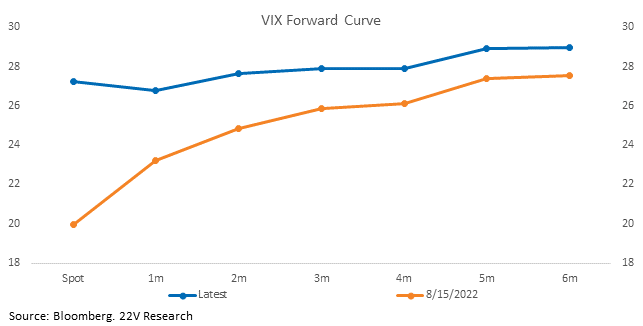
The trade can currently be closed for a mild profit. The September VIX contract can be sold for a
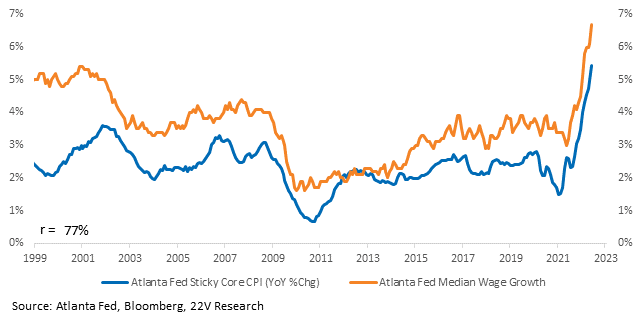
~$0.75 profit while the December contract bought back for a ~$0.40 loss, resulting in a ~$0.30 total gain. The trade should be closed if investors expect some combination of: financial conditions have tightened enough, Europe avoids a crisis, we’ve reached peak hawkishness, the September FOMC won’t be a shock, and/or September Payrolls and CPI come in weak but not recessionary. As we have discussed over the past few weeks, we do not expect the goldilocks scenario to unfold. Sticky inflation has not relented, the employment gap is over full employment, wage growth is unusually firm, and demand is still running above trend. We recommend leaving the trade on as a cheap hedge against more tightening. The shape of the curve is no longer attractive for a new trade.
The best-case scenario for the trade is the VIX curve inverts, as it did when financial conditions tightened in May and June. As we mentioned above, there are still plenty of risks before the trade expires – Payrolls Friday, CPI on 9/13, and the FOMC on 9/21. Investors we polled (HERE) think the S&P will drop another -3% in September. Only 25% expect it end the month higher. And fyi, 70% of the time the VIX crosses 27, the VIX curve inverts.