SUMMARY: Powell hammered the idea home that economic “pain” should be expected and one way to make that happen is by signaling interest rates are going to be higher for longer. The FOMC will accept increased recession risk. The Fed funds futures curve has shifted higher (most of the move post Powell’s JH speech was in the back-end of the curve) and now relevant question about Fed funds isn’t when they cut but where they stop.
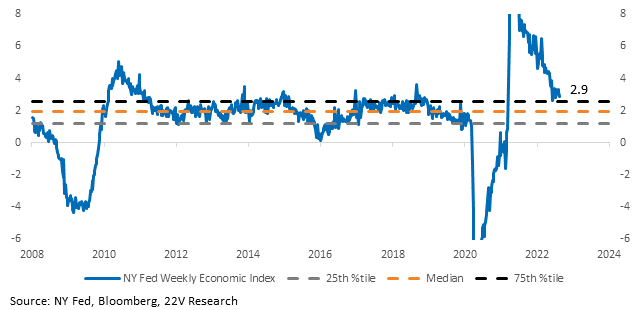
The range on where the Fed might stop seems to be 3.25-4%. If it becomes clear that 3.25-3.5% is the stopping point, that will be bullish. A 3.25% to 3.5% peak fed funds would require a slowing of demand growth though and some loosening of the labor market. Unfortunately, the employment gap over full employment, wage growth is unusually firm, and demand is still running above trend (see the NY Fed Weekly Economic Index below). While underlying U.S. demand is above trend and the labor market is tight, financial conditions will be biased to tighten. If Payroll comes in around consensus this week (headline payroll of 300k, 3.5% urate and 6.3% wage growth), that will reinforce that financial conditions should tighten. Especially after the very strong payroll last month.
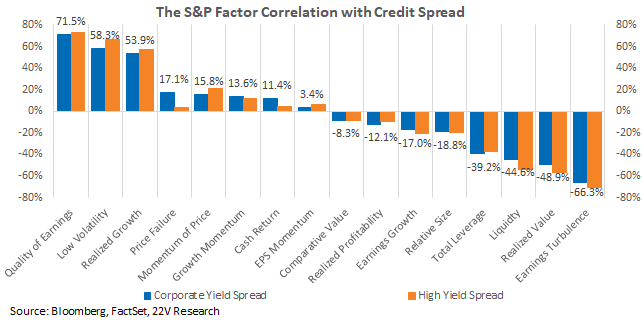
Credit conditions in particular are likely to tighten as equity markets come under pressure. Broadly speaking, risk-off and Growth factors benefit most from wider spreads, consistent with general trends during periods of tightening conditions. Quality tends to perform better during the credit driven portion of tightening. Momentum factors have tended to work well too, just much less so than during early phases of tightening.
FYI…the correlation between Value and Growth remains unusually high. That suggests there should be less return divergence between Value and Growth. On Friday the Value vs Growth factor spread was basically unchanged. Investors should focus on what sectors and factors work when financial conditions tighten. Focus on Quality and Low vol on the long side and avoid Low Liquidity, Leverage, and Earnings Turbulence. S&P 1500 stocks with weaker credit ratings (BBB and below) are at risk near term.
We go over why we think the range remains 3800-4200 in the S&P unless a deep recession is obvious. It comes down to high cash returns from monopolies, still low long-term neutral rates (0-50bp real) and 10yr yields that will move lower WITH lower earnings. Lower earnings likely mean inflation is moving much lower.
Full report below…
MARKET VIEWS: As we noted yesterday, the Fed is transitioning to a world where the level of the funds rate not the size of the interest rate hikes is the most important factor. Powell hammered the idea home on Friday that economic “pain” should be expected and one way to make that happen is by signaling interest rates are going to be higher for longer. The Fed funds futures curve has shifted higher (most of the move post Powell’s JH speech was in the back-end of the curve) and now it’s a question of what level the Fed stops at.
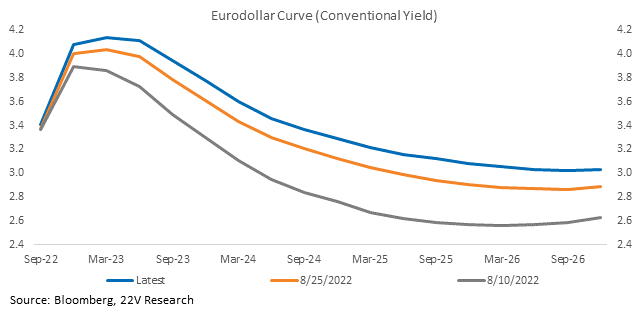
The range on where the Fed might stop seems to be 3.25-4%. If it becomes clear that 3.25-3.5% is the stopping point, that will be bullish. 3.25-3.5% peak fed funds would require a slowing of demand growth though and some loosening of the labor market. Unfortunately, with the employment gap over full employment and wages unusually firm…
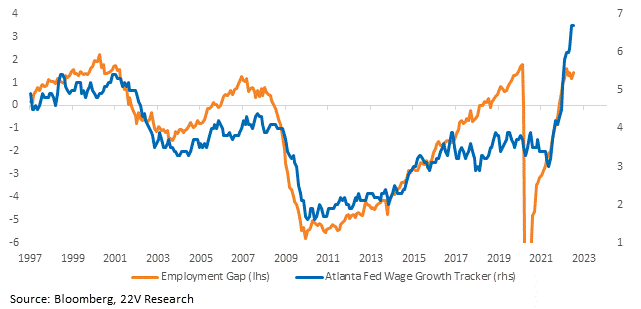
…at the same time demand growth still running above trend. We continue to harp on the fact that the NY Fed’s indicator of underlying demand (consumption / investment) is running above trend. As long as underlying demand for the US economy is above trend and the labor market is tight, financial conditions will be biased to tighten. Powell made it very clear that labor market pain is needed to slow inflation. If Payroll comes in around consensus this week (headline payroll of 300k, 3.5% urate and 6.3% wage growth), that will likely reinforce that financial conditions should tighten. Especially after the very strong payroll last month.
Equity market conditions tend to move with credit market conditions (and Treasuries, which is why the VIX and the MOVE are highly correlated). And we have seen that over the pasts six week. Credit conditions have been easing with spreads narrowing across the board. Easier credit conditions that spur investment/hiring are opposite the Fed’s goals. The next phase of tightening should be driven by credit conditions. Broadly speaking, risk-off and Growth factors benefit most from wider spreads, consistent with general trends during periods of tightening conditions. Relative to the early and volatility driven phase of tightening, Quality tends to perform better during the credit driven portion of tightening. Momentum factors have tended to work well too, just much less so than during early phases of tightening.

FYI…the correlation between Value and Growth remains unusually high. That suggest there should be less return divergence between Value and Growth.
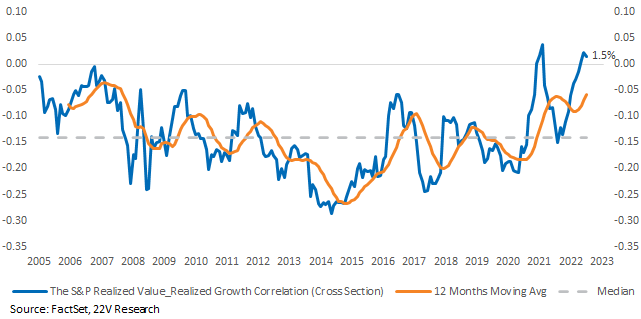
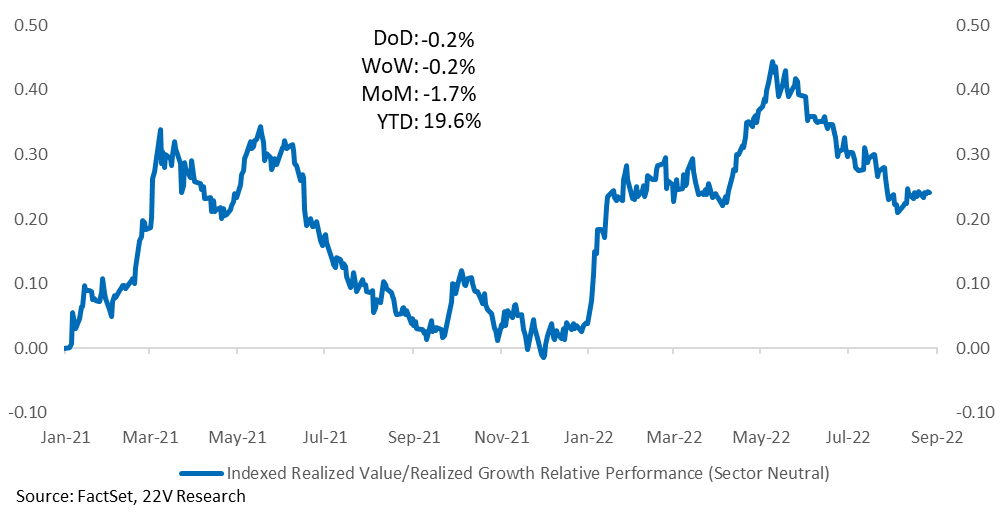
That is exactly what has happened. Despite 10yr yields moving much higher recently, Value has been flat relative to Growth. Investors should focus on what sectors and factors work when financial conditions tighten. Focus on Quality and Low vol on the long side and avoid low liquidity, leverage and Earnings Turbulence. S&P 1500 stocks with weaker credit ratings (BBB and below) are at risk near term.
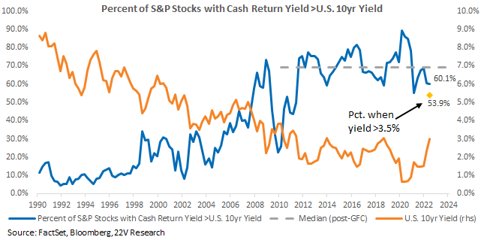
FYI: We continue to believe the S&P will remain in a 3800-4200 range until we have better sense of how deep the economic slowdown will be. Keep in mind that 60% of S&P 500 names have cash return yields above 10yr yields and that moves to 54% of names if the 10yr goes to 3.5%. If 200-215 is the trough EPS number, that WOULD come with lower inflation and economic growth (lower earnings means companies can’t pass on costs) and 10yr yields would likely move lower. Investors would likely assume neutral rates are 0-50bp real. The monopolies are likely still keeping cash returns elevated in the non-deep recession scenario, which is why below 3800 is tough without higher conviction of a deep recession.
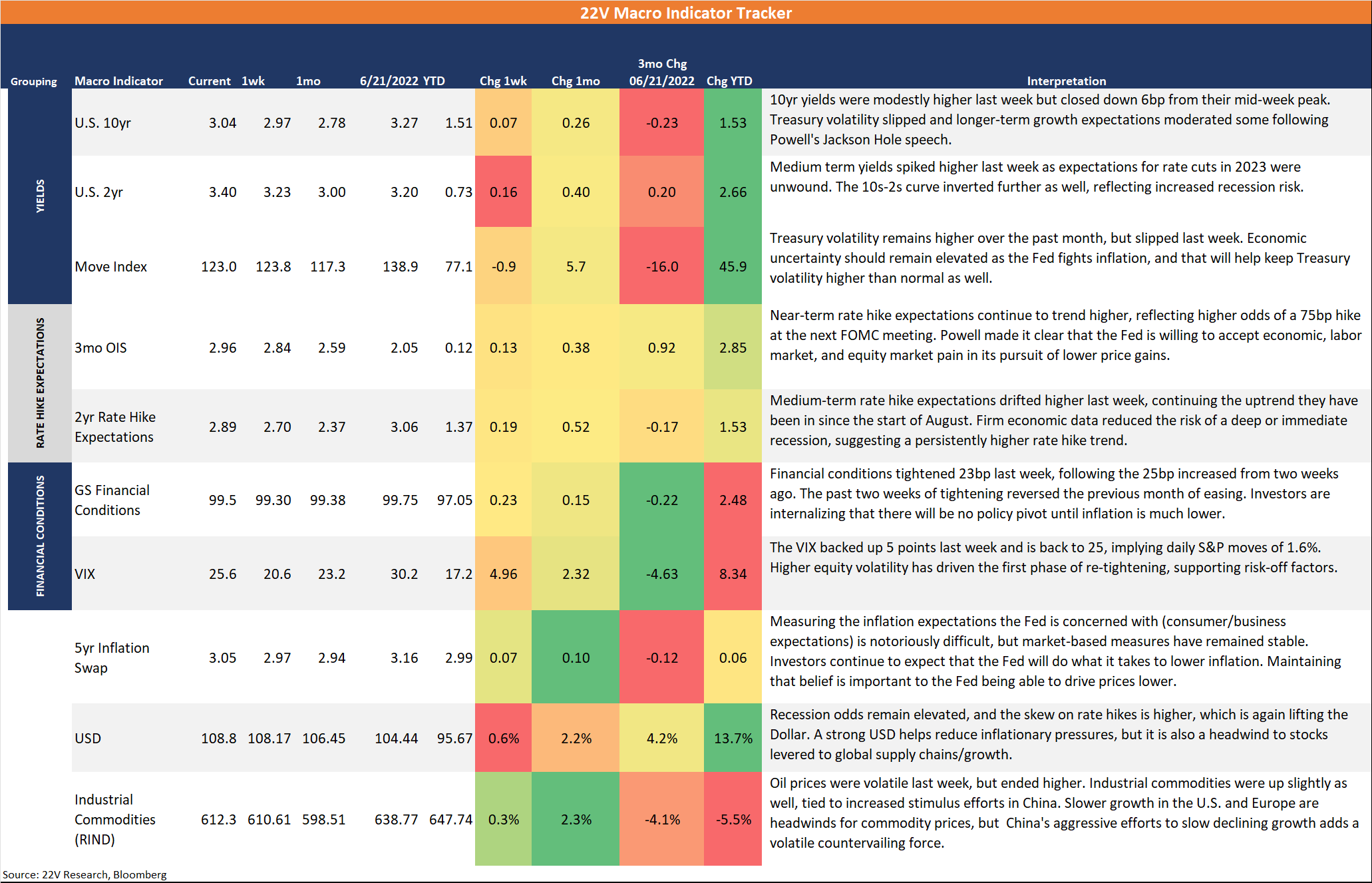
Macro Tracker: Volatility continues to march higher and financial conditions tightened 23bp last week, following the 25bp increased from two weeks ago. The past two weeks of tightening reversed the previous month of easing. Investors are internalizing that there will be no policy pivot until inflation is much lower, and that means increased recession risk and general growth uncertainty. High frequency economic indicators have slowed, but remain far too strong for get core inflation back to the Fed’s target range. Odds of rate cuts in 2023 has been all but erased over the past few weeks, and market internals are repricing for a prolonged period of tight (above neutral) fed fuds. At the market level, the re-tightening of financial conditions has driven multiples lower, unwinding much of the July leg of the recent market rally, and implied volatility higher. At the factor level, tighter conditions have manifested as a rotation into risk-off groups. The next leg of tightening should come from credit conditions, which will further encourage an internal rotation into lower volatility, higher quality names at the expense of higher risk stocks.