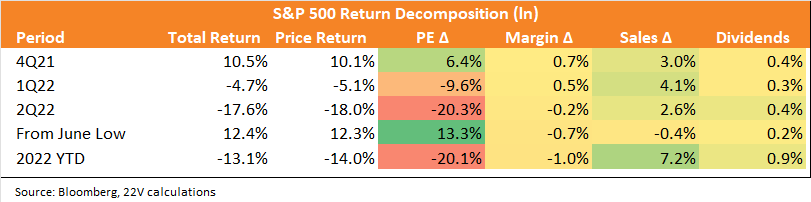
Easing recession risks, underwritten by a balance of stronger data AND expectations that growth/inflation were slowing have eased financial conditions supporting a 13% rebound in the S&P. Those gains have been driven by a rebound in equity PEs as investors lowered their odds on a new-term, deep recession. Strong dividend payments (and overall cash return) have added to market gains as well, but this has been a macro/sentiment driven rally.
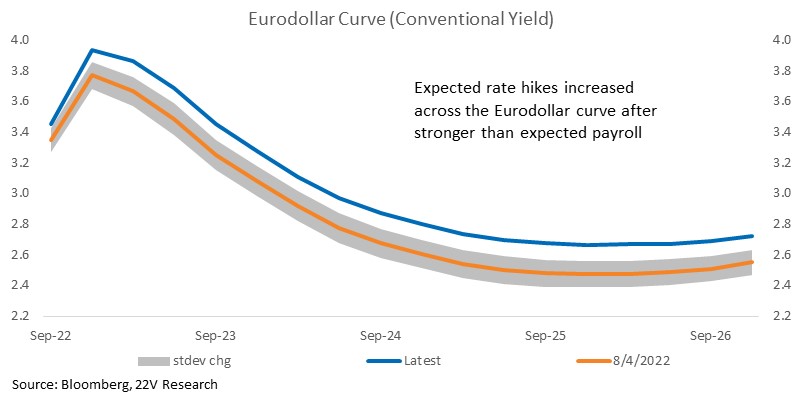
Last week’s strong payroll reading, and sticky high inflation increase the risk that further Fed tightening will be needed to slow growth. Overall financial conditions were flat/down on the week, but the incremental change following the payroll report was toward tightening.
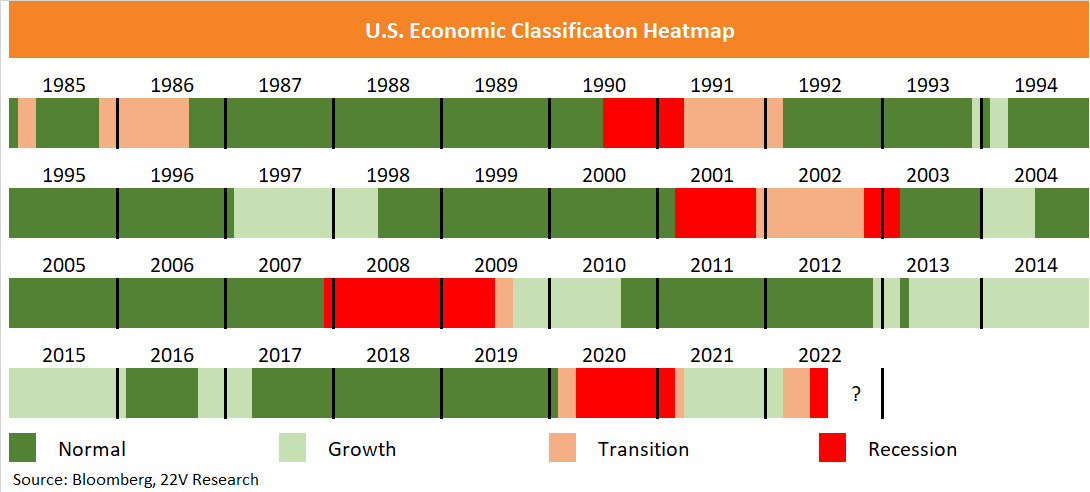
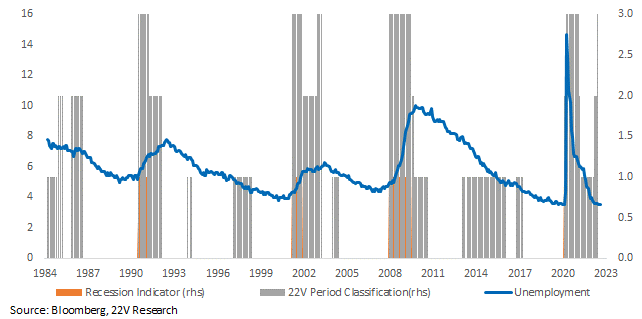
A few months back we introduced our Macro Regime Classification Model (detailed information here). Until recently, the model indicated the economy was in a transition period following a Growth phase that ended in early 2022. More recently, that model has shifted, and now classifies the economic as being in a recession. This is an objective, probabilistic classification based on the overall macro backdrop. Contributing to the recession probability are falling oil prices, PCE readings, and elevated credit spread. The payroll readings last week were much stronger than consensus expectation, but unemployment rate declines have stalled, typical of the start of previous recession periods.
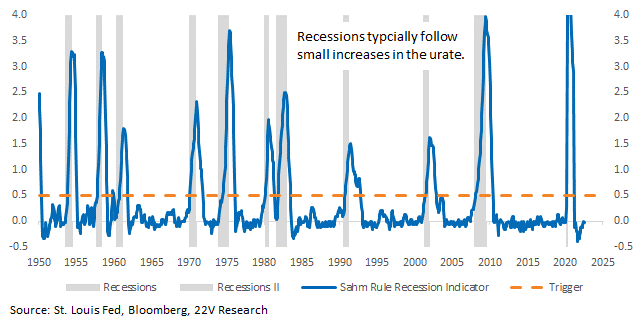
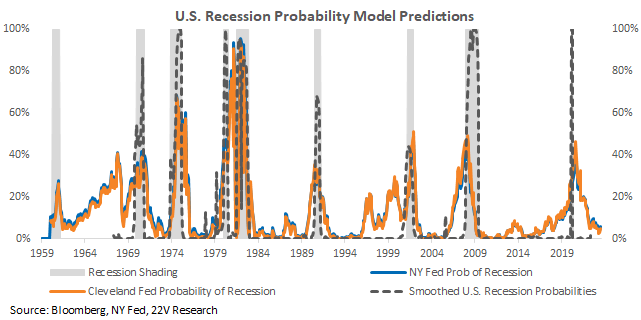
Other recession models such as the Sahm indicators (urate based), and NY and Cleveland Fed Recession probability models continue to indicate low recession risk. But readings have been moving higher, indicating increased near/medium-term recession risk. No recession model is perfect, and it is possible an official recession will still be avoided. What our modeling suggests is that positioning should be weighted more toward a Transition/Recession factor/industry profile than one of Transition that is turning into back into Growth.
In the full report we run through the Factor/Sector positioning consistent with Transition/Recession periods. Bottom line is to favor Quality Cyclicals until there is a clearer forward path for the economy and policy.
Macro Regime Monitor Slides into Recession: Easing financial conditions and declining long-term inflation expectation in mid-June has led to a rebound in the S&P, which is now 13% above its low. Those gains have been driven by a rebound in equity PEs as investors lowered their odds on a new-term, deep recession. Strong dividend payments (and overall cash return) have added to market gains as well, but fundamentals like sales and margin expectations have been a net drag. This has been a macro/sentiment driven rally.
Easing recession risks were underwritten by a balance of stronger data AND expectations that growth/inflation were slowing, potentially on a path that would allow the Fed to remain on its current policy path. Last week’s strong payroll reading, and sticky high inflation are calling the second part of that thesis into question. Potential for a more hawkish forward policy path helped lift yields last week, further inverting the 10s2s curve and increasing recession risk in general. Overall financial conditions were flat/down on the week, but the incremental change following the payroll report was toward tightening.
A few months back we introduced our Macro Regime Classification Model (detailed information about the model can be found here), which is based on monthly readings of 17 important macro forces (spreads, commodity prices, sentiment readings, leading indicators, etc.). Until recently, the model indicated the economy was in a transition period following a Growth phase that ended in early 2022. More recently, that model has shifted, and now classifies the economic as being in a recession.

Ours is an objective, probabilistic classification based on the overall macro backdrop, compared to historical readings. Regime classifications are based on multiple macro readings, some of which are flashing recession while others are not. Contributing to the recession probability are falling oil prices, PCE readings, and elevated credit spread. The payroll readings last week were much stronger than consensus expectation, but unemployment rate declines have stalled, typical of the start of previous recession periods.
The Sahm rule recession predictor, which is solely based on unemployment rate, suggests recession risk remains low. However, classification of recession based on Sahm rule sometimes can be a few months later than the start of actual recession historically as it requires an increase in the Urate to signal the start of a recession. Our model takes unemployment and combines it with other indicators to arrive at a more holistic classification.
Other recession models such as the NY and Cleveland Fed Recession probability models continue to indicate low recession risk. But both readings have been moving higher, indicating near/medium-term recession risk has indeed been creeping higher.
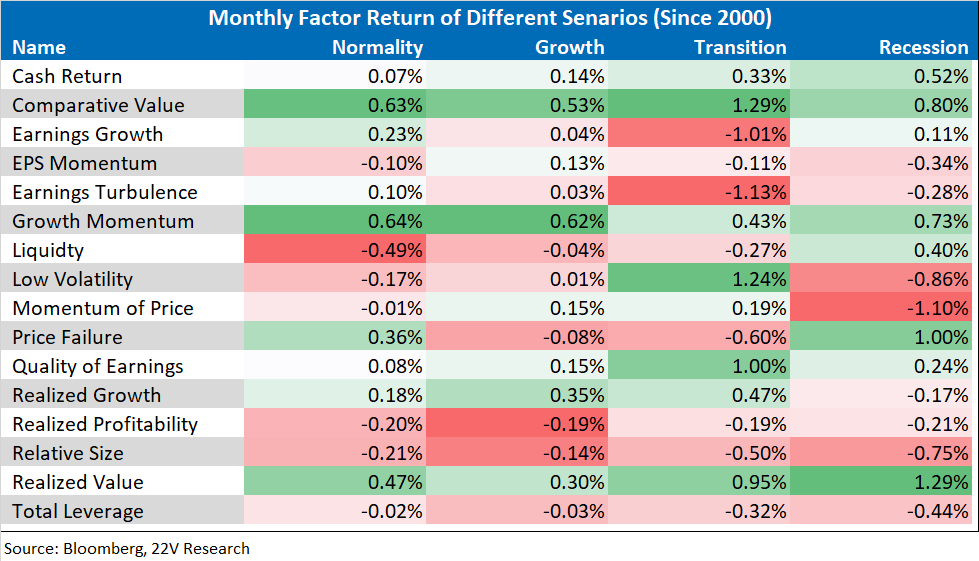
Positioning for Slowdown/Mild Recession: At the factor level, Value factors and Price Failure used to be leading factors during recessions, while Momentum of Price and Low Volatility underperformed. Keep in mind that equity bear markets usually start BEFORE the start of recession and equities bottom in the middle of a recession. So, factor returns going forward are likely to share characteristics of both Transition and Recession periods. No recession model is perfect, and it is possible an official recession will still be avoided. What our modeling suggests is that positioning should be weighted more toward a Transition/Recession factor/industry profile than one of Transition that is turning into back into Growth.
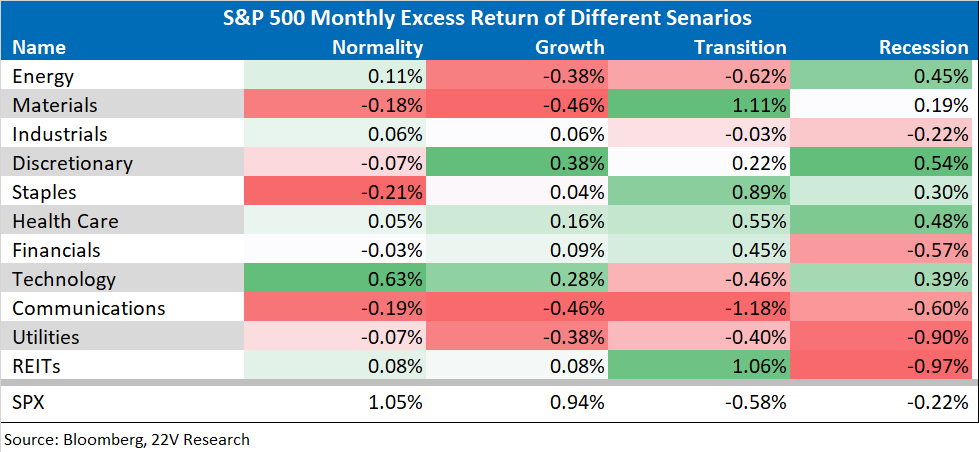
Discretionary, Health Care and Energy usually lead during Recession periods at the expense of Utilities and REITs, which generate some of their best relative returns during transition periods (Real Estate history is limited, so take those sector level readings with a grain of salt). Discretionary and Tech have been the best performing sectors since the start of June, gaining 6.9% and 4.5% respectively, while Energy and Materials are the worst performing sectors losing -15.5% and -10.3% respectively.