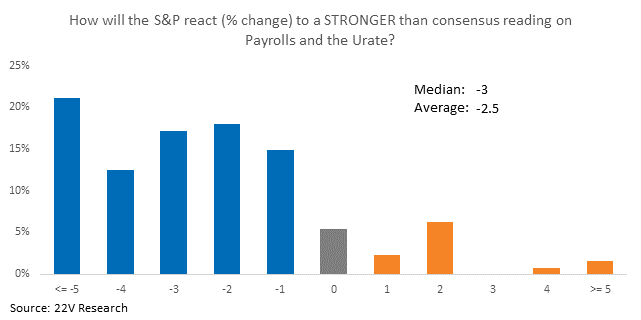
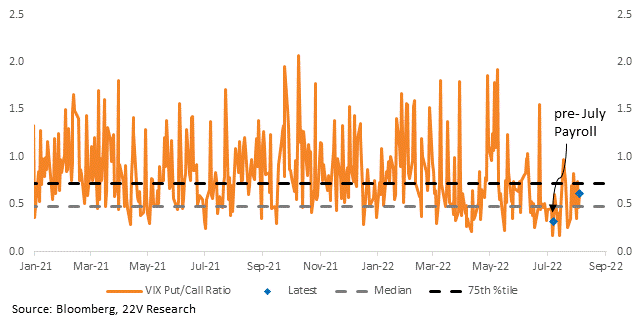
SUMMARY: Investors we polled (HERE) expect equity markets to drop significantly (-3% or more over the coming weeks) if payrolls and the urate are stronger than consensus. Investors also expect equity markets to rise (~2% over the coming weeks) if payrolls and the urate are weaker than consensus. Implied volatility at 21 puts average daily volatility at 1.3%, so investors are expecting a larger move around the data then is indicated by the VIX. In a bit of a departure from the last month or so, the VIX put/call ratio is middle of the road. Going into previous data points and big earnings weeks, investors had been buying more calls than puts (VIX Put/Call ratio moving below its 20th%tile). In theory, that means investors are less worried about event risk, which could make it harder for markets to squeeze higher. At the very least, the pace should settle down.

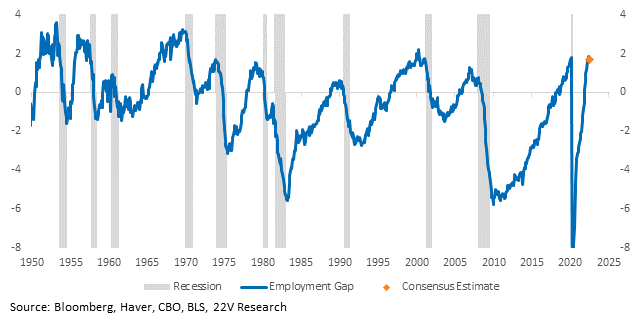
Consensus estimates of today’s payroll data implies Gerard’s measure of the employment gap will continue to go roughly sideways (HERE). The Fed will continue to ease the labor market, accepting the recession risk that follows. Growth will slow. As we noted yesterday, internals of the data are becoming MUCH MORE IMPORTANT, so the employment gap (urate/participation are important) and hours worked, which informs the labor income proxy, are important. A lower unemployment rate (below 3.6%) would be a large negative. Above 3.6% (but not too much…so like 3.7%, probably a positive).
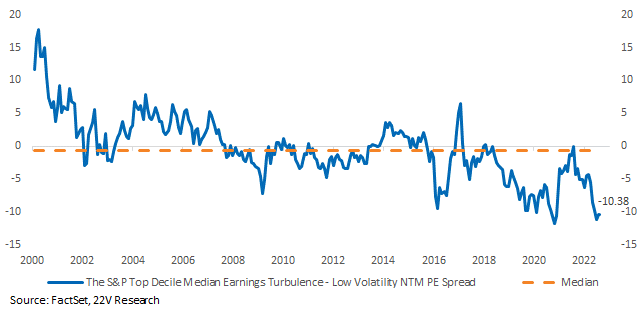
Being long Cyclicals/Risk-on factors is not as easy as it was, but a significant near term reversal seems tough as well. Earnings Turbulence PEs are in their 2nd %tile relative to Low Volatility PEs. The unusually high relative PE of high Low Vol names makes hiding in that factor more risky. That same idea holds for Cyclicals relative to Defensives. Unless the economic tail risk becomes a clear and present danger again. The tails being driven by the Fed tightening financial conditions much more aggressively or a recession becoming an obvious NEAR TERM risk. Europe/China risk are a possibility as well.
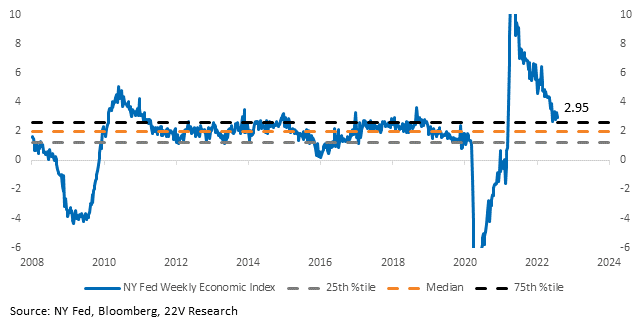
The NY Fed’s Weekly Economic Index (WEI) is an index of ten daily and weekly indicators of real economic activity. It represents the common component of series covering consumer behavior, the labor market, and production. In short, it is a good high frequency picture of underlying demand. Updated through this week, underlying demand is still pretty firm. Slowing, but still ok. That is important. As inflation moves lower and demand is slowing but ok, Cyclicals/risk-on factors can outperform risk-off factors/Defensives. This dynamic could change in the Fall as the revenge travel season fades and economic growth slows more quickly, but it’s not happening yet.
Full report below…
MARKET VIEWS: Markets are relatively quiet ahead of payroll and investors we polled (HERE) expect equity markets to drop significantly (-3% or more of the coming weeks) if payrolls and the urate are stronger than consensus. Investors also expect equity markets to rise (~2% over the coming weeks) if payrolls and the urate are weaker than consensus. Implied volatility at 22.3 puts average daily volatility at 1.4%, so investors are expecting a larger move around the data then what is implied by the VIX.
Interestingly, unlike the last month or so, the VIX put/call ratio has middle of the road heading into an important data point. Previously call volume had been significantly higher relative to Put volume (well below the 20th%tile). That makes a squeeze higher on the data less appealing. In theory at least.
Payroll Internals to Focus On: Gerard believes the labor market has probably stopped tightening (see JOLTS, last month’s employment gap), but that the level of employment is still inconsistent with disinflation at a pace fast enough for the Fed. Consensus estimates of today’s data implies Gerard’s measure of the Employment Gap will continue to go roughly sideways. The Fed will remain hawkish, working to ease the labor market, accepting the recession risk that follows. As we noted yesterday, internals of the data are becoming MUCH MORE IMPORTANT, so the employment gap (urate/participation are important for this) and hours worked, which informs the labor income proxy, are important.
Low volatility names, which is predominantly made up of Defensive factors currently, continues to come under intense pressure. We remain short Low Vol and Defensives but that position is getting harder. If and when the economic tails (near term recession risk increases meaningfully or the Fed decides to tighten financial conditions much more aggressively) become an issue, that is when being short low volatility will be a problem.
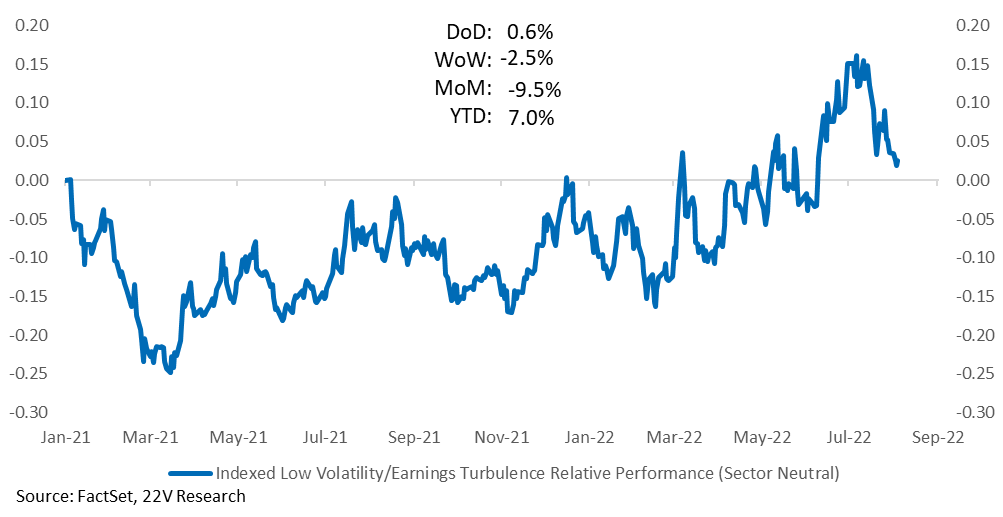
Keep in mind that Earnings Turbulence PE are in the 2nd%tile relative to Low Volatility PE. Despite the significant rally of Earnings Turbulence relative to Low Vol. The unusually high relative PE of the Low Vol factor makes hiding out that factor more difficult. This same idea holds for Cyclicals relative to Defensives. Again, unless the economic tails become a clear and present danger again.
If the payroll report is super strong and wages shoot up, the tail risk of the Fed raising rates aggressively would increase. The near term recession risk odds continue to seem low though. The NY Fed’s Weekly Economic Index (WEI) is an index of ten daily and weekly indicators of real economic activity, scaled to match up with the four-quarter GDP growth rate. It represents the common component of series covering consumer behavior, the labor market, and production. In short, it is a good high frequency picture of underlying demand. Updated through this week, underlying demand is still pretty firm. Slowing, but still ok. That is important. As inflation moves lower and demand is slowing but ok, Cyclicals/risk on factors can still outperform risk off factors/Defensives. This dynamic could change in the fall as the revenge travel season fades, but not happening yet.