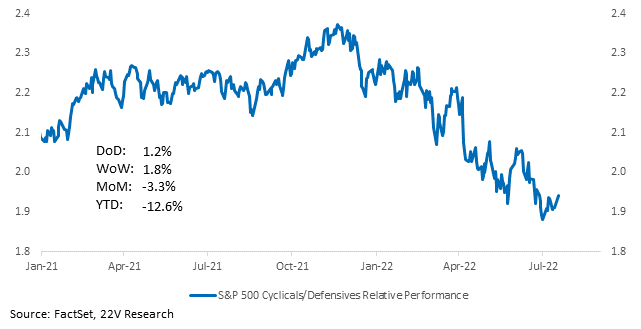
SUMMARY: Cyclicals outperformed Defensives yesterday by 1.2% (and outperformed ex-Energy) despite the ~2pp reversal in the S&P. As we discussed yesterday, the selloff in Cyclicals has been extreme and a deep recession may be required for Cyclicals to meaningfully underperform from here. BofA’s Manager Survey and the Bloomberg MLIV Survey from early July both show extreme investor pessimism. Earnings estimates will come down, reducing the PE compression seen this year, but sentiment readings suggest a good deal of the expected decline has been discounted. The bar is higher for slowing growth to impact equities. Especially with inflation tail risk moving lower (see anchored inflation expectations). We think Cyclicals and Earnings Turbulence have some room to reverse higher, through the summer, as the POSSIBILITY of the middle ground scenario (avoiding a deep recession or much higher inflation expectations) improves. In short, less focus on tail risk has implications for Sectors and Factors that have lagged significantly.
The Dollar is still supported in the medium and longer-term by elevated recession risk, but, similar to Cyclicals vs Defensives, the outlook has been so negative there is room for a short-term reversal. Especially if the ECB goes 50pb (which they are discussing) vs the expected 25bp.
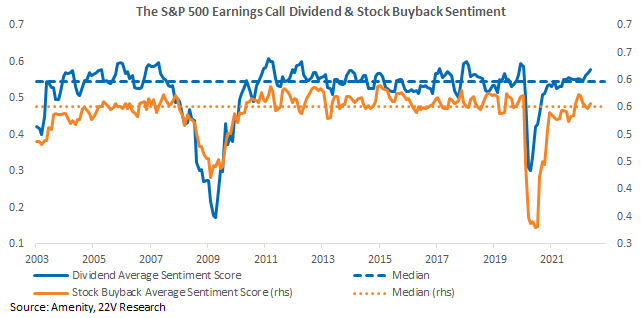
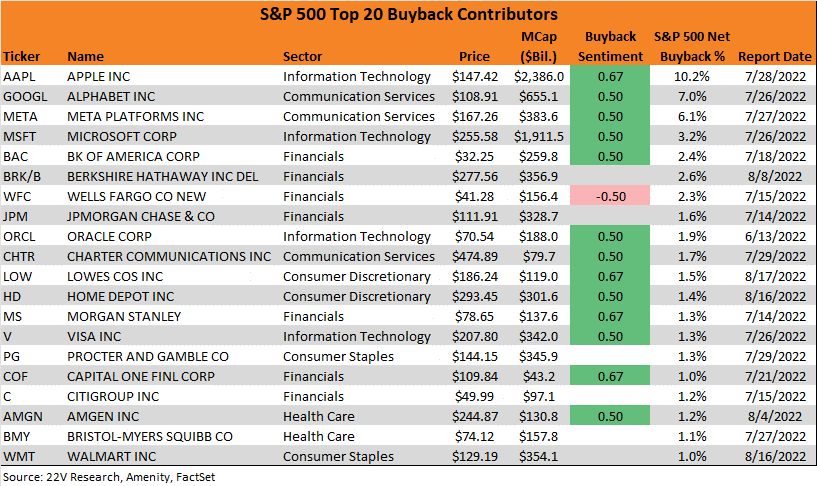
We are focused on buybacks because 1) they’re a significant component of cash return, which is an underappreciated market support (and feeds into the holistic valuation metrics we prefer), and 2) it’s unclear how they will fare during an economic slowdown. Buyback sentiment, measured using the Amenity natural language processing tool, is still positive so the breadth of activity is on solid footing. But Buybacks are highly concentrated. The top 20 contributors are responsible for over 50% of trailing net buybacks. Most of the largest contributors have positive buyback sentiment scores (those with missing values didn’t discuss buybacks), but some of the largest contributors – JPM and C – are pausing buybacks. BofA is not. We will be watching this list during this earnings season. CAP is the only reporter this week.
Full report below…
MARKET VIEWS: Cyclicals outperformed Defensives yesterday by 1.2% (and outperformed ex-Energy) despite the ~2pp reversal in the S&P. As we discussed yesterday, the selloff in Cyclicals has been extreme and needs even more bad news to move meaningfully lower again. BofA’s Manager Survey and the Bloomberg MLIV Survey from early July draw similar pictures of investor sentiment: investors expected growth to slow, earnings to decline, and risk assets to struggle. The low volatility factor significantly underperformed as well.
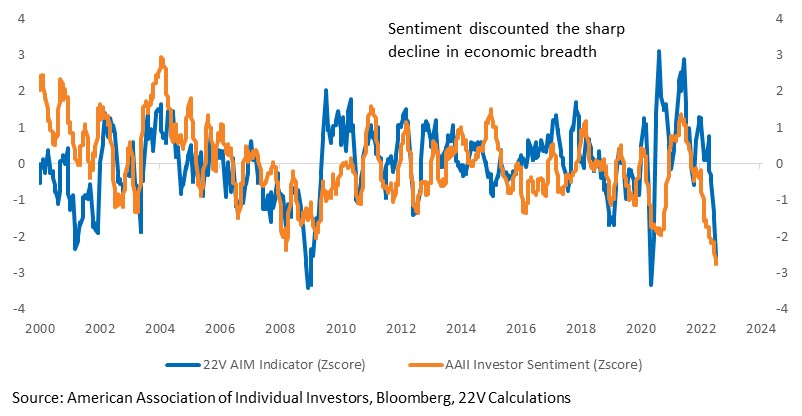
Investors sentiment collapsed ahead of the decline in economic activity, helping drive the S&P PE 5 points lower YTD. Earnings estimates will come down, reducing the PE compression seen this year, but sentiment readings suggest a good deal of the expected declines have been discounted. A deep recession/collapse in earnings is necessary to justify a meaningful drawdown from current levels.
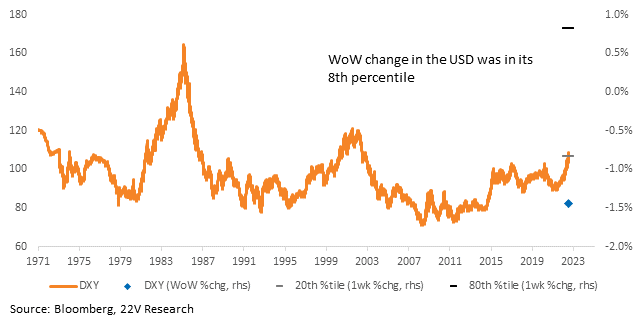
Policy shocks are a risk and the ECB is considering a 50bp hike on Thursday, which would be above market expectations. The Euro is up in response. The Dollar is still supported in the medium and longer-term by elevated recession risk, but, like Cyclicals vs Defensives, the outlook has been so negative there is room for a short-term reversal. The w/w decline in the USD was an 8th percentile move.
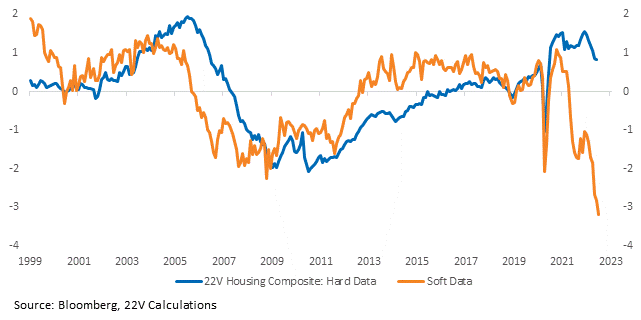
The NAHB Housing Market Index (HMI) missed, falling to 55 in its second largest drop on record (only April 2020 was worse). The three components: sales, expected sales, and traffic of prospective buyers, all fell significantly m/m. Traffic of prospective buyers is particularly poor. Our housing composite indicator continues to deteriorate; soft housing data has reached a new low. We’ll get more hard data throughout the week. Rising home prices, mostly demand driven, contributed the most to rising household net worth in the COVID recovery. So housing is set to contribute a lot to the slowdown. This week’s data is important.
Earnings: We are focused on buybacks because 1) they’re a significant component of cash return, which is an underappreciated market support (and feed into the holistic valuation metrics we prefer), and 2) it’s unclear how they will fare during an economic slowdown. Buyback sentiment, measured using the Amenity natural language processing tool, is still positive. We will be monitoring this as it updates during reporting season.

Buybacks are highly concentrated. The top 20 contributors are responsible for over 50% of TTM net buybacks. And most of the largest contributors have positive buyback sentiment scores (those with missing values didn’t discuss buybacks). Note that some of the contributors – JPM and C – are pausing buybacks. BofA is not. We will be watching this list during this earnings season. CAP is the only reporter this week.
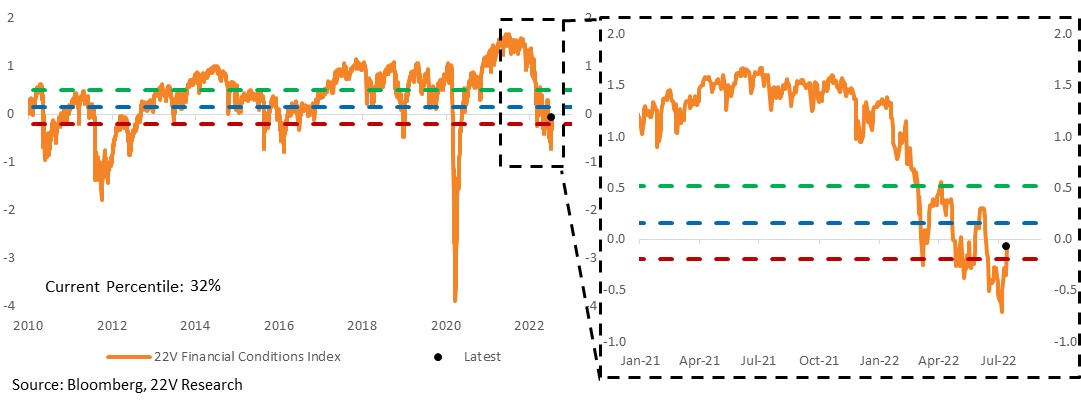
Backdrop of Increased Dispersion: Financial conditions have eased some over the past two weeks, helping lift equities in general and easing the headwinds facing risk-on factors as well.
Easing of financial conditions combined with the topping out of bond yields are helping lift some beaten down risk assets. Growth stocks have steadied and moved higher.
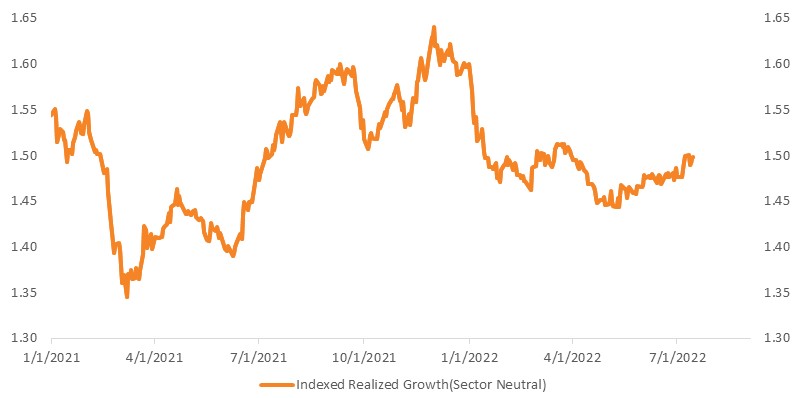
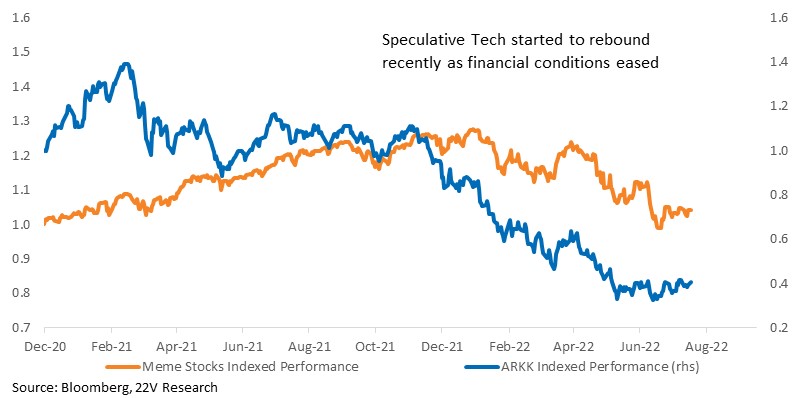
ARKK, which is still down -72% from its peak, is up 21% from its recent low. Speculative names are still at risk, particularly those that rely on abundant, cheap financing. But like Cyclicals and the Dollar, and as was noted about Tech broadly in a Quant report yesterday (HERE), stabilization of the bear market decline allows for lower correlations and more return dispersion.