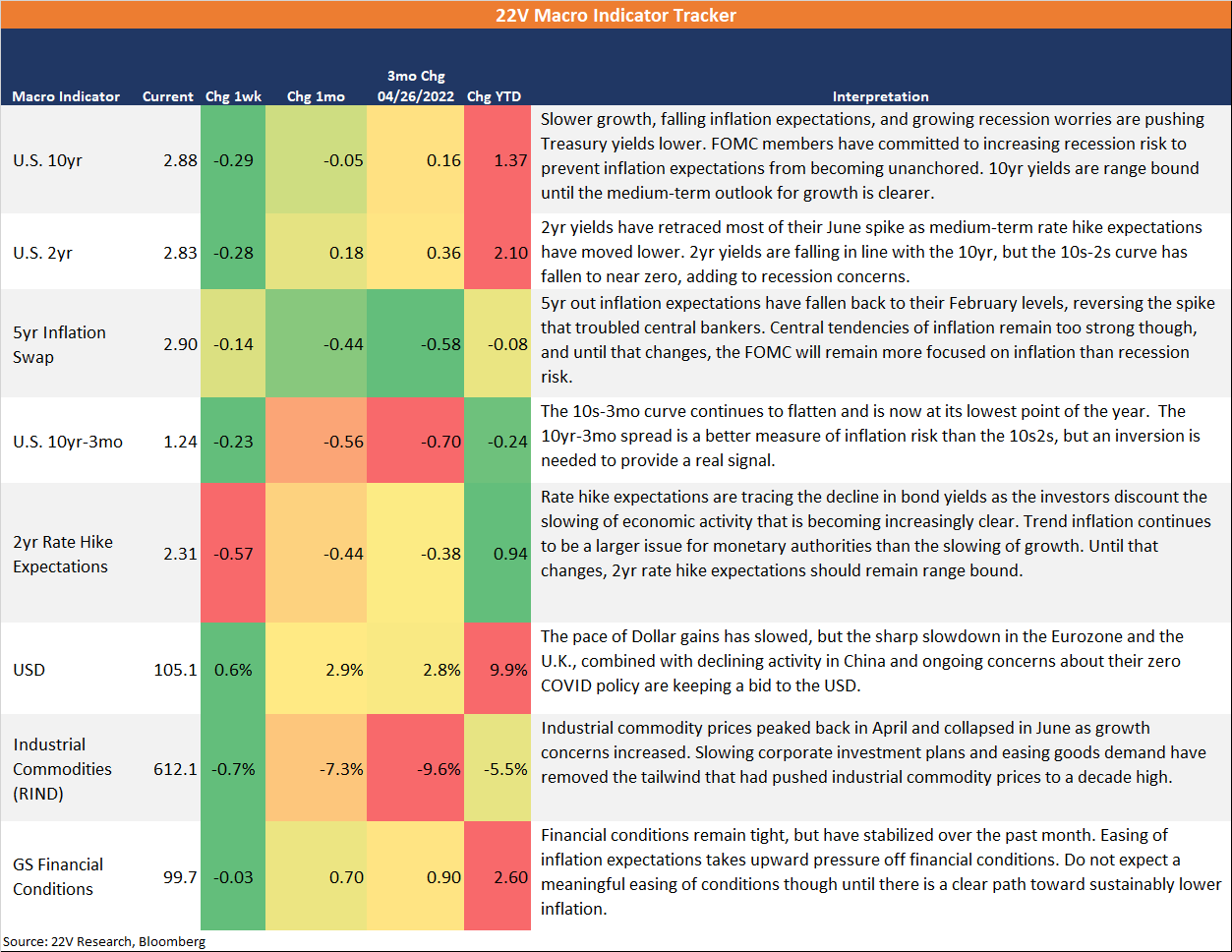
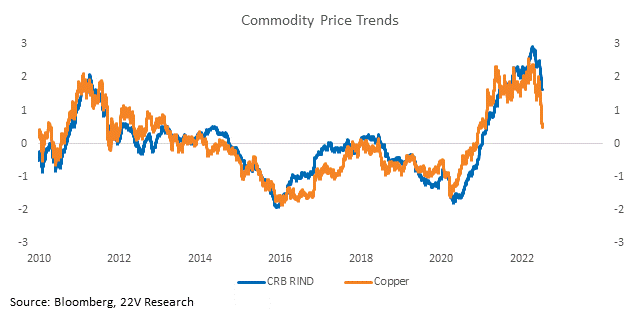
SUMMARY: Janet Yellen and China Vice Premier Liu He reportedly discussed easing sanctions and tariffs. The China Caixin composite PMI rose 13 points m/m in June and China is setting up a $75B infrastructure fund. But copper hit a 17-month low, and commodities broadly are well off the boil. The drag from Europe is the issue. Even with the slightly better than expected European service PMI, the Euro is collapsing vs the USD and European CDS spreads are at peak-COVID wides. Germany posted its first trade deficit since 1991 in May. In short, Germany is exporting much less (supply constraints/slower growth) while import costs have surged (energy prices). At the same time, Germany is likely to bail out energy producers and limit the consumer impact of higher commodity prices (not passing on gas costs). That eats into surpluses and adds to the ugly backdrop in Europe. Bottom line. Europe will remain an anchor on US yields.

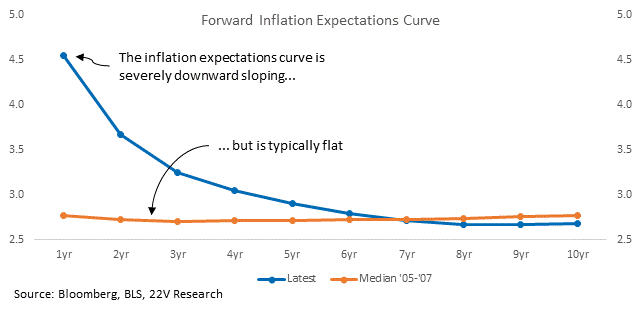
Investors have reasoned the Fed can back away from the current rate hike path because longer-term inflation expectations are still anchored. But Professor Summers mentioned on our all with him Friday, that inflation expectations are anchored because of the Fed’s insistence on getting to 2%. If the Fed backs off, inflation expectations won’t stay anchored. The main takeaway remains the same; the Fed is taking recession risk to fight inflation.
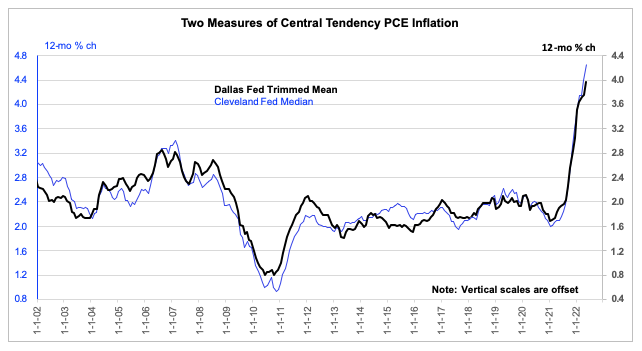
Risks of a hard landing have increased but it remains unclear if the tightening of financial conditions I enough to bring inflation own to the Fed’s target As Gerard noted about the latest U.S. income/spending report, the “major boost” to inflation provided by rents is slowing, but “…the strength in the median is not “just” about rents and therefore makes it more meaningful.” Financial conditions are unlikely to tighten further unless inflation trends remain strong. Payroll this week and CPI next week are important for the next move in yields/factors.
Recently, weakening economic activity has translated into lower bond yields, reducing downside risk to S&P fair value. That doesn’t matter much near term though as how much earnings will suffer is the more pressing issue for stocks. Implied volatility will remain high until it is clear how far the growth slowdown will go and how much damage has been done to corporate profitability. Leading into reporting season, equities have been volatile, high Earnings Turbulence names continue to move lower and Low Vol stocks just posted one of their best weeks (95th %tile) in 20yrs. That rotation suggests investors are de-risking ahead of the reporting season.
MARKET VIEWS: Janet Yellen and China Vice Premier Liu He reportedly discussed sanctions and tariffs. The depth of the conversation is unclear. Kim Wallace is more interested in pace than content of talks. Per Kim, it’s more important that a structured conversation start; the substance can only matter after shuttle negotiations officially begin. Commerce (Raimondo) is the player to watch – they handle export controls and enforce trade agreements. Data has been better too. The Caixin composite PMI rose 13 points m/m in June, from 42.2 to 55.3. And China is setting up a $75B infrastructure fund. But copper hit a 17-month low and commodities broadly are well off the boil, so the news out of China is clearly not moving the needle on global growth trends.
On Friday we hosted a call with Larry Summers. He had some great insight on the Fed and inflation expectations (among many other things). Investors have frequently reasoned the Fed can back away from the current rate hike path because longer-term inflation expectations are still anchored, as nicely illustrated in the downward sloping inflation expectations curve. But Professor Summers thinks inflation expectations are anchored because of the Fed’s insistence on getting to 2%. If the Fed backs off, inflation expectations won’t stay anchored. So, the Fed can’t back off because inflation expectations are anchored.
We agree and have been pushing an “inside the box” view of monetary policy. The Fed is going to do what they say they are going to do – slow growth and inflation. The last CPI print just increased the urgency to slow growth faster. As Gerard noted about the latest U.S. income/spending report, the “major boost” to inflation provided by rents is slowing, but “…the strength in the median is not “just” about rents and therefore makes it more meaningful.” Rents are still accelerating, but the larger issue is the acceleration of median inflation.
And to lower price levels, the Fed is taking on recession risk. Larry believes recession risk is large; recessions tend reliably to happen when unemployment is below 4% and inflation is above 4%. Soft landings do not happen because rising unemployment has been a consistent indicator of recession.
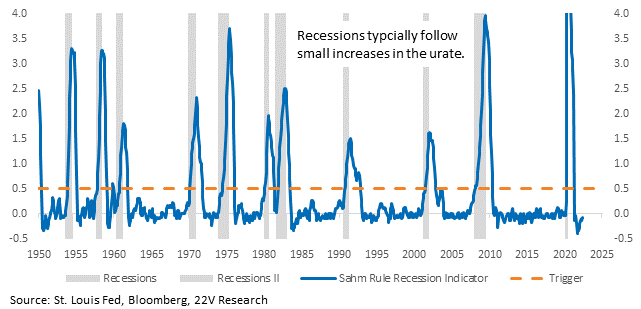
Summers’ does not expect the Fed will abandon their 2% target. But there is some nuance here that might allow us to shoehorn Summers’ take into our own (leaning on Gerard here). Obviously, Opportunistic Disinflation does not work if announced but Summers was open minded about the Fed using various bits of averaging or other sources of ambiguity to allow inflation to remain in the high 2s. The main takeaway remains the same; the Fed is taking recession risk to fight inflation.
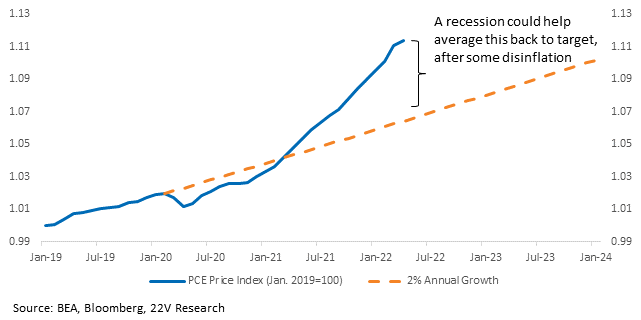
Macro Tracker: Global growth is clearly slowing, marked by declining PMI readings and falling commodity prices. Industrial commodities have reversed a year of gains with most of the retracement occurring since mid-June. Risks of a hard landing have increased but it remains unclear if the tightening of financial conditions has been enough to slow inflation to the Fed’s target. Financial conditions are unlikely to ease meaningfully near term, but further tightening is also unlikely unless inflation trends remain strong. Lower bond yields are reducing downside risk to S&P fair value, but that doesn’t matter much near term though as how much earnings will suffer is the more pressing issue for stocks. Implied volatility will remain high until it is clear how far the growth slowdown will go and how much damage has been done to corporate profitability. Leading into reporting season, equities have been volatile, high Earnings Turbulence names continue to move lower and Low Vol stocks just posted one of their best weeks (95th %tile) in 20yrs. That rotation suggests investors are de-risking ahead of the reporting season. Growth stocks are beginning to outperform relative to Value, a trend that should continue over the next few months but will be complicated by the increased correlation between Growth and Value ranks.