
SUMMARY
A mix of fresh and lingering policy challenges will force a likely divided government next year to revisit fiscal policy. Tax cuts will command plenty of attention as Republicans attempt to wrest back control of the national fiscal impulse. Disinflation, rising debt, pressures to keep defense spending on a real upward trend, and bipartisan reluctance to stem mandatory spending complicate fiscal agreements next year but we downplay the possibility that fiscalamity will be the result.
This note highlights four substantial fiscal decisions Washington must process over the coming year: tax extenders, FY23 appropriations, ACA premium tax credits, and the federal debt subject to limit. Tax extenders legislation will carry remnants of President Biden’s social spending plan and we remain of the view that he will sign a reconciliation bill into law by September 30 (before Senate reconciliation protection expires). We excluded the President’s FY24 budget request that will be submitted in 1Q23 because in a divided government that document more than usual becomes an ideological divining rod. There will be plenty of time to observe those deliberate market relevant implications, so reserve space, and your patience for now.
Extenders
The secret has been out for many months that the annual ritual of renewing small, usually one-year tax code tweaks would carry whatever remnant of BBB that Congress could negotiate. Senator Manchin for much of the second quarter has insisted a $1 trillion package must include deficit reduction. Many questions remain as the Biden administration attempts to regain footing and help bring this idea to law, but a lack of offsets isn’t one of them.
President Biden last year endorsed a net $3.5 trillion of tax policy changes available as offsets. The House Ways and Means Committee adopted $2.1 trillion of offsets. Manchin’s previously reported limit is $1 trillion with half going to deficit reduction. Whatever deal is cut will need all 50 Senate Democrats to become law. One or some senators will object to the larger offsets such as wealth taxes (about $1 trillion over ten years), changes to inversion rules (about $400 billion), stock buybacks taxes ($125 billion), or repeal of the prescription drug rebate rule ($145 billion). But the long list of available offsets offers room for compromise.
Momentum lies with those seeking to allocate $500 billion of tax expenditures. Forty small tax provisions expired last year including accelerated depreciation, the expanded child tax credit, and tax breaks for horse breeders. Each has support and opposition. The horse-trading must end soon so Congress can write and pass legislation to take advantage of Senate reconciliation protection which expires September 30. Green/clean energy has a bid and very likely will be part of anything Congress would enact. We reiterate our view that Biden will sign a reconciliation bill into law by September 30.
FY23 Appropriations
House appropriators yesterday released subcommittee funding caps, the latest sign of progress. But a continuing resolution through late November or early December is more likely to be needed to complete the FY23 discretionary spending process. As of now, bipartisan reacquaintance with targeted earmarks is the biggest driver toward all 12 bills becoming law before yearend. The obvious risk here is the post-midterm election mood.
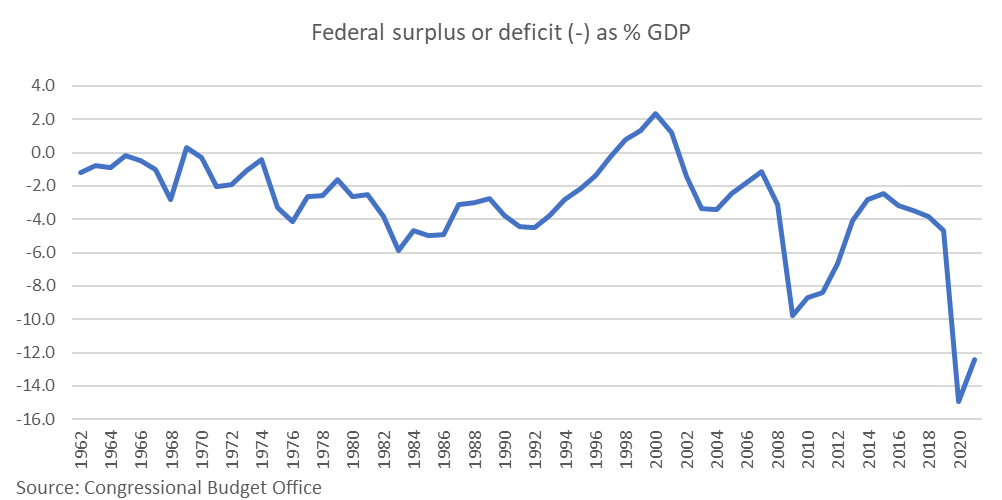
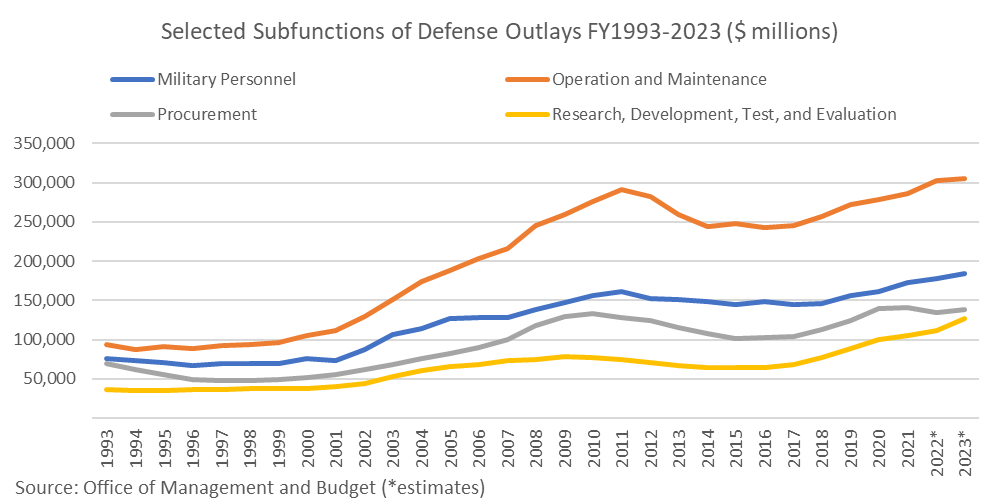
In the post-GFC recovery, deficit reduction peaked in FY2015, as seen in the preceding chart. Defense spending contributed to deficit reduction from 2009 through 2017 when it fell from 4.89 percent of GDP to 3.21 percent. It has bounced a small bit in real terms since then (3.4 percent). The chart below shows that RDT&E has been the big gainer, which eventually feeds into procurement upticks. This slow rebound off a relatively low base is supported by war necessities and Republicans very likely regaining the appropriations pen next year.
ACA premium tax credits
The 2021 American Rescue Plan increased the size of health insurance premium tax credits available through the Affordable Care Act program for that year and 2022. Expiration would increase costs for low- and middle-income individuals and household participants. The 2018 midterm and 2020 general elections validated healthcare as an emergent third rail of politics. Our sense is Washington will renew the program and its costs after the upcoming election, unless immediate post-election partisan bile is so strong that a retroactive 2023 deal is the only viable option.
Debt Subject to Limit
Recovery revenues and fiscal drag compared to the previous two fiscal years of stimulus create a small pocket of debt reduction that melts away under current law by the next presidential election year as seen above. The post-GFC trend though is troubling. Next year will indicate the direction and pace of US federal debt. If natural and policy-generated deficit reduction are a dominant fiscal tone at the end of this year, a reversal will require a supporting narrative. Fiscal storylines will be easier to produce than votes to worsen deficits and debt, but it has happened several times in the recent past.

The macroeconomic adjustment being undertaken by the Fed likely stokes fiscal debate next year. If so, it is more likely elected officials negotiate hard against each other but find little upside in pushing the US over a cliff. Inflation is the more tangible piece of the on-going tightening of financial conditions. Today in the Senate and tomorrow in the House (to generally less informed and much more vocal Members) Fed Chair Powell will be pummeled as he attempts to explain causes of and reasons for the dual pain of inflation and fighting it. Treasury Secretary Yellen over the weekend said inflation isn’t going away soon. Neither will questions of why prices are so elevated and why appointed officials didn’t do more to prevent its wrath – at least not before November 8 of this year.

