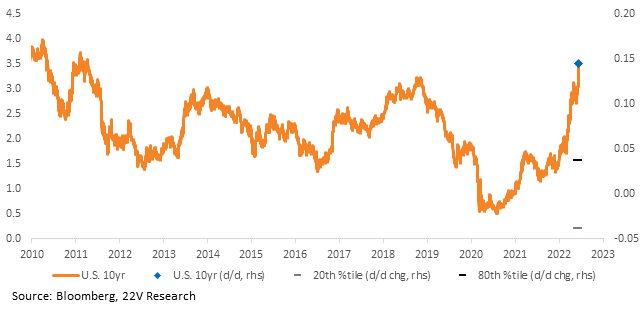
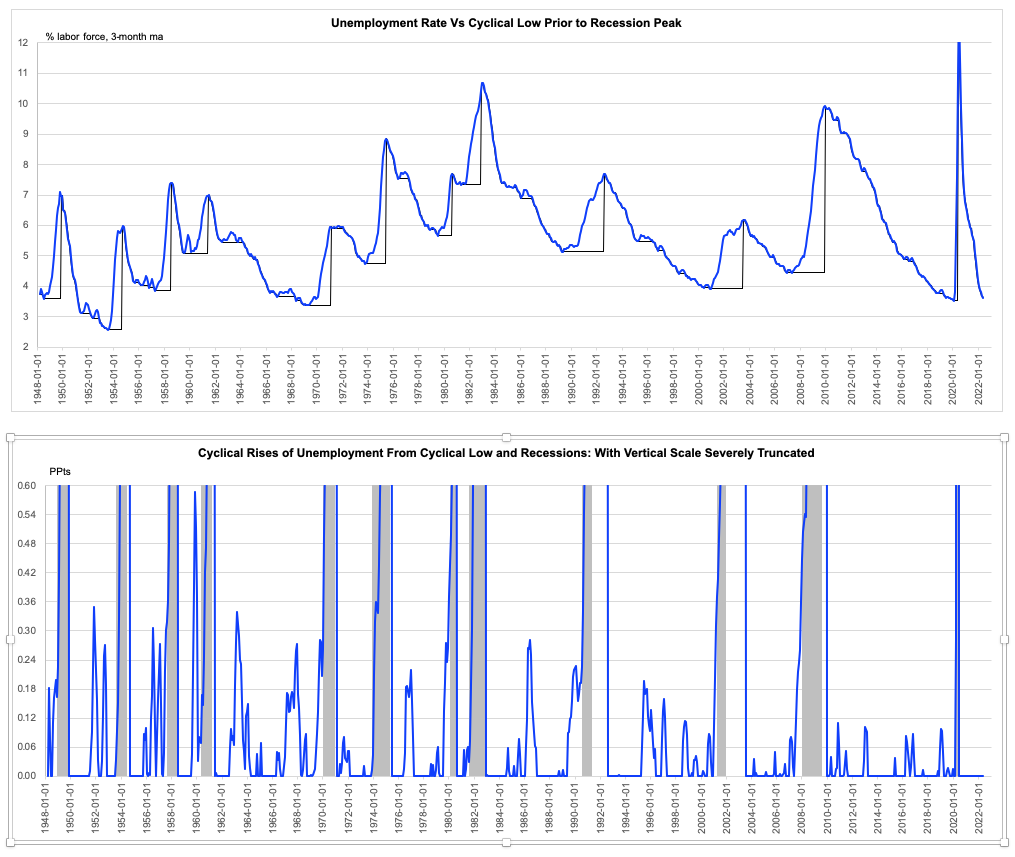
SUMMARY: Our main takeaway from the Fed is hawkish – meaning the Fed is going to accept recession risk to deliver below trend economic growth. That was the MAIN point from the FOMC statement and press conference. Powell made it clear that getting inflation lower is CRITICAL and “the worst mistake would be to fail to restore price stability”. Some people thought his press conference was dovish or he was not hawkish enough. Anecdotally, it seemed like people that had that view believed that 70’s-like monetary policy is necessary and thought Powell was going to go full Volker yesterday. Anyway, this morning’s equity reversal is more in-line with our view. Regarding recession risk, the SEP indicates the urate will increase 50bps over the next three years. That would trigger recession risk according to economic models that use certain increases in the urate to predict recession. The Fed is clearly taking on increase recession risk and that is the important point.
To have any comfort that financial conditions will not tighten much more from here, economic growth needs to slow. The credit impulse has likely peaked and is set to roll over now. The recent destruction of wealth will help ensure the credit impulse starts to weaken. So growth is going to slow and that should alleviate upside to 10yr yields. The problem is that the growth slowdown might not show up in the data fast enough to avoid another leg up in UST yields / lower in equities. Another hot CPI could lead to an above 75bp hike from the Fed (Powell did not dismiss 100bp yesterday).
Once the Fed is fully digested, we would expect bond volatility to settle down (assuming data remains in weakening trend) and markets to stabilize. Longer Term: Yields on the long end have downside risk given the commitment to kill inflation and the willingness to increase the urate (take on recession risk). That should help growth stocks. Some of the deeper Cyclicals should suffer relative as disc/Tech bounce. Its tough to get much higher on 10yr yields from here unless you think the fed is still well behind the curve on inflation. FYI…many people we talk to think that the Fed is still WELL BEHIND THE CURVE and will need to do much more. That’s why it will take a series of weak data points to impact long rates.
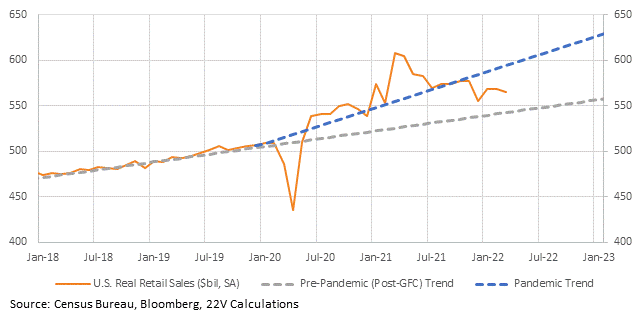
The softening in housing data and recent consumer data, including yesterday’s retail sales miss, is not yet enough for the Fed. But they are welcome developments. It’s important to understand that significantly above trend consumer spending is being driven by credit, not excess savings. The credit impulse (mortgage equity withdrawal + flow of consumer credit) as a percentage of income is in its 82nd percentile. The “excess savings” thesis is an incorrect theory based on a failure to understand the “savings” are a product of QE (more here). The implication is that consumers have less fuel to burn – the credit impulse is not as sustainable as drawing down $2.4T in savings. We covered this in more detail in a webinar yesterday – replay here.
The above point is important longer term…
MARKET VIEWS: Our main takeaway from the Fed is hawkish – meaning the Fed is going to accept recession risk to deliver below trend economic growth. Gerard’s quick takes on the presser are “The objective is disinflation. All else is secondary. The economy is in a strong place to withstand higher rates, which is actually a problem, in my view. The inflation news is bad. No question. We need to accept the recession risk… This is unambiguously hawkish, in substance. No question in my mind.” Again, “hawkish” means delivering below trend growth, it’s not in relation to the rate path relative to consensus. Ours is a goal-oriented take, which matters for equities. This morning’s equity reversal is more in-line with our view.
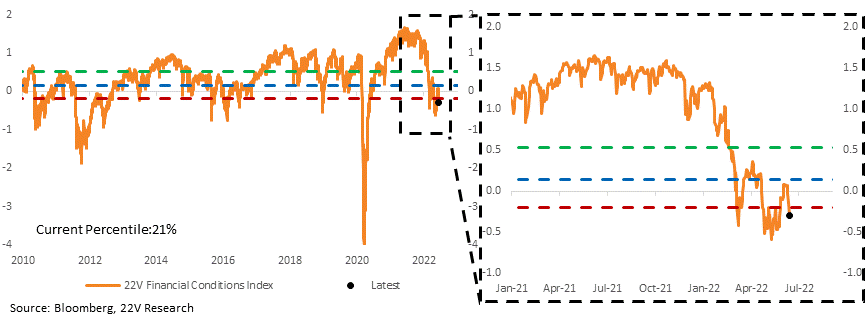
We don’t have conviction on whether financial conditions need to tighten more, but there’s no relief coming from easing financial conditions until the economic data indicates a slowdown. The Fed is explicitly data dependent. The big call remains if financial conditions need to tighten even more to slow growth. That will be the rolling “big call” until eventually the Fed accomplishes its goal of slowing demand growth.
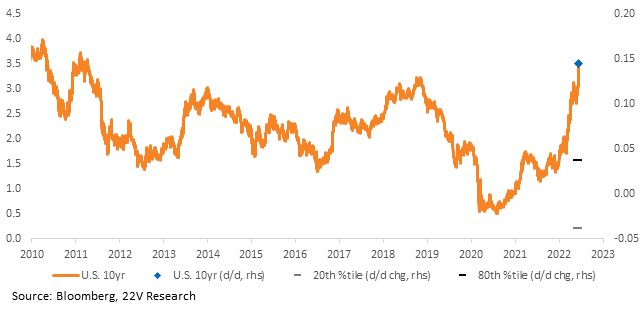
Longer Term On 10yr Yields: Yields on the long end have downside risk given the commitment to kill inflation and the willingness to increase the urate. That should help growth stocks. Some of the deeper Cyclicals should suffer relative as disc/Tech bounce. 10yr yields have reversed most of yesterday’s decline. We would fade the recent spike in yields.
Data Update: The softening in housing data and recent consumer data, including yesterday’s retail sales miss, is not yet enough for the Fed. But they are welcome developments. It’s important to understand that significantly above trend consumer spending is being driven by credit, not excess savings. The credit impulse (mortgage equity withdrawal + flow of consumer credit) as a percentage of income is in its 82nd percentile. The “excess savings” thesis is an incorrect theory based on a failure to understand the “savings” are a product of QE (more here). The implication is that consumers have less fuel to burn – the credit impulse is not as sustainable as drawing down $2.4T in savings. We covered this in more detail in a webinar yesterday – replay here.
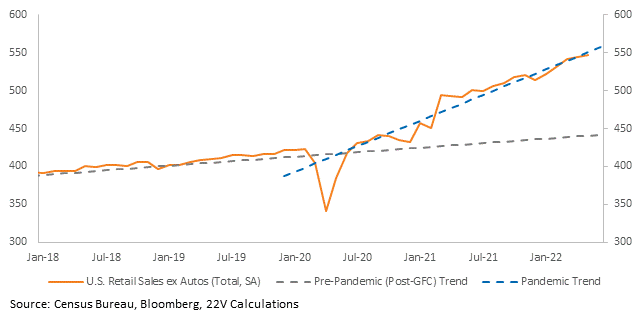
Real retail sales (units) have dropped below the COVID-era trend. Fewer units reduces supply constraints and labor demand. That is a positive longer-term too.