
FY22 fiscal policy and CY22 midterms are causing headaches for the pharma sector, particularly Pharmacy Benefit Managers (PBMs). Democrats are searching for offsets to a small fiscal package and want the sector to help, one way or another (our colleague John Roque would cue up Blondie’s 1979 smash hit but that’s his turf). There are possible offsets that can be included under reconciliation (a protection that expires on September 30). The range of PBM offsets under consideration include:
American Care Act (ACA) subsidies expire at the end of this year, but we believe there likely are 60 votes in the Senate and more than enough in the House of Representatives to address ACA subsidy renewal outside of reconciliation. If that’s correct, that bill likely comes after rather than before the midterm elections. It’s useful to recall that healthcare was part of the GOP’s electoral headwind in the last midterm election (2018). In addition to reconciliation, FY23 appropriations are another vehicle for legislators to address the subsidies in a bipartisan fashion.
It rained literally and figuratively on PBMs yesterday in Washington, DC. The FTC’s post-close announcement of an inquiry into the largest six PBMs’ “practices and their impact on pharmacies, payers, doctors, and patients.” Maybe it’s just us but the reference “middlemen” in the headline of the press release seems a bit pejorative and possibly signals a political impetus behind the inquiry. Motivations aside, the six largest PBMs have 90 days to respond.
Concentration helped build the industry in the previous decade, so a competition policy review fits well within the Biden administration’s broader antitrust bent against bigness and related network effects. In 2021 the top four PBMs controlled 88% of the market, according to the research newsletter Drug Channels. All four rode the market upswing yesterday, indicating the FTC’s announcement didn’t leak.
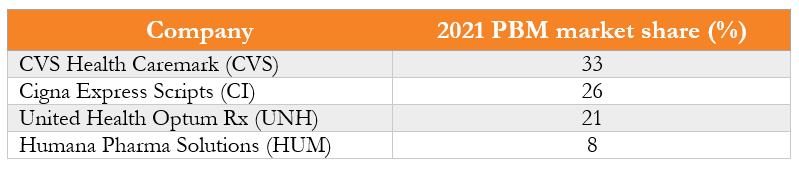
FTC’s plans to “scrutinize the impact of vertically integrated” PBMs is a signal this administration is serious about examining marketplace consequences of merger waves under the past four presidents (in industries such as defense, tech, media, airlines, healthcare, transoceanic shipping). As non-lawyers we have no expert view of whether the DoJ/FTC merger guidelines review expected to end later this year poses tangible risk. But the last large verticality case (AT&T/Time Warner), adjudicated in 2018 by US Court of Appeals Judge Richard Leon, resulted in an opinion protecting vertical integration as a business model.
The FTC inquiry into PBM’s was approved by a 5-0 vote and builds on requests for information begun in late February. Pharmaceutical costs, prices, and margins are very fungible and difficult to understand. Wholesale and retail pharmacies operate under the same often opaque umbrellas designed to share economics across proprietary platforms. Some PBMs operate offshore activities, further complicating regulators’ understanding of economic tradeoffs and possible consequences. These market realities add to policy challenges.
Healthcare policy captures most human circumstances and as such commercial, financial, medical, emotional, political (including prudential regulation) considerations influence this sector as much as most. Those circumstances portend legislative pain this year for the industry despite timing and magnitude uncertainties.
Antitrust or competition policy pain is less likely providing the Biden administration hasn’t decided to use its remaining 2.5 years to engage in court battle that could stretch beyond 2024. Even then, most risk would be of the headline variety until the 47th president decides whether to maintain any court case(s). A legal contest might help legislative negotiations, except the 118th Congress is far less likely to enact whatever legislation might emerge this year, whether under reconciliation or appropriations.

