SUMMARY: Yesterday the market jumped after the weak pending home sales data, and housing data has clearly slowed over the past few months as rising interest rates coupled with strong price gains have driven affordability lower. Slowing of the housing market is an important part of reducing inflation and increases the odds of a bullish outcome to the rate hike cycle. The bullish outcome (from here) is getting to 3% core inflation by 1Q23 and the Fed accepting inflation in the 2-3% range from there (Opportunistic Disinflation). That is one way to avoid a recession in 2023. Pushing core inflation to 2% short-term would likely trigger a recession. That is why a bullish market outcome is dependent on the Fed not pushing core to 2% too quickly. We are not saying it will happen, but that is what’s required.
Side note, when you hear economists, fed watchers etc., talk about the inevitability of a recession, keep in mind that in many cases they are assuming the Fed pushes inflation to 2% quickly. As Gerard has noted though, some Fed speakers seem to be embracing the Opportunistic Disinflation idea. The major risks to that call are 1) core inflation staying well above 3% necessitating more financial conditions tightening (stocks move lower, mortgage rates higher etc.,), or 2) economic activity rolling over too far and too quickly bringing on a recession in the next 6-8 months.
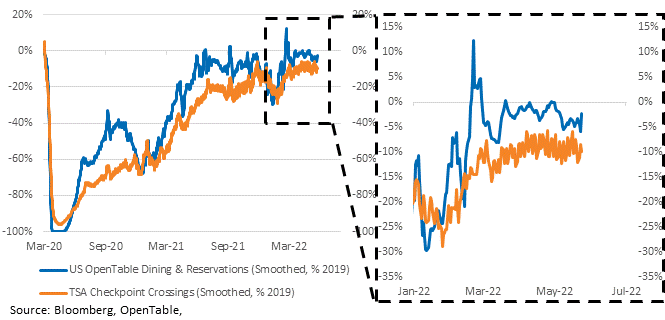
We are more worried about the first problem of core inflation remaining well above 3% into 1Q23 and short-circuiting rallies. Yes, economic data has rolled over, but the services economy is very strong (see why gasoline/energy is not having a bigger impact below) and data will not move lower in a straight line. If consumer data points are strong, they will signal financial conditions have NOT tightened enough and risk assets will fade. Does anyone want to press longs into payroll next week if inflation expectations increase into the number (both inflation expectations and oil are up the past few days) and the S&P is near 4200? We don’t think so. We would fade the market into payroll next week and we will continue to focus on the 3800-4200 range until it is clearer if the opportunistic disinflation outcome is playing out (market rallies) or not (market breaks below 3800).
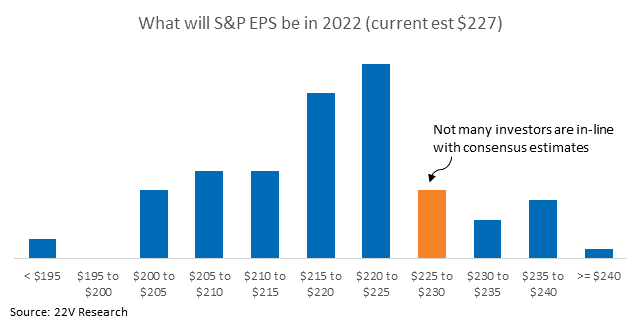
Survey Results: 82% of our respondents think 2022 earnings will be lower than consensus ($227). The consensus of our respondents is $216, which would put y/y growth rate at 4.6%. In an earlier survey, investors put the appropriate PE at 16x. Applying 16x to $216 earnings would put the S&P down at ~3,450 (down -15% from here). In a different survey, investors indicated they’d be buyers at 3,600 (down -11% from here). So, there seems to be broad consensus for a bottom around ~3,500. Keep in mind, the forward PE would likely increase substantially if earnings were expected to accelerate from a $216 level. The most important question for the market is not only what the bottom is on EPS, but how quickly earnings will rebound and where the 10yr peaks.

MARKET VIEWS: Risk assets are higher again overnight in another short-term win for markets as rallies have been sold quickly recently. Bucking that trend is important. The general slowing of economic data has driven Fed rate hike expectations down and yields lower across the curve. Yesterday, equities jumped after the weak housing data and the housing data has clearly slowed over the past few months. Rising interest rates coupled with strong price gains over the past two years have driven affordability lower. Slowing in the housing market is an important part of reducing inflation, so weakness in these data are important steps along the path of 1) normalizing inflation and 2) providing the Fed to embrace opportunistic disinflation (putting inflation on a path toward ~3% and waiting for the next recession to bring inflation back to 2%).
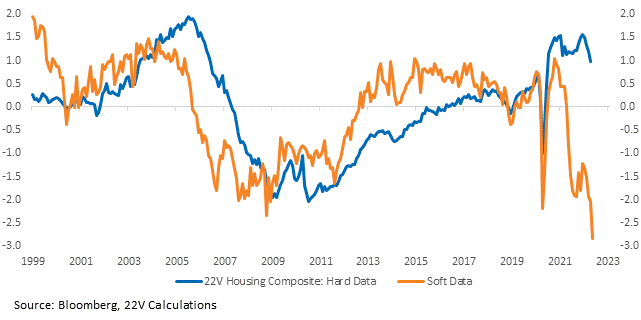
The bullish (from here) market call is getting to 3% core inflation and the fed accepting inflation in the 2-3% range from there. And we avoid a recession at the same time. We are not saying it will happen, but that is what’s required. If financial conditions have tightened enough and the path to 3% on core is more likely, PE headwinds will fade. For now, it appears that growth is going to slow and financial conditions may not need to tighten more. Hence the short-term rally. Our problem with getting carried away with the market bottom idea is that we JUST DON’T KNOW if enough financial condition tightening has been done. Sure, the economy is rolling over, but is it enough to push inflation toward 3% by 1Q23? That’s a much tougher call. And it is perfectly reasonable to assume that the data points will not all be terrible over the next month or so. The services side of the economy is still super strong.
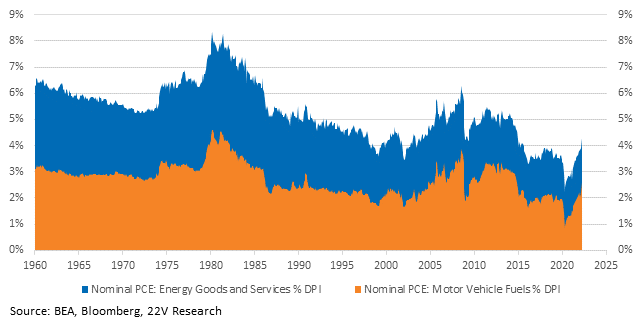
And we get that gasoline prices and energy prices in general are headwinds, but they are still a very low portion of disposable income. Both have moved up recently, but they are low historically.
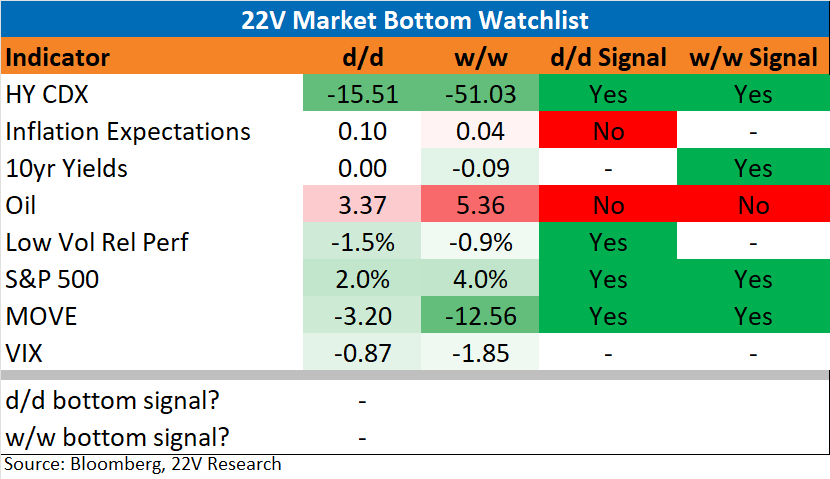
Which gets to our main point. Two things in our check list for thinking about a market bottom worried us yesterday. Inflation expectations moved up and so did oil prices. And financial conditions eased in general. If consumer data points are strong, that will signal financial conditions have NOT tightened enough and the market will fade. So does anyone want to press longs into payroll next week? if inflation expectations have increased into the number and we are close to 4200? We don’t think so. We would fade the market into payroll next week and we will continue to focus on the 3800-4200 range until we get more information on how the outlook will evolve.
Survey Respondents on Earnings & PE Mix: 82% of our respondents think 2022 earnings will be lower than consensus ($227). The consensus in our respondents is $216, which would put y/y growth rate at 4.6%. A few weeks ago, we asked what forward multiple is appropriate for the S&P. Investors responded 16x, which, applying $216 earnings, would bring the S&P down to ~3,450 (down -15% from here). In a different survey, investors indicated they’d be buyers at 3,600 (down -11% from here). So, there seems to be a broad consensus for a bottom around ~3,500. Keep in mind though, the forward PE would likely increase substantially if earnings were expected to accelerate from a 216 level. The most important question for the market is not only what the bottom is on EPS, but how quickly will that rebound happen and what will the 10yr yield settle at.