SUMMARY: The past few rallies have been instantly followed by a puke (technical term) the next day. Despite NVDA and SNOW being significantly lower on earnings overnight, markets are holding up ok and 10yr yields continue to move lower. The combination of selling exhaustion and lower 10yr yields/inflation expectations is required for a bounce to last more than a day.
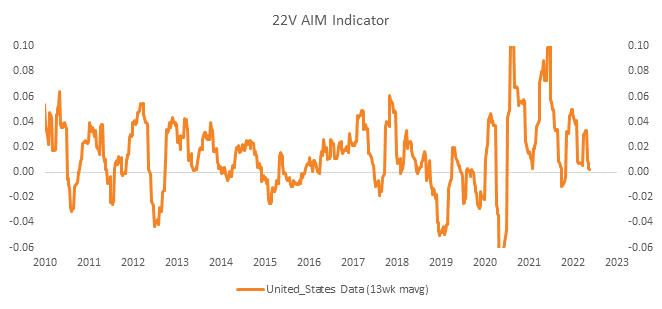
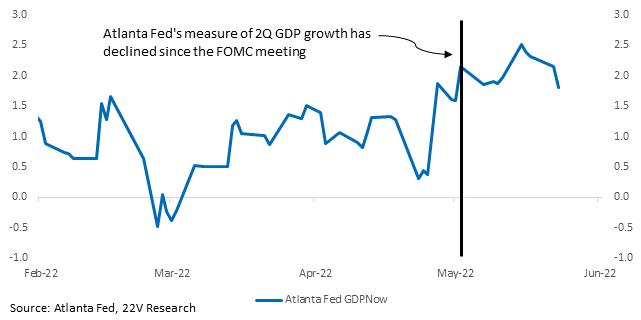
Rates and inflation expectation are moving lower because investors are discounting that the tightening of financial conditions so far this year is enough to slow economic growth meaningfully. That is consistent with the decline in the breadth of US economic data points. Two things from the FOMC minutes also support a potential near term rally and lower yields. First, the minutes indicated the Fed could pause in 2023, inflation dependent, as it asses the impact of the rapid move to a neutral policy rate (lowering the odds the Fed tightens so aggressively, which is what Larry Summers would like, that nearby recession risk increases meaningfully). Second, the Fed assumed on May 4th, when the minutes taken, that 2Q economic growth would be very strong. The Atlanta Fed GDPNow cast for 2Q data has just declined to 1.8%, so the data is not as strong in 2Q as the Fed assumed. The Fed funds futures curve has shifted lower since early May.
We are not suggesting an all-clear sign for the market at all, and the 3800-4200 range will likely hold until it is clear if 1) core inflation can trend to below 3%, 2) the Fed can move to a more neutral policy stance, 3) a super spike in gas prices will happen or not, and 4) recession can be avoided or not. If it becomes clear core CPI will approach 3% by 1Q23 and the Fed will be more neutral, being long risk assets will make sense. But it will take time and more data before we know how CPI will move. In short, get long risk when growth is weak enough that the Fed can back off. That point is not close right now.
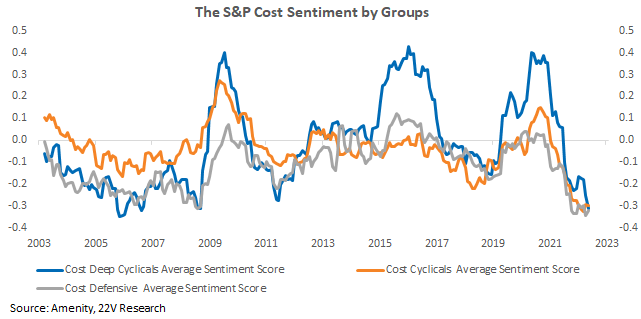
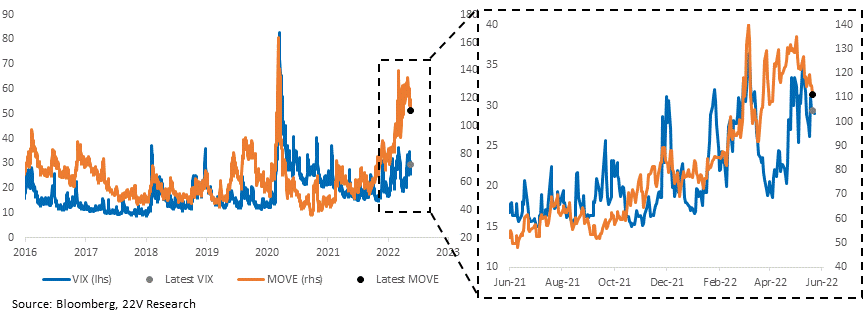
The backdrop we appear to be moving into now is one of lower bond volatility, which should lead to lower stock volatility, lower correlations, and a better backdrop for stock picking. On stock picking, we are hyper-focused on company pricing power and cost sentiment. Defensives, which have outperformed significantly, appear to have an earnings problem as cost sentiment is very weak (cost are too high) and pricing power has rolled over.
Full report below…
MARKET VIEWS: Recent one-day rallies have been aggressively sold the next day, which is why global markets holding up (despite NVDA and SNOW being lower) would be a short-term positive. US equity futures are stable with yields lower across the curve and inflation expectations continue to grind lower. Investors are discounting that the tightening of financial conditions over the past 6ish months is enough to slow economic growth meaningfully. That is consistent with the decline in the breadth of US economic data points.
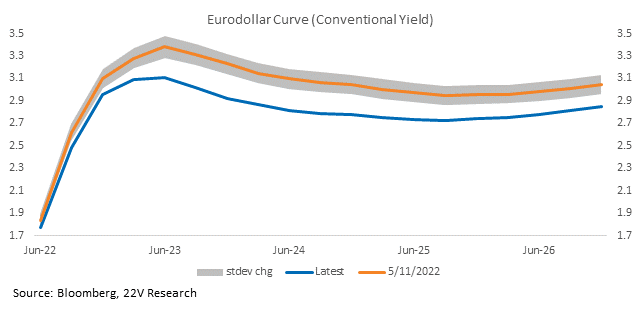
The FOMC minutes also had a line that points to a pause in rate hikes in 2023. Any pause would be dependent on lower inflation, but this line is helping drive longer-term rate hike expectations lower and giving investors some hope the Fed will not drive the economy into a recession. “Many participants judged that expediting the removal of policy accommodation would leave the Committee well positioned later this year to assess the effects of policy firming and the extent to which economic developments warranted policy adjustments. ” The Fed funds futures curve has shifted significantly lower relative to its post-CPI peak on 5/11.

FOMC minutes also highlighted that Fed officials expected strong growth in Q2. But growth has cooled since the FOMC’s May 4th meeting. The Atlanta Fed’s GDPNow puts 2Q real GDP growth at just 1.8%. That would suggest the slowdown in economic growth has happened a bit faster than the Fed expected. Importantly though, the labor market and spending data need to cool for the Fed to be comfortable that further tightening of financial conditions is unnecessary.
The bottom line: A rolling over of growth means bond volatility should decline. That is a function of investors discounting that financial conditions won’t need to tighten further to slow economic growth. That assumption could change (if inflation remains sticky high), but given what is going on in the rest of the world – see the negative China growth headlines that are likely impacting Copper/rates – we are comfortable that economic growth will slow meaningfully over the next 6 months and 10ry yields are likely headed lower. That means bond volatility will move lower which should help reduce stock volatility and market correlations.
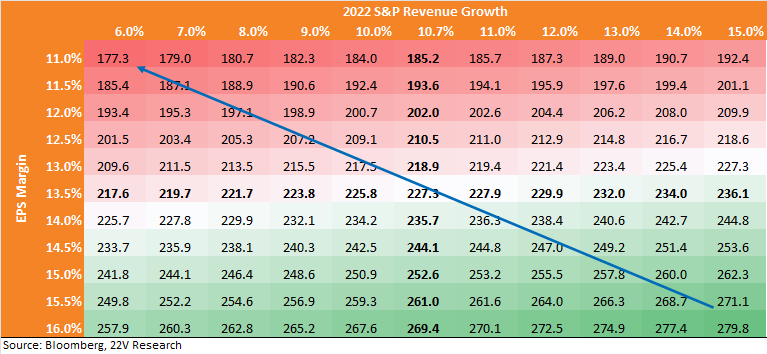
Stock Picking: The Fed is attacking revenue and margins, which will drive earnings estimates lower. That means stock volatility could move lower, but the ability of a sharp rally to take place is compromised. In this backdrop, stock selection becomes more important. And the focus is on what stocks/industries are relatively isolated from input cost pressures and/or can maintain pricing power. At the aggregate level, below is a table showing different S&P 500 EPS numbers using a range of revenue and margins estimates. 1Q22 index margins were ~13.5% and top-line growth was 10.7% (y/y). Both are heading lower, but how far they fall is an important input into fair value.
Cyclicals (Technology, Communications, Financials, and Discretionary) have had the largest decline in pricing power sentiment this year – particularly consumer facing sectors. Defensives have an issue though as they have declining pricing power. Given the likelihood of higher fixed costs for longer, Defensives have some earnings issues going forward.
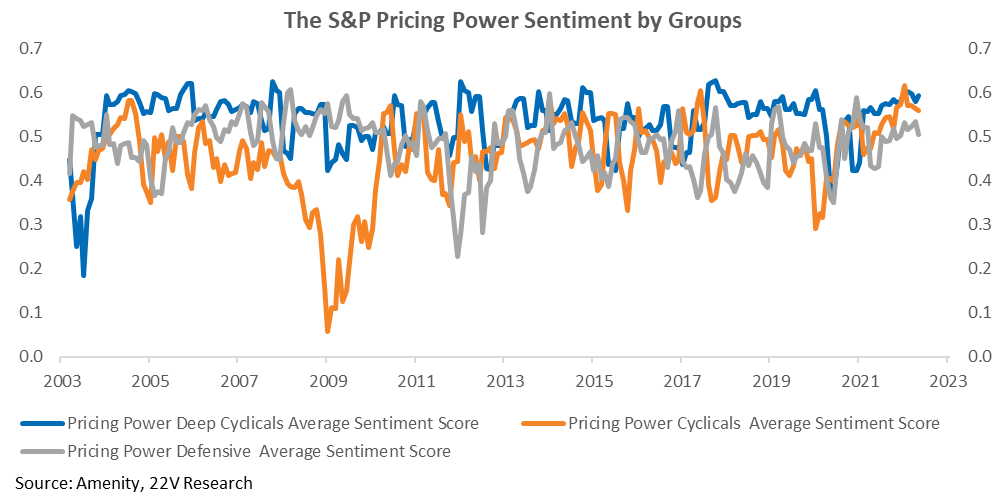
The cost sentiment for Defensives is very negative. That is true across sectors/groups, but Defensives have weakening pricing power AND have outperformed significantly.