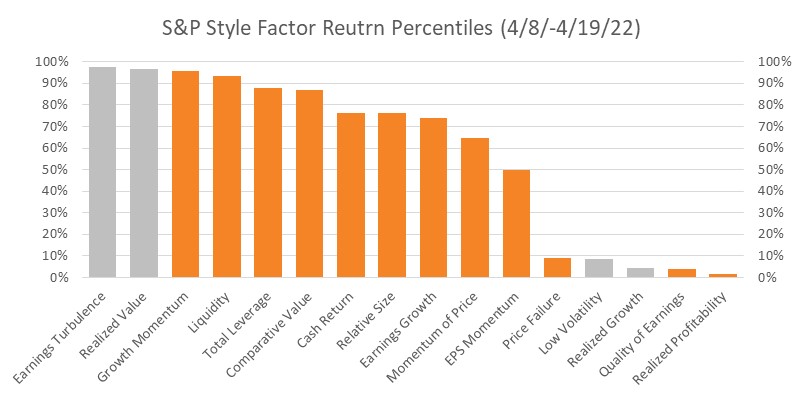
Macro narrative shifts have been frequent and strong this year, leading to volatile market internals. Style rotations – Value/Growth – and risk rotations – Turbulence/Low Vol & Quality have both offered opportunities to generate alpha. But timing has been both important and difficult. Just over the past week, most factors have posted either greater than 80th or less than 10th percentile moves. Factor return volatility has appeared across sectors as well, with large divergences between sectors with no clear Cyclical/Defensive trend.
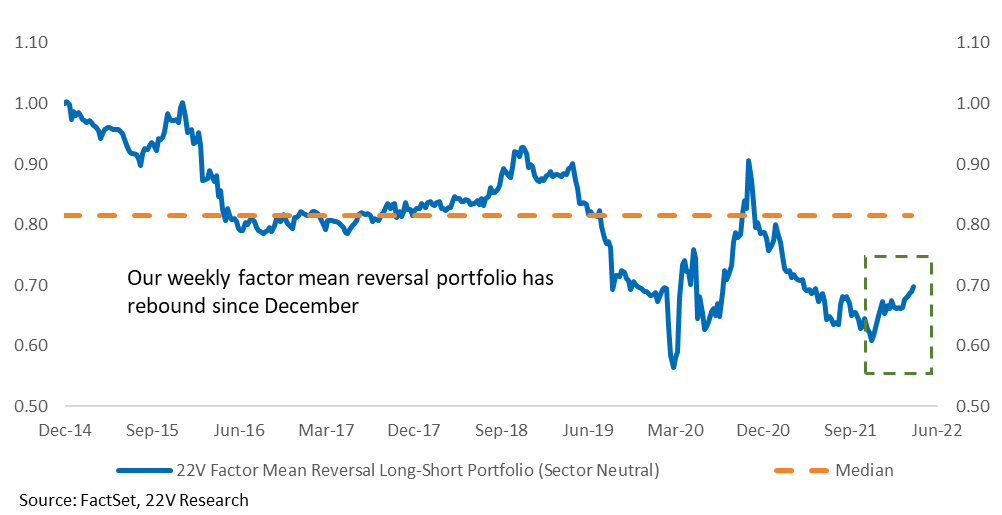
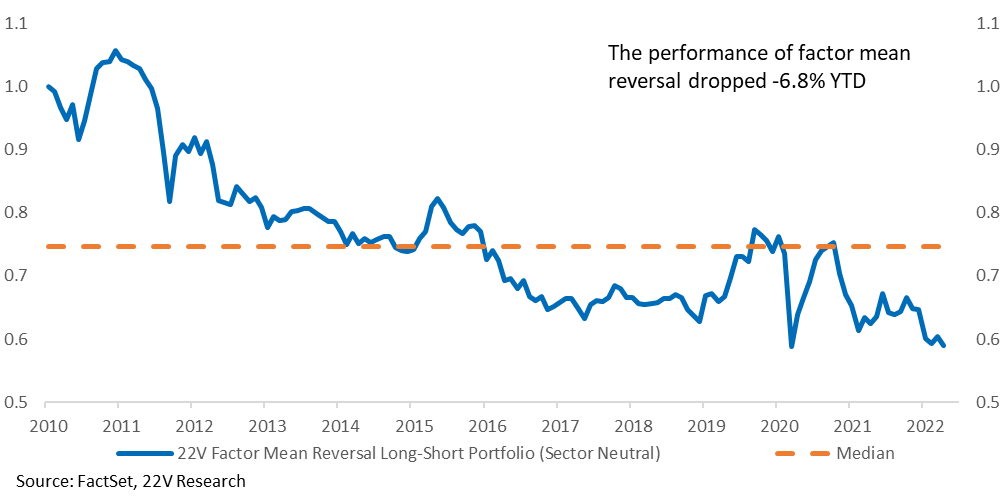
The frequency and degree of factor rotations have been extreme. A factor reversal strategy – buying the biggest loser and selling the biggest winners – rebalanced monthly has generated consistent losses this year and is down -9%. The same strategy rebalanced weekly has posted steady returns, gaining 5% this year and 14.6% since early December.
Sharp rotations are occurring intra-month, generating volatility large enough to erase multi-week gains. That makes profiting from factor trend following very difficult, necessitating either nimble exposure shifts or a focus on longer-term trends (Quality/Growth rotation) and acceptance of volatile returns. Factor volatility and dispersion are likely to remain high while the growth/inflation/policy outlook remains uncertain.

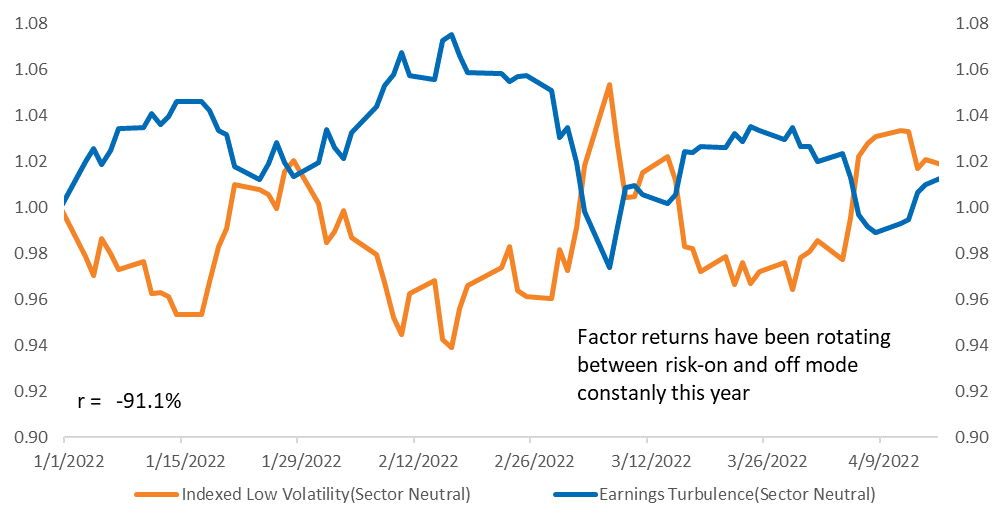
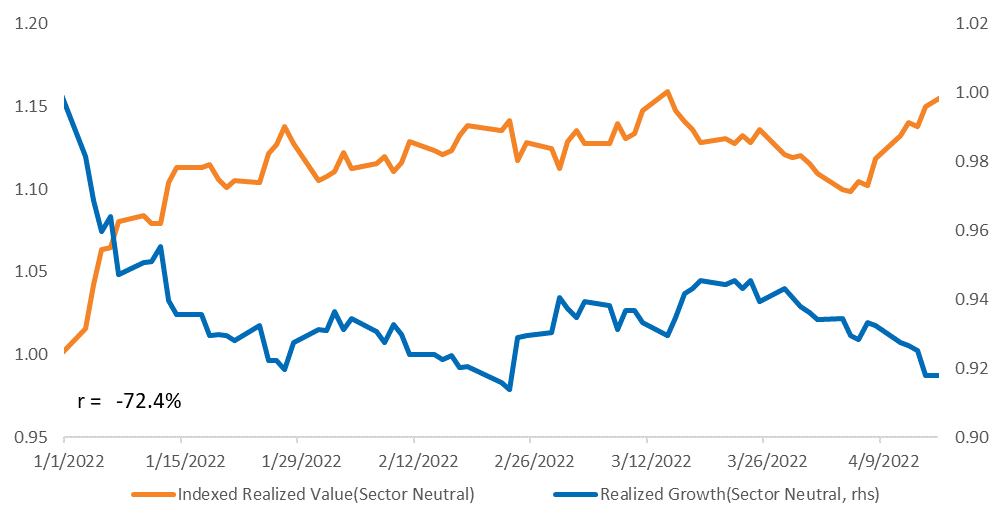
Earnings Turbulence and Low Volatility, representations of the more general risk-on and risk-off paradigm, have been significantly negatively correlated this year. A similar pattern has emerged between Value vs. Growth. Earning releases over the next three weeks, which have gotten off to a strong start, supports a short-term risk-on rotation. That trend will face a significant challenge on May 4th though as the FOMC meets.
Another Round of Factor Rotation: Style rotations – Value/Growth – and risk rotations – Turbulence/Low Vol & Quality have both offered opportunities to generate alpha. But timing has been both important and difficult. Just over the past week, most factors have posted either greater than 80th or less than 10th percentile moves.
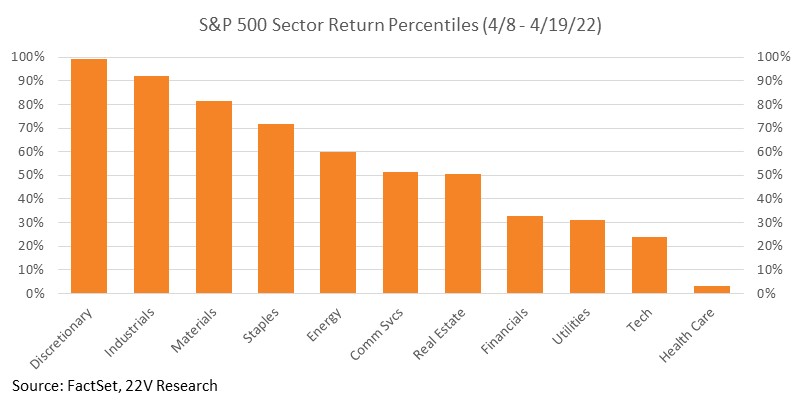
Factor return volatility has appeared across sectors as well, with large divergences between sectors with no clear Cyclical/Defensive trend. Discretionary, Industrials, Materials, and Staples have rallied over the past week+. Health Care and Tech returns have been unusually weak. Some reversals are already taking place. Energy fell significantly yesterday while Tech rallied. Sector trends have been more consistent than factor trends, but weekly volatility remains high.
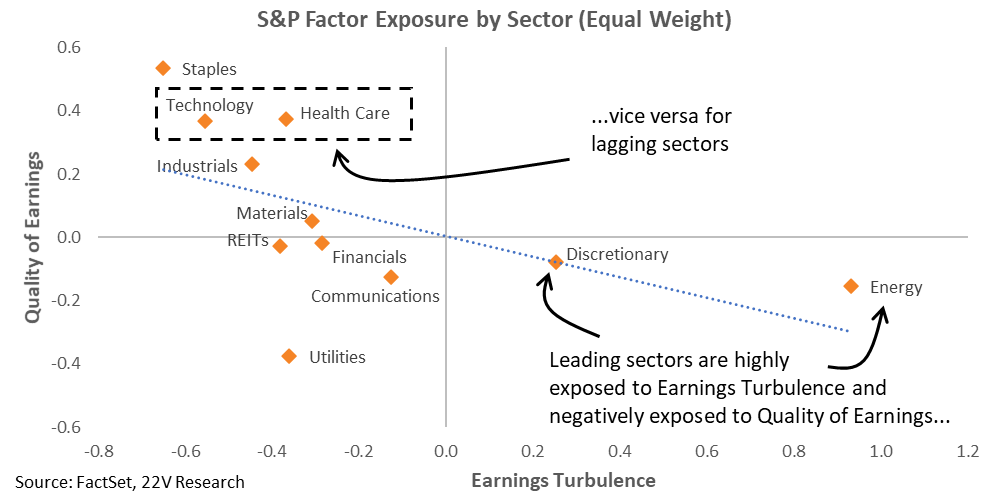
Cyclical vs. Defensive sector returns have been mixed, consistent with the factor level divergences. Sector level factor exposures help explain recent sector return spreads. Discretionary is highly exposed to Earnings Turbulence and has index exposure to Quality. Tech and Healthcare have been the worst-performing sectors and have high Quality/low Turbulence exposures. Energy is well-positioned from a factor standpoint, but as we have noted before, Energy returns are highly correlated to shifts in oil prices. Factor exposures are largely unimportant within Energy.
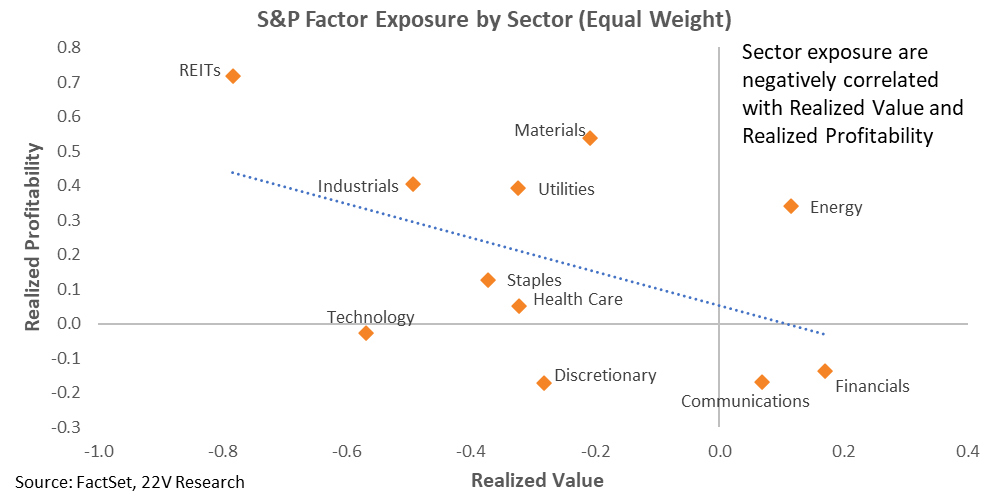
Sectors also tend to be aligned to either Profitability or Value. Returns have not mapped as well to those factors over the past few weeks, but rotations within Value/Growth & Profitability will influence sector level returns.
Awareness of factor exposures is increasingly important given the extreme and frequency factor rotations this year. A factor reversal strategy – buying the biggest loser and selling the biggest winners – rebalanced weekly has posted steady returns, gaining 5% this year and 14.6% since early December.
By comparison, the same strategy rebalanced monthly has lost -9% YTD.
Earnings Turbulence and Low Volatility, representation of risk-on and risk-off factors respectively, have been significantly negatively correlated this year. Earnings Turbulence reached a relative low on April 8th and has rallied since. Earnings season should help extend that period of gains over the next few weeks.
A trend to keep track of is the wide divergence between Value and Growth. As with the rotation into Earnings Turbulence, a strong earnings season should continue to support a Value rotation near-term. Beyond the May 4th FOMC meeting though, Growth names will look more attractive.
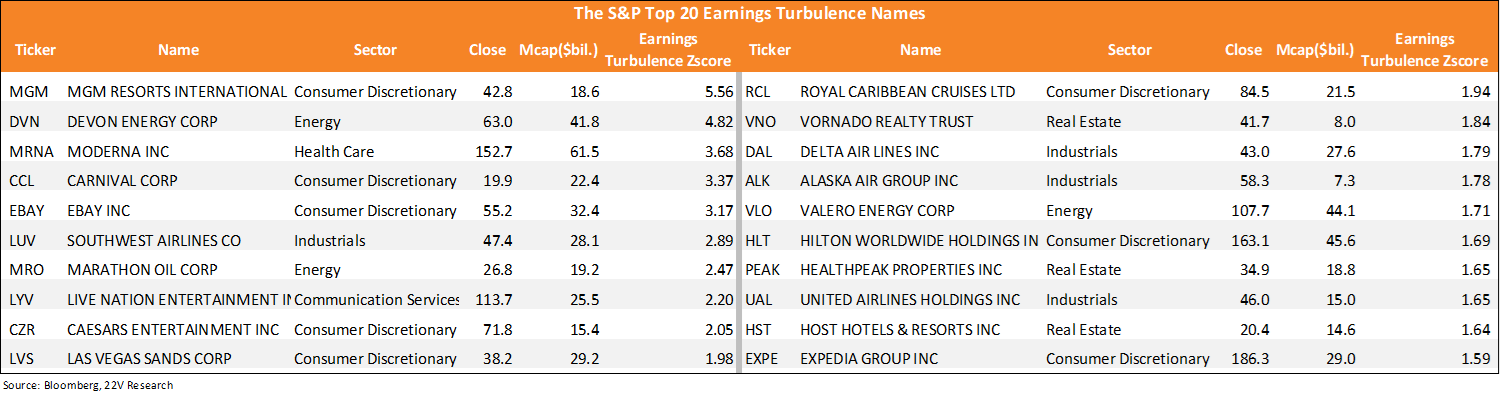
Below we provide four lists of stocks (complete rankings for U.S. stocks are available, just let us know what you would like to see). The first list is the highest Earnings Turbulence names. These are stocks that stand to benefit from a continuation of the risk-on rotation.
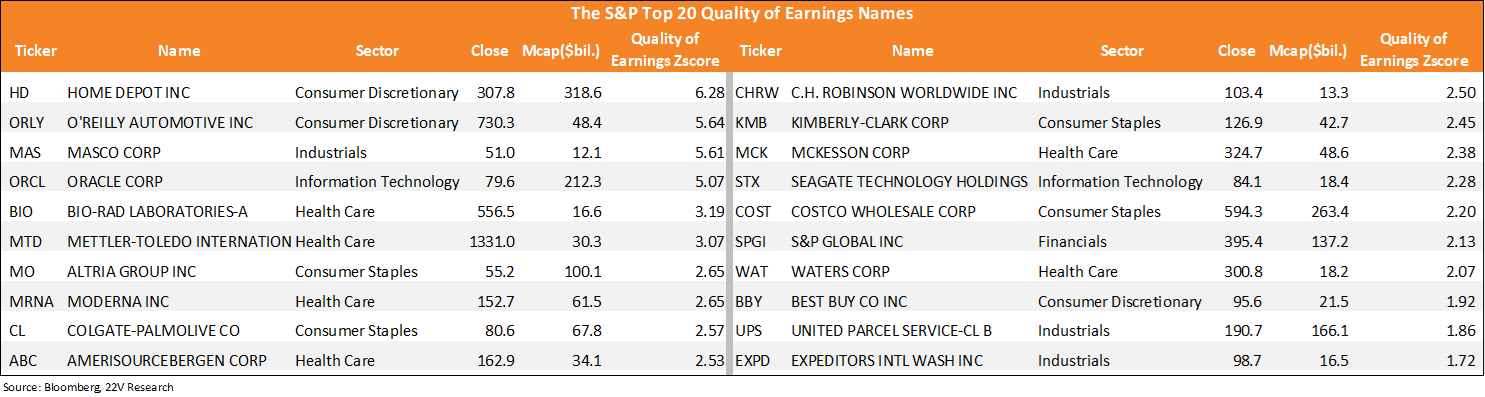
Next are the highest Quality names that should continue to struggle as risk rallies.
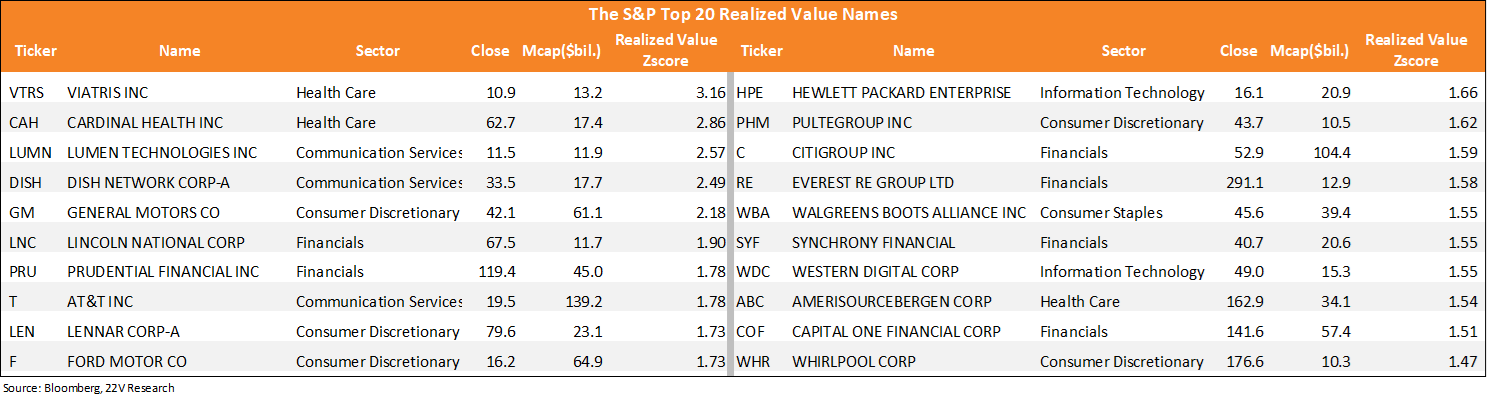
Next up are Value stocks that 1) benefit from the risk rotation, but 2) will be at risk as earnings season winds down and the FOMC meets.
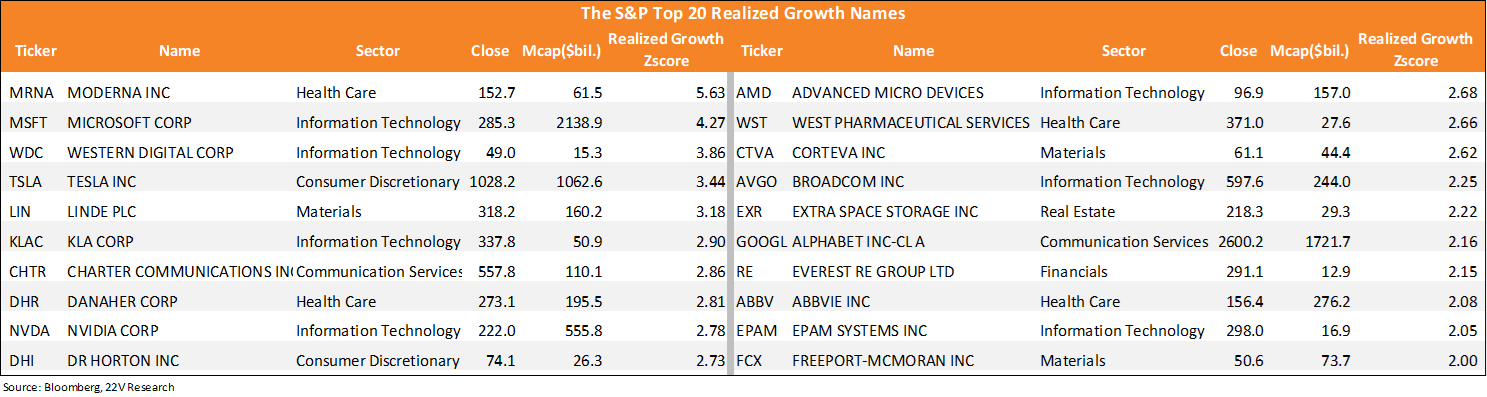
Finally, the list below is the highest-rated Growth names that should benefit from a post-earnings season de-risking.