SUMMARY: Crypto, credit, equities and bonds all sold off yesterday. Oil, commodity prices in general and the USD are the only asset benefitting (if the USD was not going to be the reserve currency anymore, why is it going up? Don’t lose money playing for a war-induced rotation out of the USD). Quick rule of thumb in thinking about the tightening of financial conditions now; with peace, the tightening might be delivered primarily through higher interest rates and yields, relative to current forwards. For a short period of time risk-on factors (unprofitable Tech AND Banks) would work. With a further intensification of war, tightening would come through risk asset prices and exchange rates, with interest rates and yields possibly even falling.
Underlying inflation remains too strong for the Fed to just back off, which is why the current backdrop still calls for tighter financial conditions. Unless demand destruction leading to much higher odds of a recession becomes much more obvious. Yes, the yield curve might be pointing to weaker economic growth longer term, but if a near-term collapse in economic data was likely, 2yr, 5yr, 10yr yields etc., would be much lower. The bond market would be discounting a recession. Particularly short rates. FYI. In a recession, people stop doing things and spending would collapse, so commodity prices would fall and the bond market would discount that. It is not now. The market seems to be discounting persistently high inflation and some slowing economic growth.
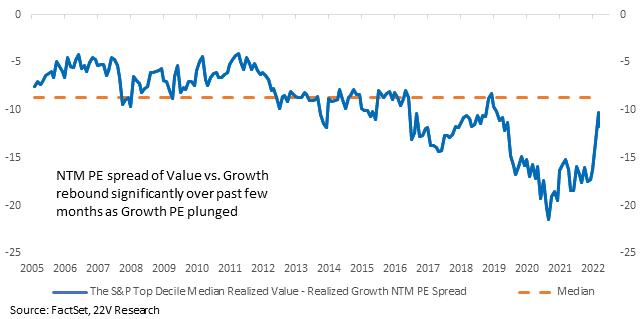
Early in the year, Value rallied while Growth fell as the Fed shifted into inflation fighting mode and real rate/yields were climbing higher. Hopes of an immaculate tightening- slowly rising yields with little tightening of financial conditions – restrained pure risk-off factors like Quality of Earnings. War in Ukraine has caused a rapid tightening of financial conditions, largely through risk assets, that has driven Low Vol, Momentum, and Quality names higher. The style trade (Value vs Growth) has reversed as the investor focus has shifted away from rising real rates/yields, which benefits Value stocks.
With the tightening of financial conditions now front and center, there has been a reallocation of assets into growth and stability and we expect that to continue. Rising Real rates/yields, which would be the longer-term backdrop assuming the war ends and the Fed avoids a recession (base case peace scenario), is ultimately good for Value, but in the medium-term there is a lot of tightening left to do and Value tends to struggle as financial conditions tighten. Value will have a large move higher in the weeks following a peaceful resolution to the war (if it happens). But that will fade. Also, for the last year Value had a macro tailwind (strong growth and the high likelihood increasing real yields) AND a deep NTM PE discount to Growth. The PE spread has basically closed.

Given the trends we highlighted above and the macro conditions we expect, the Value/Growth trade is less interesting than the Vol/Risk trade. Low vol has had a significant tailwind from the Russia-Ukraine war, but also benefits from tightening financial conditions. Vol/Risk (Banks and Unprofitable Tech) will have a significant reversal higher on a peaceful solution but will still face the longer-term headwind of the Fed trying to slow economic growth.
Side note on Europe, European debt sharing deal to address energy costs and defense spending helped put a bid into European assets. Longer-term, this could be a big deal for European growth/European Cyclicals assuming a peaceful solution. Something to keep an eye on.
Full report below…
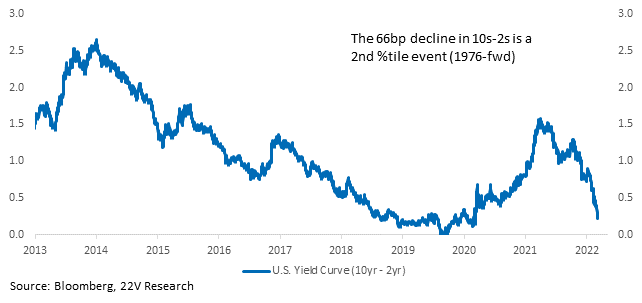
MARKET VIEWS: A potential European debt sharing deal to address energy costs and defense spending helped lift stocks overnight. If a deal alleviates some of the inflationary pressure the commodity crisis is putting on consumers in Europe, risk conditions will improve globally. Simultaneously, the US and EU are considering more sanctions against Russia, China is reportedly considering investing in Russian energy and commodity companies, and repeated rounds of negotiations have delivered no meaningful progress toward ending hostilities in Ukraine. Oil and commodity prices continue to climb higher, driving inflation expectations to levels not seen since before the GFC. A rapid flight to safety has pushed the Dollar higher and collapsed the yield curve back to early COVID levels and the shor- term move has been dramatic (2nd% tile historically).
Surging oil prices are a growing economic headwind, but not yet enough to slow growth enough to beget a more dovish Fed. Pre-war, strong growth motivated the Fed to start tightening financial conditions, but at a much slower and more predictable pace. If the war continues to escalate, financial conditions will tighten sharply, independent of any concerns policy makers would have had about market stability. Uncertainty tied to how quickly financial conditions will tighten and how (Fed or War) is a large part of the reason volatility has spiked and risk assets have sold off.
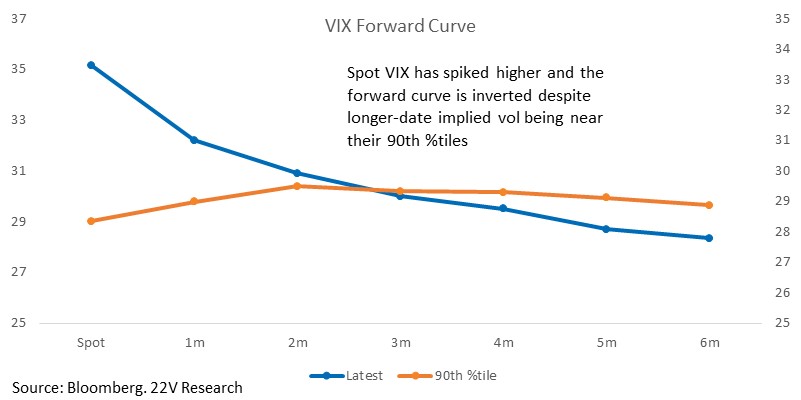
With peace, Gerard maintains the Fed must oversee a tightening of financial conditions, delivered primarily by higher interest rates and bond yields, relative to current forwards. With a further intensification of war, it might come more in the form of risk asset prices and exchange rates, with interest rates and yields possibly even falling. i.e. after risk assets have fallen much further. Either way, the current backdrop still calls for tighter financial conditions. The peaceful solution will lead to a sharp increase in Vol/Risk factors though. Think Unprofitable tech AND banks bouncing significantly on a peaceful resolution. At least short term.
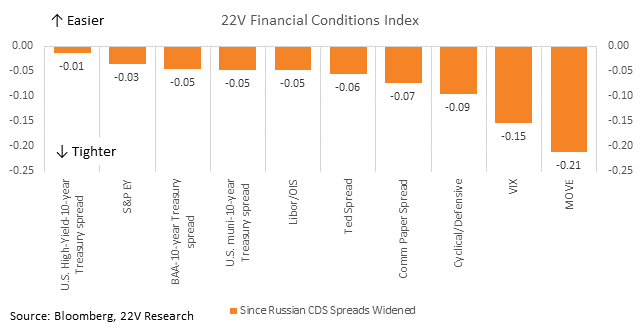
Low Vol Low Risk Rotation: Given the trends we highlighted above and the macro conditions we expect, the Value/Growth trade is less interesting than the Vol/Risk trade. Low vol has had a significant tailwind from the Russia-Ukraine war but also benefits from tightening financial conditions.
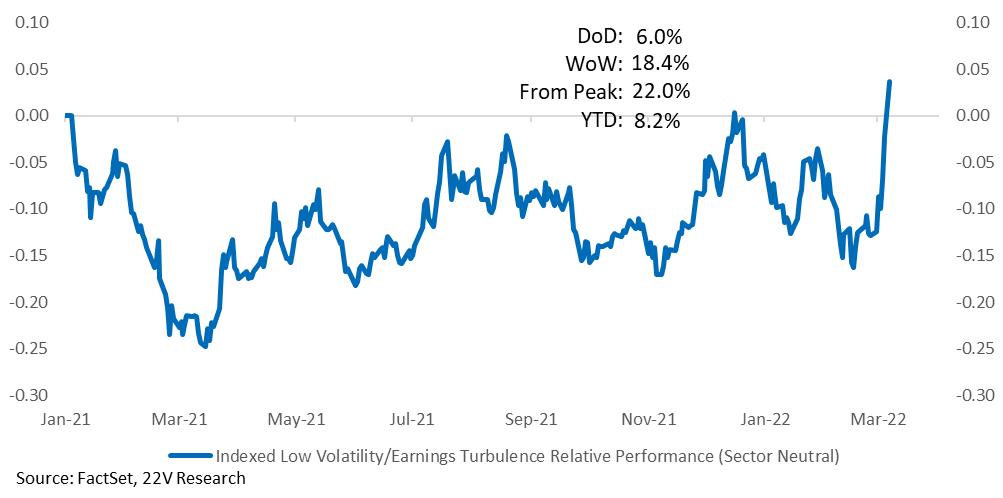
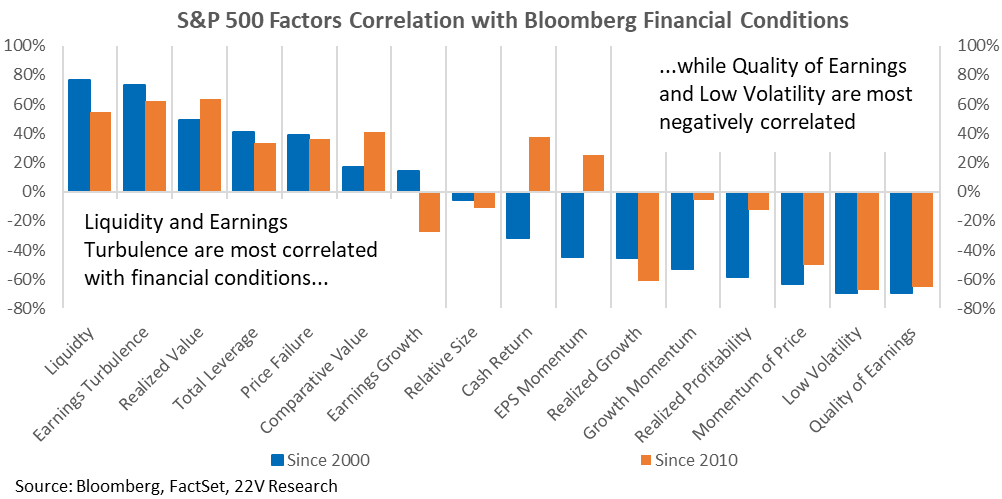
Low Vol is one of the factors most correlated to tightening financial conditions. Along with Quality of Earnings and profitability. Value tends to do less favorably than growth as financial conditions tighten. A world of higher real yields and very low recession probability is ideal for Value. That seemed possible in January. It much less obvious today.
Also keep in mind that when we and many other sell-side firms recommended Value, it had a major macro tailwind (strong growth and increasing rates) AND was unusually cheap relative to Growth on an expected NTM PE basis. That is not the case today. Value is only SLIGHTLY cheap relative to Growth.