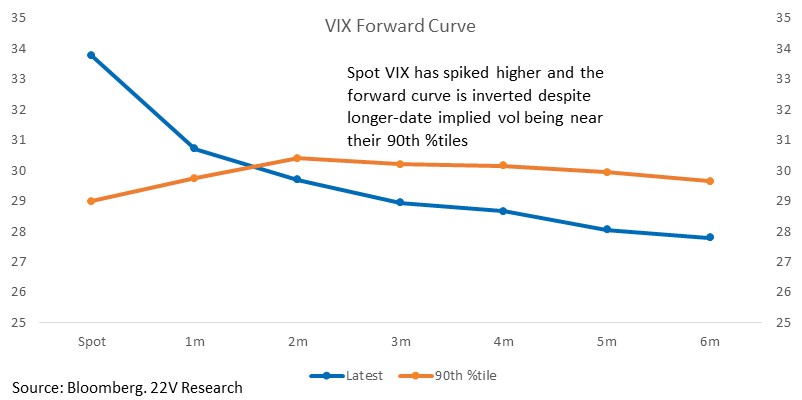
SUMMARY: The VIX curve remains significantly inverted and likely to remain so until we have more clarity on the longer-term economic implications of the war. Interestingly, the VIX curve is inverted with longer-dated volatility near its 90th %tile. Volatility is extremely high across the curve. Vol moved off its overnight high as it was reported there has been no change in radiation levels at the Zaporizhzhia nuclear power station hit by Russian shelling, but it is nearly impossible to manage risk now given vol levels across asset classes.
Two things we have high conviction on though; The S&P is not an obvious short (assuming oil prices don’t go to $170 or above) given the extremely high expected cash return yield relative to risk free rates and financial conditions will continue to tighten. Powell will only be “dovish” if the war tightens financial conditions significantly for him. If some sort of peaceful resolution is reached, Powell will be hawkish and rates/rate hike expectations will go higher. Tighter financial conditions will continue to favor Quality, Low volatility, and Size factors. Earnings turbulence (ARKK as an example) will continue to suffer.

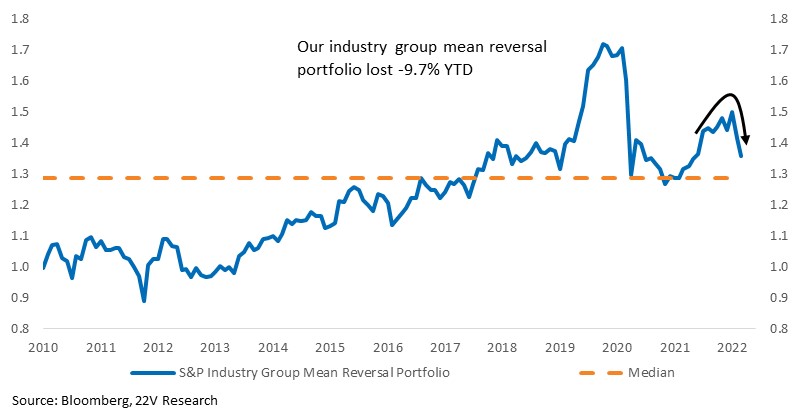
Industry group mean reversal, which delivered strong returns in 2021, has been poor in 2022. Our long-short industry group mean reversal portfolio has fallen -9.7% YTD as market trends have become more consistent. A peaceful resolution would lead to a short term move higher in risk-on factors (earnings turbulence and unprofitable Tech rebound), but financial conditions will still need to tighten given the inflation outlook. Which means more persistent trends vs the consistent reversals of the past few years.
We will see if the payroll data comes in around consensus (we get it, it never does) but Gerard ran through the numbers assuming all the labor market data comes in around consensus (headline payroll, labor income proxy, average hourly earnings, participation etc.,) and it would paint a picture of very strong demand growth and tight labor markets (details below). Given that we know the consensus numbers would indicate a very strong and tight labor market, it can help everyone think about how markets will react if the numbers come in slightly below (still tight and the Fed doesn’t change its path much.) or slightly above (the possibility of a 50bp hike increases the moment Powell can get away with it). The much weaker number of course provides some hawkish relief. Bottom line, financial conditions need to tighten to offset set the inflation impulse.
Full report below…
MARKET VIEWS: UST yields are well off their overnight low (but still lower) after it was reported that there has been no change in radiation levels at the Zaporizhzhia nuclear power station hit by Russian shelling. Russian troops have reportedly taken over the station. The VIX curve remains significantly inverted and likely to remain so until we have more clarity on the longer-term economic implications of the War. Interestingly, the VIX curve is inverted with longer dated volatility near its 90th %tile. Volatility is extremely high across the curve.
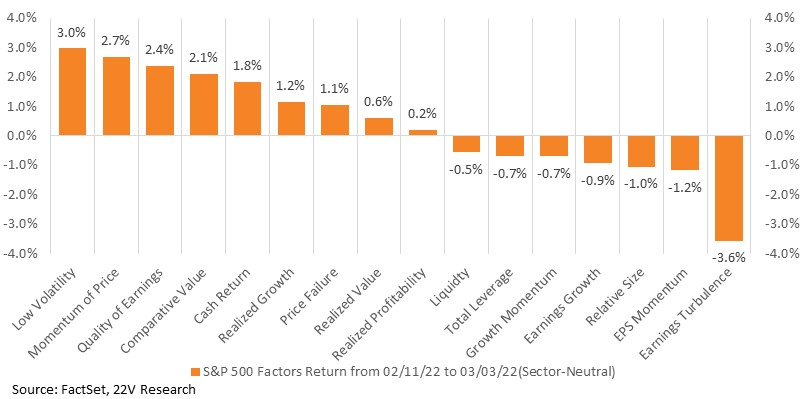
With front month vol extreme and volatility elevated across the curve, it is nearly very difficult to manage risk now. Two things we have high conviction on though; The S&P is not an obvious short (assuming oil prices don’t go to $170 or above) given the extremely high expected cash return yield relative to risk free rates and financial conditions will continue to tighten. Powell will only be “dovish” if the war tightens financial conditions significantly for him. If some sort of peaceful resolution is reached, Powell will be hawkish and rates/rate hike expectations are going higher. Tighter financial conditions will continue to favor Quality, Low Volatility and Size factors. Earnings turbulence (ARKK as an example) will continue to suffer.
Industry group mean reversal, which delivered strong returns in 2021, has been poor in 2022. Our long-short industry group mean reversal portfolio has fallen -9.7% YTD as market trends have become more consistent. Industry and factor trends will be influenced by rising inflation and yields well into 2022 and likely beyond. A short-term reversal in trends is possible and likely if the hot war cools, but that will only encourage the Fed to tighten more aggressively. Which will favor the same factors and industry groups that are working now.
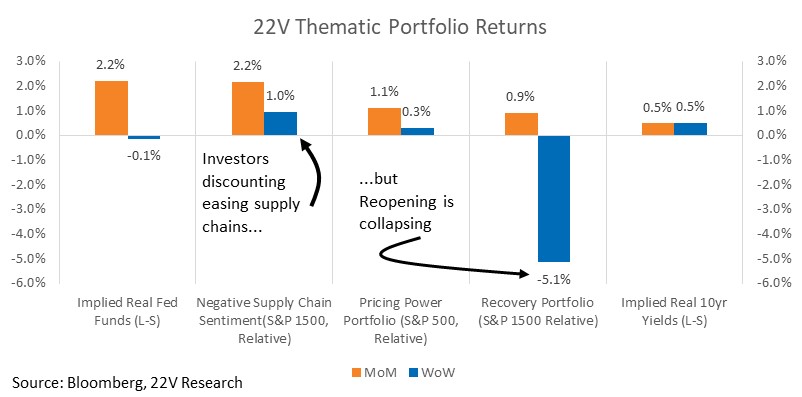
In addition to the factors and sectors that benefit from tighter financial conditions, we are focused on our thematic portfolios. They have don’t very well this year and over the past week, with the expectation of the reopening portfolio. The war directly impacts that portfolio and is overwhelming the benefits from post-Omicron economic reopening. Companies that benefit from improving supply chains have been unusually strong recently. That runs counter to the narrative that the war will lead to another round of significant supply chain stress.
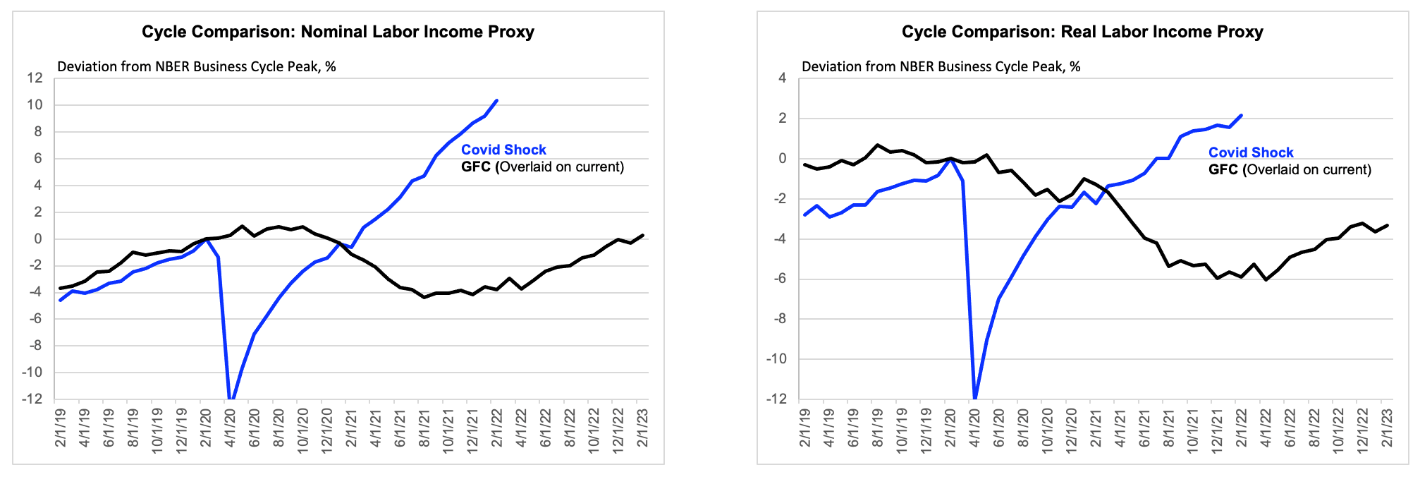
THINKING ABOUT PAYROLLS: Gerard had a very interesting pre-payroll report we think is worth highlight. In short, he makes a point that if the payroll numbers come in at consensus and there are no significant revisions, the labor market would appear to be VERY strong. A few of his points. First “The labor income proxy is expected to be up 1.1% or 0.7% after the 0.5% gain I pencil in for the headline PCE deflator during February. this would imply 3- and 6-month nominal growth rates of 10% and 11% respectively.” That is very strong and supports spending/aggregate demand. Consistent with retail sales estimates for February.
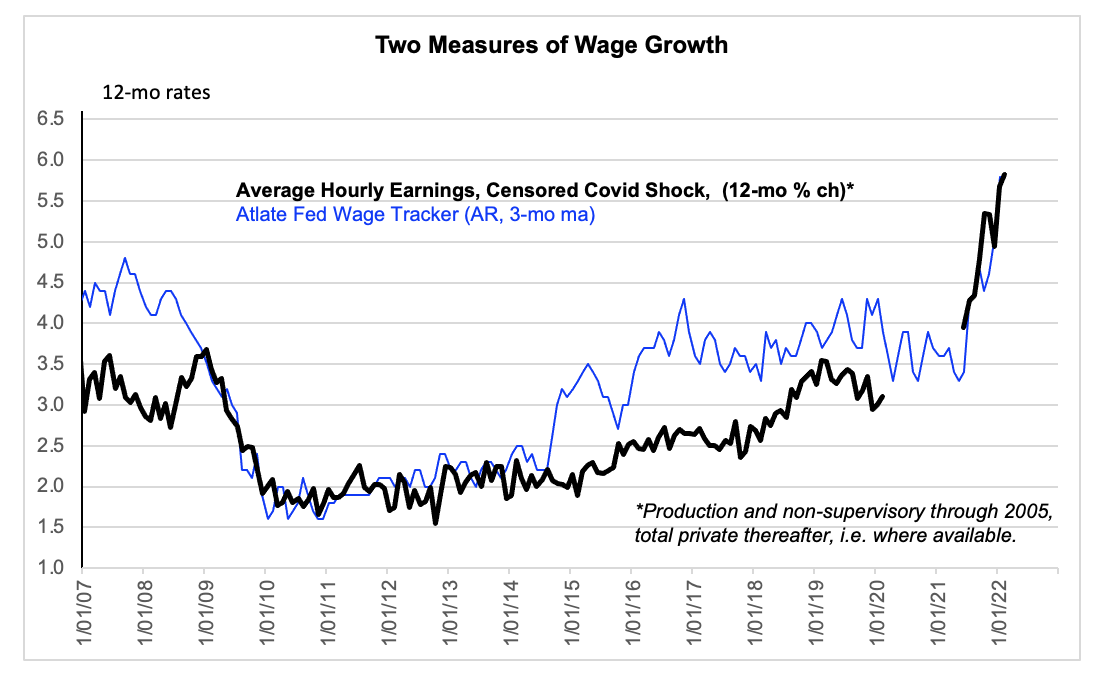
Further, Gerard notes that “the consensus estimates imply also that my standard measures of labor market tightness will have moved in the direction of further tightness during February. For example, the combination of a 450k+ gain of household employment and an unchanged participation rate would imply a decline of the unemployment rate to 3.75%,. Note in the right panel of the chart below, that the Atlanta Fed Wage Tracker, available to January, strongly implies that the tightening trend in my measure of the Employment Gap is picking up something real. “
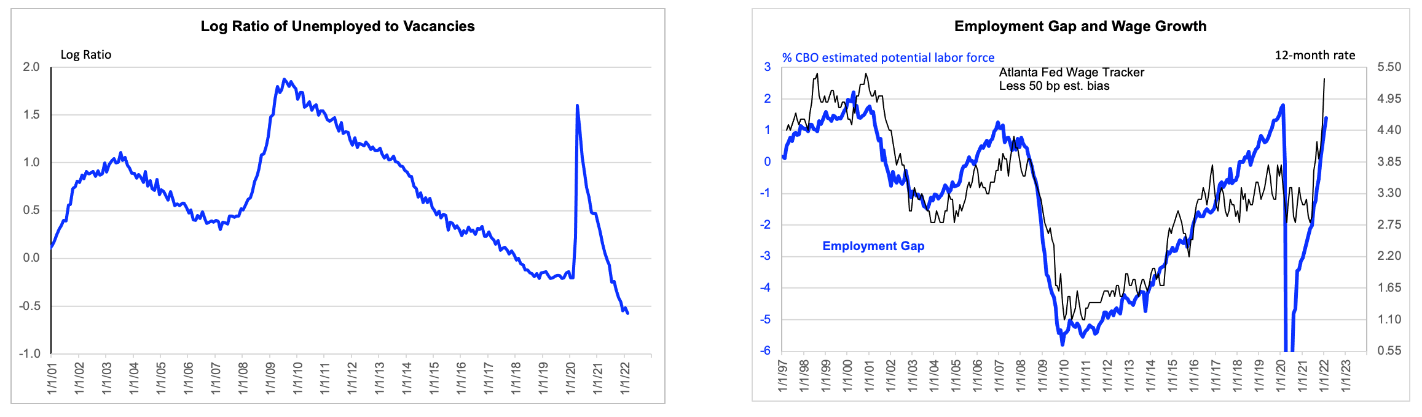
And lastly…” the consensus has the 12-month change of AHE rising from 5.7% to 5.8%. That last figure would be exactly in line with the Wage Tracker for January, which had risen 80 bps from 5% that month. Powell, who is a bit politic, may say that wage growth is a “good thing but….” More simply, these wage figures are far too strong to be consistent with the recent inflation pulse being entirely or perhaps even mainly transitory. “
We will see if the payroll data comes in around consensus, we get it, it never does. But given that we know the consensus numbers would indicate a very strong and tight labor market, it can help everyone think about how markets will react if the numbers come in slightly below (still tight and the Fed doesn’t change its path much.) or slightly above (the possibility of a 50bp hike increases the moment Powell can get away with it). The much weaker number of course provides some hawkish relief.