Kim Wallace is hosting a 30-minute webinar on Ukraine today at 10:00 AM ET with Chris Skaluba, an expert from the Atlantic Council. Register HERE.
SUMMARY: Russia invaded Ukraine overnight and there are reports of intense fighting this morning. There are too many unknowns and unknown unknowns about how this situation will unfold. Investors should expect strong sanctions imposed on Russia, which will slow growth and leave upward pressure on commodity prices. How long this crisis takes to unfold will determine how much inflation, financial conditions, and growth will be impacted. Short-term, a flight to safety means Treasury yields, rate hike expectations and risk assets are sharply lower. Near term, how forcefully world leaders respond on sanctions (or not) will determine how much more near term downside exists.
Volatility is spiking across assets as investors shift into lower risk assets. A great deal of uncertainty has been priced in, but there is little reason to expect any type of mean reversion until there is some clarity on geopolitics. For now, elevated volatility is 1) puts downward pressure on all risk assets, 2) should impact speculative names the most, and 3) is tightening financial conditions.
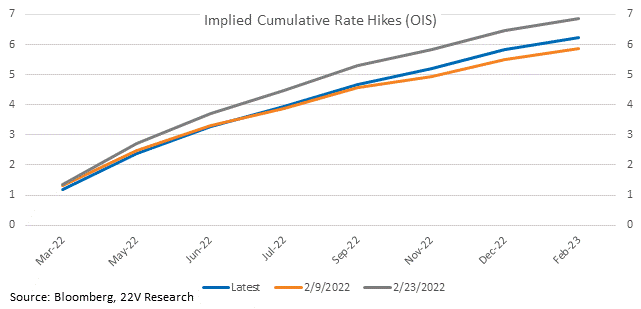
Short-term, monetary policy concerns will have little influence on asset prices, but in the medium term it is important to keep in mind that the Fed’s policy goal was to tighten financial conditions, but they won’t (intentionally) overdo it. Persistent fighting in Ukraine COULD cause a shift in the Fed’s tone, which markets are roughly pricing in; cumulative rate hike expectations are back near their pre-CPI levels. If there is any change to the Feds rate path, it’s because of growth slowing or the Fed views the tightening of financial conditions as being enough. It is tough to argue that -15% – -20% on the S&P is something that the Fed will just ignore. Large declines in the S&P, along with increases in CDX spreads and surging oil prices will have an impact on expected demand growth. The Fed wants demand growth to slow, so this conflict helps accomplish that goal. Unfortunately.
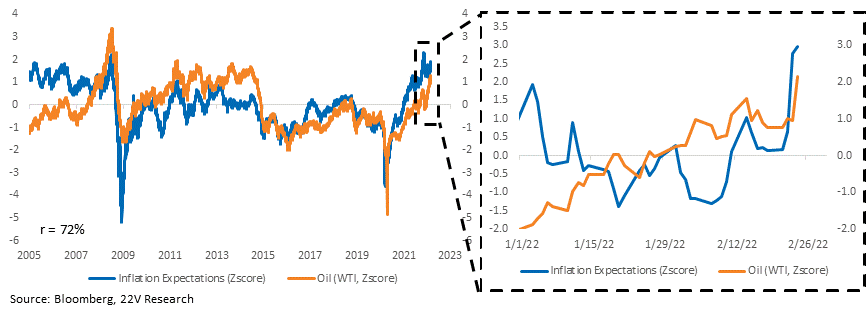
Oil prices are moving sharply higher this morning and that will impact headline inflation. There is less reason to expect a meaningful impact on core inflation and the underlying conditions for above-trend demand growth are still intact. The Inflationary pressure from rents won’t abate immediately and Inflation expectations have gapped higher with oil prices, in-line with its historical relationship. The main sources on inflation motivating the Fed policy shift remain in place. Rate hikes are the Fed’s way of tightening financial conditions and slowing growth. If that happens through a combination of financial sanctions slowing global growth and increased volatility pushing risk assets lower, fewer rate hikes are likely. The Fed’s need to “reset” economic expectations lower and financial conditions tighter is less so as this conflict persists.
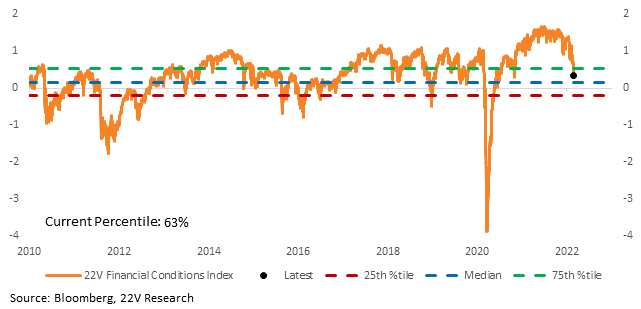
MARKET VIEWS: Russia attacked Ukraine last night, opening multiple fronts. As of the time of writing, Russian forces were entering Kyiv. Kim Wallace is hosting a 30-minute webinar on Ukraine today at 10:00 AM ET with Chris Skaluba, an expert from the Atlantic Council. Register HERE. Equity futures are down over -2.5% (bringing the NASDAQ’s drawdown to ~-21% and the S&P’s to ~-14%), crude oil is trading above $100 a barrel, and U.S. 10yr yields are down -14bps to 1.85. Financial conditions have tightened meaningfully over the past two days and will tighten (the chart below is updated through this morning, but not every metric updates intraday).
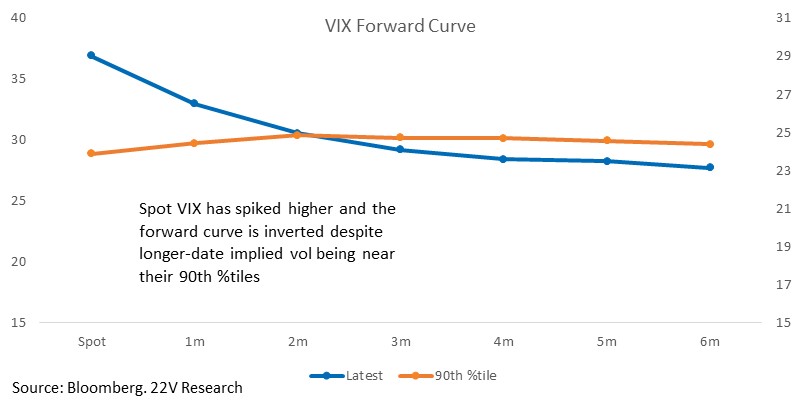
Volatility is spiking across assets as investors shift into lower risk assets. Spot VIX is near 37 and the forward cure is deeply inverted. Implied vol has increased across durations over the past month and forward VIX contracts are near their 90th %tile levels. A great deal of uncertainty has been priced in, but there is little reason to expect any type of mean reversion until there is some clarity on geopolitics. For now, elevated volatility is 1) puts downward pressure on all risk assets, 2) should impact speculative names the most, and 3) is tightening financial conditions.
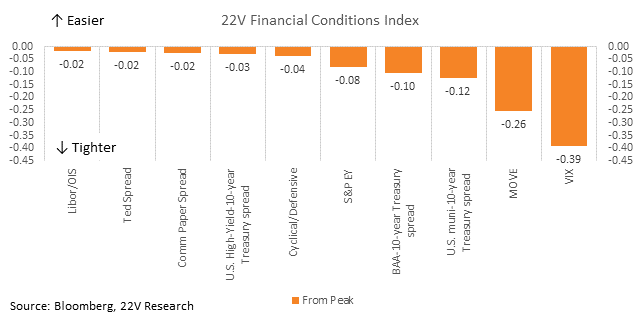
Since financial conditions peaked last June, most of the tightening has been from increased volatility. But bond and money market spreads had started to contribute before the invasion. The decline in yields is further widening out spreads.

Short-term, monetary policy concerns will have little influence on asset prices, but in the medium term it is important to keep in mind that the Fed’s policy goal was to tighten financial conditions, but they won’t (intentionally) overdo it. Persistent fighting in Ukraine COULD cause a shift in the Fed’s tone, which markets are roughly pricing in; cumulative rate hike expectations are back near their pre-CPI levels. If the war ends and tension ease, the rate hike path will remain in place. If there is any change to the Feds rate path, it’s because of growth slowing.
Oil prices are moving sharply higher this morning and that could impact headline inflation. There is less reason to expect a meaningful impact on core inflation and the underlying conditions for above-trend demand growth are still intact. And the inflationary pressure from rents won’t abate. Inflation expectations have gapped higher with oil prices, in-line with its historical relationship. The main sources on inflation motivating the Fed policy shift remain in place.
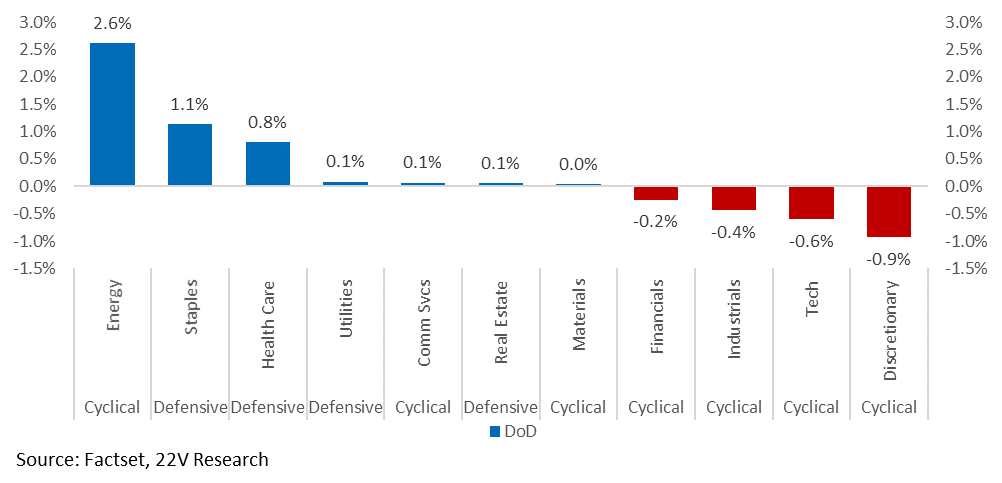
The flight to safety will persist as long as geopolitical tensions are this bad: defensives outperforming as equities decline, yield-curve flatteners outperform, low vol outperforms, and Energy outperforms as oil prices rise.
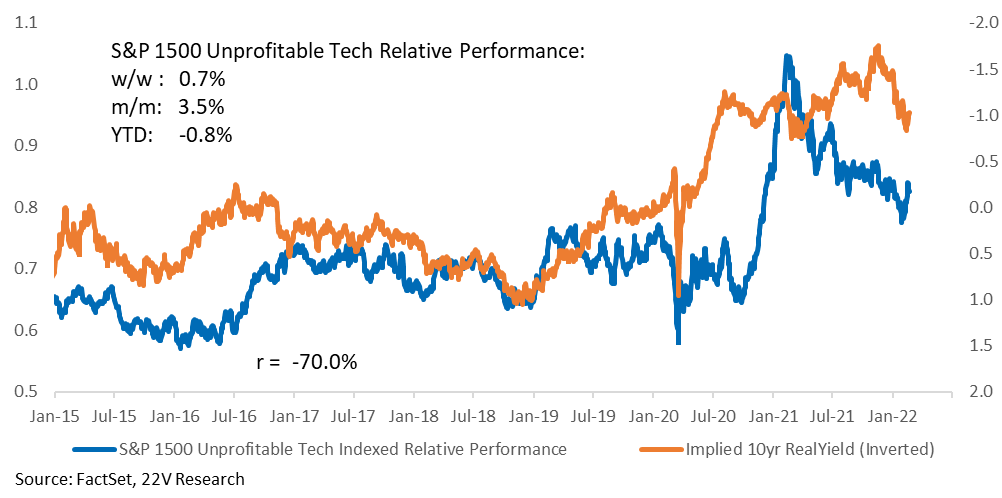
Real rates are unlikely to move higher short-term as inflation expectations increase and 10yr yields are pinned by geopolitical tensions. But unprofitable tech won’t benefit; speculative names will remain weak during the flight to safety.