Broad Discretionary struggled with lockdowns, supply chain disruptions, and shifting spending patterns during COVID. As variants faded and mobility rebounded, earnings and sales rebounded. In 4Q, Discretionary sector sales and earnings both grew 13% y/y, supported by strong consumer demand and profit margins that reached their highest level since the 1990s. Management sentiment toward forward margins remains high today as well.
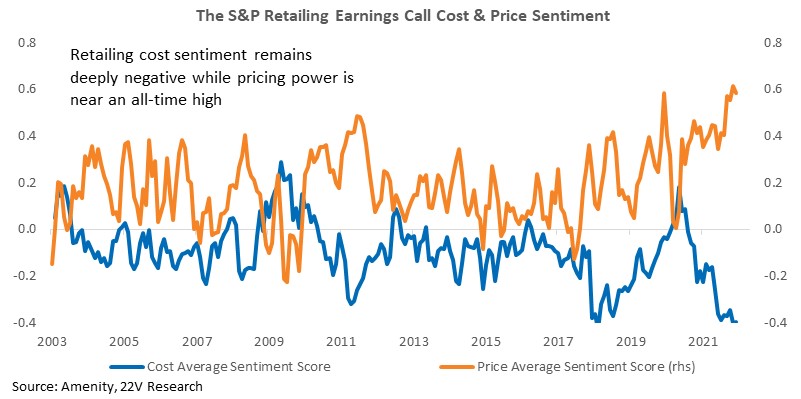
So fundamentals for the group are attractive, but the threat facing Discretionary is from macro conditions, specifically inflation and the Fed. Cost sentiment, which we measure using the Amenity natural language processing tool, for Discretionary names has fallen to a near record low while pricing sentiment is near an all-time high. Rising wage growth and a Fed focused on raising rates to slow inflation and demand, are headwinds for Discretionary profitability in general. Retail in particular faces increased risk from strong wage growth and a Fed focused on slowing growth and inflation, and ongoing supply chain bottlenecks.

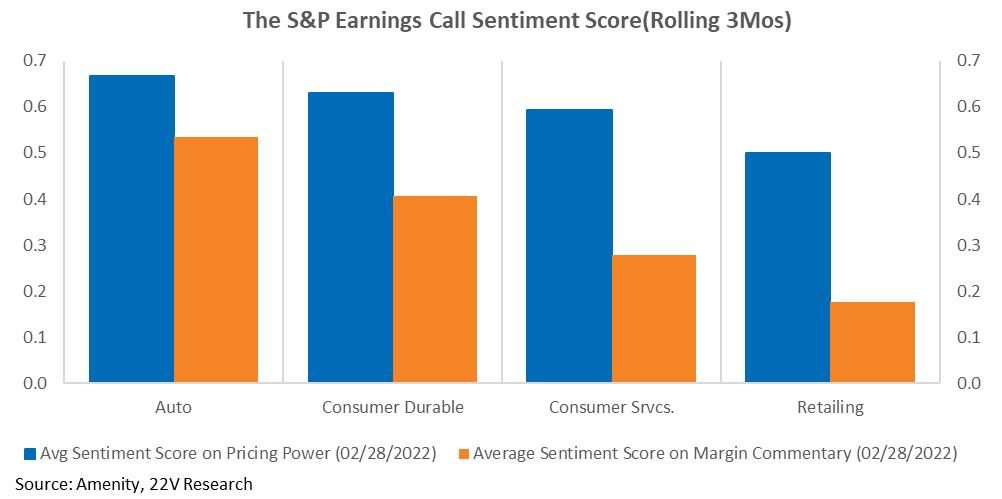
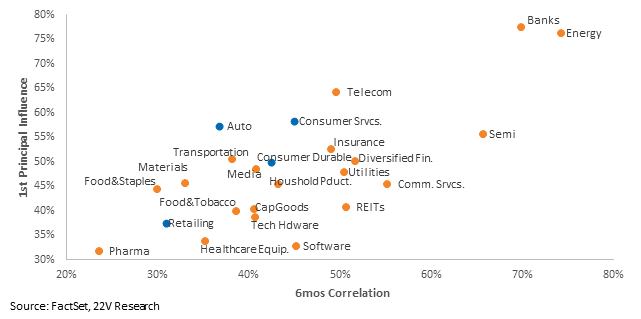
Retail tends to be less highly correlated and less macro influenced than most other industries, even within Discretionary, suggesting stock picking will remain an important consideration within the space. Consumer Services and Durables tend to be more macro driven. In the near-term, high pricing power and margin commentary sentiment suggests profitability will remain strong across the groups. Longer term, with the Fed setting policy to push back against strong pricing power, focusing on names that can maintain profitability through cost controls will be increasingly important.
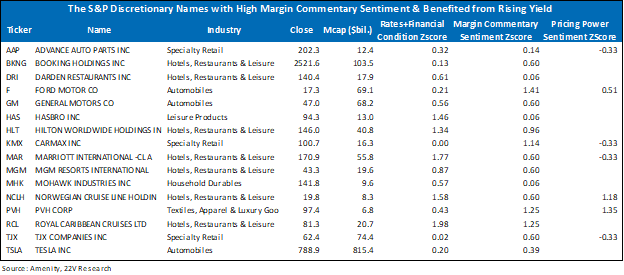
At the end of the report we list the Discretionary names that are nest positioned for a rising rates/tightening financial conditions backdrop that also have elevated forward looking margin sentiment. These names tend to have better near term margin expectations. We also list their pricing power sentiment score, where available, for reference.
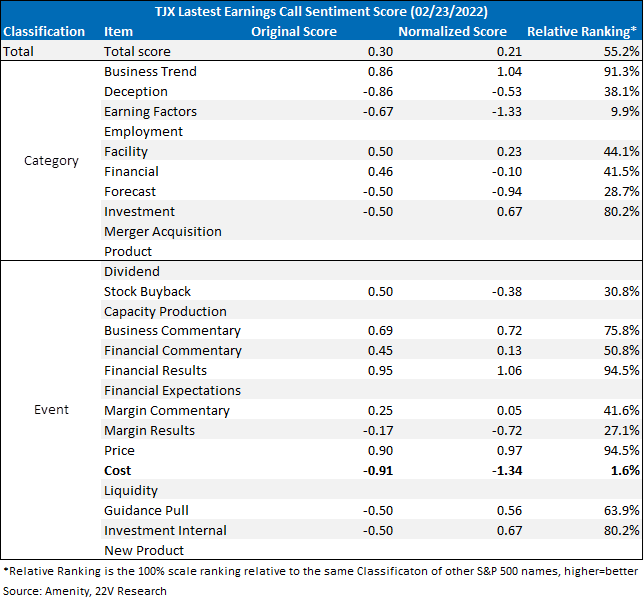
Sentiment Considerations within Discretionary: Yesterday, the latest round of Retail names announced 4Q earnings, and results fell largely in line with the space in general. Top line growth and profitability were stronger than expected, helping lift overall Consumer Discretionary margins to their highest level since 1998. But Discretionary has been one of the worst performing S&P sectors YTD and Retail is the worst performing industry group despite strong fundamental growth. The reason for that can be seen in the sentiment breakdown of TJX’s earnings call. Business Trends, Financial Results and Pricing sentiment were all extremely high, but cost sentiment was near its lowest of any S&P name. In the case of TJX, rising costs led to an earnings miss and the stock fell sharply. With inflation and pricing power under assault from the Fed, cost pressures will be an increasingly important area to focus on, particularly within Discretionary names (let us know if you would like a sentiment scorecard for specific names)
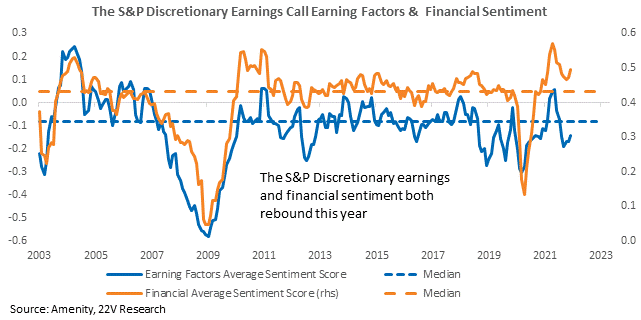
At a high level, as Omicron fades and mobility rebounds, earnings and financial sentiment factors have improved across Discretionary names this year. Financial sentiment remains higher than normal, but earnings sentiment is depressed. Sales and earnings growth of Discretionary in 4Q has were 13.2% and 13.1% respectively, slightly lower than the S&P growth.
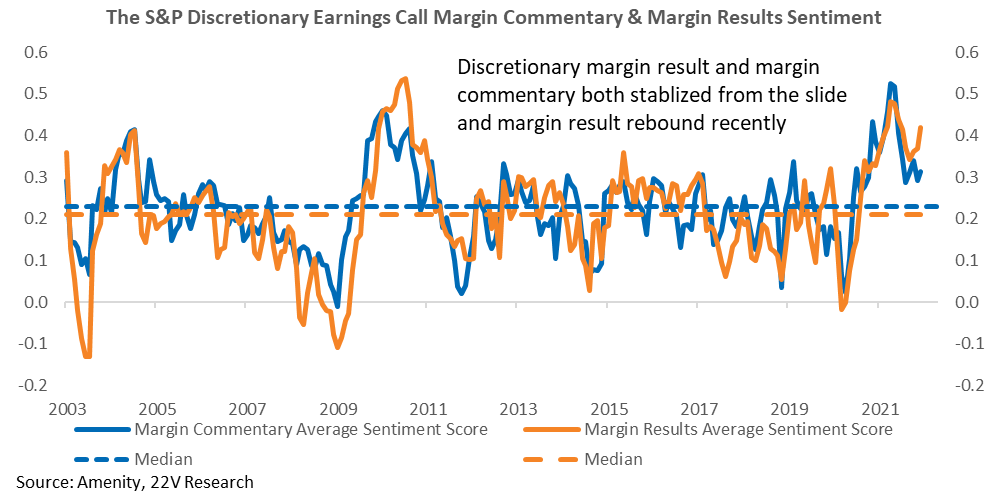
Sentiment on margin commentary and margin results have stabilized recently as well and remains at the higher end, especially for margin results. Currently profit margin for the S&P Discretionary has been 8.8%, the highest level since the 1990s. Retail sales growth has been robust during the post-recession rebound supporting increasing earnings and strong margins.
While rising inflation has been a headwind to Discretionary as well. Price sentiment of Discretionary names have reached an historic high, but cost sentiment is near its all-time low.
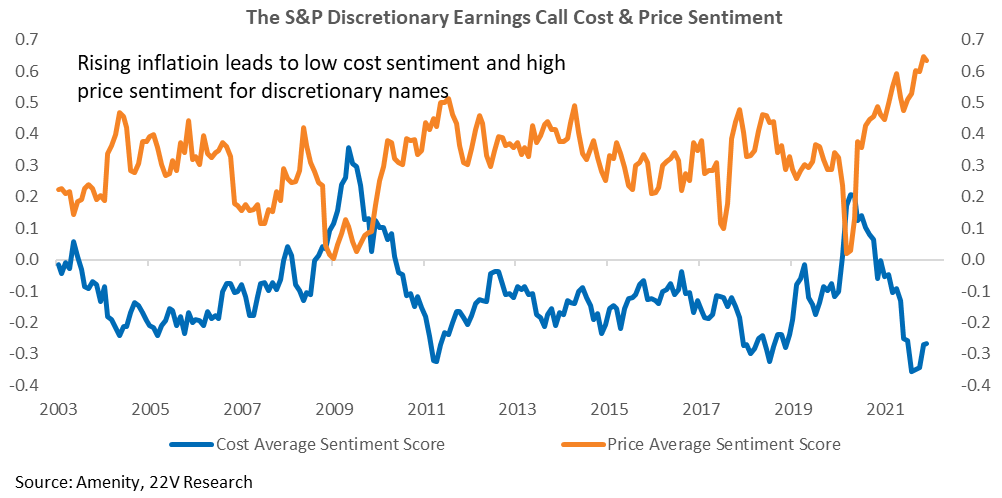
Retail in particular faces increased risk from strong wage growth and a Fed focused on slowing growth and inflation, and ongoing supply chain bottlenecks.
Industry Groups Sentiment Recap: Ranking of pricing power and margin commentary at industry group level shows better pricing power and forward margins expectation for Autos than other industry groups, while Retailing has the lowest sentiment within Discretionary. YTD Retailing has been the worst performing industry group of all industry groups, in line with lower sentiment score.
As we discussed last week, Energy and Banks are industry groups that are more macro driven given their high correlation and the percent of their volatility influenced by the first principal component. Correlation within Discretionary industry groups have been around its median level compared to other industry groups, while macro influence on Discretionary industry groups are slightly higher. The exception is Retailing, which has both lower than median correlation and macro influence. Though Retailing has underperformed this year, stock selection remains effective given the low correlation.
Below we list Discretionary names with higher than median margin commentary sentiment and higher combined real fed fund rate, real yield, and financial conditions normalized scores. These names best positioned for rising real rates/yields and tightening financial conditions that also have strong margin sentiment. We also list their pricing power sentiment normalized score for reference. Higher pricing power score names are less likely affected by rising inflation pressure.