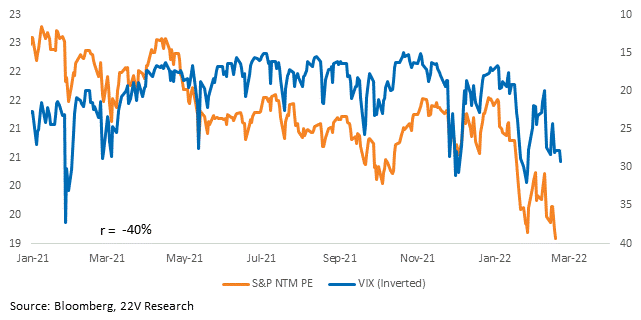
SUMMARY: Equity markets are under pressure again this morning after Russia recognized the two separatist republics in eastern Ukraine and ordered troops there. Since tensions spiked, the VIX is up +9.3 points and the S&P NTM PE has contracted -1.2 points. A quick and clear resolution to the Russia situation would be a quick +6% on the S&P if PEs return to their level on 2/9. Kim Wallace wrote a good report on Putin’s constricting options HERE.
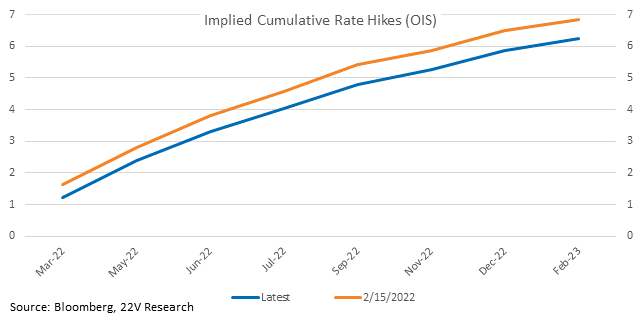
There has been some speculation that Russia-driven economic weakness will lead to a less aggressive Fed. Gerard maintains the Fed has no reason to try to offset shocks that would slow aggregate demand growth. The Fed will take tightening financial conditions where it can get it, so don’t rely on a Fed put struck nearby. Rate hike expectations have diminished a little in light of the rising geopolitical tensions. If tensions are unwound, then rate hike expectations will increase again.
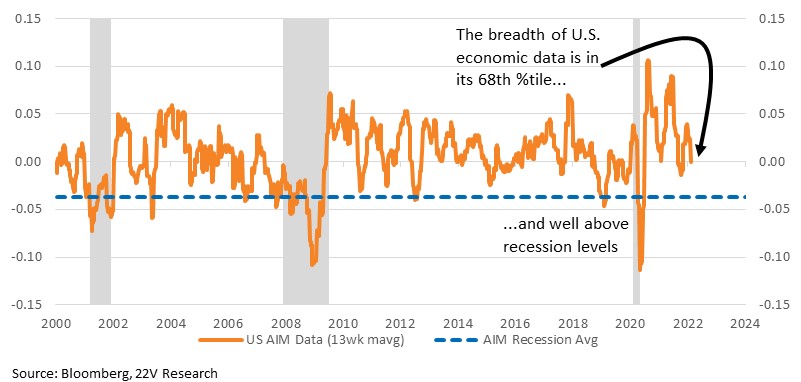
Stagflation arguments took another hit last week as economic numbers remained robust. Retail sales, PPI, industrial production, and capacity utilization were all much stronger than expected. Overall, hard economic data remains very firm while soft data (surveys, sentiment) have fallen. High inflation and above-trend growth remain firmly entrenched, necessitating a more aggressive policy stance by the Fed.

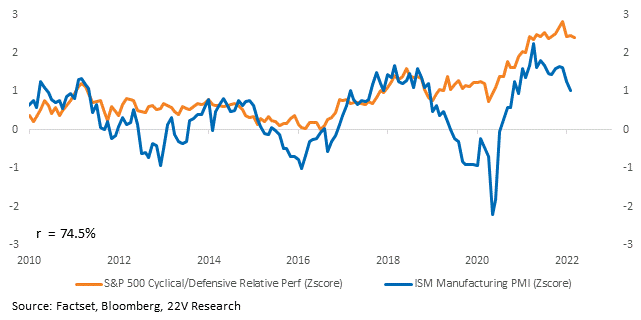
So far, Cyclicals have largely defied the tightening of financial conditions. Concerns about Russia and the ongoing debate about the “immaculate tightening” (organically slowing growth/inflation allowing financial conditions to remain easy) helped support Cyclicals. Outside of a potential short-term bounce when/if geopolitical risks ease, as the Fed pursues its goal of slowing growth and inflation, Cyclicals will struggle. Their next round of outperformance is most likely to come AFTER inflation expectations and financial expectations have reset lower.
Cyclical vs Defensive relative performance is correlated with financial conditions and PMI trends. Tightening conditions and slower growth is a medium to longer-term headwind after geopolitical tensions ease. Of note, a catalyst to tighten financial conditions is still necessary. We expect it to come in the form of a Fed speech, but none are scheduled for the next few weeks during a quiet macro period. If geopolitical tensions do ease, the short-term setup for Cyclicals is constructive.
MARKET VIEWS: Equity markets are under pressure again this morning after Russia recognized the two separatist republics in eastern Ukraine and ordered troops there. Since tensions spiked, the VIX is up +9.3 points and the S&P NTM PE has contracted -1.2 points. A quick and clear resolution to the Russia situation would be a quick +6% on the S&P if PEs return to their level on 2/9. Kim Wallace wrote a good report on Putin’s constricting options HERE. Market internals could rebound short-term as well, but the Fed, rising real rates/yields, and tightening of financial conditions will be more important over the medium term.
Gerard maintains the central case for tightening financial conditions requires the Fed to do more, but shocks cannot be ignored. The Fed has no reason to try to offset shocks that would slow aggregate demand growth. The Fed will take tightening financial conditions where it can get it, so don’t rely on a Fed put struck nearby. Rate hike expectations have diminished a little in light of the rising geopolitical tensions. If tensions are unwound, then rate hike expectations will increase again as the Fed will have to rely on rate hikes to re-tighten financial conditions.
Stagflation arguments took another hit last week as economic numbers remained robust. Retail sales, PPI, industrial production, and capacity utilization were all much stronger than expected. Housing numbers were mixed as borrowing costs continue to backup, but employment readings remained strong, confirming the survey and sentiment data that show firms continue to hire. Overall, hard economic data remains very firm while soft data (surveys, sentiment) have fallen. High inflation and above-trend growth remain firmly entrenched, necessitating a more aggressive policy stance by the Fed.
So far, Cyclicals have largely defied the tightening of financial conditions. Concerns about Russia and the ongoing debate about the “immaculate tightening” (organically slowing growth/inflation allowing financial conditions to remain easy) helped support Cyclicals. Growth has remained surprising string as well with the Omicron slowdown proving to be smaller than feared. As the Fed pursues its goal of slowing growth and inflation, Cyclicals will struggle. Their next round of outperformance is most likely to come AFTER inflation expectations and financial expectations have reset lower.
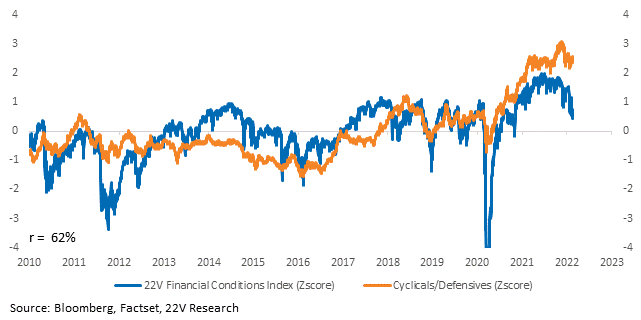
Cyclical vs Defensive relative performance is correlated with financial conditions and PMI trends. Tightening conditions and slower growth is a medium to longer-term headwind after geopolitical tensions ease. Of note, a catalyst to tighten financial conditions is still necessary. We expect it to come in the form of a Fed speech, but none are scheduled for the next few weeks during a quiet macro period. If geopolitical tensions do ease, the short-term setup for Cyclicals is constructive.
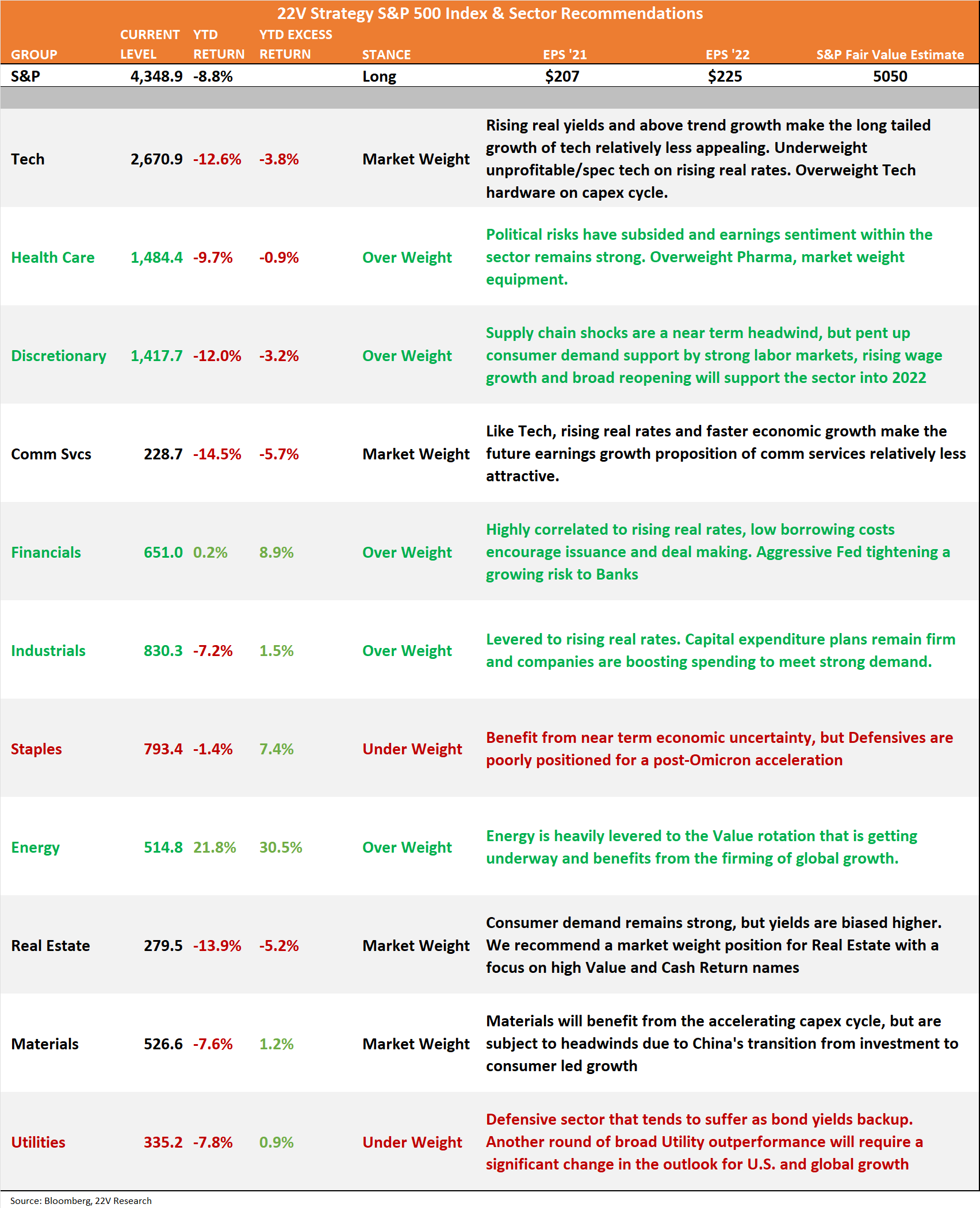
Sector Comments: Geopolitics and the tightening of financial conditions led the S&P to another weekly decline and left implied volatility near its cycle high. High inflation and above-trend growth remain firmly entrenched, necessitating a more aggressive policy stance by the Fed. Cyclical and Defensive returns were messy last week as the push of strong growth again met the pull of tightening financial conditions. Staples (Defensive) and Industrials (Cyclical) were the best performing sectors, while Energy, Comms (Cyclicals), and Healthcare (Defensive) were the worst performers. Financials, which remain one of the best performing sectors this year, underperformed as financial conditions tightened and yield curves flattened. Large caps in general struggled as well with the S&P falling -1.6% w/w while the equal weighted index was down -1.2%. Macro/micro themes continue to offer more attractive opportunities than the more traditional Cyclical/Defensive paradigm, given the broad cross currents impacting markets.