SUMMARY: There were no material developments from the FOMC minutes yesterday. We continue to view the focus on 50bp or not in March as noise. If Powell and co want to be very hawkish they can point out that futures pricing of 2.5% end point on fed funds is way off, they can say neutral rate is really far away again, and they can indicate that they really want growth to slow. That is how they can reset financial conditions tighter, which we still expect. But Powell isn’t slated to speak until March 16. What the Fed does to tighten financial conditions should be the focus.
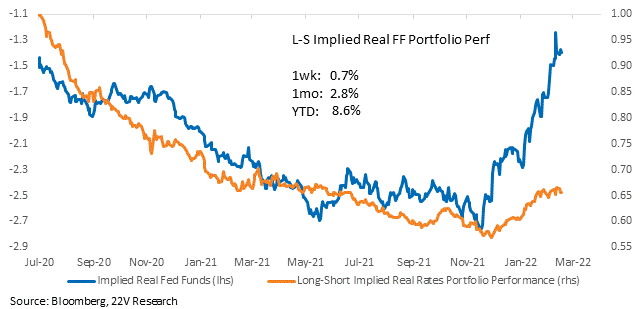
Real yields have gone straight up since the Fed pivot in November and they should go up even more as the Fed continues to tighten financial conditions. We remain long companies that benefit from increasing real yields, but real yields should consolidate some over the news few weeks as we enter a quiet macro period. Cyclicals will remain bid until the Fed resets financial conditions tighter, which we expect will happen in the coming months.
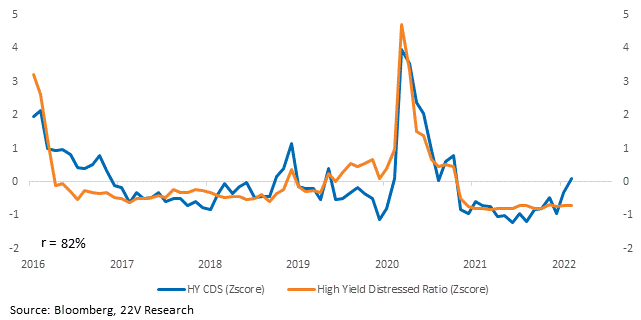
High yield credit spreads have widened out, but the percent of high yield debt that’s distressed is still unusually low (15th percentile). That means the widening out in credit has been due to interest rate risk, not default risk. If we are correct on the need for financial conditions to tighten more aggressively, default risk likely needs to increase before the Fed backs off. Which means being long the market will be much easier AFTER default risk increases.
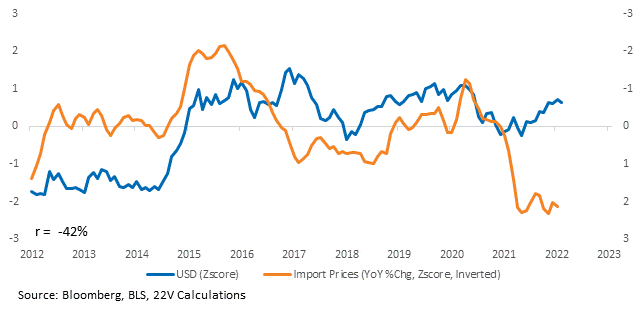
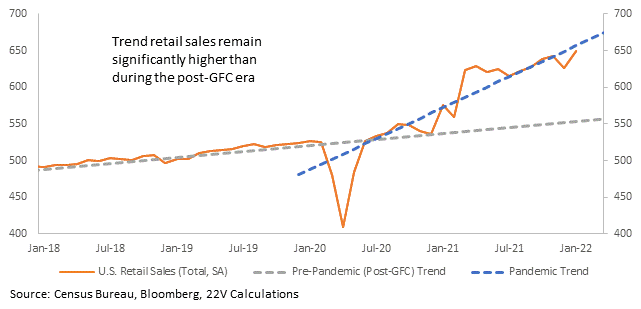
Retail sales came in very strong in January after a revised-weaker December. The debate is not on the strength of the economy anymore. The debate is if firm economic growth continues to butt up against supply constraints (rent/labor) or if stronger productivity growth can offset that (something we discussed during our macro conference yesterday). We expect the Fed has to ratchet down demand growth much more aggressively to combat inflation. The USD has been firm over the last 8-12 months and import prices are still high, which is interesting and speaks to less alleviation on supply chains than hoped. At least for now.
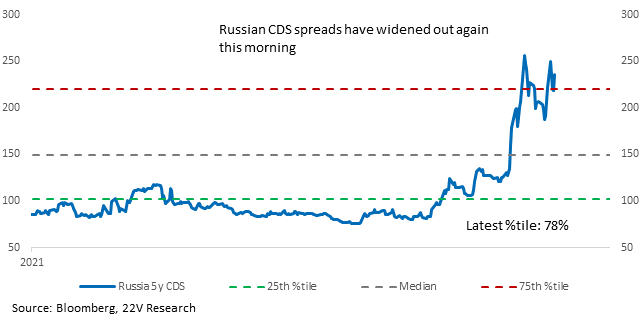
MARKET VIEWS: The Russia-Ukraine escalation-de-escalation cycle continues, bringing a bid for haven assets back this morning. The volatility will likely continue, weighing on 10yr yields as it does. Kim Wallace, 22V’s Washington policy analyst, hosted a webinar on the Russia-Ukraine conflict last week with Chris Skaluba, an expert from the Atlantic Council. They discussed long-term strategy and the sustainability of the offensive; the content is still relevant and timely today. Check out the replay here.
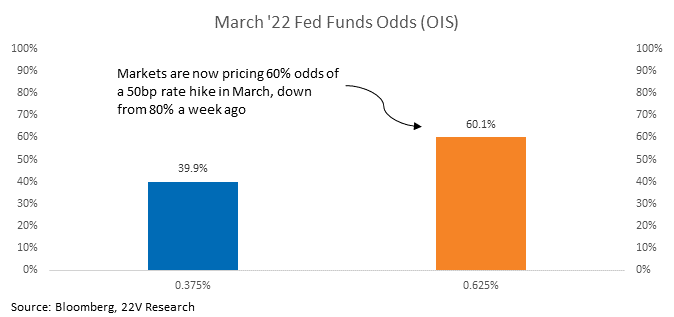
There were no material developments from the FOMC minutes yesterday. Market-based rate hike expectations fell slightly. We continue to view the focus on 50bp or not in March as noise. If Powell and co want to be very hawkish they can point out that futures pricing of 2.5% end point on fed funds is way off, they can say neutral rate is really far away again, and they can indicate that they really want growth to slow. That is how they can reset financial conditions tighter, which we still expect. But Powell isn’t slated to speak until March 16. As the San Fran Fed pres Daly said yesterday, she would like to see continued tightening of financial conditions . What the Fed does to tighten financial conditions should be the focus.
Real yields have gone straight up since the Fed pivot in November and if you believe San Francisco Fed president Daly, they should go up even more as the Fed continues to tighten financial conditions. We remain long companies that benefit from increasing real yields, but real yields should consolidate some over the news few weeks as we enter a quiet macro period. Fed President Williams and Vice Chair Nominee Brainard speak on Friday and both are work paying attention to (especially Brainard), but another leg up in real rates is unlikely before Payroll (March 4th), CPI (March 10th) and the FOMC meeting on March 16th. Cyclicals will remain bid until the Fed resets financial conditions tighter, which we expect will happen in the coming months.
High yield credit spreads have widened out, but the percent of high yield debt that’s distressed is still unusually low (15th percentile). That means the widening out in credit has been due to interest rate risk, not default risk. If we are correct on the need for financial conditions to tighten more aggressively, default risk likely needs to increase before the Fed backs off. Which means being long the market will be much easier AFTER default risk increases.

Economic Growth Is Strong: Retail sales came in very strong in January after a revised-weaker December. The debate is not on the strength of the economy anymore. Credit card data, labor market data, housing data are all telling the same story – the US econ is firm and now we will have less Omicron headwinds. The debate is if firm economic growth continues to butt up against supply constraints (rent/labor) or if stronger productivity growth can offset that (something we discussed during our macro conference yesterday). We expect the Fed has to ratchet down demand growth much more aggressively to combat inflation.
The USD has been firm over the last 8-12 months and import prices are still high, which is interesting and speaks to less alleviation on supply chains than hoped. At least for now.