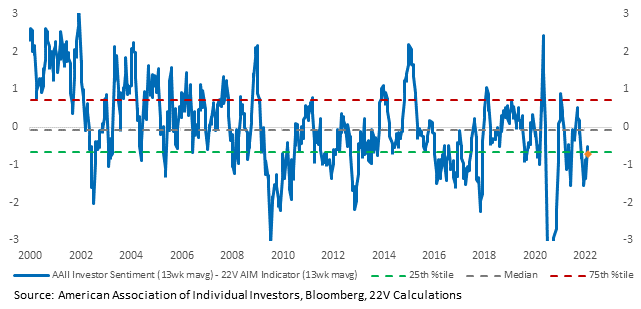
SUMMARY: Outside of geopolitical risk, we are in a quiet period for macro the next few weeks (unless the FOMC minutes are shocking today, which is unlikely). The major data points to focus on will be Payroll on March 4th, CPI March 10th and then the FOMC meeting on March 16th. There are plenty of other data points in between, but payroll and CPI are the meaningful ones. Powell or Fed Vice Chair nominee Brainard are not expected to talk (for now) before the March 16th FOMC meeting. NY Fed President Williams speaks on Friday and is important to listen to, but if we are going to get a “resetting” of the current easy level of financial conditions like we expect, it will likely come at the FOMC meetings. For now, financial conditions remain easy, sentiment is weak relative to the growth outlook, and we are unlikely to learn anything new on the data or Fed for a few weeks, which makes being short stocks in general difficult near-term.
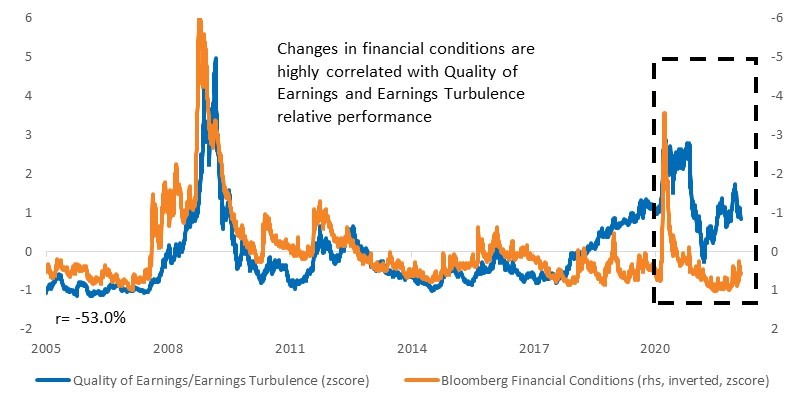
Tightening financial conditions are a tailwind to Quality of Earnings while easing conditions favor Earnings Turbulence. We think financial conditions should tighten longer term as the Fed raises rates to rein in inflation and slow growth. That being said, many investors believe the Fed will not have to do much more, inflation will move lower naturally over time, and economic growth will be fine. That is how markets are priced now (tightening with no impact on financial conditions) and until the Fed resets financial conditions, expect riskier factors to outperform.
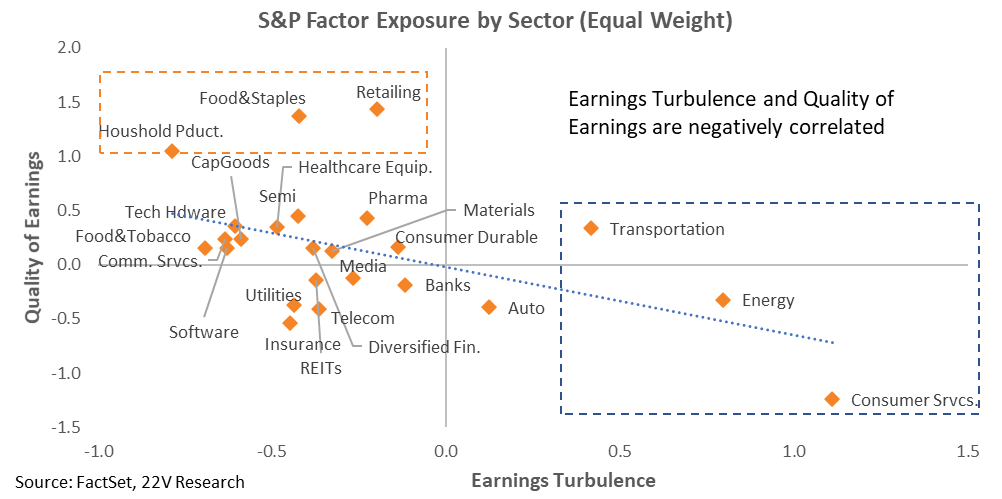
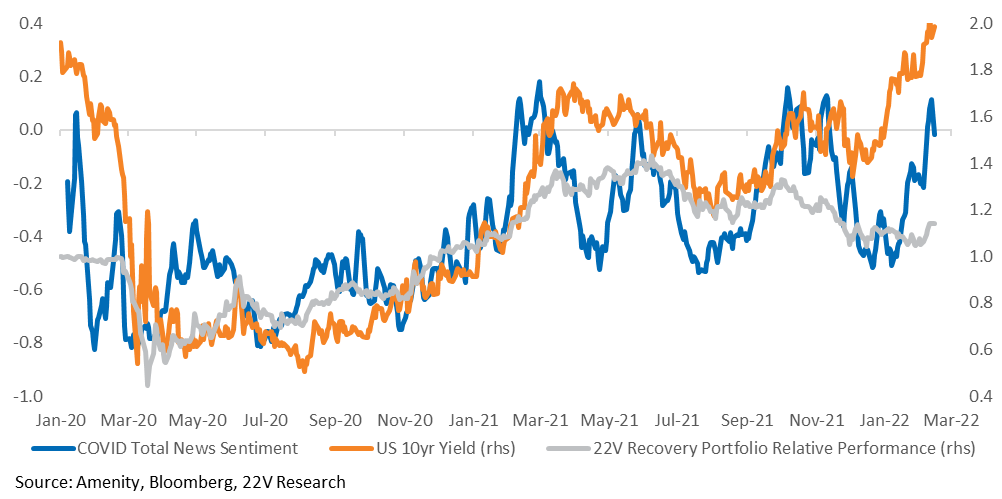
FYI: Consumer Services, Energy, Transportation and Autos are the most exposed to Earning Turbulence and Retailing, Food & Staples and Household Products are most exposed to Quality of Earnings. Unprofitable tech and our Reopening Portfolio have high exposure to Earnings turbulence as well. Both will do well if financial conditions remain easy over the coming weeks while macro is relatively quiet. On reopening in particular, it has plenty of room to “catch up” to improving COVID sentiment and 10yr yields. The correlation between improving COVID sentiment and reopening basket relative performance broke down when financial conditions tightened some in January.
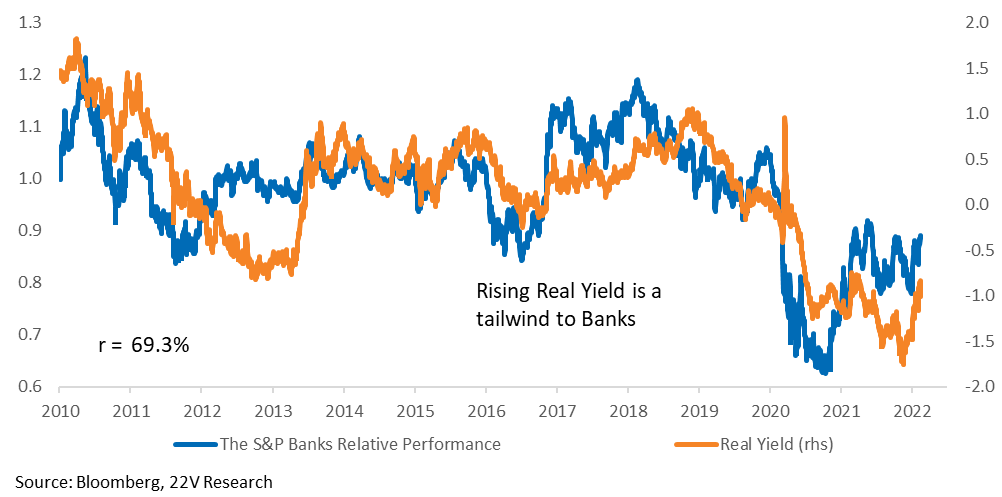
Lastly, we highlight two sectors (Energy and Financials) that are the most macro driven and have high intra-industry group correlation. In short, Energy and Financials are poor stock picking sectors now and have unusually high macro influence. Oil’s influence on Energy is high relative to history and yields are heavily influencing Banks. Longer term, we think oil prices will remain bid and real rates are going up. Short term though, expect consolidation as macro is quiet and if Ukraine risk fades.
I hope we are being clear – we expect financial conditions to tighten longer term, but they remain easy, despite the increase in Fed rate hike expectations and we don’t see anything that will change Fed rate hike expectations or financial conditions in the next few weeks.
Full report below…
MARKET VIEWS: The headlines are still focused on Russia, but we are in a quiet period for the next few weeks from the macro and economic data point of view (assuming the FOMC minutes aren’t shocking today, which is unlikely). The major data points to focus on will be Payroll on March 4th, CPI March 10th and then the FOMC meeting on March 16th. There are plenty of other data points in between, but payroll and CPI are the meaningful ones. Powell or Fed Vice Chair nominee Brainard are not expected to talk (for now) before the March 16th FOMC meeting. NY Fed President Williams speaks on Friday and is important to listen to, but if we are going to get the “resetting” of the current easy level of financial conditions as we expect it will likely come at the FOMC meetings. For now, financial conditions remain easy, sentiment is weak relative to the growth outlook, and we unlikely to learn anything new on the data or Fed for a few weeks, which makes being short stocks in general difficult near-term.
Tightening financial conditions are a tailwind to Quality of Earnings while easing conditions favor Earnings Turbulence. There was more return volatility between Quality of Earnings and Earnings Turbulence recently as the Fed meeting and FOMC member comments have caused financial condition volatility. Longer term, financial conditions should tighten as the Fed raises rates to rein in inflation and slow growth. That being said, many investors believe the Fed will not have to do much more, inflation will move lower naturally over time, and economic growth will be fine. That is how markets are priced now (tightening with no impact on financial conditions) and until the Fed resets financial conditions, expect riskier factors to outperform.

So that investors are aware, Consumer Services, Energy, Transportation and Autos have been leading Earning Turbulence-exposed industry groups while Retailing, Food & Staples and Household Products are the industry groups most exposed to Quality of Earnings. Unprofitable tech and our Reopening Portfolio have high exposure to Earnings turbulence. Both will do well if financial conditions continue to remain easy over the coming weeks.
Reopening has plenty of room to “catch up” to improving COVID sentiment and 10yr yields. The correlation between improving COVID sentiment and reopening basket relative performance broke down when financial conditions tightened some in January.
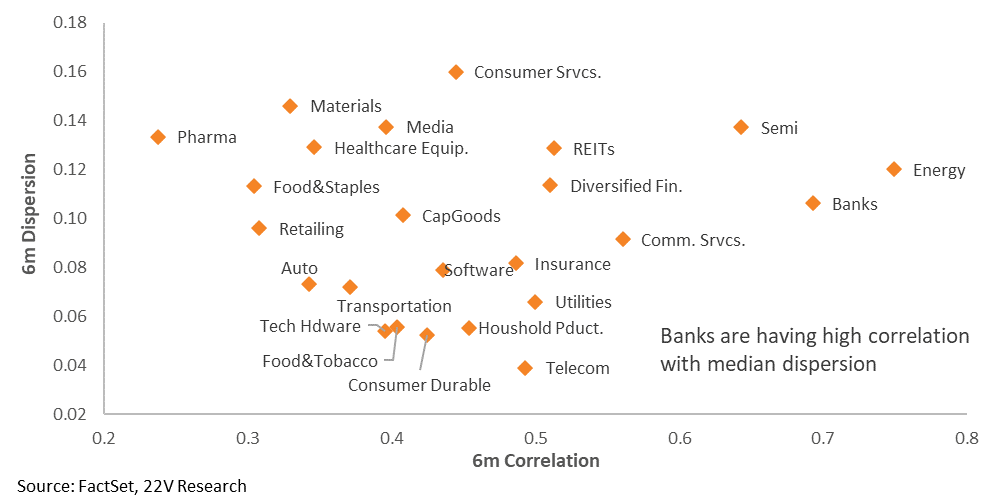
Digging Into Banks & Energy: In line with Principal Component Analysis, both Banks and Energy have much higher intra-industry group correlation than other industry groups, suggesting Bank stocks are more likely to move together. Banks is also having a median dispersion level compared to other industry groups. Banks should be traded as a group based on macro conditions rather than stock picking.
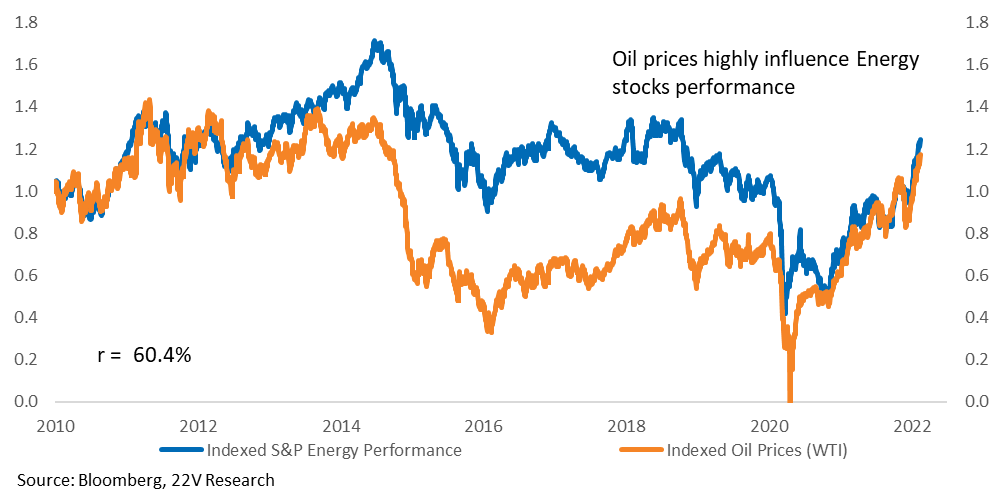
Oil has an usually high influence on Energy. Look for Energy to consolidate if Ukraine risk fades or an Iran deal gets done.
Both U.S. 10yr yield and the real Fed funds rate are highly correlated with relative performance of Banks. Banks outperformed the S&P by 5.9% YTD as yields rose. As the Fed clearly shifts to tame inflation, more rising rates should be expected and is a tailwind to Banks.