SUMMARY: China Loan new loans came in at CNY 3.98T versus consensus CNY 3.69B (previous 1.13T) and both total social financing and M2 increased more than expected. The focus is on CPI today, but metals have traded well (John Roque has been all over this) and with Asian central banks much easier than developed world central banks, emerging markets and high foreign sales stocks remain interesting.
We got multiple emails about the market setting up for a reversal (lower), given the sharp move higher the past few days, if CPI is inline or higher. The negative combination for stocks is a core inflation beat (expectations 5.9%) with STICKY inflation (rents and services) driving the number. Worst case scenario for markets is used care prices lower MoM, but core inflation is higher than expected because of rents and services. If CPI is inline, then the market will probably be fine and the pain trade is higher near term. Our longer-term view is the same; core PCE will be too high for the Fed and economic growth will remain above trend. Financial conditions should tighten significantly to offset to high inflation and firm economic growth. It might take until March before the Fed makes that obvious though.
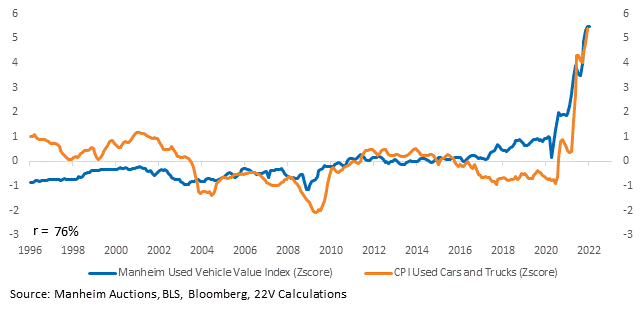
Focus on core inflation and its drivers (rents/wages), not headline inflation. Headline inflation will roll over, but that is NOT the story and not driving the Fed. Private rent data suggests rent inflation will continue to push core inflation higher. Manheim used car prices flattened out. This is a marginal positive, but pales in comparison to rent and wage data.

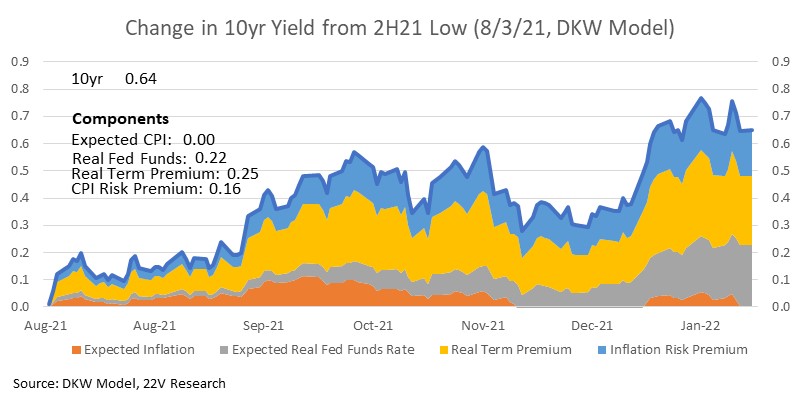
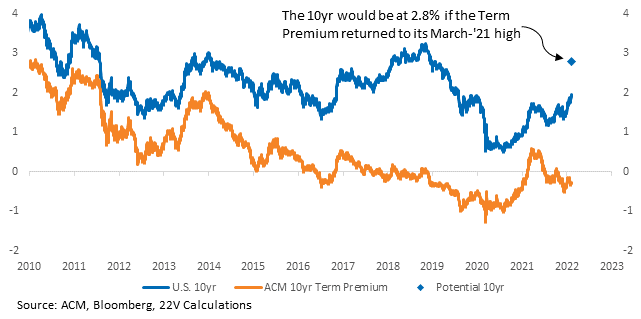
Through the end of January, the increase in the 10yr resulted from more or less equal parts 1) a higher real term premium, and 2) higher real expected fed funds. As Gerard has been writing, the current estimated rate path won’t systemically lead to a tightening of financial conditions, which in turn implies the Fed will have to reset expectations. That will bias yields higher still. The term premium is what investors require for bearing the risk that short-term Treasury yields do not go as expected. The term premium will likely increase if the Fed resets expectations, which could get 10yr yields into the 2.5%-3% range.
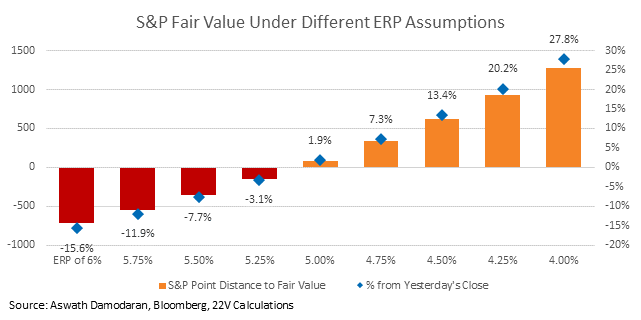
Fair value for the S&P, based on Aswath Damodaran’s model of present value of future cash returns for the index, sequentially drops as the 10yr yield increases. With a 4% 10yr yield there is still upside to fair value IF the equity risk premium falls to ~4.5%. The ERP would be below its post-GFC median but close to its longer-term median. The equity risk premium matters a lot more than 10yr yields. If the Fed “smashes something,” to borrow from Gerard, then the ERP will increase and fair value estimates will decline (markets have downside risk). Once the Fed accomplishes its goal of slowing inflation, assuming a recession is not required to do so, equity risk premiums should decline.
Full report below…
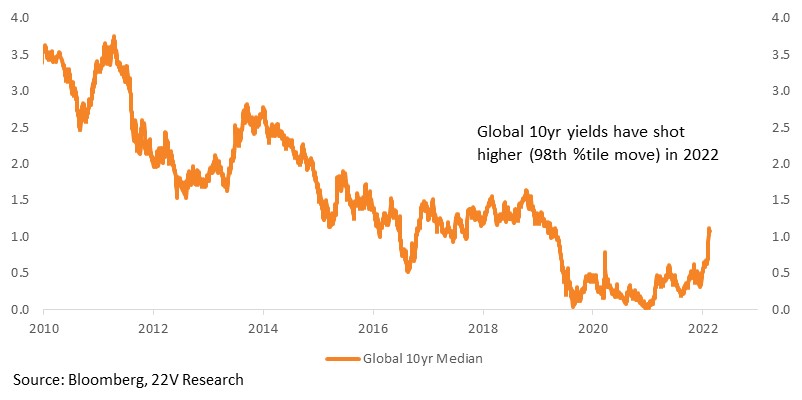
MARKET VIEWS: Bloomberg reports that ECB officials don’t trust internal inflation forecasts and want to start raising rates more quickly. At the same time, the BoJ said it will buy “unlimited” JGBs at 0.25% to keep borrowing costs from rising. Japan’s inflation readings have been tame compared to the rest of the world, and the BoJ’s move is to prevent higher borrowing costs from slowing growth. China new loan growth came in much higher MoM in January. Asia policy is far easier than developed world policy. Supports Oil/Metals. Global 10yr yields have moved sharply higher (98th percentile move, 1990-fwd) so far in 2022. Uncertainty over the inflation outlook, and central banks’ willingness to tolerate high current readings, makes the medium-term outlook for yields increasingly tricky. The main question is if the Fed and ECB allow time for growth and inflation to slow organically. Last month, the hawkish FOMC meeting and press conference suggested the answer, at least from the Fed’s side, is no.
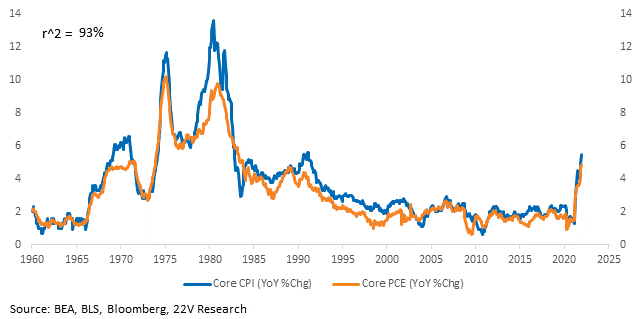
The Fed watches core PCE. There is variation between core CPI and core PCE. A beat or miss in today’s CPI doesn’t have a necessary and practical implication for the PCE. Rather, the two will trend together and right now, and we suspect in the future too given the rent data, the trend is still intolerably high inflation. We got a number of emails about the market setting up for a reversal, given how strong it has been past few days, if CPI is inline or higher. That would take a core inflation beat (expectations 5.9%) with STICKY inflation (rents and services) driving the beat. Worst case scenario for markets is used care prices lower MoM, but core inflation is higher than expected because of rents and services. If we are basically inline on CPI, then the market will probably be fine and the pain trade is higher near term. Longer term our view is the same it has been; core PCE will be too high, growth too strong, and financial conditions could tighten significantly. It might take till March before the Fed makes that obvious though.
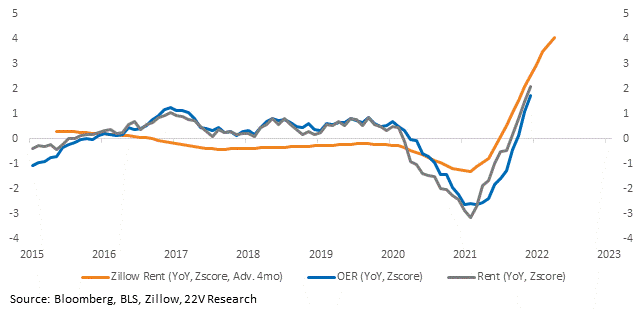
Focus on core inflation and its drivers (rents/wages), not headline inflation. Headline inflation will roll over, but that is NOT the story and not driving the Fed. Private rent data suggests rent inflation will continue to push core inflation higher. Case-Shiller has moderated recently, but still indicates higher levels of CPI OER and Rent growth. Zillow data continues to accelerate. We don’t know the beta to government rent data exactly, but the trend is not encouraging.
Manheim used car prices flattened out. This is a marginal positive, but pales in comparison to rent and wage data. Plus, we know auto inflation should moderate as manufacturing comes back online. We don’t get too excited by the below.
What Drives 10yr Yields: Over the past few weeks, we have made the case for higher yields. Today we’ll focus on some of the mechanisms of higher yields. Through the end of January, the increase in the 10yr resulted from more or less equal parts 1) a higher real term premium, and 2) higher real expected fed funds. As Gerard has been writing, the current estimated rate path won’t systemically lead to a tightening of financial conditions, which in turn implies the Fed will have to reset expectations. That will bias yields higher still.
Using the ACM model, the 10yr would be at 2.8% if the term premium returns to its March 2021 high. The term premium is what investors require for bearing the risk that short-term Treasury yields do not go as expected. The term premium will likely increase if the Fed resets expectations. There is an element of false precision here; the main takeaway is that a higher term premium can get 10yr yields into the 2.5%-3% range.
Fair value for the S&P, based on Aswath Damodaran’s model of present value of future cash returns for the index, sequentially drops as the 10yr yield increases. There is still upside through a 4% 10yr yield under a 4.5% equity risk premium, which is below is below the post-GFC median but closer to the longer-term median.
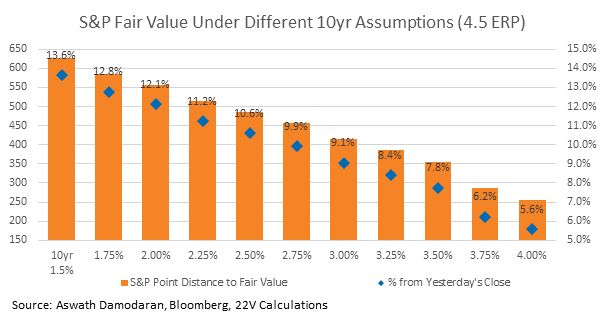
The equity risk premium matters a lot more. If the Fed “smashes something,” to borrow from Gerard again, then the ERP will increase and fair value estimates will decline in turn. The ERP gyrated between 4.5%-6% during the post-GFC, pre-COVID era. We think 4.5% is reasonable longer-term once the Fed achieves its goal, but 6% is not without rather recent precedent.