SUMMARY: Improving economic data will support risk assets unless the Fed needs to reset the outlook for financial conditions lower (tighter). Until it is clear financial conditions need to tighten further, favor Cyclicals relative to Defensive. Especially as the economic headwinds of Omicron fade and demand growth firms. A very high CPI number could help reset Fed rate hike expectations, but assuming CPI is roughly in line, the March FOMC meeting would be a place for the Fed to “reset expectations”. Without a surprise, financial conditions could ease or tighten and financial conditions have eased some recently. That stabilizes PEs for the market and Cyclicals near term.
Tech will continue to bounce, but we would not be short Value against it. Long Cyclicals (both Financial and Tech are Cyclical) relative to Defensives (Staples, Utes, REITS, Healthcare), is more interesting than Long Growth vs Value here. Earnings Quality and low volatility were the worst performing factor yesterday, consistent with an easing of financial conditions.
That’s the good news…
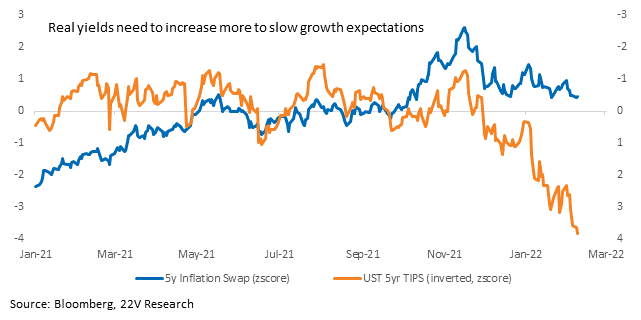
22V economist Gerard Macdonell has done some good work thinking through the interplay of rate hike expectations and what that means for financial conditions. In short, there is no reason to believe that the Fed policy rate rising toward current forwards should lead to a tightening of financial conditions. Financial conditions represent discounting what has already been printed on the screens. Financial conditions are still VERY easy, which is to say, very little economic impact has been priced in. Given that economic growth is running above trend and inflation is high, the Fed will likely become more explicit about the need to slow economic growth. As that happens, economic growth expectations should decline, and Cyclicals will struggle again. What we know for sure, inflation expectations (a proxy for demand growth) have remained near post-pandemic highs despite a sharp rise in real rates. Which means real rates need to keep moving higher until they have an impact on the growth outlook.

Bottom line: While demand is firm and core inflation trends are too high for the Fed, the longer-term overhang on the market will remain. The fed winning the battle against inflation means pricing power slows or reverses AND economic growth slows. Bad combo for earnings. That makes the market a fade as oversold conditions are worked off. Also, focus on core PCE and its drivers (rents / wages), not headline inflation. Headline inflation will roll over, but that is NOT the story and not driving the Fed.
Full report below…
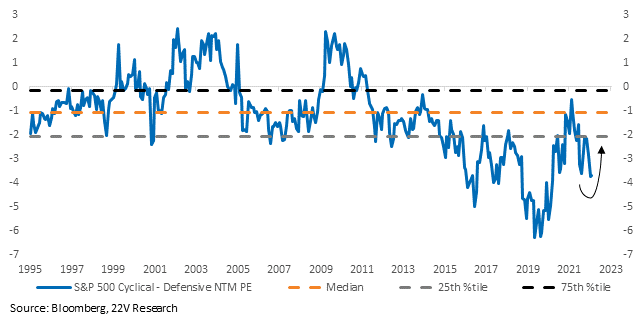
MARKET VIEWS: Risk assets are higher across the world as global 10-year yields consolidate. There is not clear catalyst for the consolidation in 10yr yields in Europe, but recent ECB commentary suggesting rate hikes wouldn’t happen before 4Q seems to have helped settle down European yields. We continue like Cyclicals relative to Defensive near term as Omicron’s impact on economic data fades and demand growth rebounds. At the same time, there is no reason to expect financial conditions to tighten significantly until there is a resetting of expectations by the Fed. CPI could help reset fed rate hike expectations if the number is really hot, but assuming CPI is roughly in line, the March FOMC meeting would be a place for the Fed to “reset expectations”. Without a surprise, financial conditions could ease or tighten and financial conditions have eased some recently. That stabilizes PEs for the market and Cyclicals near term.
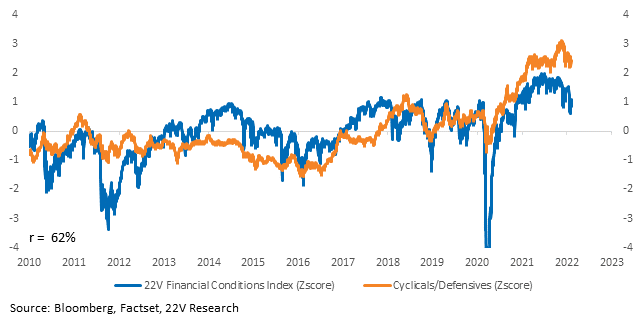
Improving data is not a headwind for risk assets unless the Fed resets the outlook for financial conditions. That is helping more speculative and risk-on factors near term. The factors with the more severe underperformance yesterday were Low Volatility and Earnings Quality. Both Value AND Growth outperformed. Tech will continue to bounce but we would not be short Value against it. Long Cyclicals (both Financial and Tech are Cyclical) relative to Defensives (Staples, Utes, REITS, Healthcare), is more interesting than Long Growth vs Value here.
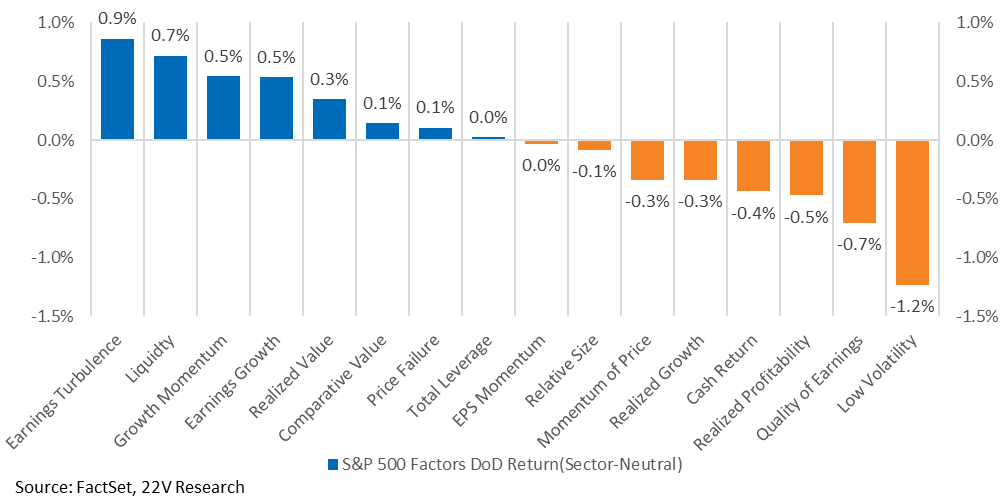
Keep in mind that Cyclical PEs have moved significantly lower relative to Defensives. With markets pricing in no real economic impact from the Fed rate hike path, Cyclical look attractive fundamentally as long as the story of gradual rate hikes and no real economic impact holds.
The above is the good news. The bad news, once it becomes obvious financial conditions need to tighten more aggressively to slow growth, Cyclicals will suffer. Gerard has done some good work on thinking through the interplay of rate hike expectations and what that means for financial conditions. In short, there is no reason to believe that the Fed policy rate merely going up to the current forwards should systematically lead to a tightening of financial conditions. Financial conditions likely have discounted what is already printed on the screens. Given that economic growth is running above trend and inflation is firm, the Fed will likely become more explicit about the need to slow economic growth. As that happens, economic growth expectations should slow significantly and Cyclicals will struggle again. What we know for sure, inflation expectations (a proxy for demand growth) have remained near post pandemic highs despite the sharp rise in real rates. Which means that real rates need to keep moving higher until they have an impact on the growth outlook.
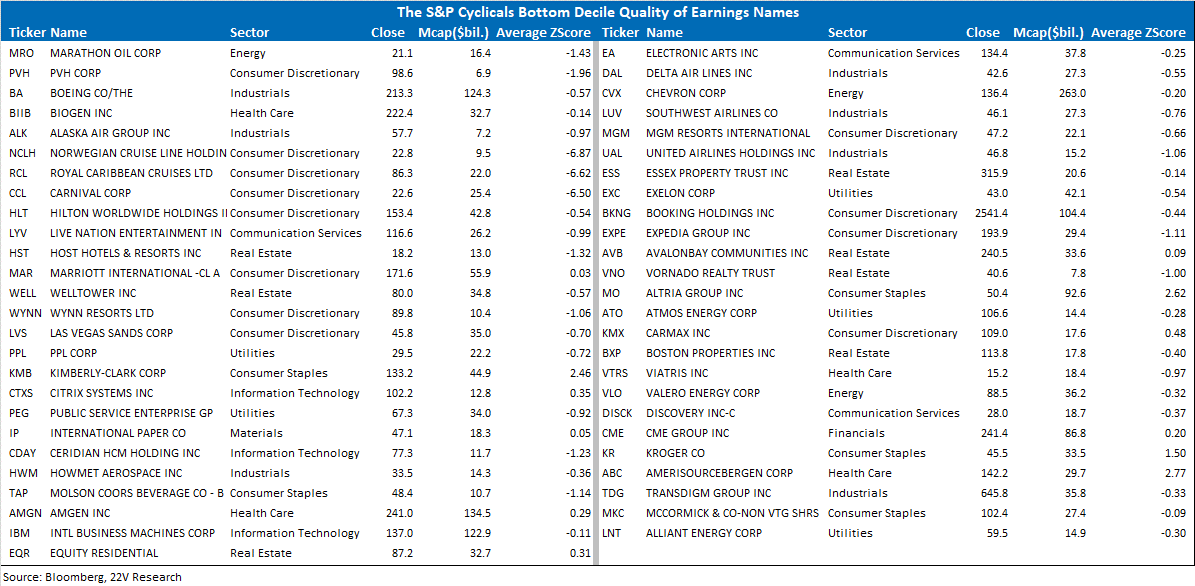
As noted in a Quant report earlier this morning, the earnings Quality/Turbulence trade is well correlated to shifts in financial conditions. We expect to see financial conditions tighten over the coming months as the Fed signals more aggressive tightening or investors internalize the FOMC’s existing commitment to fighting inflation. If that proves accurate, higher Quality of Earnings names should be a useful selection tool across Cyclical/Defensives.
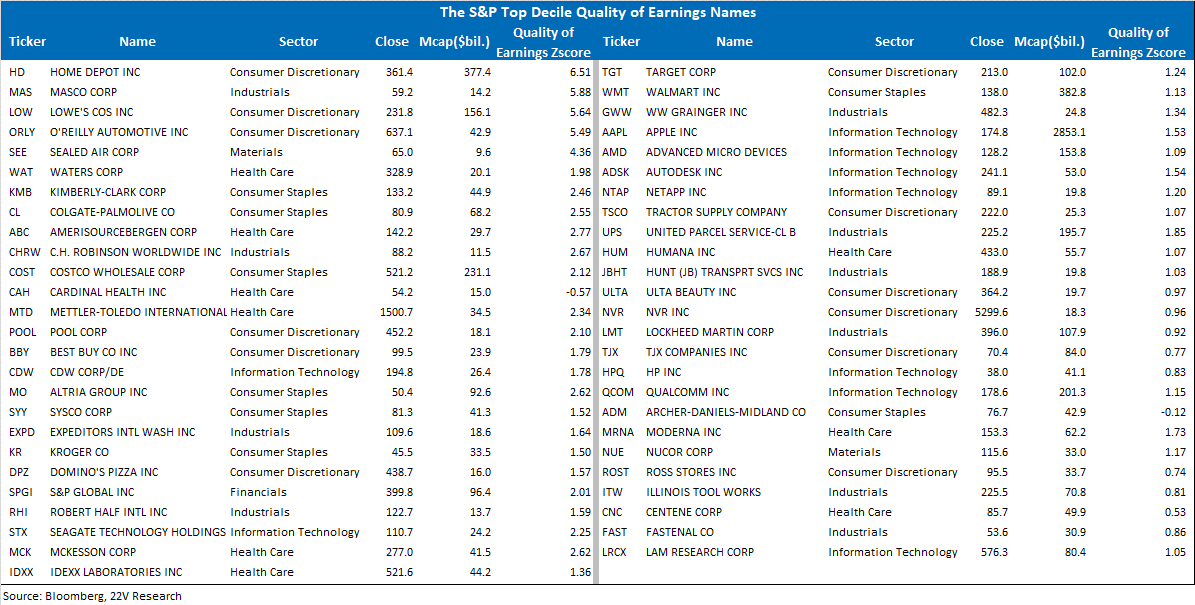
If financial conditions ease again however, higher Earnings Turbulence names should benefit. Those names are in the table below. Please let us know if you would like a full list or a EQ vs ET analysis of a specific portfolio.