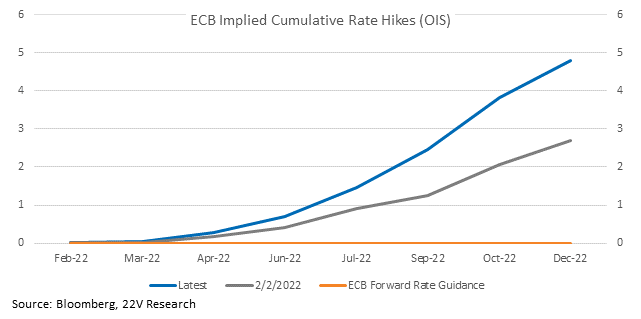
SUMMARY: S&P futures are lower after being up significantly overnight, as ECB rate hike expectations continue to increase and rest of world 10yr yields gap higher. German bunds are +17bp today vs -40bp on December 15th. The ECB professional forecasters survey revised their inflation outlook significantly higher, helping push European yields higher.
Short-Term Low Conviction: With US economic growth improving and rest of world 10yr yields rising, we would expect some SHORT-TERM re-steepening of the yield curve. Especially given the Fed is unlikely to move 50bp in March. The Fed is on a tightening path and that will slow economic growth, but shorter duration (~1mo), Cyclicals could rebound relative to Defensives as US data stays firmer than expected, and the Fed is unlikely to aggressively offset that near-term strength. Housing and high frequency consumer data are improving and a near-term economic support (details below). On payrolls, keep an eye on household survey and urate, those are factors that will drive today’s narrative. A lower urate would mean more tightening potential (and vice versa).
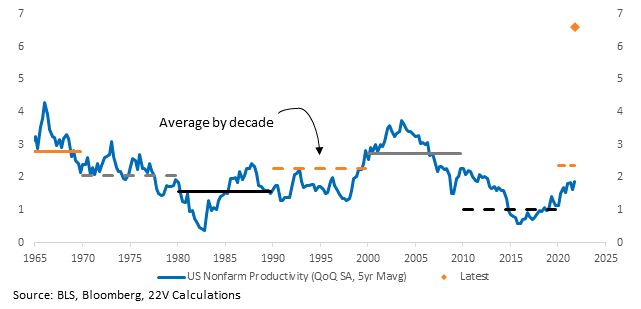
Longer-Term High Conviction: Productivity has improved and that supports profits, but as Gerard noted, two things are going to work against margins going forward. As he notes “First, what we have celebrated as “pricing power” during the past year, and quite appropriately, has finally morphed into an inflation problem for the Fed. So, they are going to drive down demand growth to a pace much closer to the economy’s potential of around 2% (real). As a result, productivity growth will weaken on a cyclical basis, which will tend to push up unit labor costs, particularly given that labor compensation will be rising in response to the tight labor market.”
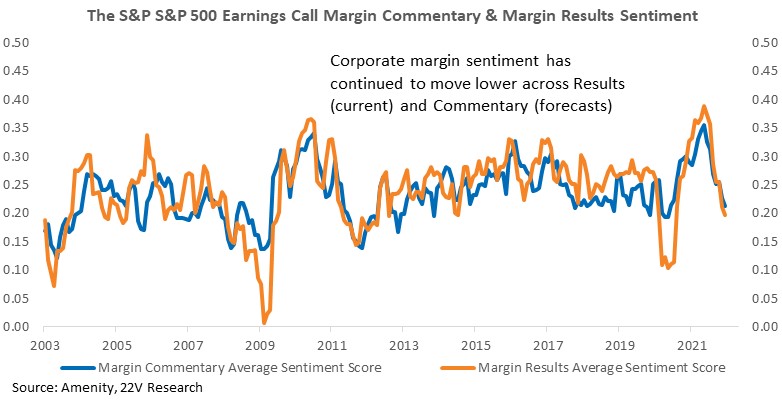
The Fed’s Job One is to Destroy Pricing Power: And fighting the Fed is tough. As Gerard further highlights, “the sweet spot for margins seems to be behind us. Whether this turns out to be a proper profit squeeze from the inflation-fighting side or more a soft landing is not something we can know in advance.” Think about this way, the 20% increase in prime membership rates that AMZN announced yesterday is the type of thing the Fed is pushing back against. Management sentiment toward margins has deteriorated, reflecting the increasingly uncertain outlook.

Bottom line: Our base case is that margins flatten and probably narrow a bit in 2022, and the economy slows. Markets will have a tough relative year and assuming the 2023 inflation outlook looks much better, the longer-term outlook for the economic growth/profits looks fine and risk premiums can eventually decline (our base case). If things do not work out, there is a significant decline in economic growth (well below 2% real) and a margin squeeze. It is tough to be sure this latter scenario is avoided and we still don’t know how high real rates need to go (deeply negative still) to accomplish the Fed’s goal. Those headwinds will persist for a while.
Full report below…
MARKET VIEWS: Asian stocks finished higher and S&P Futures were up significantly following AMZN EPS and other tech companies’ earnings, but have given up the overnight gains (for now) as Europe stocks have turned lower. ECB President Lagarde’s hawkish press conference yesterday (she did not dismiss the possibility of a rate hike in 2022) and rumors of a sizable minority of ECB member pushing for more action helped push ECB rate hike expectations significantly higher. This morning, the ECB professional forecasters survey revised the inflation outlook significantly higher and now have 2022 inflation at 3% vs 1.9% previous and 2023 at 1.8% vs 1.7% previous. That helps justify the increase in rate hike expectations and is weighing on European risk assets.
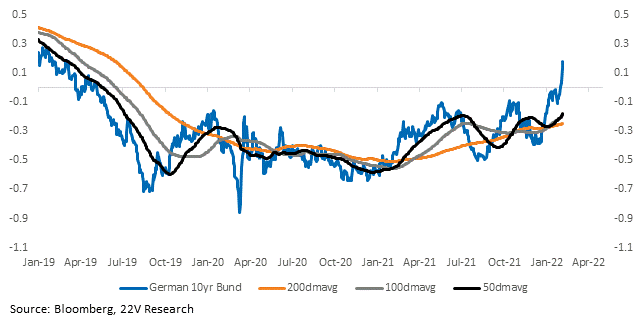
German 10yr yields have broken higher and are now +17bp. On December 15th, German 10yr rates were -40bp, so the move has been significant. Our Technician, John Roque, has been long German 10yr yields and things they are going to +50bp. The increase in rest of world interest rates is likely to have an impact on US 10yr yields.
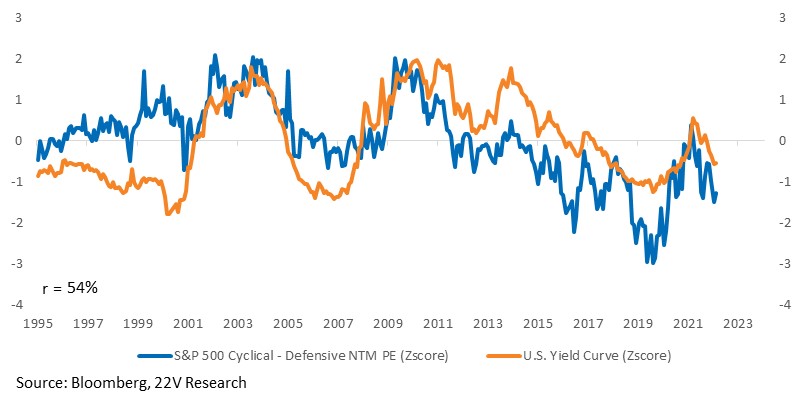
Short-Term Cyclical Idea: With US economic growth improving and rest of world 10yr yields moving higher, we would expect some SHORT-TERM re-steepening of the yield curve. Especially since the Fed is unlikely to move 50bp in March. The Fed is on a tightening path and that will slow economic growth, but over a shorter duration (~1mo), Cyclical could have a significant bounce back relative to Defensives as US economic growth stays firm and the Fed is unlikely to aggressively offset that near term strength.
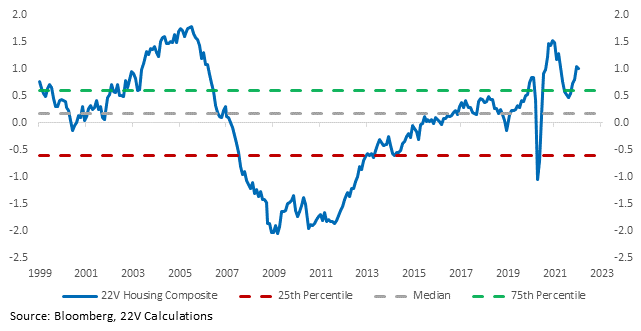
Housing is a segment of the economy that has remained firm and has good momentum. Our housing composite, which blends together the NAHB HMI, existing home sales, new home sales, housing starts, permits, Umich buying conditions, construction, and Case-Shiller, is at its 84th percentile.
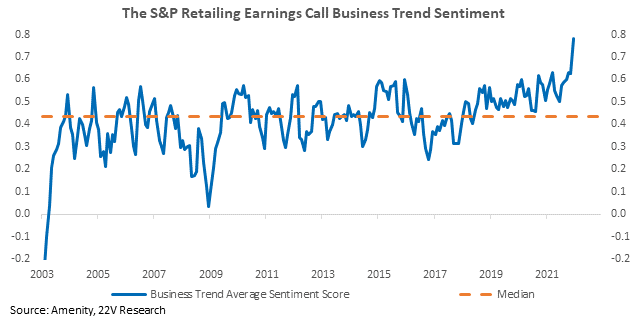
And the higher frequency consumer data has improved. Although very few consumer companies that have reported, the ones that have are reporting strong business sentiment trends according to the Amenity Natural Language processing tool. That is consistent with the MoM increase in retail spending estimated by the Chicago Fed’s CARTS index.
Longer-Term: The outlook is more complicated. Productivity has improved and that has supported profits, but as Gerard has noted, two things are going to work against profits going forward. As he notes “First, what we have celebrated as “pricing power” during the past year, and quite appropriately, has finally morphed into an inflation problem for the Fed. So, they are going to drive down demand growth to a pace much closer to the economy’s potential of around 2% (real). This will have two effects. First, productivity growth will weaken on a cyclical basis, which will tend to push up unit labor costs, particularly given that labor compensation will be rising in response to the tight labor market and some “catch-up” effects from earlier surprise inflation. (We don’t need inflation expectations to rise to deliver this effect.)
Second, pricing power – or more precisely, the improvement of pricing power – needs to decline. The Fed’s Job One now is to destroy pricing power. And we ought not fight the Fed. So, the sweet spot for margins seems to be behind us. Whether this turns out to be a proper profit squeeze from the inflation-fighting side or more a soft landing is not something we can know in advance. Think about the above in these terms, the 20% increase in prime membership rates that AMZN announced yesterday is something the Fed is pushing back against.
Bottom line, if things work out, margins stop widening and probably narrow a bit and the economy slows, markets have a tough relative year, but everything is fine longer term (our base case). If things do not work out, then we get recession and probably a margin squeeze. The central case is the boring version.
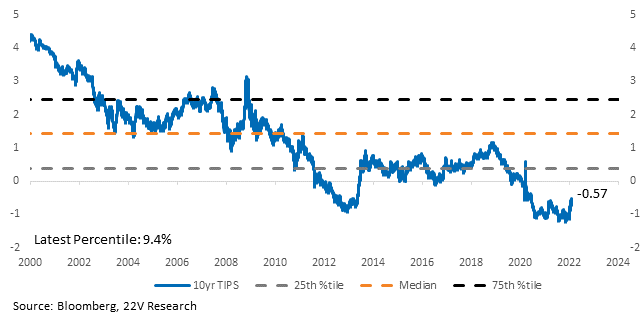
Real rates are a going to move higher as the Fed/other CBs continue on their inflation fighting path. Keep in mind that real rates are still EXTREMELY low. They were just at 1% low a month or so ago and are now in 7.6th %tile on 10yr implied real yields….
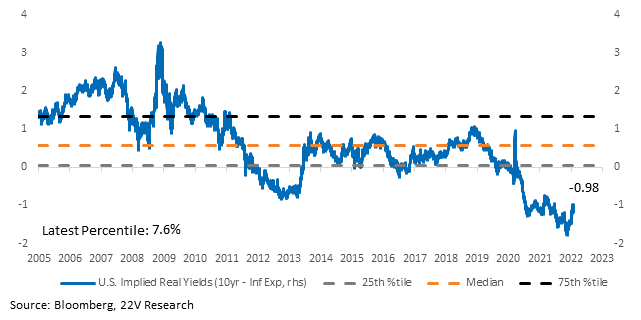
…and 9%tile on 10yr TIPS. They are going up and risk premiums will remain elevated until we figure out what level of real rates is necessary to accomplish the Fed’s lower Core inflation goal.