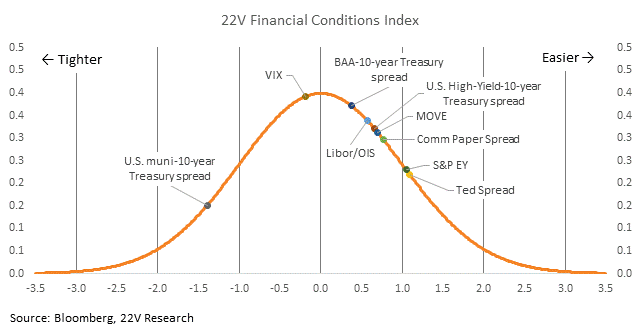
SUMMARY: Earnings and central bankers are capturing headlines again this morning. GILTS are up 12bps (98th %tile d/d move) as the BOE jumped into the inflation fighting game, raising rates 25bp. What is making headlines though is 1) that four of the bank’s members wanted a 50bp hike, and 2) they are immediately reducing their balance sheet by ending reinvestment. The UK’s Treasury and the BOE are working in tandem to address the “cost of living catastrophe”.
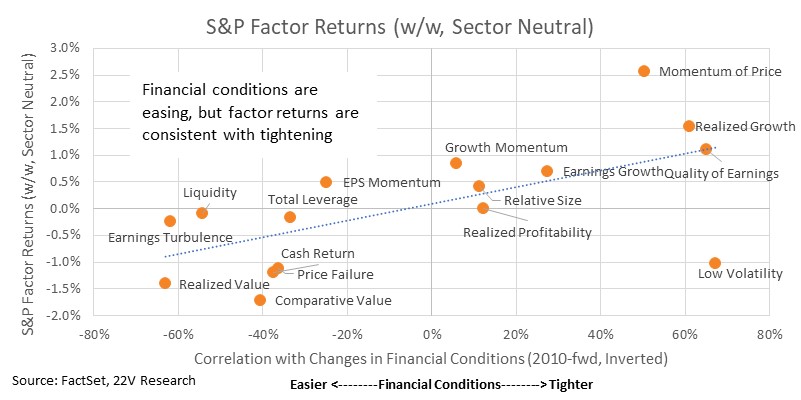
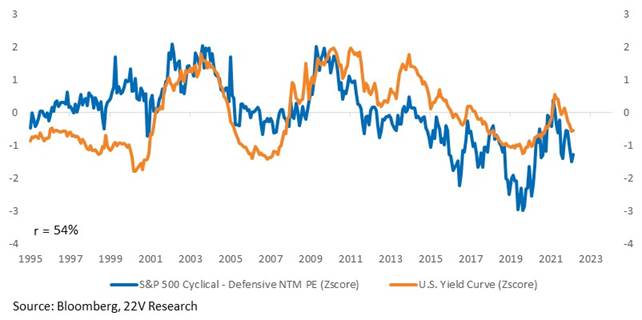
Global yields are backing up, but USTs remain well above rest of world sovereigns, capping the UST yield and flattening the curve. That is weighing on cyclical PEs relative to Defensives. Despite headline financial conditions easing over the past week and Fed officials pushing back against a 50bp hike in March, as we show below, factors returns indicate investors are discounting tighter conditions ahead.
Fed officials continue to strike conciliatory tones; yesterday Daly said gradual rate hikes won’t derail the economy. The tone change isn’t a pivot. Breaking the economy doesn’t serve the Fed’s goals, but they still want to slow growth to trend to temper inflation. The problem is policy is a hammer not a scalpel. Recall, if there is a serious inflation issue (rent impact is a KEY swing factor here), the Fed will have to tighten until something “gets smashed,” as Gerard put it. To the extent that economic growth improves as Omicron fades, which will become more obvious following the universally accepted weak payroll report tomorrow, Cyclicals can have a short term run higher relative to Defensives. At least until the next Fed meeting in March. Beyond that, Cyclicals will struggle given the Fed’s goal to offset stronger growth with tighter financial conditions.
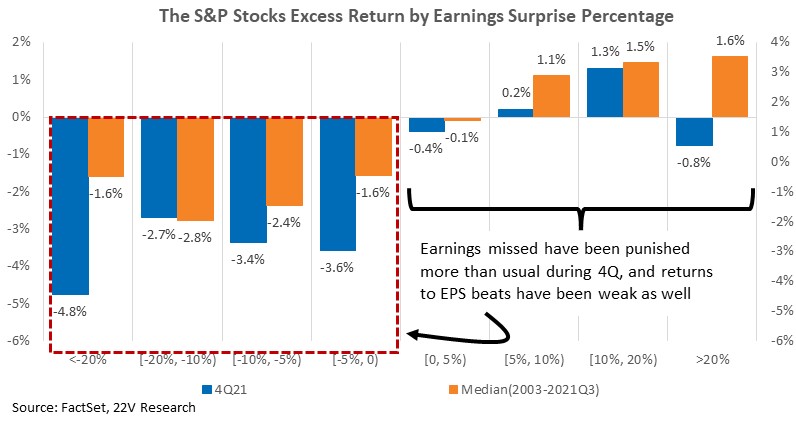
FB’s huge drawdown is the latest example of the negative skew to earnings releases. EPS growth is firm but has slowed, and companies that miss estimates have been seen larger than normal underperformance around reporting. That reinforces the need to focus on companies with higher quality earnings and stronger sentiment.
Full report below…
MARKET VIEWS: Earnings and central bankers are capturing headlines again this morning. GILTS are up 12bps (98th %tile) as the BOE got into the inflation fighting game, raising rates 25bp. What is making headlines though is 1) that four of the bank’s members wanted a 50bp hike, and 2) they are immediately reducing their balance sheet by ending reinvestment in maturing assets. The UK’s Treasury and the BOE are working in tandem to address the “cost of living catastrophe” – a phrase that emphasizes commitment to fighting inflation. The ECB is up next at 7:45 and is expected to hold, but may acknowledge recent inflationary pressures.
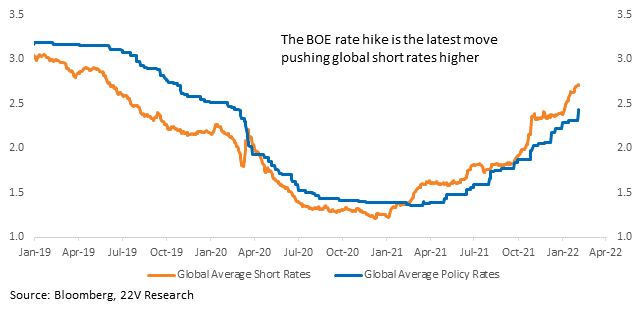
Global yields are backing up, but USTs remain well above rest of world sovereigns, capping the UST yield and flattening the curve. That is weighing on cyclical PEs relative to Defensives.
Fed officials continue to strike conciliatory tones; yesterday Daly said gradual rate hikes won’t derail the economy. The tone change isn’t a pivot. Breaking the economy doesn’t serve the Fed’s goals, but they still want to slow the economy to temper inflation. The problem is policy isn’t a scalpel. Recall, if there is a serious inflation issue, then the Fed will have to tighten until something “gets smashed,” as Gerard put it. Play factors that benefit from tightening financial conditions and rising real yields. Despite headline financial conditions easing over the past week, factors returns indicate investors are discounting tighter conditions ahead.

FOCUS ON EARNINGS RISK: FB’s huge drawdown is the latest example of the negative skew to earnings releases. Index level earnings growth remains strong with 4Q estimates rising from $51.29 at the start of reporting to $53.31 today. Full-year ’21 numbers have increased from $203 to $205.20. EPS growth is firm but has slowed, and companies that miss estimates have been seen larger than normal underperformance around reporting. That reinforces the need to focus on companies with higher quality earnings and stronger sentiment.
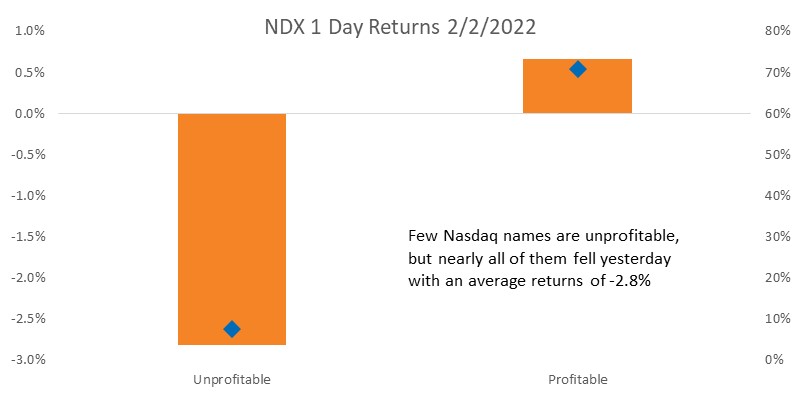
From yesterday’s open to the close, profitable Tech significantly outperformed unprofitable. Of the 13 stocks in the NDX with negative LTM EPS only 1 posted an absolute gain yesterday while 71% of profitable names rose. Profitable Tech is under pressure this morning though after FB’s earnings miss and dour outlook. FB’s is taking about -90bp off the NDX this morning (futures -2.4%).
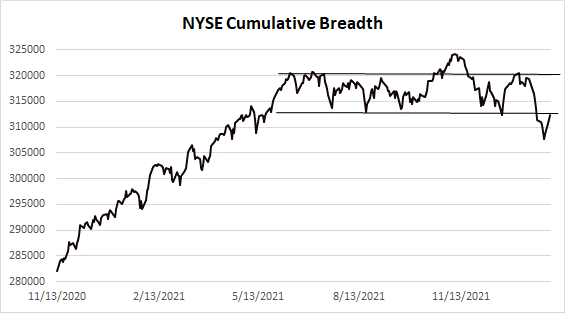
Megacaps have driven indices higher despite shaky market breadth. John Roque, 22V’s technician, pointed out that NYSE and NASDAQ stocks declining dwarfed stocks rising yesterday. Per John, “…in order for the broader market to stabilize and strengthen Cumulative Breadth is going to have to, at least, get back into its former range. Another failure – i.e., a break to a new reaction low beneath the late January 2022 low – would be another negative sign for equities.” FB’s miss puts mega cap leadership at risk. AMZN reports after the close and will provide important signals for both market leadership and the state of the consumer.
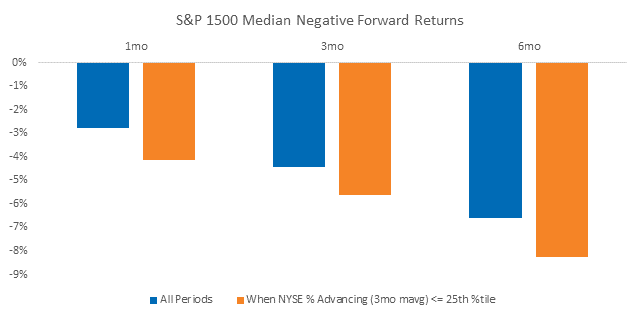
When the percentage of stocks advancing is at or below its 25th percentile, the forward returns of the S&P 1500 are worse than normal and the median NEGATIVE forward returns are a lot worse than normal. Breadth indicates if the market topples, the fall is more severe.
Earnings are an important market level support right now. Top line has help lift bottom line earnings, but upward revisions to margins continue to drive EPS surprises. S&P profitability has been ~30bp better than expected, continuing a multi-year trend of margins topping estimates.
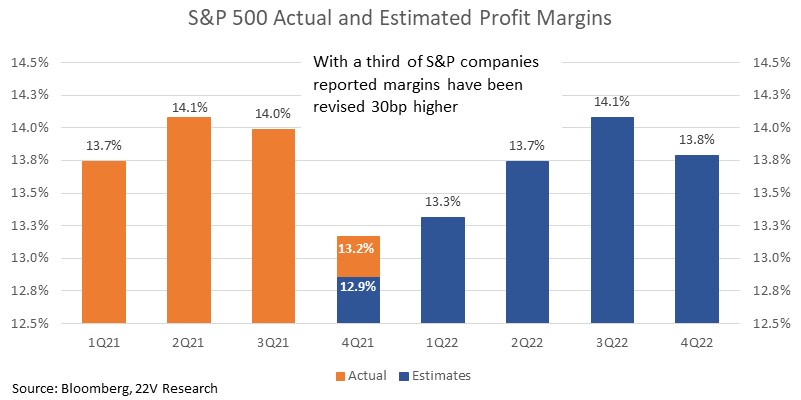
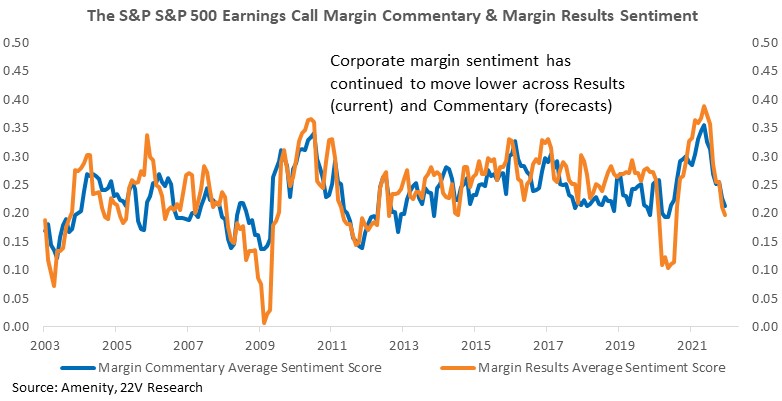
Earnings are an important support, which implies less support after earnings season. And the outlook is muddied by deteriorating company sentiment around margin commentary and margin results. The market is going to be left with a lot to contend with: the Fed fighting inflation through tighter financial conditions, poor margin sentiment, and poor supply chain sentiment (supply chain disruptions could delay goods deflation).
So, we’re still in sell-the-rally mode, especially after earnings. Whether the Fed is aggressively pursuing tighter financial conditions or not is one of the most important determinants, so we will still be monitoring our index of financial conditions and economic growth indicators/estimates, like medium-term inflation expectations. Currently, most components of our financial conditions index are still easier than their 1998-2004 “normal” (1998-2004 is a better comp to now than 2010-COVID).