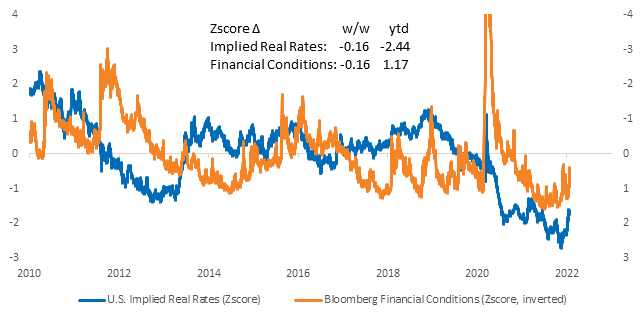
SUMMARY: Implied real rates have had a ~2.5stdev increase YTD while financial conditions have tightened by ~1.2stdevs. Expect tightening of financial conditions to slow economic growth more going forward than increased Fed rate hike expectations. At least over the next few months. Real rates are still headed higher, but economic activity is slowing due to Omicron impacts and reversal of stock market wealth effects will have an impact as well, so there is an increasing chance economic growth does not rebound significantly after January (we think it will, which is why we would still be long 2yr bonds, but the skew is not entirely to the right).
Bottom line, yields should be capped across the curve until it becomes clear the Fed needs to raise rates more aggressively to slow economic growth. That discussion is a few months away though and there will likely be some weak payroll reports between now and then. The yield curve should continue to flatten. Financials will face headwinds as that process unfolds, and considering that financial conditions will still be tightening, investors should continue to favor Low Vol and Low Earnings Turbulence factors and Defensive sectors (see today’s Quant work for details).

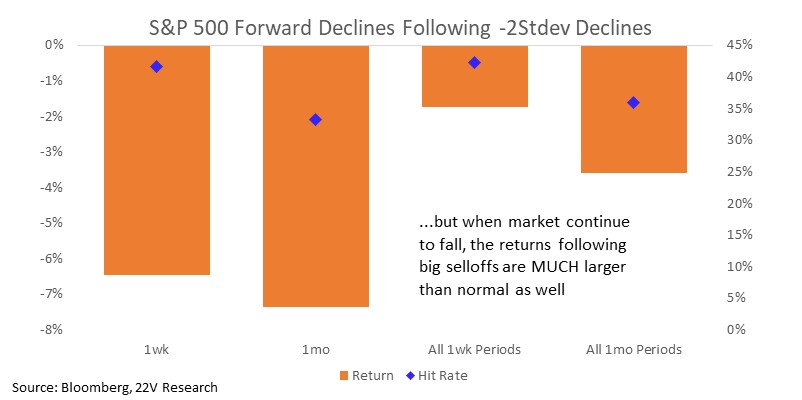
The S&P fell -1.9% on Friday and -5.7% on the week, a 2.5 standard deviation event. A decline of that magnitude typically sees stronger than normal returns over the following week and month. BUT, about 42% of the time (1990-fwd), the S&P continues to decline over the next week. The odds of a continued decline following a move like last week are NOT small. When that happens, S&P returns are MUCH weaker than normal (average -6.4% with a stdev of 7.7%). Our worry is investors are looking for a “non-event” Fed meeting as a positive catalyst, but that might not happen. Fed messaging will remain focused on “inflation containment” into a slowing, at least near-term, economic growth backdrop. That is a tough battle for the longs to fight beyond short term bounces.
Fundamentals are still an important support; 105 companies are set to report this week. Check out Friday’s quant report for this week’s earnings cheat sheet, which contains the metrics we think most relevant to handicapping earnings outcomes and response: earnings sentiment, implied volatility, and correlation to the reporting companies’ industry group (to find where stock picking is most effective).
Full report below…
MARKET VIEWS: Tighter financial conditions and the Fed’s desire to slow economic growth remains the main theme driving risk assets. Implied real rates have seen a ~2.5stdev increase YTD while financial conditions have tightened ~1.2stdevs. Expect tightening of financial conditions to slow economic growth more going forward than increased Fed rate hike expectations. At least over the next few months. Real rates are still headed higher, but there is an increasing chance economic growth does not rebound significantly after January (we think it will, which is why we would still be long 2yr bonds, but the skew is not entirely to the right now), which makes being long rates tougher as 200bp of Fed hikes are priced in over the next 2years.
Barring a high conviction call that growth is weak enough for the Fed to change its policy stance, don’t expect the current backdrop to change much. The Fed is likely to stay in inflation containment mode; core inflation trends are too hot and supply chain issues may delay goods deflation. The market is deeply oversold (NDX in particular) and we heard several comments that the bar for Powell is extremely low this week. A bounce is probable, but be cautious trading any recovery if the Fed continues to talk about inflation containment despite weak economic growth.
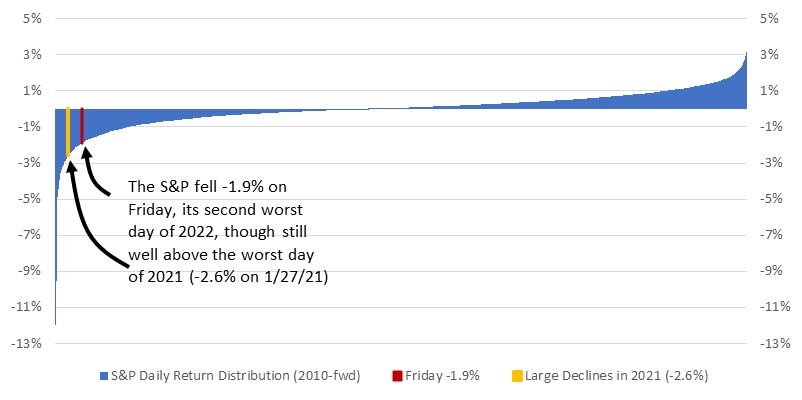
Returns over the week and month following large S&P weekly declines (defined as 2stdev or greater) are typically stronger than normal…
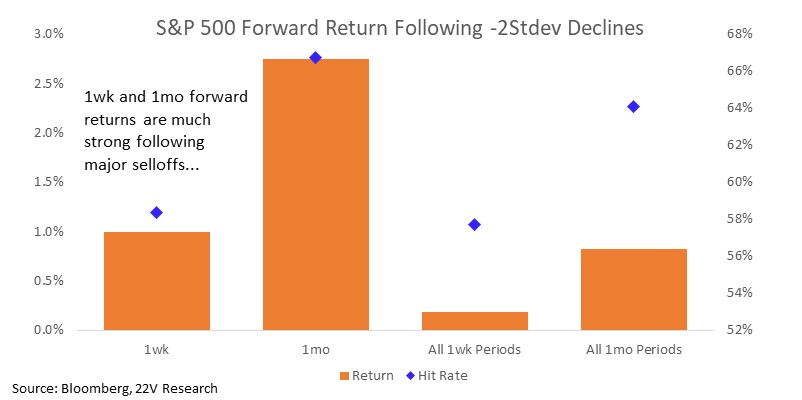
…BUT, about 42% of the time (1990-fwd), the S&P continues to decline over the next week. This is an important point. The odds of a continued decline following a move like last week are NOT small. And when selloffs continue, S&P returns are MUCH weaker than normal (average -6.4% with a stdev of 7.7%). Looking out one month following large one-week declines, the return skew improves, but equities are lower in 33% percent of periods.
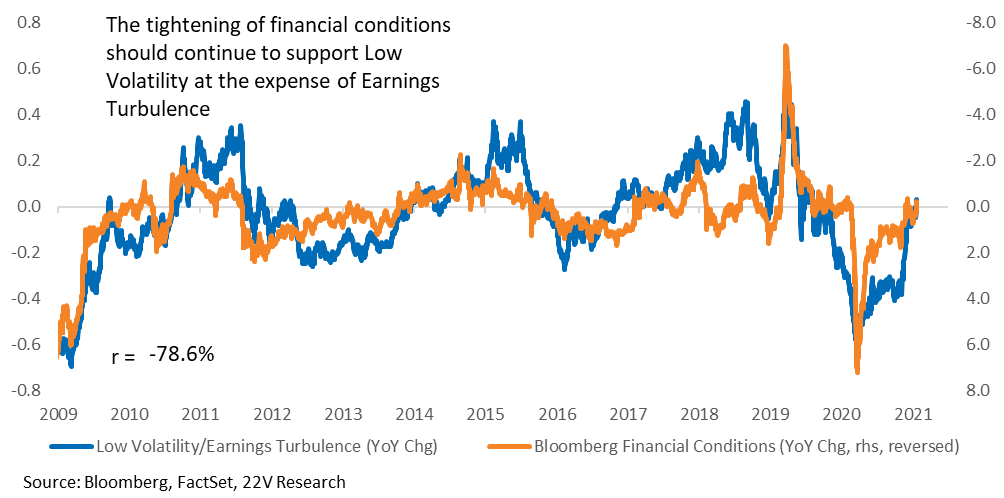
The Fed wants to tighten financial conditions to the point the economy slows. We are watching credit spreads and farther-out inflation expectations to gauge if markets have internalized the Fed’s ambition. So far, inflation expectations remain stubbornly high and credit spreads tight. Financial conditions will continue to tighten, favoring sectors and factors that tend to perform well as yields increase, spreads widen and volatility ticks higher (see today’s Quant work for more details). The y/y change of relative performance between Low Volatility and High Earnings Turbulence has been negatively correlated with changes in the Bloomberg Financial Conditions and Low Vol has spiked higher over the past few months.
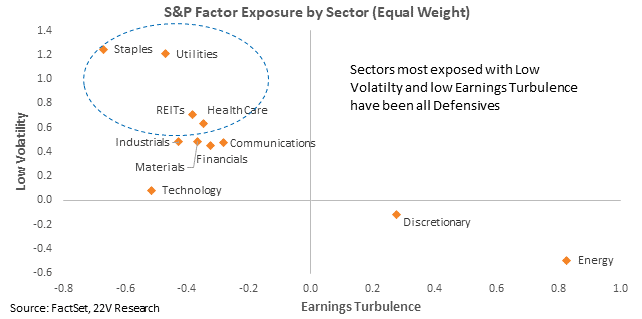
Interestingly, sector exposure towards Low Volatility and Earnings Turbulence has become more bifurcated. Sectors with the highest Low Volatility and lowest Earnings Turbulence are all Defensives, which were among the best performing sectors recently. Discretionary was the worst performing sector last week and has the high Earnings Turbulence and higher volatility exposure. Energy, the best performing Cyclical last week has even more Earnings Turbulence and Volatility exposure than Discretionary, suggesting heightened risk.
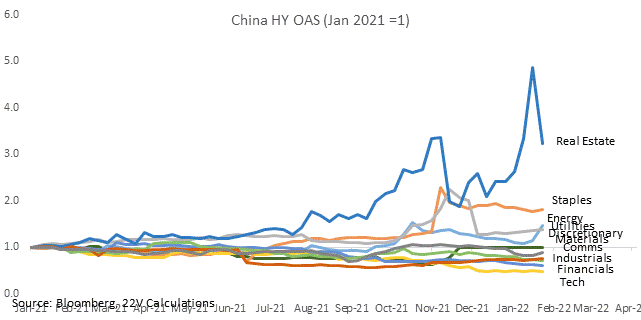
Quickly on China: A flurry of property deals is boosting confidence in China’s real estate debt crisis. Shares in China’s property developers, including Evergrande, are higher in response. Credit spreads are tighter among HY Real Estate and there is no sign of contagion. We hosted a webinar with Victor Shih, a China expert, last week (replay link HERE). Victor said China’s real estate soft landing is in fine shape as long as the banks are willing to cover their eyes and assume the inventory is worth what developers claim it is. The Chinese government is keeping up with that fiction, which today’s news emphasizes. Risks remain. Credit growth has fallen to the single digits and Omicron is putting pressure on fiscally weak regions. Victor argues massive fiscal support is not coming; debt servicing requirements are too intense. But that doesn’t mean a contraction in fiscal support; total social financing appears to have bottomed. On the margin, the news is better.
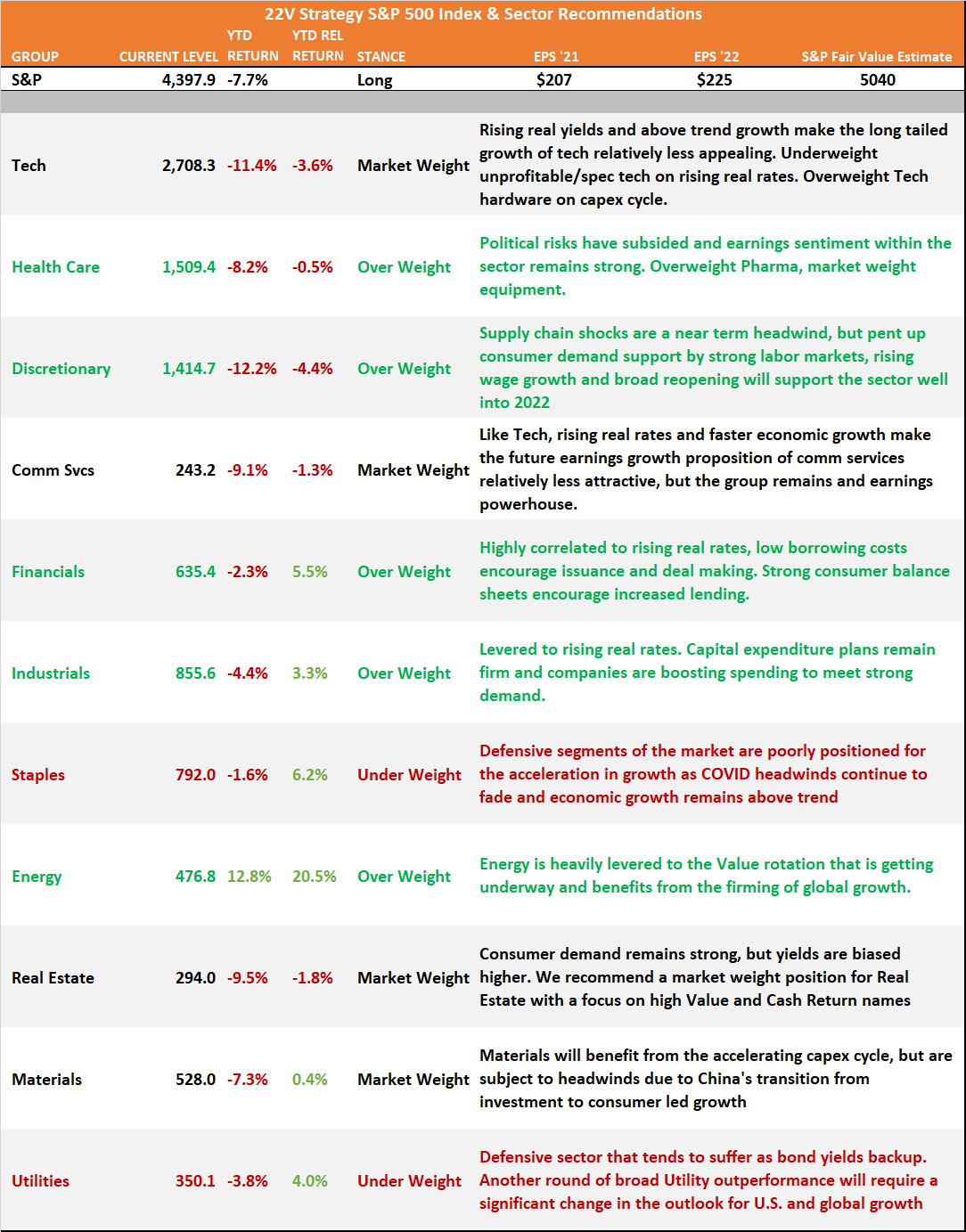
Sector Comments: Cyclicals were responsible for the lion’s share of equity market declines last week. Discretionary was down -8.5%, Comm Services fell -7%, and Tech was down -6.9%. In absolute terms, no sector avoided declines. Utilities were the “best” performer, falling -0.8%. Ultimately, the backup in yields is a headwind for Utilities, and that sector will underperform unless the Fed needs to crush growth to slow inflation. Utilities and Staples were the best performing sectors, followed by Real Estate. Energy and Industrials were the only Cyclical sectors to outperform the broad market. Oil prices closed the week down, though, adding a headwind to Energy names. Deeper Cyclicals will remain at risk if financial conditions remain easy, forcing investors to discount more aggressive Fed tightening.