WEBINAR: We are hosting our firm-wide Friday webinar today at 10:30 AM ET. We are capping the webinar at a digestible 22 minutes. Registration link HERE.
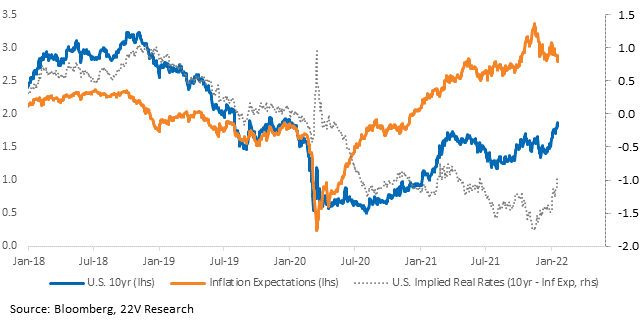
SUMMARY: Bounces are harder than normal to play (we have made some poor bounce calls) and markets headwinds will remain in place while the Fed is in “inflation containment” mode. Our call remains that core inflation trends are too hot (Rents/Wages suggest stubbornly high Core PCE), which means the Fed is unlikely to back off until longer term economic growth trends slow. Implied real yields have gone up despite 10yr yields consolidating the past few days. That is a result of inflation expectations coming down. Inflation expectations are still in their 98th %tile historically and likely headed much lower if the Fed is going to slow growth. That means real rates are still biased higher EVEN if 10yr yields consolidate.
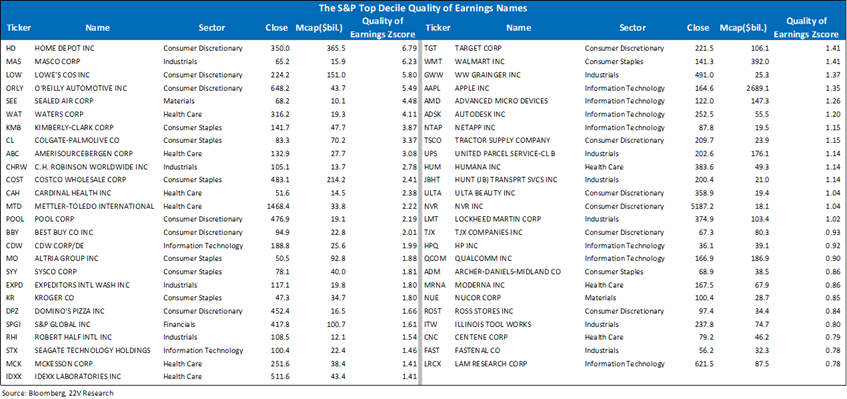
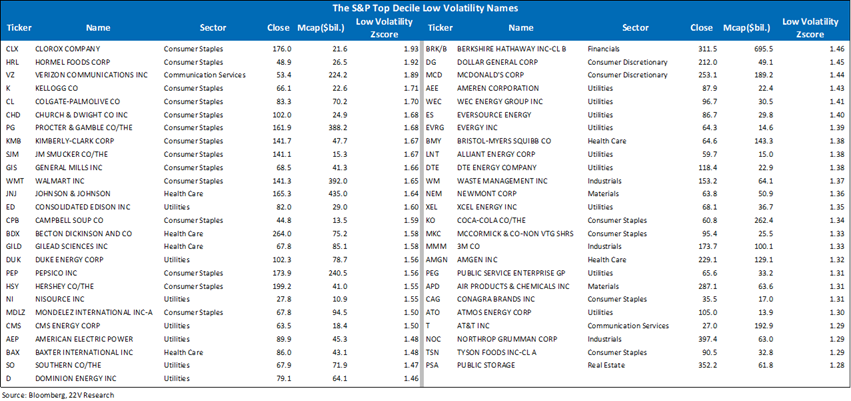
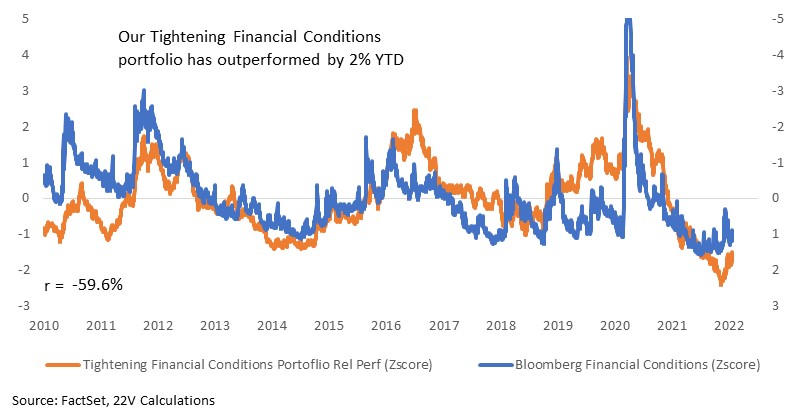
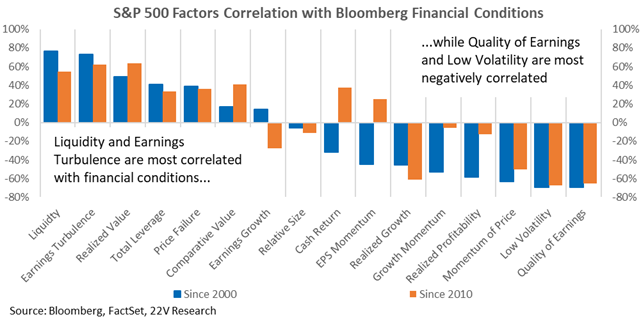
Stocks benefiting from tightening financial conditions (most negatively correlated with the Bloomberg Financial Conditions Index) rebound recently and have outperformed the SPX by 2% YTD. Quality of Earnings and Low Volatility factors benefit the most from tighter financial conditions. We have the list of stocks in the report.
We had several comments yesterday that the bar for Powell next week is low. That may be true, but if the fed continues to talk about inflation containment, should we expect a change in market trends?
The two main areas driving above trend demand for the US economy have been the consumer and housing. When the Fed pivoted to a more hawkish tone in late November, retail stocks immediately turned lower, and homebuilders followed a few weeks after. Both will remain under pressure until markets believe the Fed is close to accomplishing its goal. After credit spreads widen more and inflation expectations move much lower is when you want to think about being long retail/homebuilders.
Side Note on Credit Spreads: They have been relatively tame despite the stock selloff (CCC has been the best performing part of high yield this week). That is not something we should view as a market positive though. It just means the Fed must hold to its tightening process (all things equal). Asset reflation will resume after credit spreads widen, which will happen if stocks keep falling or inflation expectations collapse, and the Fed changes its tone.
Full report below….
MARKET VIEWS: After two days of significant intra-day reversals and NFLX collapsing after releasing earnings last night, some might view the relatively mild overnight losses as a win. The overnight news was very quiet, and the focus will remain on when markets bottom. From our point of view, markets headwinds will remain as long as the Fed is in “inflation containment” mode while rents/wages are biasing core inflation higher. Our call remains that core inflation trends are too hot, which means the Fed is unlikely to back off until longer term economic growth slows. Implied real yields have moved higher despite 10yr yields consolidating the past few days. That is a result of inflation expectations coming down. Inflation expectations are still in their 98th %tile historically and likely headed lower if the Fed is going to slow growth. That means real rates are still headed higher EVEN if 10yr yields more somewhat lower.

The two main areas driving above trend demand for the US economy have been the consumer and housing. When the Fed pivoted to a more hawkish tone in late November, retail stocks immediately turned lower, and homebuilders followed a few weeks after. If the Fed is successful in slowing economic growth, it stands to reason that the consumer and housing will slow some (consumer and housing slowing will go a long way in helping the fed accomplish its goal). That is a headwind for both groups.
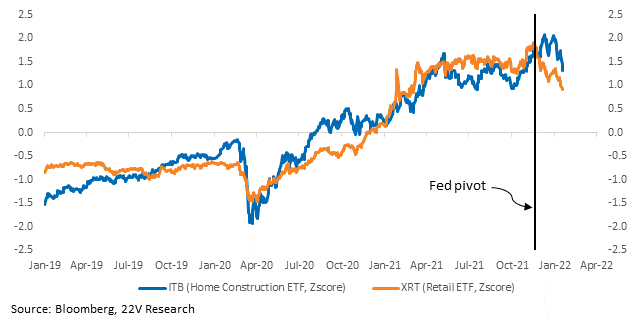
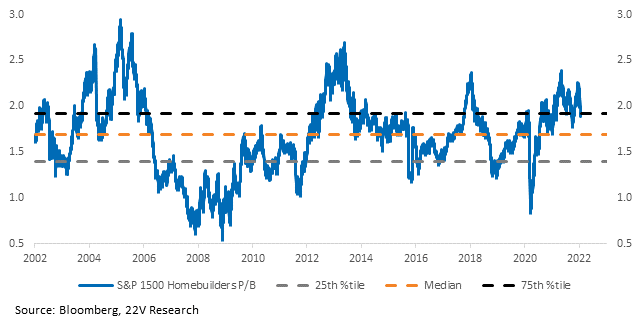
Unfortunately for the homebuilder stocks, their price to book ratio was in its 75th %tile when the Fed pivoted. While the fed is interested in slowing economic growth, homebuilders will struggle. Even on days when 10yr yields move lower.
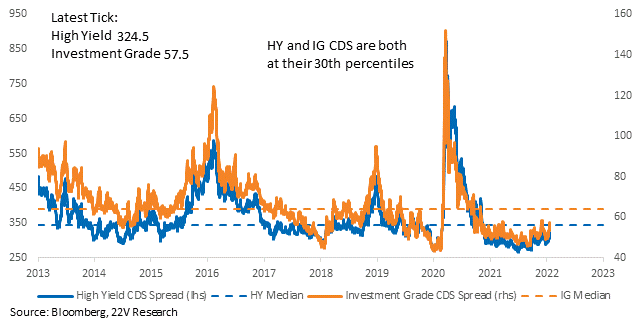
A few people have noted how credit spreads are relatively tame and credit vol has remained low. We have been asked what that might mean. Companies are flush with cash and have done a significant amount of refinancing the past few years, so the odds of a credit led downturn in the economy are low. Credit spreads should widen, but due to other factors like equities falling significantly, or inflation expectations (or both) signaling a significant slowing in economic growth. Which brings up an important point, credit spreads being tight while the Fed in in active “inflation containment” mode, is not good for equities. It means the Fed must continue the tightening process (all things equal). After credit spreads widen and the Fed changes its tone is when we want to be long asset reflation again.
Focus On the Stocks That Benefit from Tighter Financial Conditions: Stocks benefiting from tightening financial conditions (bottom decile names correlated with Bloomberg Financial Conditions) rebound recently and have outperformed the SPX by 2% YTD.
Quality of Earnings and Low Volatility are factors most negatively correlated with Bloomberg Financial Conditions (benefit from a tightening of financial conditions). Liquidity and Earnings Turbulence are the factor most positively correlated with changes in financial conditions and should struggle as the fed pursues its tightening goal.
Quality of Earnings basket and Low Volatility basket.