SUMMARY: Earnings reporting season got underway this morning with mega cap banks reporting amid rising monetary policy uncertainty, increasing real rates, and tightening financial conditions. This week’s CPI report confirmed the strong upward trend in price levels, prompting fed officials to reiterate the need to tighten financial conditions to tackle inflationary pressures. Tightening financial conditions will be one of the major macro trends influencing markets over the coming quarters.
Earlier this week, we reviewed factor trends and industry group excess returns during periods of financial condition tightening. Generally, tightening financial conditions favors higher Quality of Earnings and lower Volatility names. Higher earnings turbulence names tend to struggle. As we have noted over the past few months, anticipation of rising real fed funds, the direct path though which the fed can tighten financial conditions, tends to favor Value and Cash Return names while being a headwind for stocks with higher Earnings Turbulence.
There are some crossovers between the factors that work in rising real rate AND tightening financial conditions environments, and some differences. Noticeably, Value benefits from rising real rates, but struggles as financial conditions tighten. Which force is exerting greater influence on the market at a given period will influence short-term market trends. To help investors aligning to names the benefit from both trends, we highlight the stocks with the highest combined correlations to 1) tightening financial conditions, 2) rising real fed funds, and 3) rising implied real 10yr yields.

Later in the report, we update our week ahead earnings reporting screen. It contains the names expected to report by day along with a number metrics we think most relevant to handicapping earnings outcomes including 1) earnings reporting day implied vol, 2) earnings sentiment as of the end of 3Q reporting, and 3) the correlation of price movement within the reporting companies industry group.
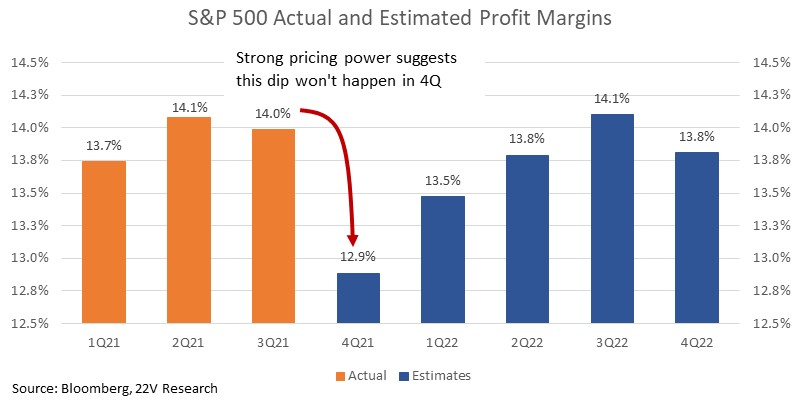
We also review the setup into the first major week of earnings reporting. Pricing power sentiment remained high at the end of 3Q and consensus estimates imply a significant decline in 4Q margins. That is a setup for another quarter of strong upward earnings surprises as companies again beat low profitability expectations.
Financial Condition Positioning: Earnings reporting season got underway this morning with mega cap banks reporting amid rising monetary policy uncertainty, increasing real rates and tightening financial conditions. This week’s CPI report confirmed the strong trend in price levels and prompted a reiteration by fed officials of the need to tighten financial conditions to tackle inflationary pressures. The Bloomberg Financial conditions index tightened further w/w, putting pressure on equities and cyclicals in particular.
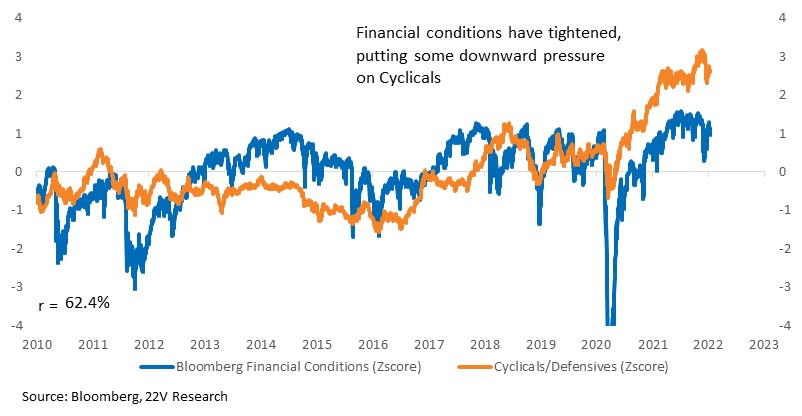
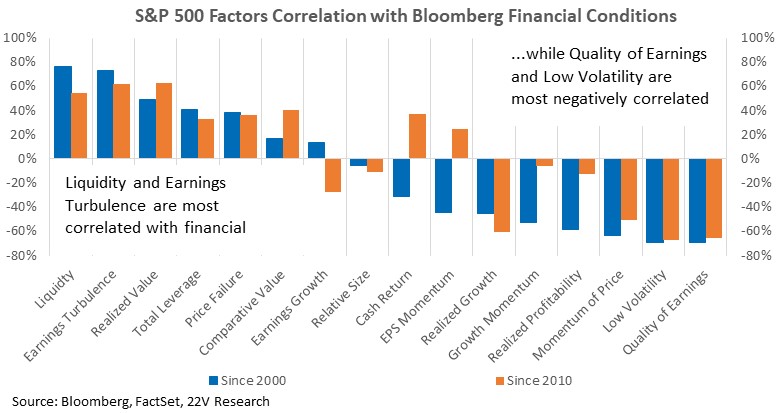
Earlier this week, we reviewed factor trends and industry group excess returns during periods of financial condition tightening. Generally, tightening financial conditions favors higher Quality of Earnings and lower Volatility names. Higher earnings turbulence names tend to struggle.
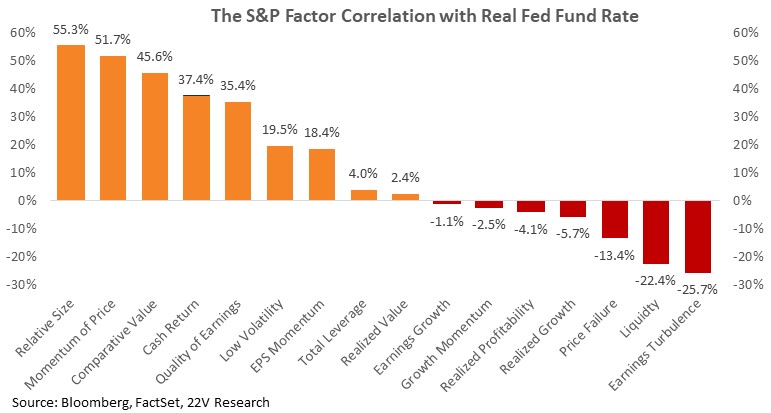
As we have noted over the past few months, the one of the major macro trends influencing markets over the coming quarters will be the general increase in real rates on the short and long ends of the curve. To fight inflationary pressures, the fed needs real rates to climb higher. Anticipation of a rising real fed funds rate tends to favor Value and Cash Return names while being a headwind for stocks with higher Earnings Turbulence.
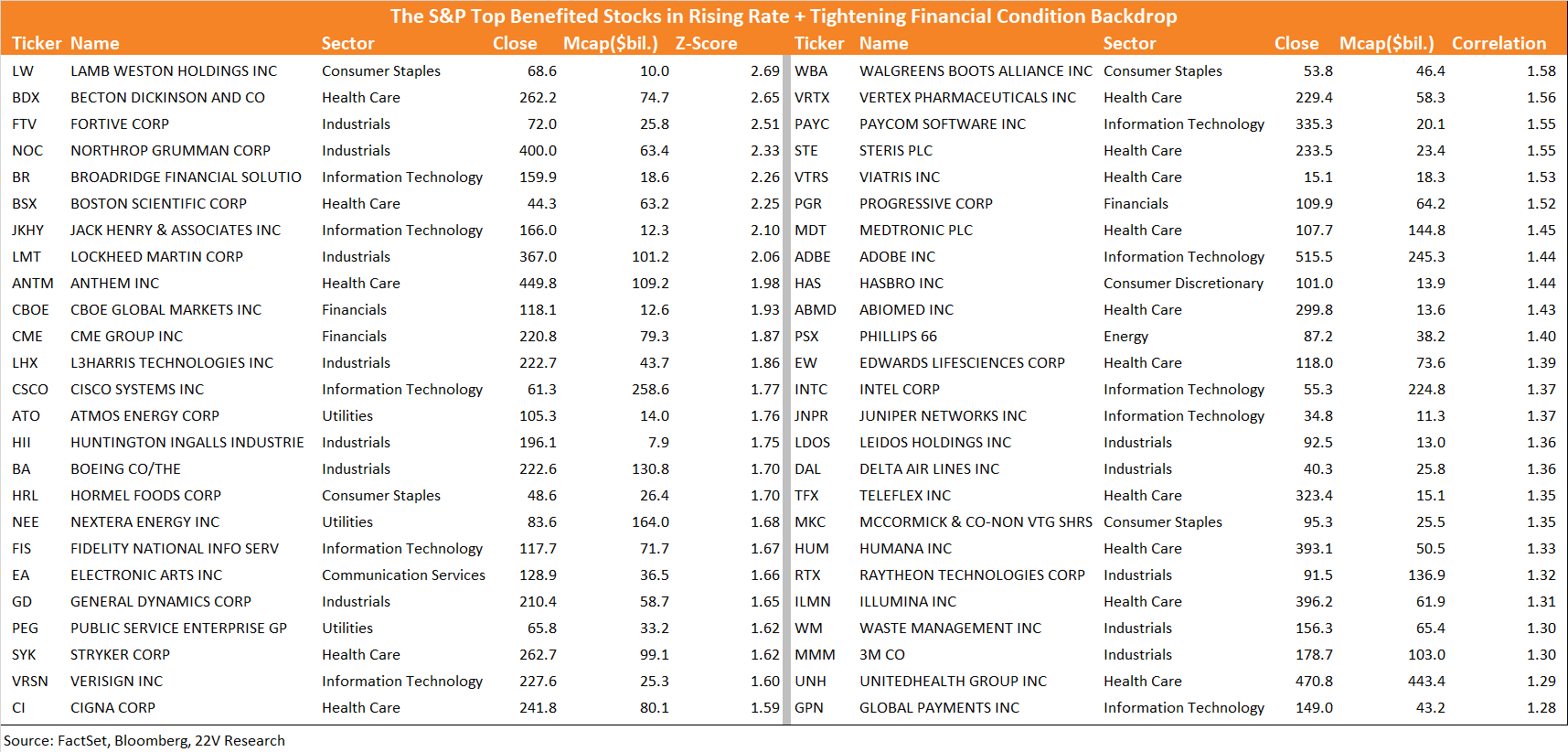
There are some crossovers between the factors that work in rising real rate AND periods of tightening financial conditions, and some differences. Which force is exerting greater influence on the market at a given period will influence short-term market trends. Aligning to those names the benefit from both should help improve performance over the course to 2022. In the table below we list the S&P stocks with the highest combined correlation to 1) tightening financial conditions, 2) rising real fed funds, and 3) rising implied real 10yr yields.
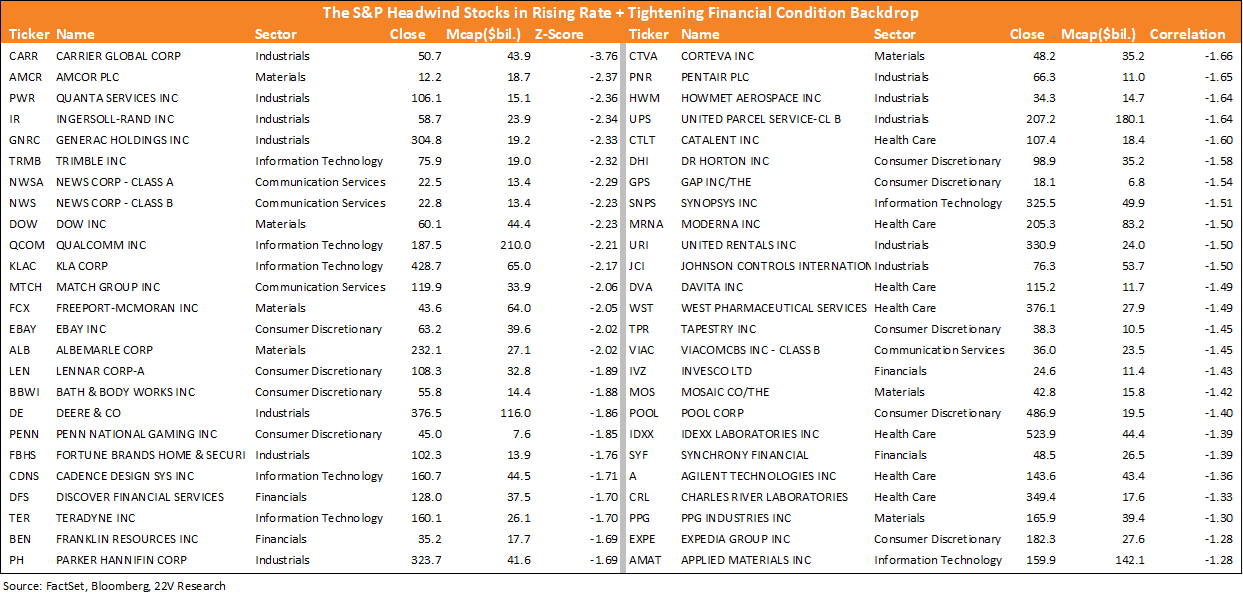
The table below is the short end of the above basket. These are the names most negatively correlated to changes in the financial conditions and real rates, and should struggle most as real rates trend higher and financial conditions tighten.
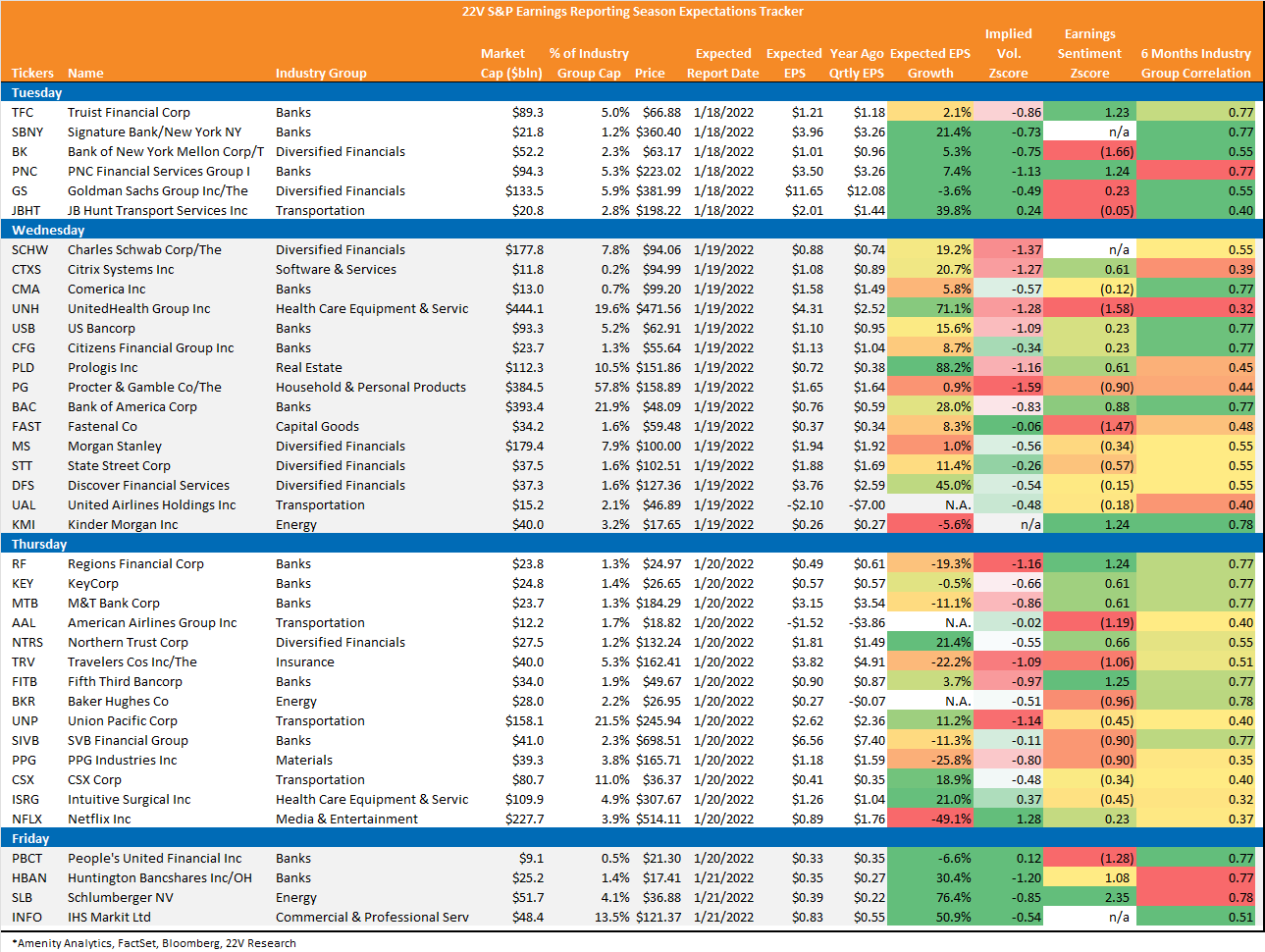
4Q EPS Season Cheat Sheet: Earnings reporting season got underway this morning with mega cap banks reporting amid rising monetary policy uncertainty, increasing real rates and tightening financial conditions. Banks beat earnings estimates though their price reactions were skewed negative on a range of concerns. Below is our cheat sheet for next week’s expected S&P earning report. It contains the names expected to report by day along with a number metrics we think most relevant to handicapping earnings outcomes, and response during reporting. Those metrics include the stocks earnings sentiment ranking from the end of 3Q. Implied volatility indicates how much investors expect the stock to move around earnings release date. Companies with the highest earnings sentiment tend to have stronger earnings reports. Lastly, we list the correlation of price movement within the reporting companies industry group. Highly correlated groups tend to be more macro/micro theme driven. Leverage to those themes should influence their earnings and post-earnings price reactions.
Thinking about the overall outlook for 4Q, corporate pricing power has shot higher over the past few quarters, buoyed by strong employment markets and a flush consumer.
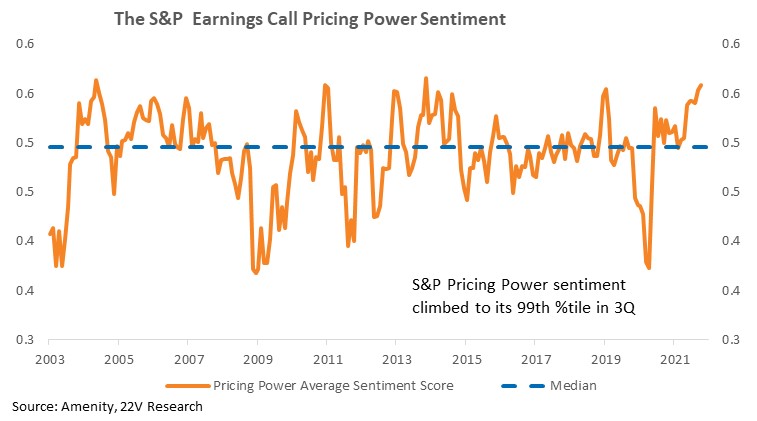
Pricing power sentiment has positive correlation with realized S&P margins one-quarter forward. Logically there should be a connection between how managers talk about pricing topics and how margins develop. The fit between the two is far too weak to be used to estimate a level, but a strong and rising pricing power sentiment reading suggest profit margins will remain firm.
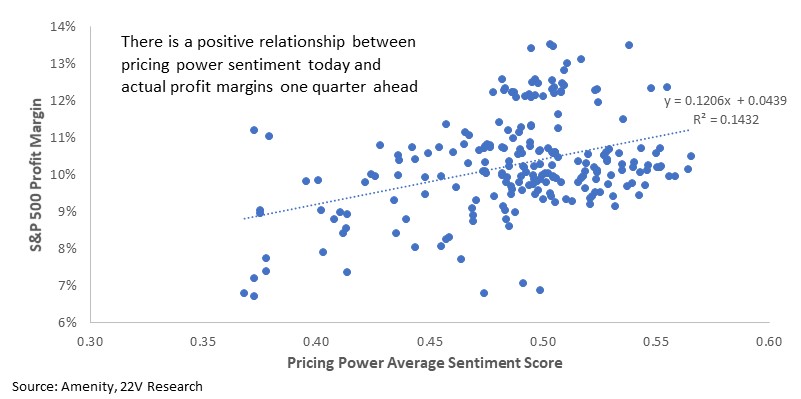
Despite multiple quarters of stronger than expected profitability, consensus estimates continue to imply a significant downtick in corporate profitability. As real rates and yields trends higher over the coming months and the fed moves towards its goal of tightening financial conditions, there will be downward pressure on profitability. How much and in which areas of the market that pressure increases is an important consideration for 2H22 profit forecasts, but 4Q21 reporting is likely to again surprise to the upside.