OUTLOOK WEBINAR: We are hosting a webinar on our 2022 outlook today at 10:30 AM ET. Registration link HERE. We will also have a replay afterwards that we are happy to send.
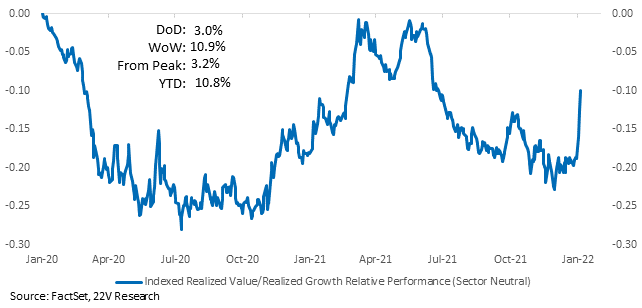
SUMMARY: The FOMC minutes made clear the Fed would move on rates before full employment was achieved. They had already reneged on that commitment in effect, but yesterday made it official. Here is the line: “there could be circumstances in which it would be appropriate for the Committee to raise the target range for the federal funds rate before maximum employment had been fully achieved”. What does this mean for you? It means that “inflation containment” is now the only goal and that means tighter financial conditions and higher real rates near term. Higher real rates are negative for Growth and Positive for Value historically. Value has surged recently. The official commitment to “inflation containment” is why markets reacted negatively to the minutes, despite everyone seemingly understanding the minutes would be hawkish.
The Fed also made clear they want real rates higher. Real rates are just too negative in a hot economy (in their view) and the minutes highlighted that “some officials” (a group) are in favor of earlier QT and fewer hikes to offset yield curve flattening. Focusing on other ways to increase yields, as opposed to just raising rates, is why the fed funds futures curve never moved yesterday (flat DoD), but term premium increased significantly. So bond yields gapped higher. They are higher again today.
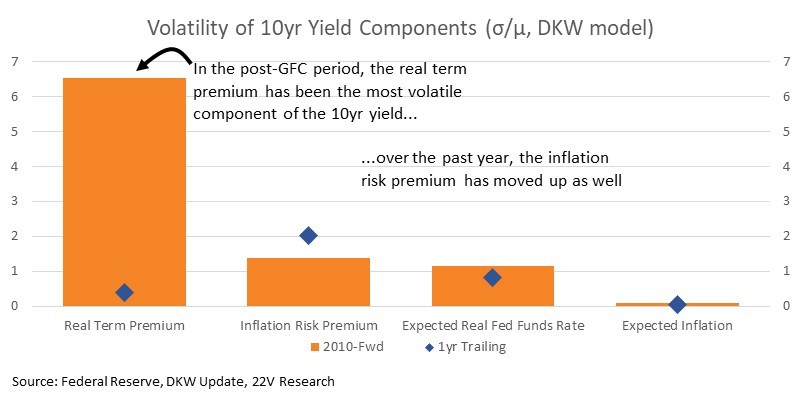
FYI… Term premium (TP) is basically the “other driver” of 10yr yield once you have added up expected short rates, inflation risk premium, and expected inflation. The term premium has been the largest driver of 10yr yields over the last 10+ years, which makes sense in a world of constant balance sheet expansion. If investors are starting to discount efforts by the Fed to increase real yields via QT or other forms of jawboning, the TP SHOULD move higher. This brings us back to a point we have made frequently of late. The Fed wants real yields higher and investors should position for that outcome.

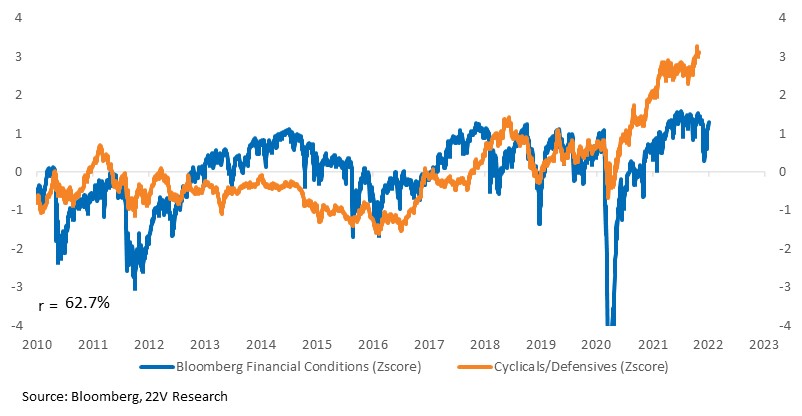
Longer Term: Don’t assume the Fed crushing growth is the default outcome. Data could still show a higher participation rate, productivity, less than feared impacts from rents etc., over time. That would indicate the Fed doesn’t have to risk crushing economic growth to slow inflation (our bias is they will not have to crush growth). It’s a long year. As far as Cyclicals are concerned, financial conditions should tighten some over the coming quarters, which is a headwind for Cyclicals, but the absolute level of financial conditions remains exceptionally high (easy). Healthy growth, strong consumer demand, and high corporate profitability support Cyclical sectors as well and some benefit from higher real yields (Energy/Financials/Materials). That being said, every Cyclical would struggle if policy tightens to aggressively slow growth (threat of recession increases). We don’t think it will, but it is tough to prove that today.
Full report below…
MARKET VIEWS: We had a number of comments as to why the minutes had such a large impact on risk assets and yields, despite most people expecting a somewhat hawkish release (yields are higher again today). As 22V economist Gerard MacDonell had been pointing out, the Fed had effectively reneged on its promise not to raise rates (i.e., “really” tighten) until full employment has been achieved. They didn’t say that in the last statement, but Powell indicated a number of times at the press conference that they could move before full employment was reached. In the minutes, the Fed made it clear they would move before full employment was achieved. Here is the line: “there could be circumstances in which it would be appropriate for the Committee to raise the target range for the federal funds rate before maximum employment had been fully achieved”. What does this mean for you? It means that “inflation containment” is now the only goal and that means tighter financial conditions and higher real rates. Higher real rates are negative for Growth and Positive for Value historically. Value has surged.
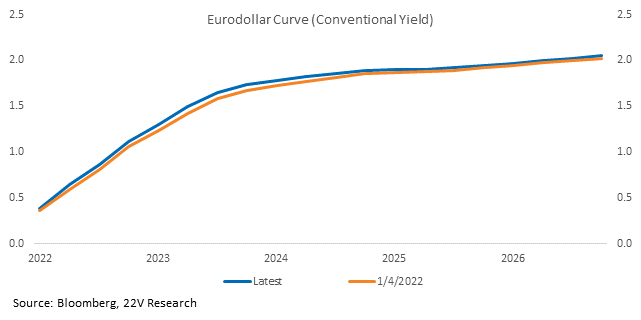
WHAT MOVED BONDS – IMPORTANT: Eurodollar futures (fed fund futures) have priced in a very minor shift up in rate hikes following the FOMC minutes. The move is MUCH less dramatic than what we saw in 2yr and 10yr yields. That is important to internalize as it has implications for longer dated real yields…
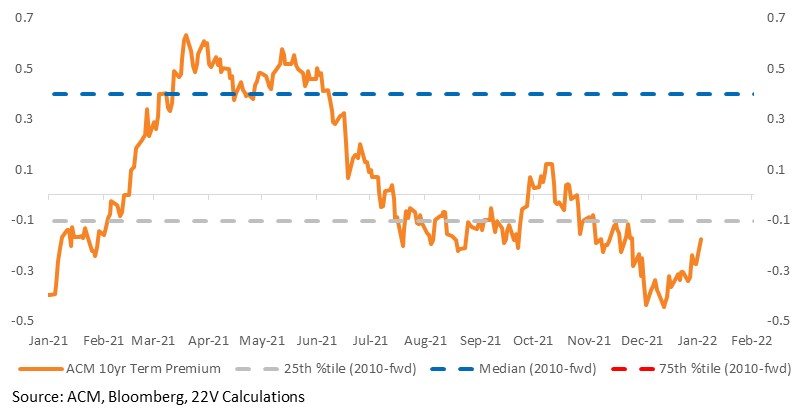
…the minutes showed some officials are in favor of earlier QT and fewer hikes to offset yield curve flattening. What moved rates then was not a reassessment of the expected Fed rate path, but a sharp increase in the term premium. Term premium is basically the “other driver” of the 10yr yield once you add up the expected short rate, inflation risk premium and expected inflation. The only thing that changed yesterday was the term premium. That makes sense if markets are starting to discount efforts by the Fed to increase real yields via QT or other forms of Jawboning. This brings us back to a point we have made frequently of late. The Fed wants real yields higher and investors should position for that outcome.
FYI, the DKW model, which breaks down the drivers of 10yr yields, shows that what moved the 10yr over the past decade is the real term premium. That makes sense in a backdrop of consistent balance sheet expansion (the term premium has been negative for a long time). The term premium will work in the opposite direction (pushing up UST Yields) if the Fed starts QT earlier.
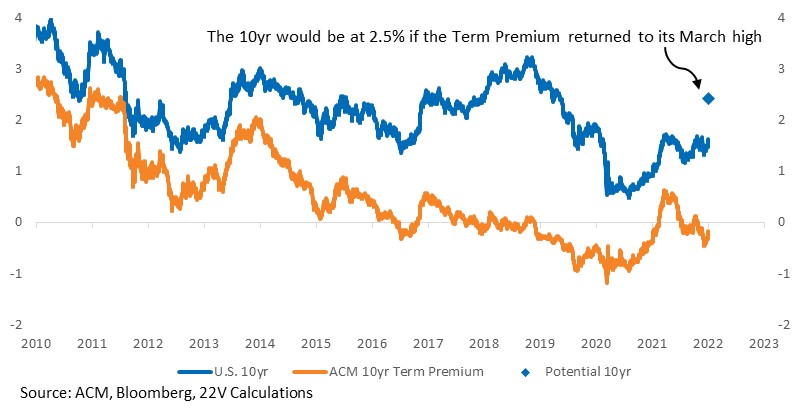
Just to give some perspective, if the term premium returned to the March-’21 high it would put the 10yr at 2.5%. Yields are still constrained by multiple forces (low competing sovereign yields, omicron risk, ongoing macro uncertainty, etc.) so the 10yr is unlike to quickly move about 2%, but the skew is clearly higher.
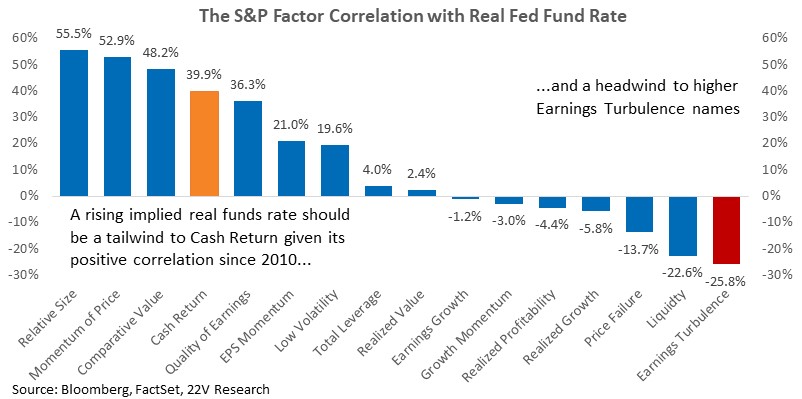
Stay long factors that benefit from higher real yields (Quality, Value, Cash Return and Size) and short low liquidity, earnings risk, high beta. That is an enduring theme of ours; happy to send along the stocks for both lists (just ask us).
FYI: Inflation containment doesn’t mean the Fed needs to raise rates aggressively. Data could still show higher participation rates, productivity etc., over time, which would indicate the Fed doesn’t have to risk crushing growth. But for now, it policy is focused on containment of inflation and higher real rates as a result.
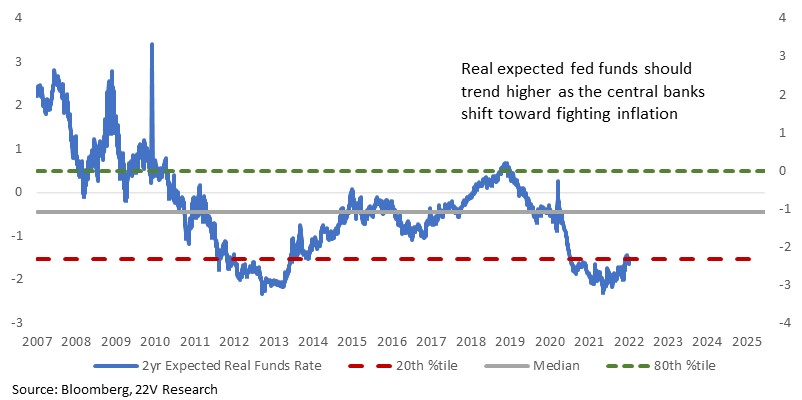
Investors need to get comfortable that the Fed will not have to crush economic growth to slow inflation. Easy financial conditions have been a support for Cyclicals relative to Defensives. Financial conditions should tighten some over the coming quarters, which is a headwind for Cyclicals, but the absolute level of financial conditions remains exceptionally high (easy) even as investors have moved to price in three rate hikes next year. If the Fed needs to tighten much more aggressively than currently forecast, that will be a headwind for Cyclicals. Healthy growth, strong consumer demand, and high corporate profitability support Cyclical sectors, but the group would struggle if policy is tightened more aggressively (recession threat increases).