
Tense Words
Geopolitics are poised to test the Biden administration in the new year. Presidents Biden and Putin are set to discuss Ukraine on January 10 for the third time in a month. Public reports from each side confirm the talks have been frank about expectations and ramifications which possibly constrict the range of outcomes, should de-escalation fail to materialize.
Asymmetry is a prominent element of the US/Russia relationship. Moscow is unhindered by domestic or international public opinion which greatly enhances Putin’s hand. Washington possesses disproportionate sway in transparent trade and finance which could strengthen Biden’s hand, but only in the event of transatlantic unity. Geopolitics is the top policy risk capable of changing 1Q22 market narratives.
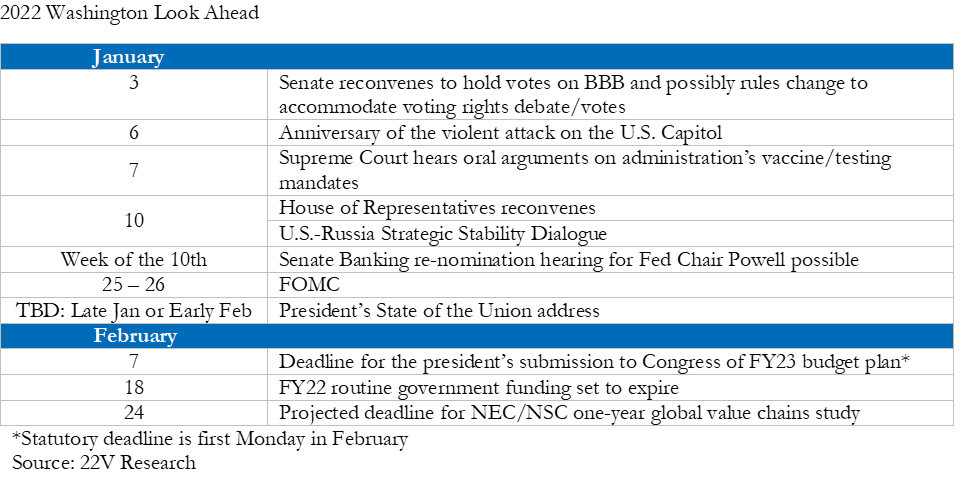
Calendar
Domestic policy tests do not rise to the potential market threat level of geopolitics, but macroeconomics and the pandemic remain policy spheres directly affecting voter and market sentiment. Republicans have very limited incentive to help Democrats work through Build Back Better (BBB) or even a possible mid-February shutdown. Omicron appears less ominous the more we learn about its lack of severity. The president is scheduled to submit his FY23 budget plan by February 7, days after he reports on the general condition of the nation’s welfare.
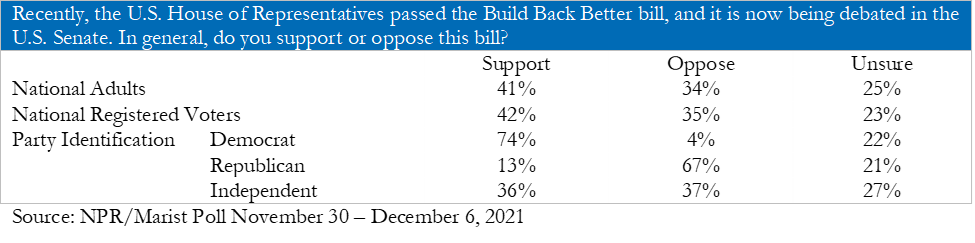
Better Building Blocks?
Two related public sentiment looks impress us most this week as Democrats begin the process of discovering whether anything can be salvaged of the original legislation. Nearly a quarter of registered voters said they were unsure about the bill, including 22% of self-identified Democrats. It’s fair to question the validity of any poll, but even half that number of Democrats sincerely unsure about the bill impedes compromise incentives within the Senate Democrat Conference or with House Speaker Nancy Pelosi’s caucus.
Axios recently ran a map displaying topics and interest intensity from the last days of 2020 to last week. Interest as represented by Google searches didn’t increase meaningfully until problems arose, reinforcing the notion that positive sentiment wasn’t created by Democrats while they developed BBB legislation many Americans supported (this was reflected in other polls throughout late summer and the fall).
Resurrecting a version of this plan will require legislative mastery, common purpose, keen use of political leverage, and luck. Biden’s green/clean energy plan and possible changes to prescription drug prices are the most immediate market stakes going into Senate talks. Whether that body produces a revised BBB bill (and assessments of what it means for those sectors) depends on House progressives’ reaction to it.
Fed/Banks
We continue to see more opportunities than risks for regulated financial institutions and products despite what will be an active 2022 for bank regulation. US bank policy next year will be influenced by a pro-growth White House nominating three new Federal Reserve governors. The Treasury Department supports broadly inclusive growth as it leads the administration’s plans to address nonbank financial institution risks. National private and public payment systems, to varying degrees, stand to benefit from innovations designed to increase choice, mitigate deficiencies, and enhance competition.
A decision by the GOP and banks to not only oppose but actively fight to defeat coming Federal Reserve nominees is the biggest risk to the president’s ability to successfully appoint three new members to the Federal Reserve Board. This scenario also would affect 1H22 macroeconomic policy narratives which gain importance if other aspects of policymaking aren’t going well (geopolitics and the pandemic, for example).
In this election year, public sentiment reflects politics and the several realities over which the parties rarely agree – at least in public. The pandemic’s effect on economic perceptions and realities continues unabated as a contributor to whether policy is an aid or hindrance to growth and the majority party’s election results. It is an unusual start to the second year of a first-term president that begins with such a heavily weighted agenda in the first two months. If 2022 US policy tests/risks turn out to be a front-loaded phenomenon, markets and Biden could be grateful looking back a year from now.

