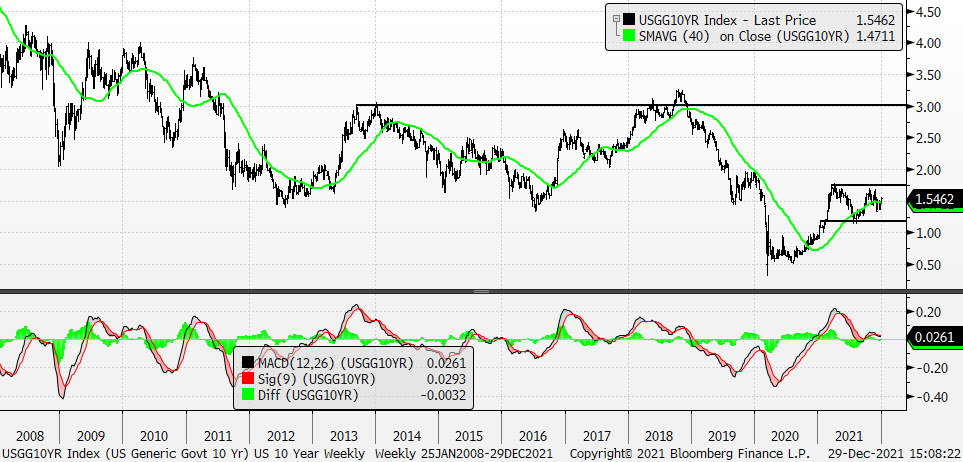
SUMMARY: COVID news sentiment is starting to improve, which is helping bond yields trend higher. Omicron has been a significant headwind to Treasury yields, which are used as chaos hedges, and reduction of virus-induced left tail risk takes downward pressure off yields. John Roque, 22V’s technical analyst, pointed out the positive setup for U.S. treasury yields across the curve yesterday. Treasury yields from 2 to 10yrs have technical scores of 4 (the best score they can have). John expects yields to work higher across durations.
From a technical standpoint, shorter durations have better setups than longer durations, which is consistent with fundamental upward bias to shorter dated yields given the shift in fed policy. Rising bond yields an and important support for Financials industry groups. Financials industry groups tend to be highly influenced by macro forces and that is particularly true today.

Relative to history, the level of correlation within Financials is only slightly above its median (57th percentile). With correlations at typical levels and a rate hike cycle getting started in 2022, Financials are likely to remain a macro dominated group into the next year. Bank stocks are the most highly correlated at the industry group level. In other words, Banks tend to trade together, making them more attractive to play as a group and less attractive for stock picking.
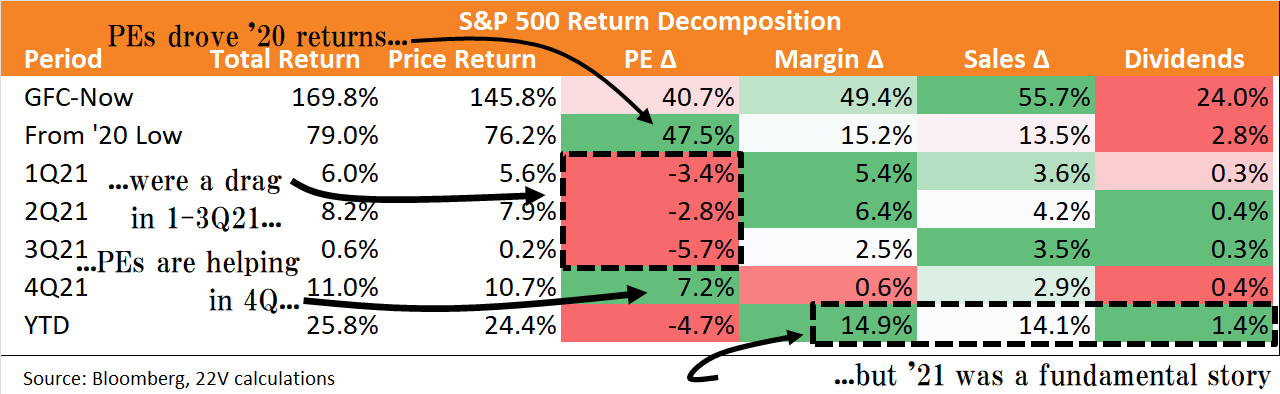
When looking to next year it is important to keep two things in mind. 1) 2021 equity returns were almost entirely a result of expanding fundamentals. PEs contraction were a 5pp drag on the S&P this year. 2) 4Q and 2022 earnings estimates are being revised higher, in part because analysts are increasing their profitability outlooks after two quarters of expecting declines that never came. Firming growth and the shift in fed policy will push yields higher putting additional downward pressure on PEs, but strong earnings fundamentals in 2022 will push equities higher.
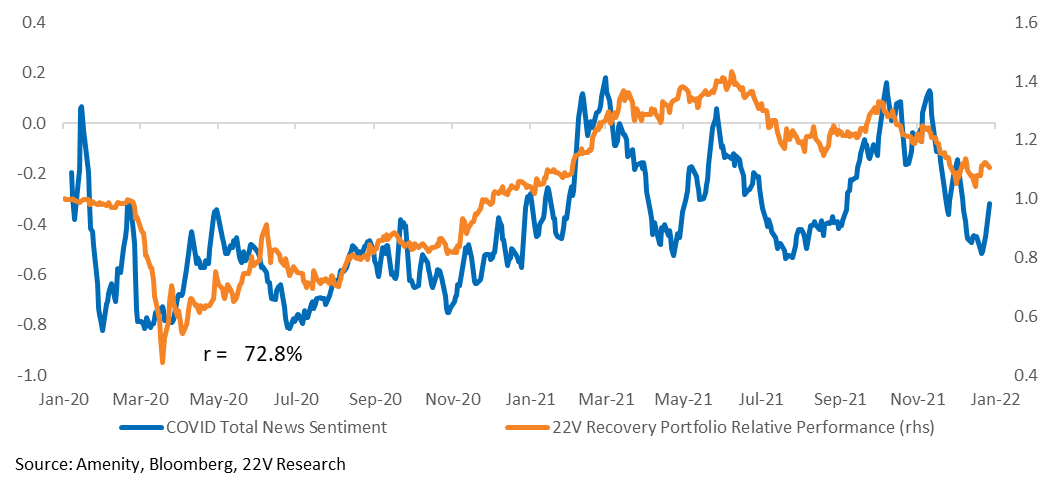
MARKET VIEWS: COVID news sentiment is starting to improve, which is helping bond yields trend higher. Omicron has been a significant headwind to Treasury yields, which are used as chaos hedges, and reduction of virus-induced left tail risk takes downward pressure off yields. Recovery stocks have been also moved lower as COVID risk spread and countries introduced renewed restrictions. Recovery headwinds will remain near term, but the outlook for those stocks is improving.
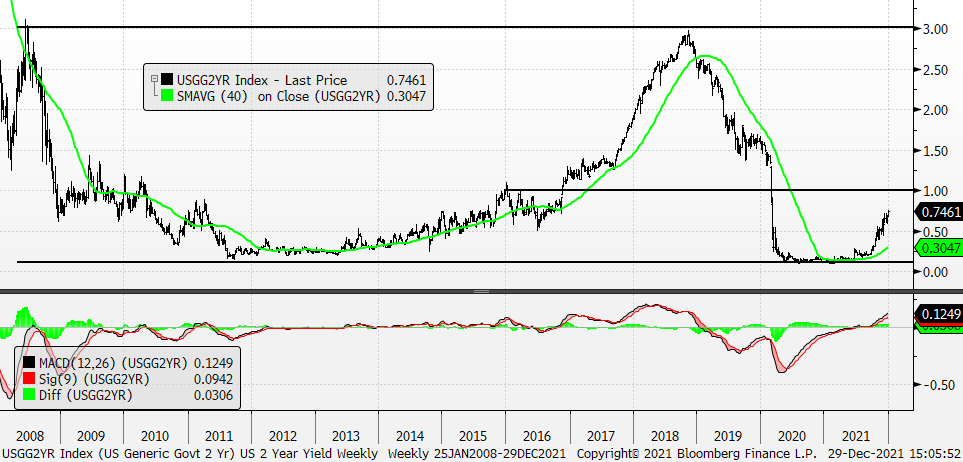
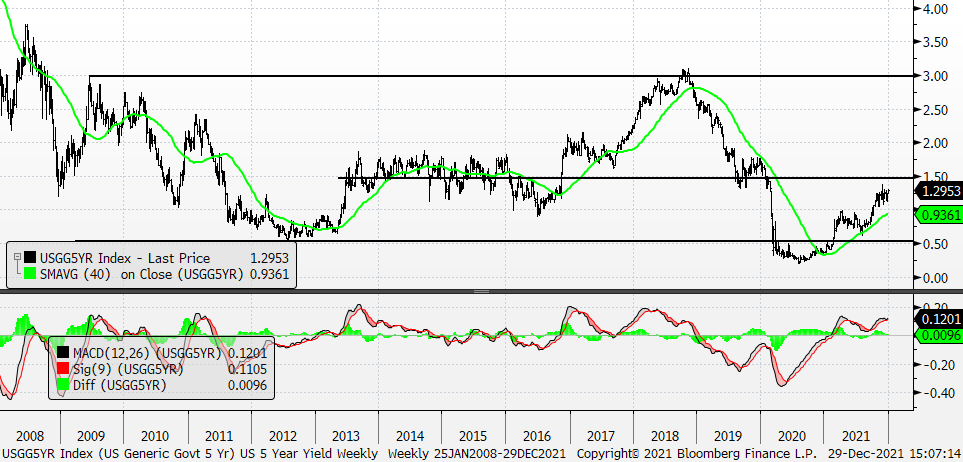
John Roque, 22V’s technical analyst, pointed out the positive setup for U.S. treasury yields across the curve yesterday. Treasury yields from 2 to 10yrs have technical scores of 4 (the best score they can have). John expects yields to work higher across durations.
From a technical standpoint, shorter durations have better setups than longer durations, which is consistent with fundamental upward bias to shorter dated yields given the shift in fed policy. John expects the yield curve to flatten short term as “2s have been strong with corresponding and in agreement momentum gauges. 5s are building to a breakout but still BASING or consolidating. 10s are behind both 2s and 5s as its consolidation or BASE is much less aggressively formed than is that for the 5s.”
2yr
5yr
10yr
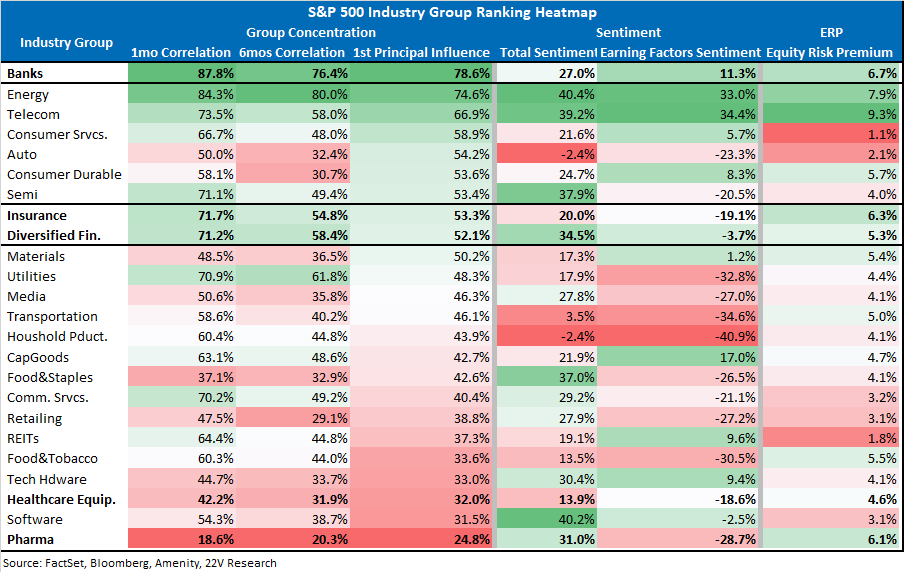
Financials Positioning: Rising bond yields an and important support for Financials industry groups. A risk-on rotation has started to take hold over the past week with global indices moving higher and Cyclical sectors rebounding relative to Defensives. Financials industry groups tend to be highly influenced by macro forces and that is particularly true today. Bank stocks are the most highly correlated at the industry group level. In other words, Banks tend to trade together, making them more attractive to play as a group and less attractive for stock picking.
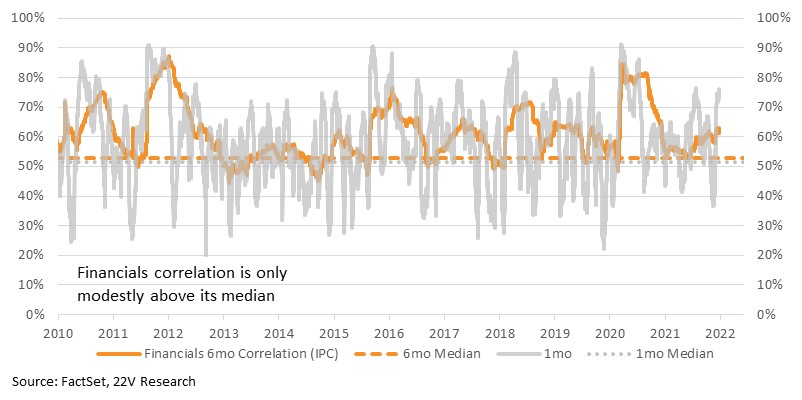
If intra-Financials correlation were at an extreme, increased stock return dispersion (better stock picking opportunities) might be a reasonable expectation going forward. Relative to history, the level of correlation within Financials is only slightly above its median (57th percentile). With correlations at typical levels and a rate hike cycle getting started in 2022, Financials are likely to remain a macro dominated group into the next year.
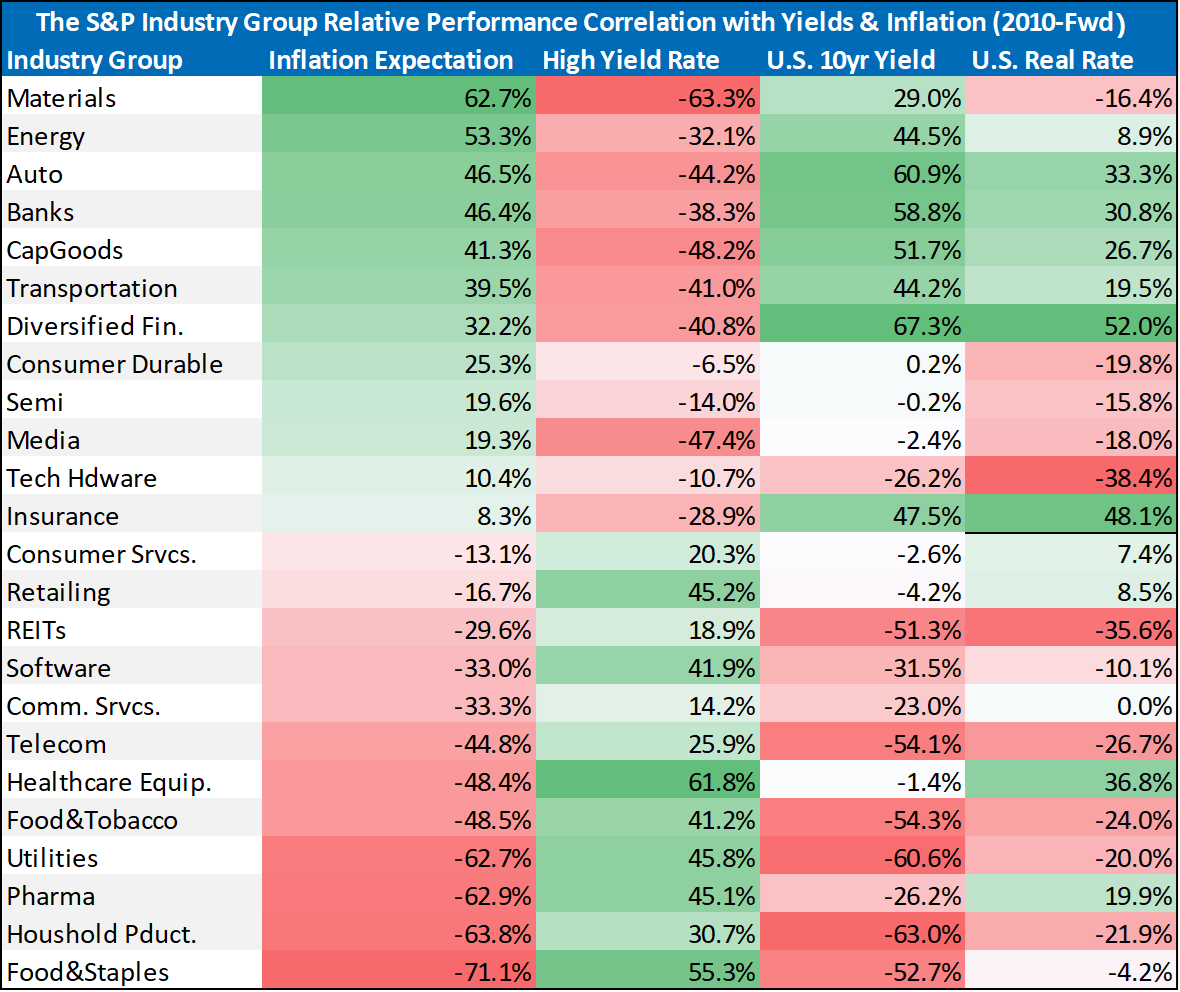
All Financials groups are well correlated with increasing 10yr and real yields, but Banks and Diversified Financials are positively correlated to inflation expectations. In the near term, falling inflation expectations are a headwind for Banks, but the upward skew on yields and real rates should benefit Financials in general and Banks and Diversified Financials in particular.
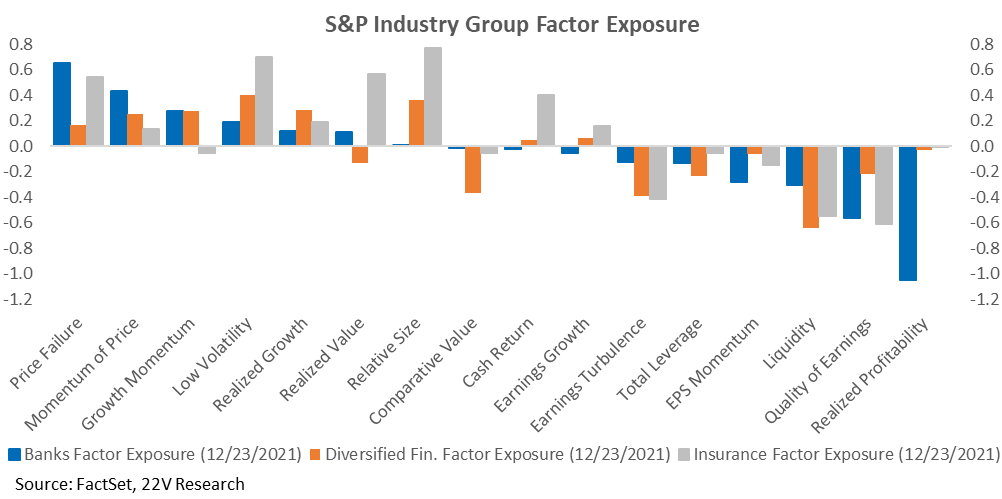
At the factor level, there are large and important divergences between industry group exposures. While all industry groups are exposed to Low Volatility, Insurance is the most heavily skewed. All three groups also have significantly less than index level Quality of Earnings exposure. Banks have the largest Momentum exposure and the most negative exposure to Realized Profitability.
On Fundamentals: Barring some radical shift in the next two days, the return numbers for 2021 are set. That allows us to compare narrative commentary to actual results. For most of the year there was a debate surrounding the influence of policy on equity markets, which was largely a continuation of the persistent debate since the end of the Financial Crisis. Monetary and fiscal policy undoubtedly had a positive impact on short term economic activity, which was the goal of said policies. But market returns were NOT a result of increased risk appetites. They were a result of improving fundamentals. U.S. equities are up ~26% this year (ln) and PEs subtracted about 4.7pp from the S&P in 2021 gain.
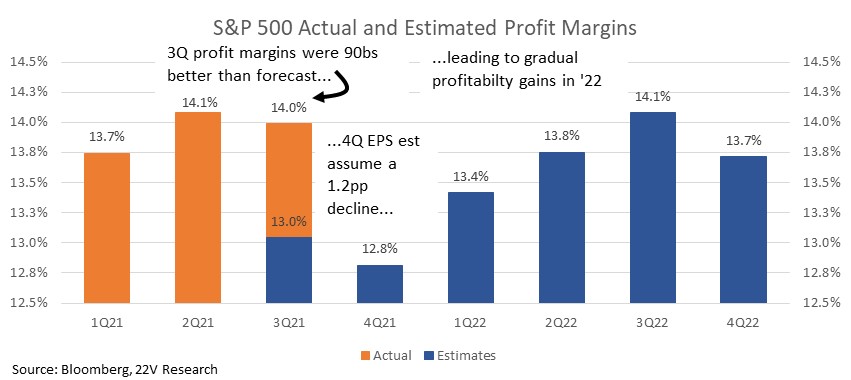
Changes in risk appetites could shift the return profile for next year and we expect a lower equity risk premium (our preferred valuation methodology) will support stocks. But fundamental supports are forecast to remain strong and those estimates have been moving higher over the past month. Earnings estimates are being revised higher in part because margins estimates are moving higher. Margins have consistently beat expectations and the bar heading into 4Q reporting season is unusually low.