SUMMARY: China policymakers continue to shift toward more stimulative policy with the PBoC stepping up policy support for the real economy. As Omicron burns through the population and fades over the coming months, a continued firm US growth backdrop and stabilizing Chinese economy will be an important positive tailwind for Industrial stocks that have lagged. Near term, we continue to focus on mean reversion from a trading point of view as it has been one of the most consistent trends all year (the 22V long/short mean reversion portfolio is up +20% in 2021). Cyclicals started to rebound last week and we expect that to continue. The Omicron/Fed pivot shock led to a 97th %tile move higher in relative Defensive performance MoM. A Cyclical rebound benefits more risk-on factors such as Value and Cash Return, which are more exposed to Cyclicals.
We currently recommend being long Energy (XLE) vs Utilities (XLU), Tech (QQQ) vs Staples (XLP) and Retail (XRT) vs Staples (XLP). IGV (software) vs Staples if you want to be more aggressive as well. We are long generically Banks and reopening stocks. The ~40 trillion increase in total net worth of Americans since 2019, high savings and low level of household leverage are important drivers of stronger than post-GFC personal consumption trends.
Longer term: Data last week reinforced an important call, which we hope people will keep in mind as the noise ramps up on economic growth trends in 1Q (Omicron will have some distorting short-term impact on growth). The US economy continues to track post-Tech bubble spending trends and will continue to do so unless the Fed HAS to slow growth significantly (a risk, but not a base case). The ~40 trillion increase in total net worth for Americans since 2019, high savings and extremely low levels of household leverage are important drivers of much stronger than post GFC personal consumption trends. Don’t assume that a wiggle lower in spending will lead to decline toward post-GFC trends. We hope clients internalize this important point. We see a ton of commentary on “slowing” potential but with very little context around it.

FYI: COVID sensitive and insensitive spending are well above pre-GFC trends. That leads to a potential broadening out of supply issues going forward (i.e. demand never slows to alleviate supply) issues. Especially if China shutdowns continue as it sticks to its COVID zero policy.
Full report below…
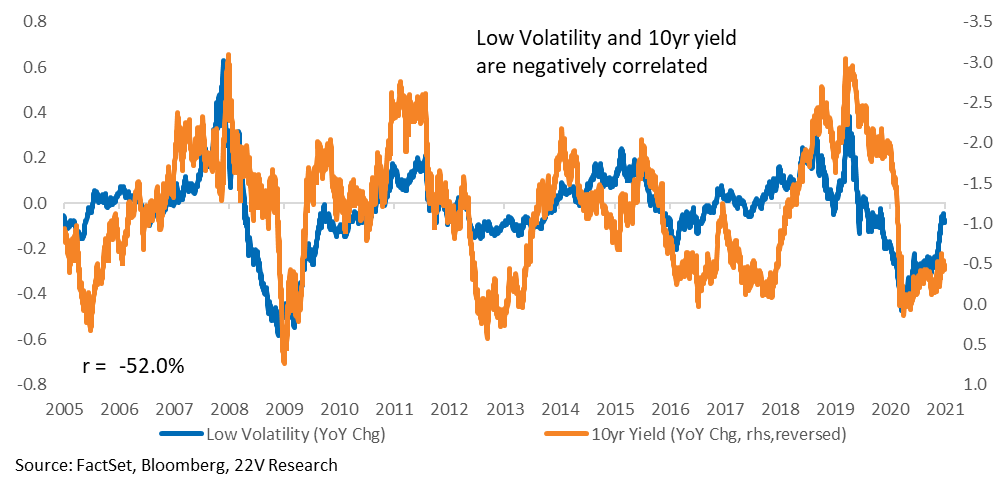
MARKET VIEWS: The news over the holiday weekend and overnight is relatively slow. China policymakers continue to shift to more stimulative policy as the PBOC said it will step up policy support for the real economy. As Omicron burns through the population and fades in the coming months, a continued firm US growth backdrop and stabilizing Chinese economy will be an important tailwind for many of the Industrial stocks that have lagged. That trade is too early to put on now though. Near term, expect mean reversion to continue. Auto, Semis and Retail were leaders in November and lagged significantly in December as the Omicron uncertainty increased and the Fed pivoted. Any security that was high beta or levered to improving economic growth suffered as a result.
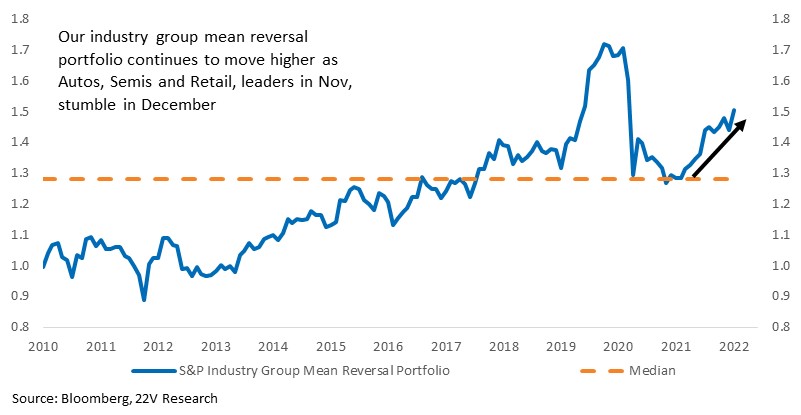
Currently, Low Volatility is most exposed to Defensives. Quality of Earnings is highly exposed Staples and Health Care. The relative return of S&P Cyclicals vs. Defensives fell sharply in early December but has rebounded over the past week, in line with the performance of Quality of Earnings and Low Volatility. The rebound of Cyclicals, which will continue as Omicron risk fades, benefits more risk-on factors such as Value and Cash Return, which are more exposed to Cyclicals. We currently recommend being long Energy (XLE) vs Utilities (XLU), Tech (QQQ) vs Staples (XLP) and Retail (XRT) vs Staples (XLP).
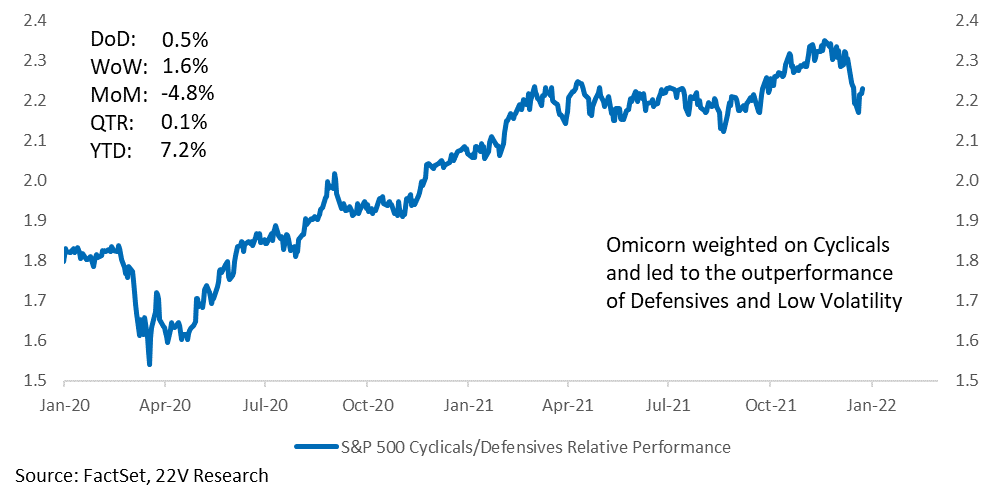
Both Low Volatility and Quality of Earnings are negatively correlated with the U.S. 10yr yield. Omicron has been a significant support for Treasuries, which continues to be used as a hedge against tail risk. Easing of virus risk and expected rate hikes will help push 10yr yields higher in 2022. Quality of Earnings and Low Volatility will likely face downward pressure given the negative correlation with yield, especially after the outperformance of 4Q as of now. We recommend long KRE (regional banks) now.
DATA LAST WEEK SUPPORTS STRONG DEMAND: It is important to keep in mind that the data remains above post-GFC trends. The ~40 trillion increase in total net worth for Americans since 2019, high savings and extremely low level of household leverage are important drivers of much stronger than post-GFC personal consumption trends (we didn’t even mention capex trends). The US economy continues to track post-Tech bubble trends for spending and will continue to do so unless the Fed HAS to slow growth significantly. This is something we wont figure out for some time and unpredictable productivity will be a major swing factor.
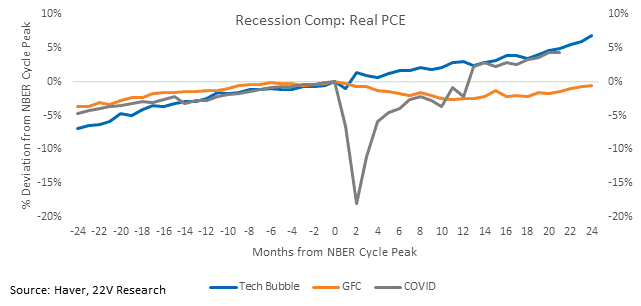
COVID sensitive and insensitive spending (services) are running above post-GFC trends. Two things follow from this chart. The main point is that consumers don’t have to make a choice between goods and services purchases (i.e. if they buy more services they have to shift spending away from goods. That is not true).
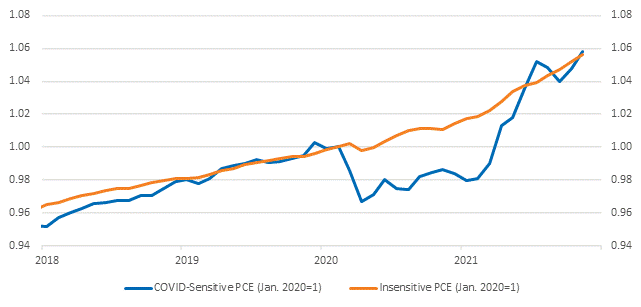
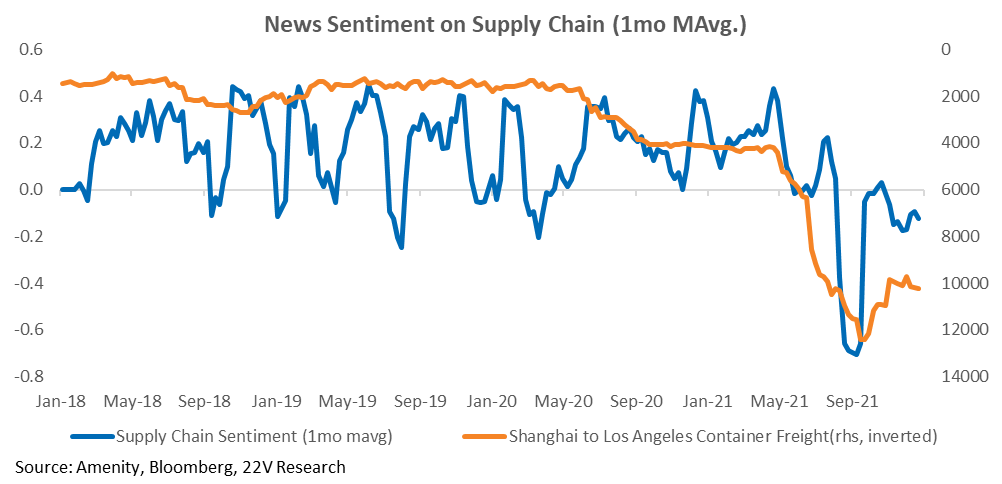
The problem with the charts above is that they do not suggest a slowing in demand that will help ease supply chains. Supply chain sentiment has improved some suggesting easing of bottlenecks, but COVID zero policy in China (China announced more shutdwons this weekend) and continued strong demand runs the risk of supply chain inflation remaining unusually high.