
Microelectronics
A ramp up of geopolitical developments at the very end of 2021 continues as headlines over the past 48 hours suggest this rolling ball certainly will pick up speed and importance into next year. The National Security Council (NSC) made public its intention to discuss sanctions today against China’s Semiconductor Manufacturing International Corporation. Meanwhile, Russia finds useful being publicly elevated on the US geopolitical ‘to-do’ list regardless of whether we should be thinking, much less speaking, in G3 terms.
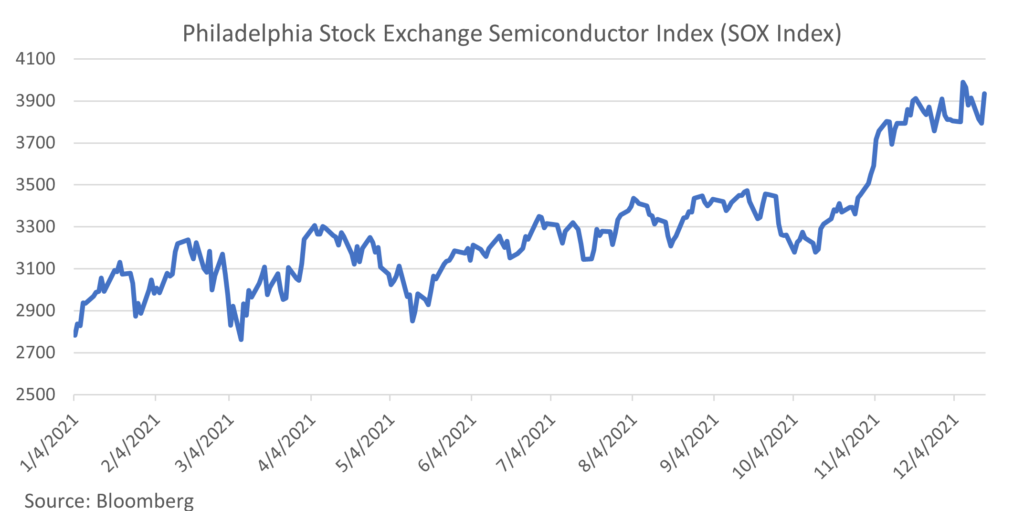
The Philadelphia Stock Exchange Semiconductor Index (SOX Index) began selling off a week ago, a move not abated by the NSC acknowledgement. The index was up 43% YTD before the move down. We don’t know the explanation(s) for this decline but believe geopolitics will remain a feature of the global value chain restructuring led by business interests and impacted by policy. The Biden administration’s one-year review of US supply chain resiliency is due around February 24 when national and economic security threats will be prominently featured. The administration isn’t waiting for the report to explore and possibly implement policy.
On September 23, one White House blog post focused on microelectronics supply chain disruptions. Authors noted the chip shortage could cut a point from GDP growth this year, and that slowing production cycles have adversely affected hundreds of thousands of US workers. They suggest that manufacturing resiliency generally requires three related strategies:
John Roque scored SOX Index members from a technician’s viewpoint. Sixty percent of the index is rated strong but that doesn’t predict possibly growing influences from policy. Part of this noise includes the White House exploring blacklists for some biotech companies, a topic we’ll give more attention later this week.
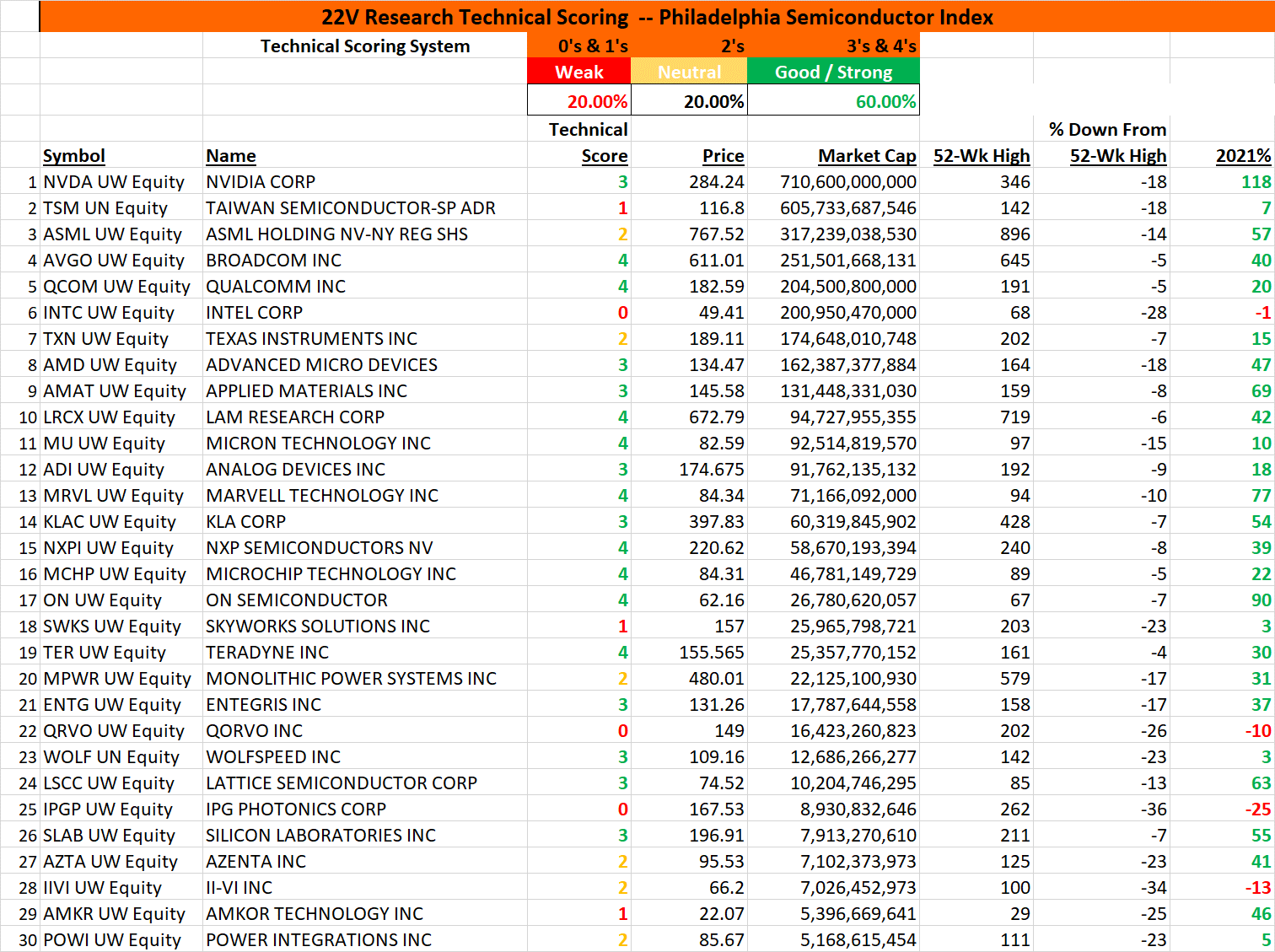
Source: 22V Research
Outlook
Beijing and Moscow are sometimes partners in presenting a bulwark against US attempts to refurbish the Transatlantic alliance as well as President Biden’s efforts to re-engage the Asia-Pacific region after US failure to join the Trans-Pacific Partnership. Public approval ratings matter very little in China and Russia but are a constant factor in the US presidents’ political capital at home and abroad. Economic, pandemic, and overall competency perceptions can boost or hinder White House decisions and an administration’s ability to manage implementation. Few heads of state know this better than presidents Xi and Putin and both can complicate the lives of those living or working at the White House. Against this backdrop, all three countries have an interest in managing geopolitical differences from mushrooming into geostrategic confrontations sure to undermine domestic and global economic growth.

