Is it possible to make a simple observation about a topic as complex as geopolitics? The recent US-China, US-Russia heads of state conversations accomplished what was intended by all sides in the shortest of terms, which on whole is a positive for the world. China’s recent macroeconomic and bank reserve policy moves suggest economic stress. Moreover, they signal less appetite for self-created geopolitical risk. Russia understands more clearly than a week ago that while its perspective on Ukraine hasn’t been fully acknowledged, military incursion is far from risk-free. Near-term developments and headline reactions won’t matter as much as 2022 events, in our view.
We recall the fresh and older lessons two decorated former military officers shared to help inform our geopolitical policy orientation. Just yesterday one of them spoke to us about the global and domestic political value of President Biden making clear the pain Russia could confront from invading Ukraine. He pointed most to the domestic political value of “not being punked”. Years ago, on the other hand, one of our favorite renaissance men, the late Dr. James Schlesinger, illuminated the tactical importance of obfuscation in matters of state.
President Biden’s internationalism built over decades arguably prepared him for the commander-in-chief role. Then again, his eight years as vice president and decades in Congress should have prepared him to avoid the depletion of political capital he continues to suffer.
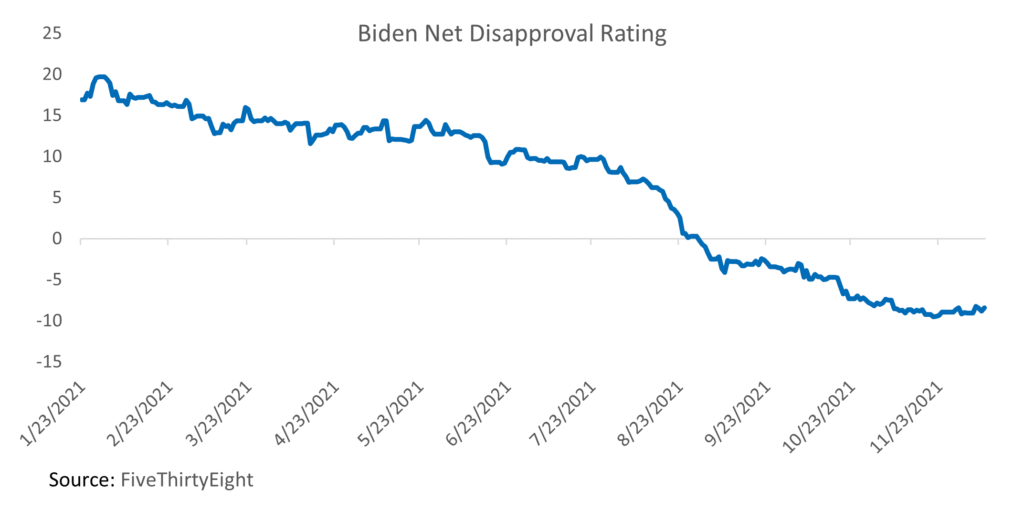
Biden’s net disapproval implosion has slowed this past month or so, but it is still negative despite a strong economy and his fulfillment of his predecessor’s Afghanistan withdrawal deal (Americans typically disdain US long-term forward involvement – call it the Vietnam Effect.) President Biden’s more recent foreign policy net job ratings (RealClearPolitics average at -16 and Politico/Morning Consult at -10) are slightly worse than his overall net disapproval rating at -8.4. These figures don’t reflect the recent Russia discussion.
US Presidents get plenty of advice, some of which they seek. The current issue of Foreign Affairs offers a few articles on Washington’s historical approach and present options for dealing with Beijing and Moscow. The Economist yesterday led with a typically provocative weekly cover article asking “[w]hat would America fight for?” Both publications explore short versions of the histories shared by the three nuclear powers. Ambassador Bob Zoellick in the Financial Times on Wednesday painted an administration clear on what it won’t do rather than its next steps to manage relations with China or Russia.
Our note yesterday commented on Biden’s anti-corruption proposal that is based on constructing a beneficial ownership system that would affect anyone conducting certain financial transactions in the US or its payment systems. This proposal is aimed in part at authoritarian regimes like Russia. Early in his tenure, Secretary of State Antony Blinken framed the administration’s approach to competing in the G2 relationship: “Collaborate when we can, compete when we should, and oppose when we must.” It struck us then and now as a useful, transparent approach to a difficult and necessary relationship. One can take exception with the timing or immediacy of the strategy but both countries have received regular attention from Biden and his team.
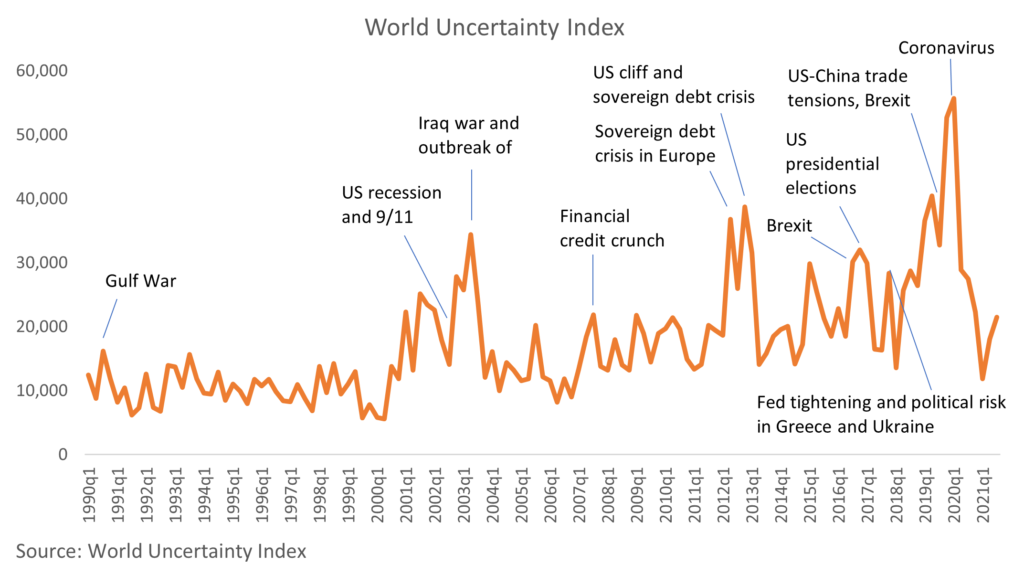
The World Uncertainty Index continues to spike through this year, reflecting how many times its authors’ detect the word “uncertainty” in the quarterly Economist Intelligent Unit country reports. The direction is more our point than the absolute level. Our Monday weekly outlook note set out that geopolitics will be of increasing importance to the financial markets relative to declining interest in the US fiscal policy agenda. Zoellick may be fed up with what he sees as indecision; it is also possible the administration finds the obfuscation useful. Whatever one’s perspective, we expect geopolitical noise and action to ramp up next year.