Our entire repository of COVID charts is HERE.
Today’s report is a simulation of hospitalizations in the U.S. under a theoretical Omicron wave. It’s a very rough estimate because we make assumptions about transmissibility, severity, and vaccination efficacy that we don’t have data for. The range of hospitalizations under different severity assumptions is extreme. We don’t know, and that’s the point; the illustration helps explain the volatility in the 10yr and Recovery stocks.
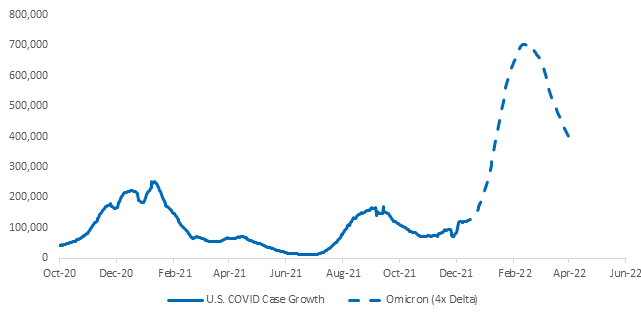
OK, now for the simulation. According to a Japanese study, Omicron is roughly 4 times more transmissible than delta. Let’s say we rerun the Delta wave but its 4x as bad and it starts right now. The assumptions here are that vaccine efficacy and reinfection risk are the same as they were during the Delta wave. Case growth would obviously be extremely high, peaking at ~700k cases a day.
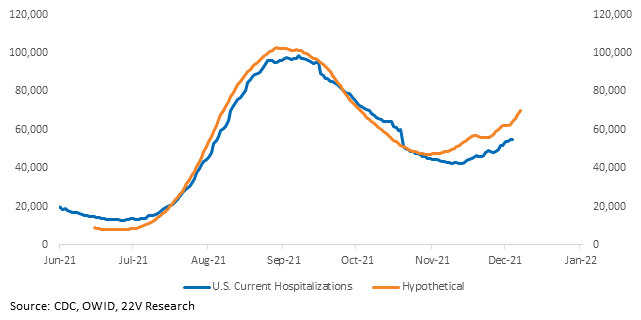
During the Delta wave, one new case was consistent with 0.65 people in the hospital.
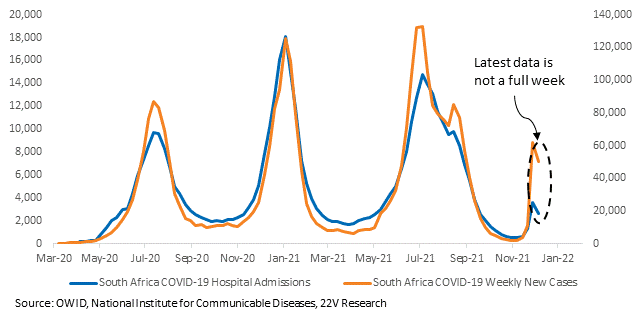
After 1 week of data from South Africa, hospitalization data indicates Omicron is 0.2x as severe as Delta (using ratio of hospitalizations, advanced one week, to case growth). We know this is early and imperfect, but it’s the only data we have.
So, here are a number of different scenarios of hospitalizations under a theoretical Omicron wave (assuming 4x Delta transmissibility), ranging from as severe as Delta in the U.S. to 0.1x as severe. The grey line is 0.2x, the early indication of Omicron’s severity relative to Delta from South Africa. Assuming 4x transmissibility and 0.2x severity, hospitalizations would peak ~190k, above the winter wave peak of ~130k. One of the difficulties is we are starting from a higher level of hospitalizations than in previous waves.

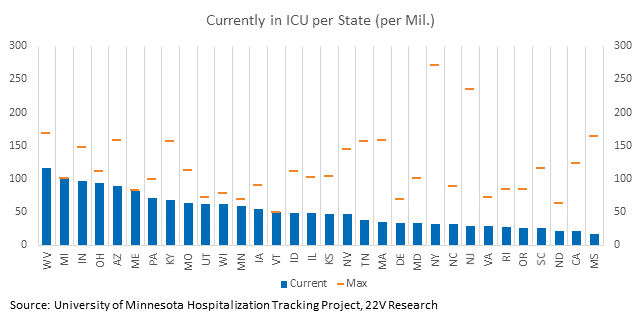
That noted, most states are well below peak ICU usage hit during prior waves. Michigan is the lone state at its peak now. We include all the states we have data for in the chart below.
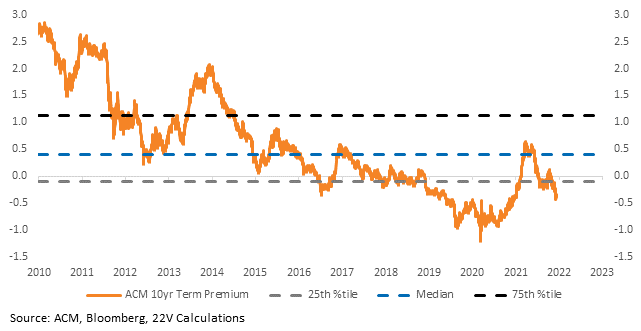
The term premium is at its lowest level since early 2020, when vaccines and treatments didn’t exist. Hospitalizations matter for the markets insofar as they lead to lockdowns and the economic consequences thereof. There are two points to keep in mind (in addition to how little is known when estimating hospitalizations): 1) we have new and better treatments, including therapeutics that are expected to work against omicron, and 2) political appetite for lockdowns is significantly less than 2020.
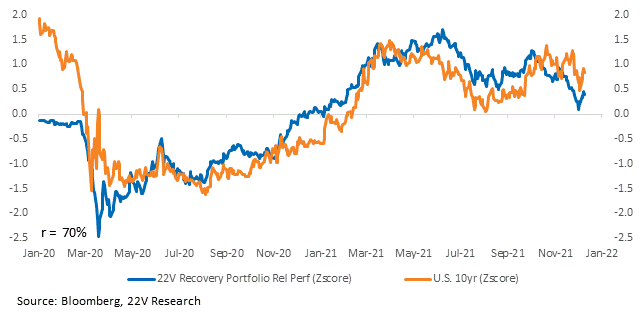
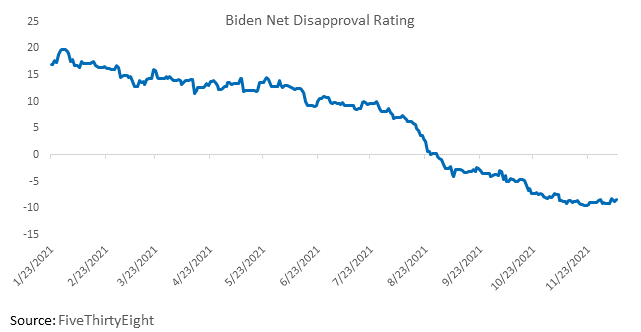
22V’s Washington Policy team believes that the odds of restrictions at a national level are low. President Biden relayed his belief that current measures are sufficient to deal with the new variant during his press conference after last week’s jobs report. Biden’s net disapproval rating is near its low; he is unlikely to embrace incredibly unpopular lockdowns.