SUMMARY: With the VIX in its 90th %tile, a bounce in equities should be expected assuming Omicron does not lead to a significant spike in severe cases (either though vaccine resistance or higher mortality). For now, Omicron severity looks unremarkable, but we will get more data over the coming weeks. If Omicron is more transmissible but not vaccine resistant or more severe, demand growth in the US will remain firm and earnings expectations should be stable. Keep in mind, today’s EPS growth trend puts index earnings on 1) an above pre-COVID trend and 2) recover half their pre-GFC trend rate (the EPS growth trend decelerated significantly post GFC). Fundamentals and a relatively high implied equity risk premium have been a more important support for equities. And will continue to be assuming there is no recession.
As Noah Smith highlighted over the weekend, “the age when we could expect to stop the virus with non-pharmaceutical interventions — lockdowns, social distancing, masks, test-and-trace — is long, long over”. And given the countries that Omicron is reportedly already in and how long it has potentially been around, flight restrictions will not stop the variant. The headlines over the weekend would lead you to believe that politicians have come to the opposite conclusion, which is why Energy/Airlines came under significant pressure last Friday. If it becomes obvious that we are at peak lockdown fear NOW, Energy/Airlines (which have had 98th %tile declines Friday), are buys today.
Important Fed Caveat: Coming out of previous COVID waves, monetary policy was near max dovish and the Fed’s goal was to push inflation higher. Today, the fed is tolerating higher inflation as they move toward normalizing policy. That will make this sell off different. Bottom line, if the Omicron’s impact is minimal, the Fed will still be biased to tighten financial conditions. The intent of the Fed is changing. As Gerard pointed out Wednesday afternoon after the data dump of across the board stronger data, “the price detail released in the income and consumption report for October confirm that the inflation backdrop has continued to deteriorate, and a bit more seriously than was expected one, two or three months ago” and inflation should slow some, “but it will be from a base that has become progressively more troubling.” Keep in mind the Fed is focused on core inflation, so the decline in Energy prices late last week should not change their reaction function.
On the Wednesday before thanksgiving SF Fed President Daly said she would “would completely support an accelerated pace of tapering” if inflation and employment data remain in their current trend. Her speech along with comments by other fed speakers prompted well followed fed watchers to note that tapering could be accelerated to as early as the December Fed meeting, tapering could end in March and that the FOMC might raise rates three times in 2022. The Fed could be forced to delay some hikes or not increase the pace of tapering, but the INTENT has clearly shifted. Bottom line, we need a very poor longer term Omicron outcome to change the Fed’s reaction function. And that outcome would bring its own headwinds.
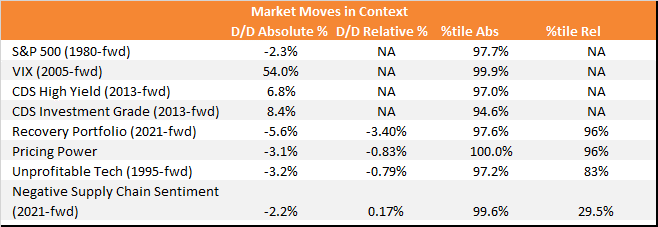
Friday was a lower volume day, but investment grade and high yield CDS blowing (95th and 97th %tile moves respectively) is likely a function of the complicated dance between COVID and the Fed. At least relative to previous COVID waves. Pricing power stocks and unprofitable Tech both lagged on Friday. Pricing power suffers from both the Fed AND a change in the Fed’s reaction function. Unprofitable Tech gets hurt by the tightening of financial conditions.
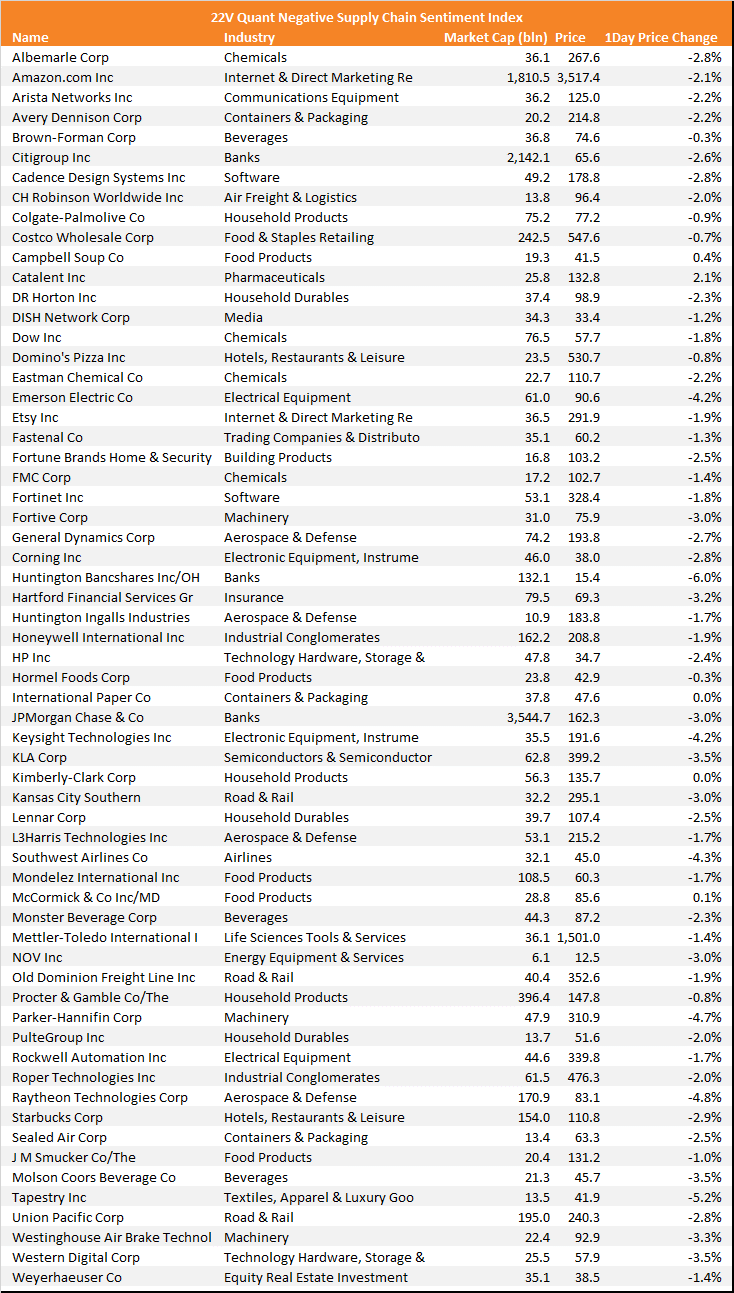
NET NET: A short term bounce should be expected and we anticipate the Fed will at least sound less hawkish than they did last week (Powell speaks tomorrow and Tuesday. NY Fed President Williams speaks tomorrow as well). Longer term though, unless Omicron proves to be a significant issue, expect US demand to remain firm (economic bears have been wrong about the impact of every COVID post the original one) and the Fed bias to move inflation back toward target to remain. That favors companies that benefit from strong US demand and improving supply chains (negative supply chain sentiment companies outperformed Friday!).
Last Sunday we highlighted the complicated backdrop and suggested a focus on micro trends that seem cleanest into year end. That proved to be a very lucky suggestion. From last week and it remains true today “Strong housing fundamentals and macro uncertainty anchoring long rates suggest Homebuilders continue to outperform. Strong US demand growth and easing supply chains favor Retail (and other industries. We can send the list). Pharma and other drug pricing sensitive names benefit from less drug pricing uncertainty overhang and relative insulation from macro uncertainty.” We would add high credit rating companies to the list. They started to work pre-Omicron and that should continue.
We have been dead wrong on small caps and we still think banks will benefit from higher short rates. But both those are going to be in headline Omicron hell for a while. We have payroll report on Friday…the participation rate number will be supper important.
Full report with charts covering the topic we mentioned in the summary below…
Macro Backdrop: It was a low volume day, but investment grade and high yield CDS blowing out last Friday (95th and 97th %tile moves respectively) is likely a function of the complicated dance between COVID and the Fed. At least relative to previous COVID waves. Pricing power stocks and unprofitable Tech both lagged on Friday. Pricing power suffers from both the Fed AND a change in the Fed reaction function. Unprofitable Tech gets hurt by the tightening of financial conditions.
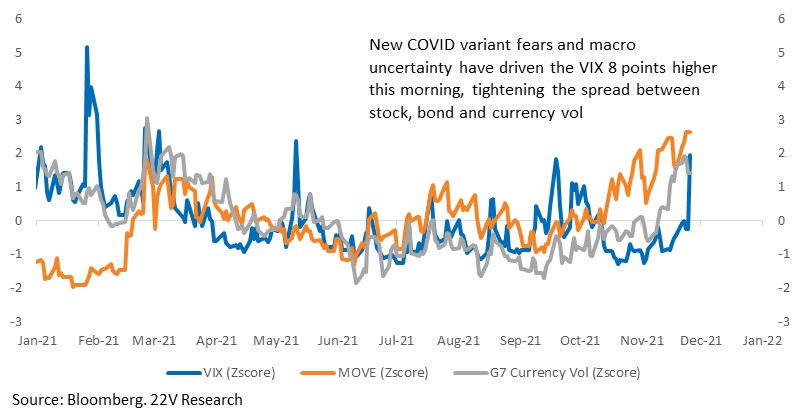
Over the past few months, bond and currency volatility has spiked higher as investors debated the outlook for inflation/supply chain issues, and global monetary policy. With the spike, implied equity volatility is now in line with bonds and currencies on a normalized basis. In one sense it is good news equity volatility has caught up to currency and bond volatility. Investors had been worried about the catch up. On the other hand, COVID impacts could get worse (we are working with little info now) and if it turns out that the impact from the new variant is minimal and the COVID surge fades, rate hike expectations which have declined Friday will likely get priced right back in. That would push back against the idea that volatility across asset classes would fall back to the old lows
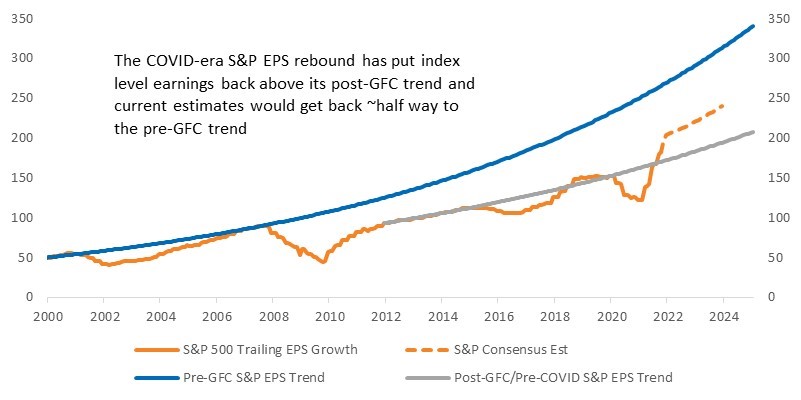
Fundamentals insulate broad equity indices somewhat. The absolute level of implied vol is significantly higher than it has been in the post-GFC period. All things equal, that would suggest a lower level of valuations is appropriate. One difference is that today’s EPS growth trend puts index level earnings on track to recover about half of their pre-GFC trend rate. Market internals will remain more influenced by the shift in rates and uncertainty than the index.
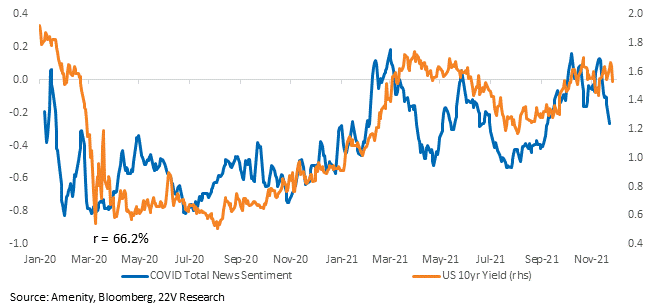
Even before the new variant, COVID news sentiment was deteriorating significantly (measured through 11/22). That was limiting the increase in 10yr yields. To the extent that COVID news continues to deteriorate or remains a headwind in the coming weeks / month, 10yr yields face headwinds. That should help homebuilders assuming US demand remains firm. We think it will.
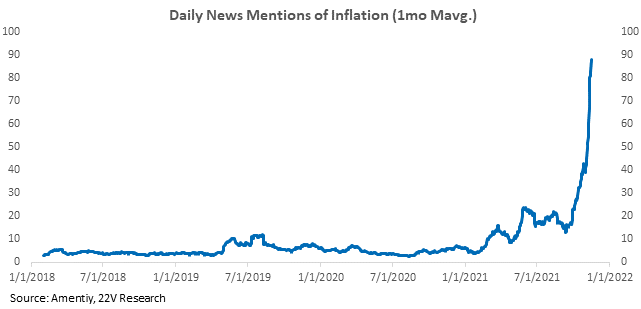
Daily news mentions of inflation are at their highest-level years and inflation sentiment is near its lowest level in recent history. That is prompting the shift in inflation comments from all levels of government. See the SPR release announcement today. Inflation concerns are unlikely to just collapse, which is why the Fed will not be MAX DOVISH coming out of this COVID wave.
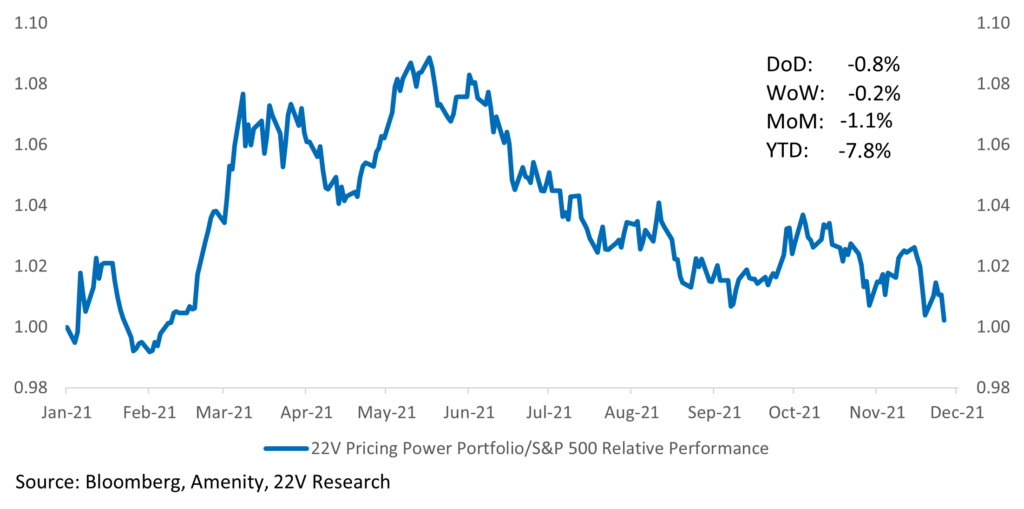
Pricing Power stocks are those names with the strongest pricing power sentiment coming out of 3Q earnings reporting season (measured using the Amenity natural language processing tool). These are stocks meant to be able to weather rising inflation. Give the rapid decline in inflation expectations due to COVID related growth concerns AND the shift in Fed focus to being less tolerant of inflation, underperformance of these names is not surprising.
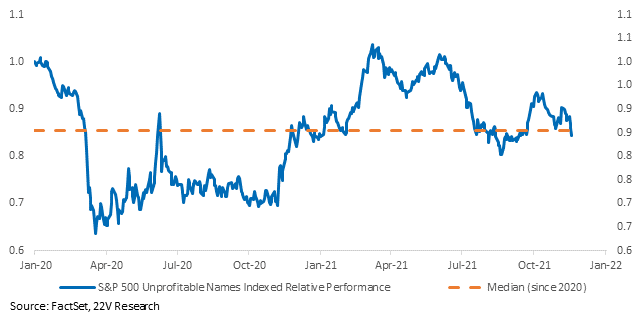
It is important to note that the outperformance of unprofitable companies in late 2020 was an exceptional outlier. Reversals in 2021 are an unwinding of that move. To the extent that financial conditions are tightening (they did on Friday with wider credit spreads), unprofitable Tech is likely to remain at risk. Stay short these names even with the COVID scare.
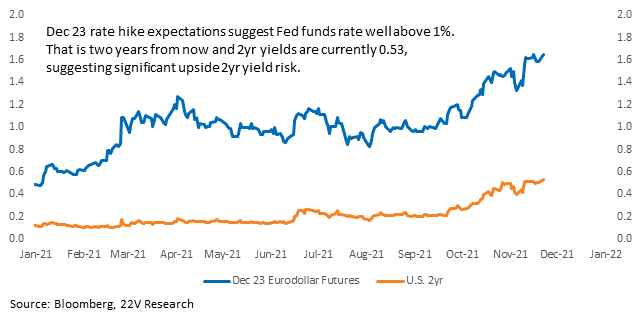
Complicated Fed Backdrop: Over the past several days, fed speakers including Clarida, Waller, Bostic, and Bullard have all made comments about accelerating the drawdown in asset purchases (taper). In a speech Wednesday afternoon, SF Fed President Daly said she would “would completely support an accelerated pace of tapering” if inflation and employment data remain in their current trend. Those speakers prompted well followed fed watchers to note that tapering could be accelerated as early as the December Fed meeting, tapering could end in March and that the FOMC might raise rates three times in 2022. Market-based rate hike expectations have been creeping higher since the last CPI print. As Gerard has pointed out (great summary of his current thinking can be found here), the fed is shifting from pursuing to tolerating higher inflation. Yes we get it…fed rate hike expectations are much lower on Omnicom, but investors likely realize that the high volatility backdrop won’t just disappear, given the Fed shift, if COVID trends improve. 2yr yields have PLENTY of room to increase from here. They are well below what the estimate of the Fed funds rate is two years from now.
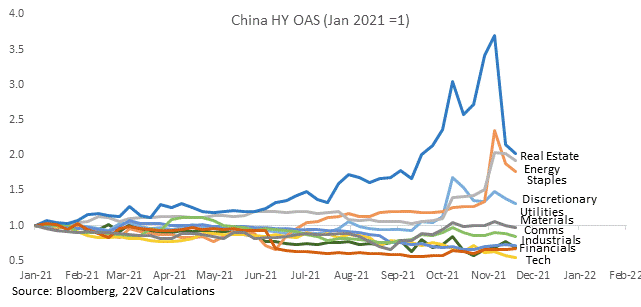
Quick China update – A Positive Shift (FOR NOW) Liu He, China’s top economic policy official noted the following. From an article in the People’s Daily. Officials should “focus on stabilizing land prices, house prices, and stabilize expectations.” China’s success in transitioning to high quality growth without derailing the economy is still a risk to the market, but high yield OAS have come in significantly across sectors. Investors are pricing in a more benign resolution to contagion risk from the Evergrande crisis.
A complete list of our negative supply chain sentiment stocks can be found below.