
The transition to a more sustainable environment and economy has not proven to be a linear process. Even as scientific and ecological evidence suggests to many that policymakers should adopt more haste in addressing these factors, economics and politics often impede a faster transition. This reality manifests in the pace and debate about green energy sections of President Biden’s economic agenda.
Senate Democrats soon will begin public consideration of the House-passed Build Back Better (“BBB”) legislation. Half of the 13 titles of HR 5376 contain detailed climate science/change provisions; many concentrated in the “Energy and Commerce” or “Ways and Means” committee subtitles. Prevailing wage, apprenticeship, and domestic content requirements surely mark this bill as an effort by Biden and other Democrats to intertwine essential worker, growth, productivity, and environmental protection into an economic agenda.
Over the coming two to three weeks, the 50 senators caucusing with Democrats will produce the Senate version of the bill. House Speaker Nancy Pelosi’s assertion that 90% of the bill that passed the House would survive the Senate rings true to us in part because some provisions objectionable to Democrats from hydrocarbon-producing states were dropped from earlier House drafts. We think much of the climate-focused provisions are covered by the Speaker’s statement, including but not limited to:
Socially Responsible Investing (SRI) and Environment, Social, and Governance (ESG) finance themes seek to capture many aspects of human thought about what can or should be done to improve environmental outcomes at the global and local community levels. Such a broad sweep unavoidably results in more sledgehammer than scalpel ideas. Lawmakers and law enforcers from the First and Second branches of government have jumped into the policy and politics of climate change, right along with companies and investors.
BBB would direct resources to some new and existing functions. The SEC has a half dozen SRI/ESG projects underway. One of the larger efforts is to develop standards for public companies disclosing potential climate risks. The comment period of the SEC’s request has been open seven months and has thousands of responses. A similar process is underway for US-regulated financial institutions. Climate change was prominently featured in annual risk reports this year from the Federal Reserve System, the Treasury Department, and US Intelligence Community.
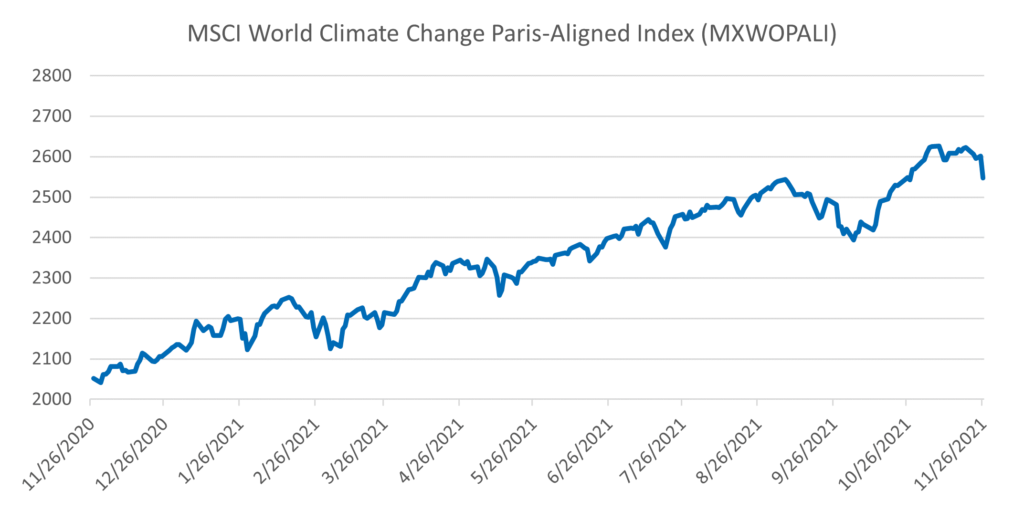
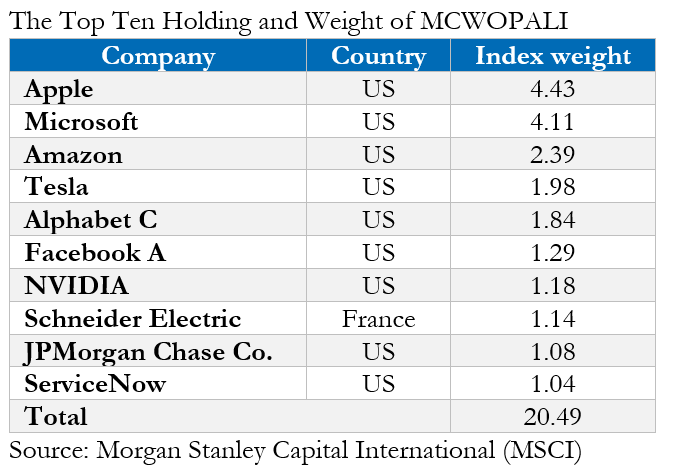
The MSCI World Climate Change index shaped by Paris Agreement strictures resembles lots of portfolios, especially those titled to Big Tech and Big Finance. It is up 19.3% YTD, three points less than the S&P 500 and only a point behind the NASDAQ year-to-date return. 22V’s John Rogue points out that other ESG/SRI indices are also highly correlated to tech powerhouses and stresses that this sameness could hurt many investors crowded into similar themes for many reasons.
Steps Forward or Sideways
Congress this week will return to the three pending fiscal matters President Biden is pushing to accomplish before Christmas. The socioeconomic effects of climate change, science, and human reactions to both are addressed in many titles of the House-passed BBB economic program. Some are reconstituted older programs, but many are newer. The bill is another example of climate policy incrementalism likely to remain in investors’ focus even if, as we believe, near-term economic considerations are the primary drivers of the pace and content of policies designed into these programs.

